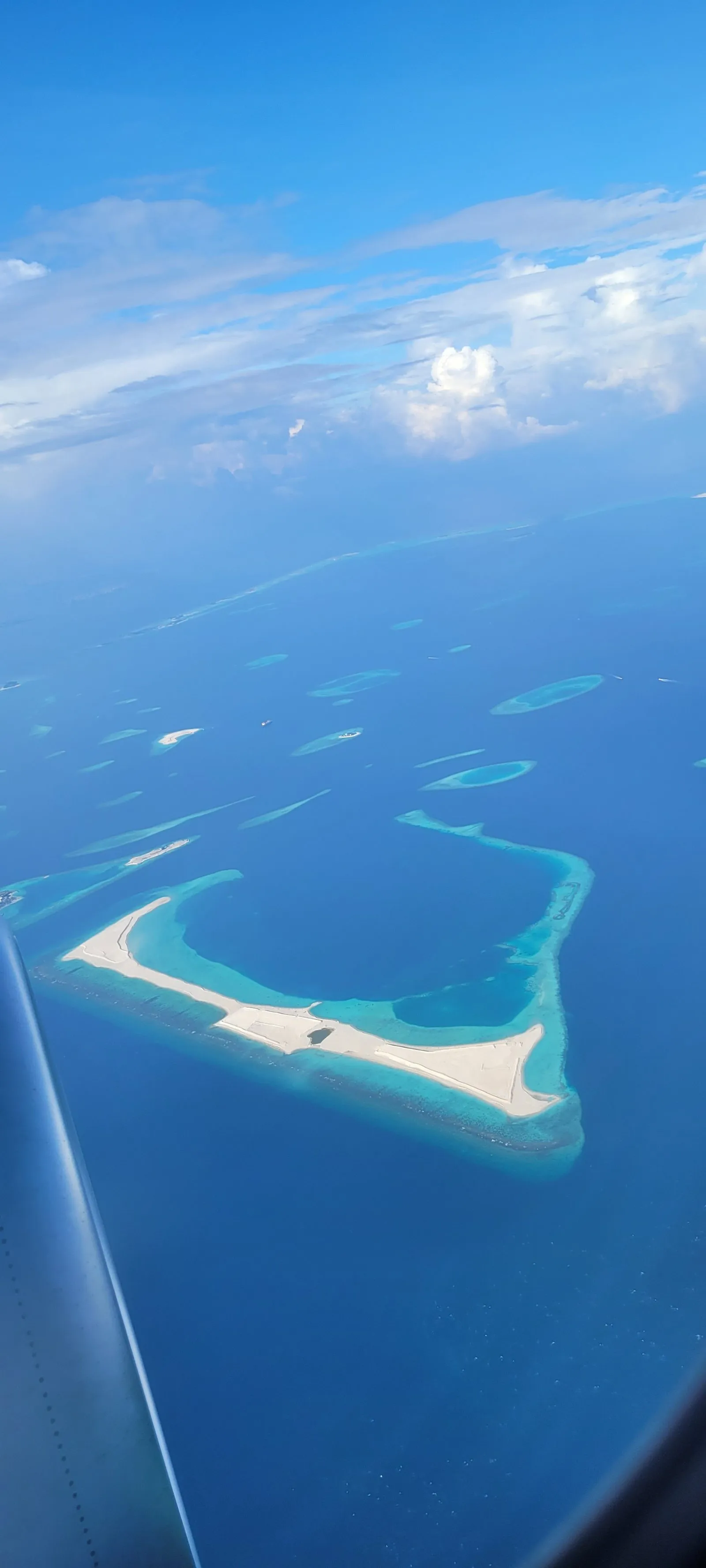
Indian Ocean
Best time to snorkel in the Maldives: what to expect when
Translated from the German original.
Now in October
Southwest monsoon — the wet season
- Water
- 28–29 °C
- Visibility
- 5–25 m, depending on the spot and the weather
- To see
- Mantas and whale sharks gather to feed — on Rasdhoo a reef manta at the house reef every morning
At most spots the weather makes the visibility: wind and waves stir up whatever lies on the bottom. Only over coral gardens without sediment does the water stay clear — there, plankton clouds it at most. Then there's the time of day: from late morning on it gets noticeably hazier. Rain didn't fall every day, and usually only for a few hours. What really defines this season is the big animals.
Source: Own notes and SSI logbook, August 2026 (Dhigurah, Kamadhoo, Maalhos, Rasdhoo): visibility between 5 and 25 m, water 28–29 °C, air 29–30 °C
The year at a glance
| Months | Season | Water | Visibility | To see |
|---|---|---|---|---|
| December–April | Northeast monsoon — the dry season | 29 °C | around 25 m | Nurse sharks, turtles on the reef, mantas only with a boat trip and luck |
| May–November | Southwest monsoon — the wet season | 28–29 °C | 5–25 m, depending on the spot and the weather | Mantas and whale sharks gather to feed — on Rasdhoo a reef manta at the house reef every morning |
The values come from my logbook and from named expert sources — each row gives its origin in detail above. Nothing here is estimated.
The Maldives are two different destinations — depending on when you fly. That is the most important point when planning, and it isn’t in any climate table.
Maldives in April: what I saw in the dry season
I was there in April 2025, on Rasdhoo and Fulidhoo — at the end of the dry season. 29 °C water temperature, around 25 meters visibility at the house reef, calm water.
What was in front of my mask in those days: nurse sharks in groups in the shallow water off the beach, a manta over the reef, turtles that didn’t let themselves be disturbed while feeding, and in the evening at the jetty on Fulidhoo rays gliding over the sand.
For snorkeling I never needed more than about five meters of depth.
You don’t need a boat for it. Every island in the Maldives is surrounded by reef, and on almost every one you can reach the reef from land. That’s the point the glossy pictures of boat trips hide.
By boat, though, you get to see completely different places again. I enjoyed every trip, and every one was worth it.
What are the Maldives like in the rainy season?
In August 2026 I was there once more, in the middle of the rainy season — on Dhigurah, Kamadhoo, Maalhos and again on Rasdhoo. So I know both seasons of the same area from my own experience.
What surprised me: At the same reef on Rasdhoo the water was equally clear in both seasons. So the month alone doesn’t separate the seasons.
What makes the visibility is the weather. Wind and waves stir up whatever lies on the bottom — and where the reef drops from sand into the depths, there is plenty of it. Over coral gardens without sediment, on the other hand, the water stays clear; there, plankton clouds it at most. Then there’s the time of day: from late morning on it gets noticeably hazier. How far apart the visibility was on four islands in August is in Snorkeling in poor visibility.
Still, the rainy season isn’t the same. The sky is overcast more often, and less light means less to see; the sea is rougher from rain and wind.
And then there’s what you come for at this time: the big animals. On Rasdhoo a reef manta passed the house reef every morning. In Hanifaru Bay I was in the water with around fifty mantas, from Dhigurah with a whale shark. In April we had needed a boat trip and a lot of luck for that.
When is the best time to snorkel in the Maldives?
If you want to see the reef in peace and in plenty of light — colors, structure, the edge into the blue —, then take the dry season from December to April. Not because of the number of meters, but because of the sun and the calm sea.
If you want mantas and whale sharks, come from May to November. Then on some days it blows so hard that you’d rather stay on land — in return, the chances of the big animals are incomparably better.
Both are a good experience. They’re just not the same.