Tips
Best time of day to snorkel: Maldives visibility at low tide, high tide and in rain
Translated from the German original.
In the morning everything was clear. Then I’m outside, playing with my son on the beach and having lunch. When I come back, the legs of the sun loungers are almost standing in the water. I go in, and it’s foggy. It’s worst where there is no reef below me, just sand. At the reef edge of Rasdhoo I feel it on my skin first: with the high tide comes colder water, and sometimes I even see the two bodies of water not mixing. The visibility turns blurry.
In case you’re planning right now: Visibility is better in the morning than in the afternoon. At high tide it was rather worse for us, because the water came back, was choppier, and the waves were a little higher. At the same spot on Rasdhoo I had about 25 meters of visibility in the morning, about 15 from noon on. In August, visibility on four islands was between 5 and 25 meters, depending on the spot and the weather. The ground below, sun or clouds, moving water, plankton and the time of day decide it.
Poor visibility doesn’t mean nothing is there. At two of the murkiest spots of the trip, mantas were in the water.
On the murky days our son saw the same things we did. He noticed it; it wasn’t an issue for him.
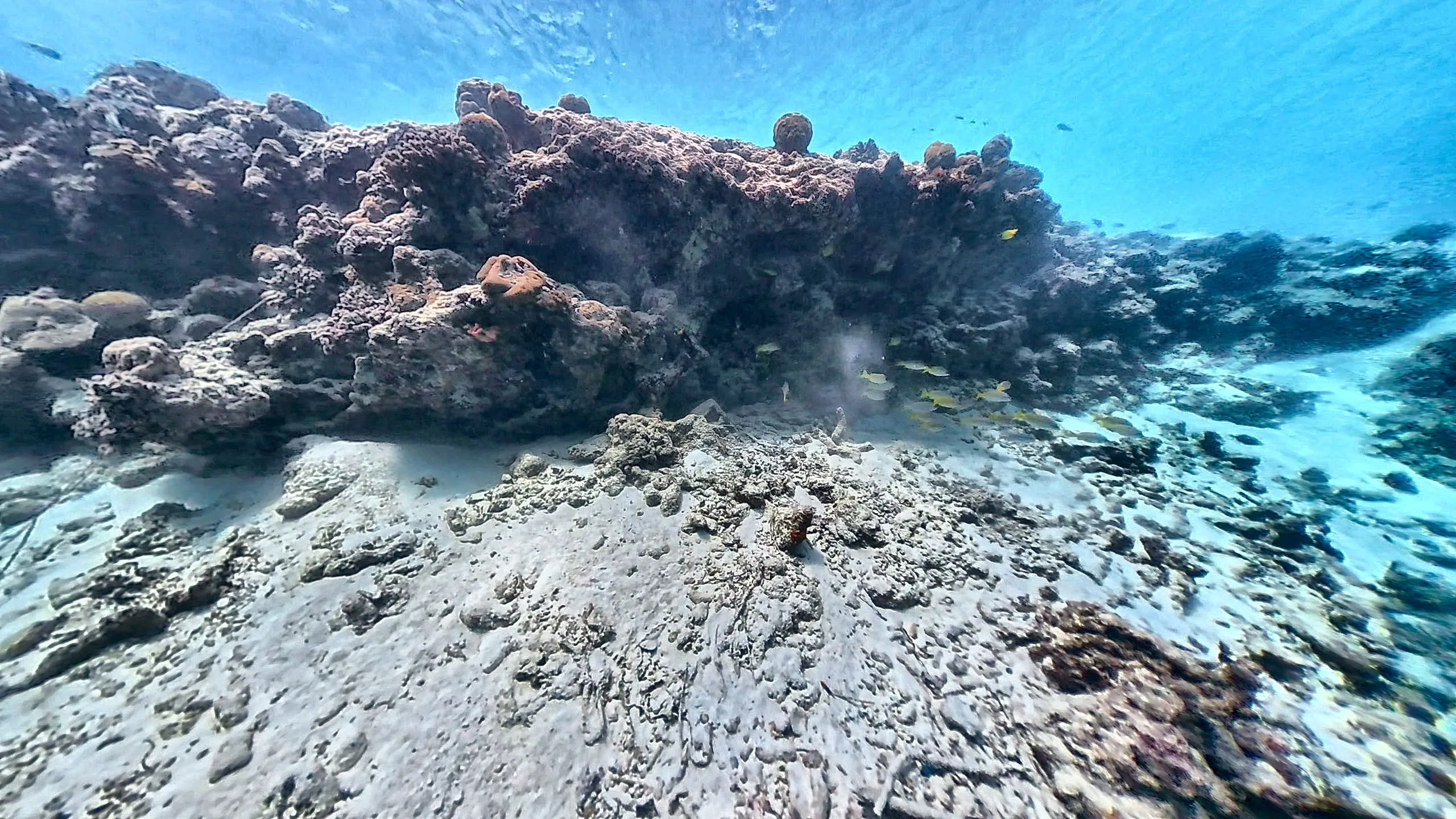
The trip started with the worst reading. On the second day on Dhigurah we were in the water at Bikini Beach. The wind was strong, the waves high, and at the small reef blocks off the beach I could see almost nothing. Five meters, and foggy with the stirred-up white sand. Colors were barely recognizable. That was more down to the waves the wind was making; the time of day didn’t make much difference on Dhigurah. In the morning it had rained heavily; after that it stayed dry for six hours, warm and overcast. So I played in the waves with my son, and under the palm trees there were lots of shady spots. The day after, out on the whale shark tour, I had about twenty meters of visibility, and at Bodufinolhu Thila afterward the same, with two reef sharks and a turtle.
Two days later, at the long sandbank of Dhigurah, visibility stayed at about ten meters, even in the morning. The shallow water over sand gets churned up by the waves; on the east side there was only seagrass, and in it the first sea urchins. At Turtle Reef off Dhigurah it was also about ten meters, colorful fish, no turtle. I didn’t snorkel out to the reef edge, because at high tide it was already five to eight meters deep. There, you only see something of the reef when you dive down.
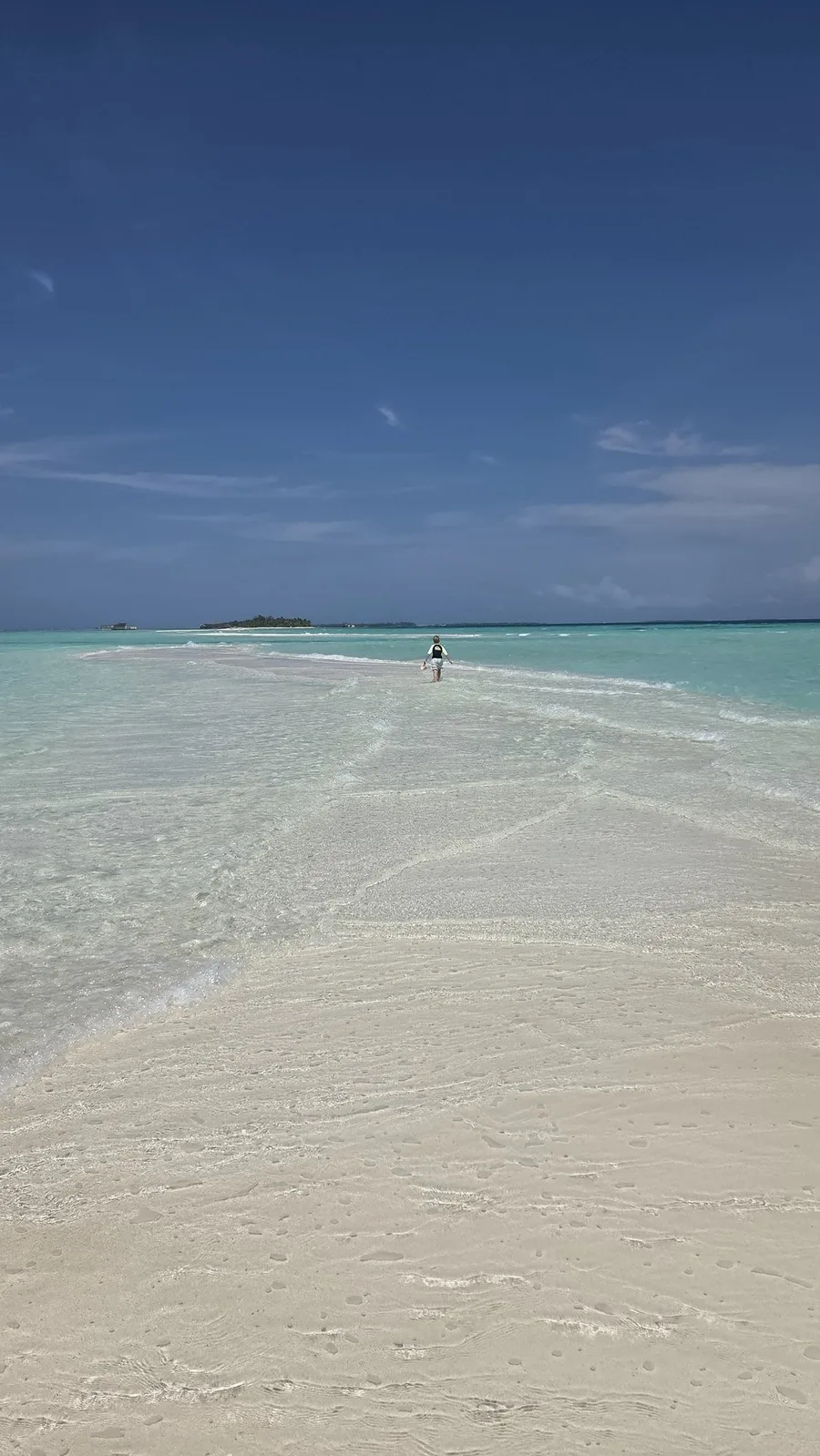
On Kamadhoo the reef starts just thirty meters off the beach. In front of it lies sand with the first corals, and without water shoes you can’t go in there. At the surface I had about ten meters of visibility. From five meters depth it was about twenty. Dive down once and look, and the reef looks different. The next morning it rained, it was windy, and I didn’t go into the water. In the afternoon it was then ten to fifteen meters, with a big turtle and a reef shark, and from land we saw dolphins right at the reef edge.
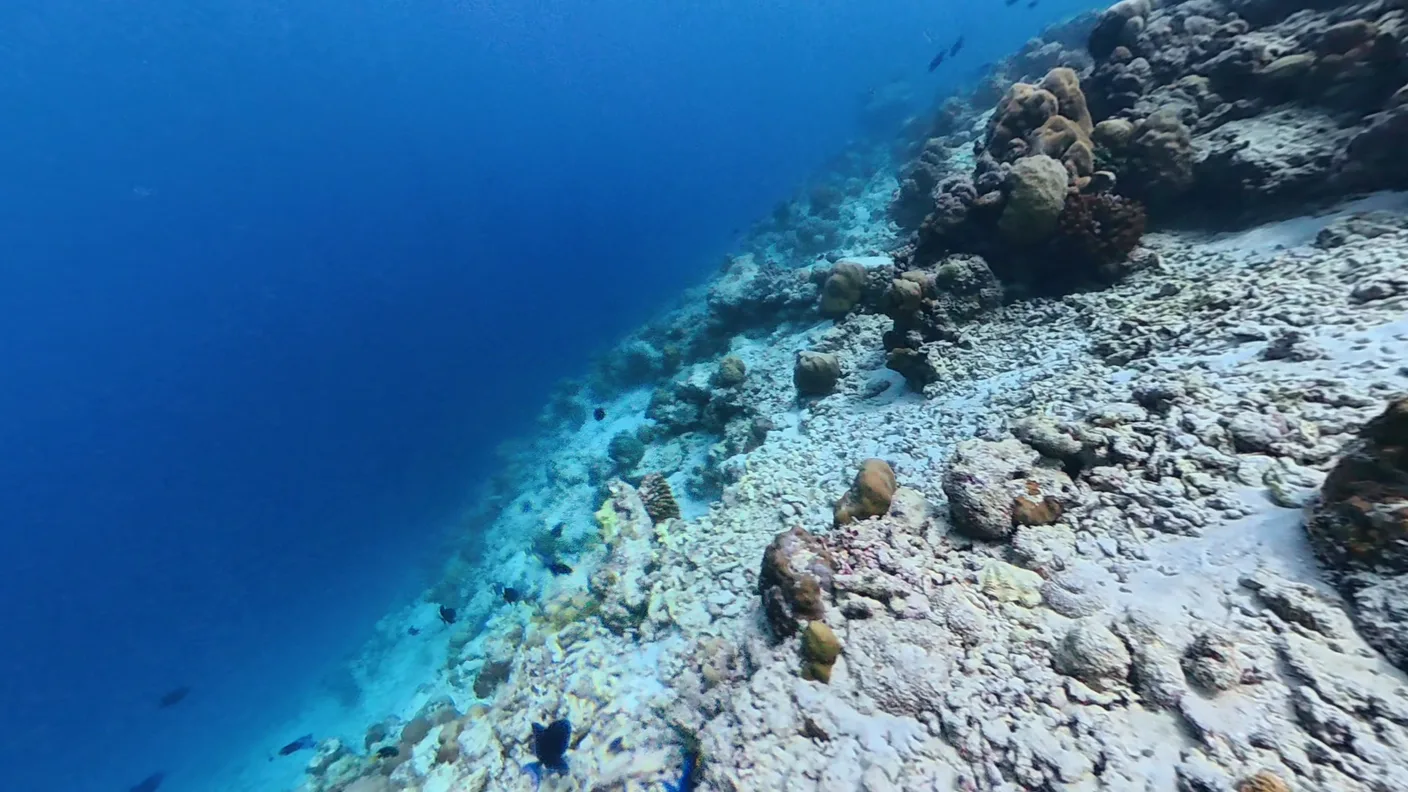
On Maalhos I snorkeled the house reef three times. On the first afternoon, visibility was about fifteen meters. There the reef drops from sandy ground into the depths. The current was weak; the sand was churned up mainly by the tides, and in wind by the waves too. Three days later, in beautiful weather, my son did his Bubble Maker course behind the reef edge and came out very happy. There it was fifteen meters again, but without sediment, and the reef was clearly visible.
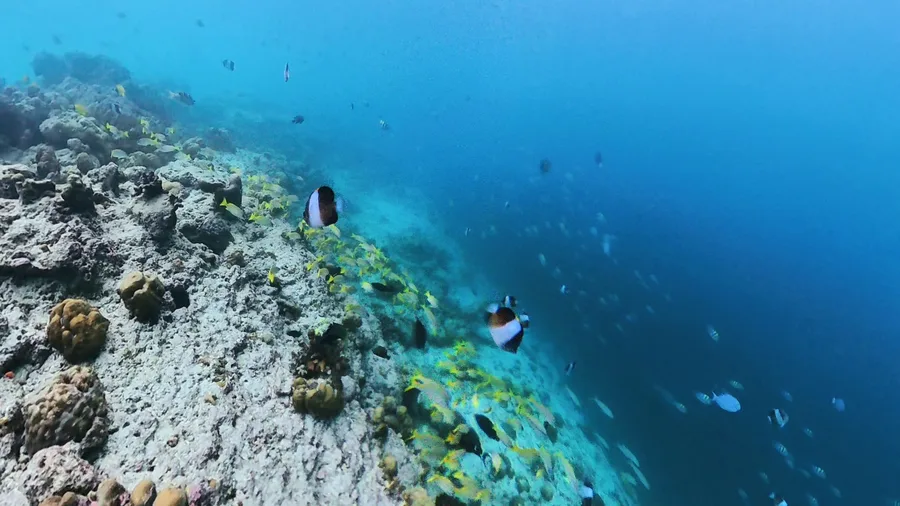
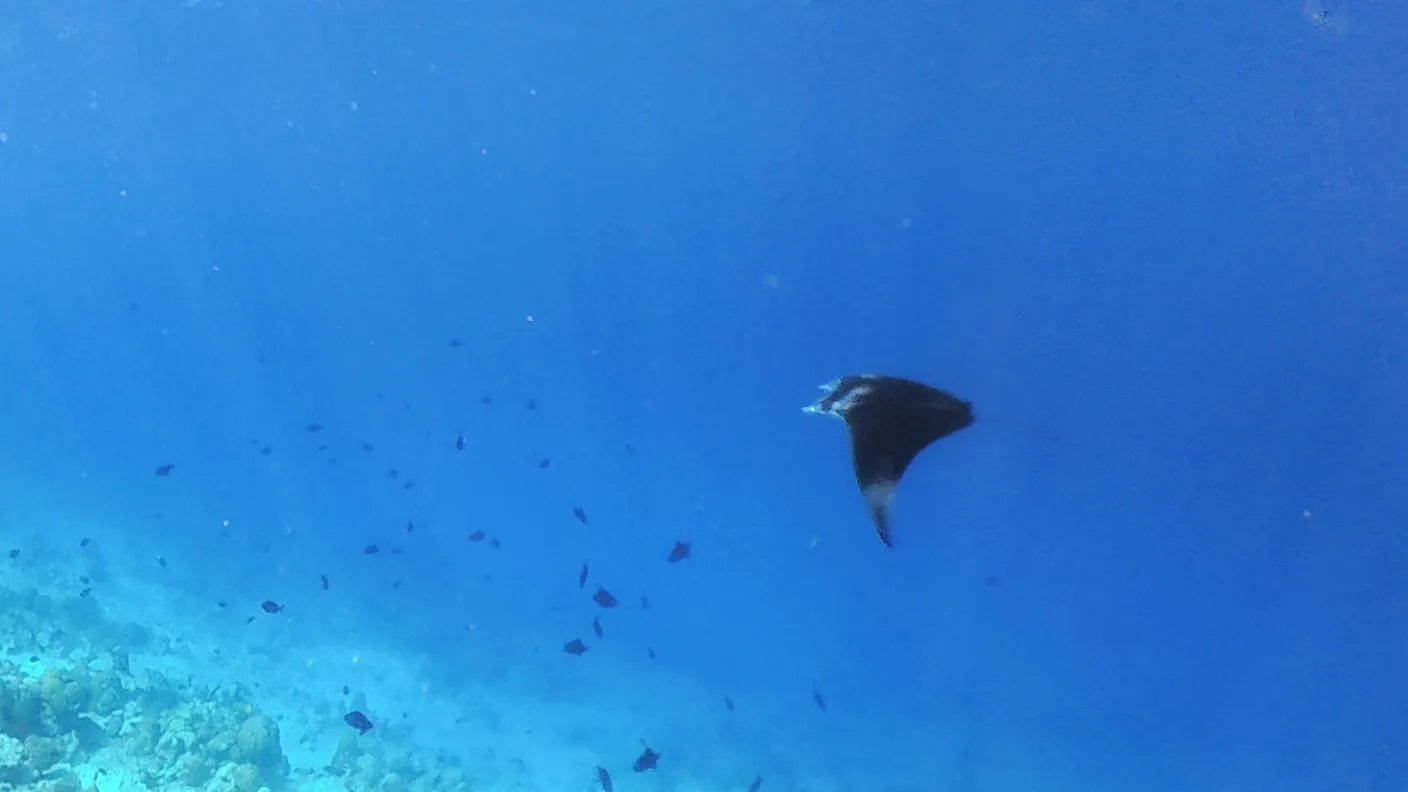
From Maalhos we were out in the atoll at five spots. At Kihaadhuffaru Thila and at Dhonfanu Reef I could see more than twenty meters; Dhonfanu Reef has no sandy bottom. In between, the boat stopped in the middle of open water at UNESCO Thila, because mantas were at a cleaning station there. We went into the water and saw them, with a good ten meters of visibility and lots of plankton. At Faana Faru and at a second reef it was about twenty meters again, without sediment.
At Hanifaru Bay I had a good ten meters of visibility. The water was full of plankton, and the heavy rain on the way there had churned up the sea. The mantas still came within barely a meter. There were at least fifty.
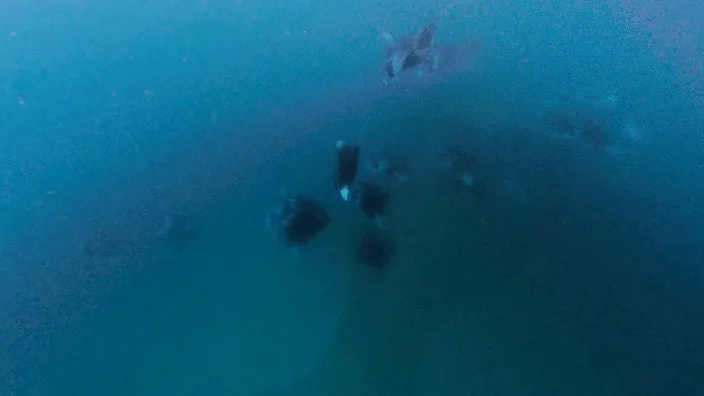
On Rasdhoo I was able to compare the time of day at one spot. The Bikini Beach there lies on the reef Rasdhoo Beyru. In the morning I had about 25 meters of visibility, with a reef manta and a moray. At half past one at the same spot it was about 15 meters, and the sediment made everything blurry. Two days later, in the morning again, about 20 meters, a reef manta again, plus sharks. On the dive at Madivaru Corner, visibility was 20 meters, with gray reef sharks and barracudas; it went down to 17 meters, in strong current.
From eleven or twelve o’clock, tide and current change, and the water gets churned up. Until then is the best time.
In April a year earlier, I had already been on Rasdhoo once. Back then it was sunny almost the whole time, and more sun means more visibility. In the rainy season it’s cloudy more often, and the sea is choppier from rain and wind; in the dry season everything tends to be calm. At the same reef I still had about 25 meters in both years, and over the whole trip the rainy season was worse. Both are true, and that is no contradiction.
Maldives water visibility in August on four islands
All values are my own estimates in the water.
| Day | Spot | Visibility |
|---|---|---|
| Aug. 5 | Dhigurah, Bikini Beach | 5 m, foggy |
| Aug. 6 | Rangali Madivaru (whale shark tour) | approx. 20 m |
| Aug. 6 | Bodufinolhu Thila | approx. 20 m |
| Aug. 7 | Dhigurah, sandbank | approx. 10 m |
| Aug. 7 | Dhigurah, Turtle Reef | approx. 10 m |
| Aug. 9 | Kamadhoo, Bikini Beach | 10 m at the top, from 5 m depth approx. 20 m |
| Aug. 10 | Kamadhoo, Bikini Beach, afternoon | 10–15 m |
| Aug. 12 | Maalhos, house reef, 4 p.m. | approx. 15 m, sediment |
| Aug. 13 | Kihaadhuffaru Thila | over 20 m |
| Aug. 13 | UNESCO Thila | over 10 m, plankton |
| Aug. 13 | Dhonfanu Reef | over 20 m |
| Aug. 14 | Hanifaru Bay, 4 p.m. | over 10 m, plankton |
| Aug. 15 | Maalhos, house reef, 1 p.m. | 15 m, no sediment |
| Aug. 16 | Faana Faru | approx. 20 m |
| Aug. 16 | second reef, Maalhos | approx. 20 m |
| Aug. 18 | Rasdhoo Beyru, morning | approx. 25 m |
| Aug. 18 | Rasdhoo Beyru, 1:32 p.m. | approx. 15 m, blurry |
| Aug. 19 | Madivaru Corner (dive, 17 m) | 20 m |
| Aug. 20 | Rasdhoo Beyru, morning | approx. 20 m |
- In April: The articles from back then are the Rasdhoo and Fulidhoo trip report, the turtles and the first manta.
- All islands and months: in the Maldives destination guide.
My conclusion
Find a reef that doesn’t start over sand, and go in in the morning. If it’s murky anyway, dive down once and see what it looks like a few meters deeper. With the mantas, the plankton didn’t bother me.
What the same reef looked like in April and in August, I will tell in an article of its own.