Travel report
Turtle Reef in the Maldives, at Rasdhoo: where sharks appear and bother no one
Translated from the German original.
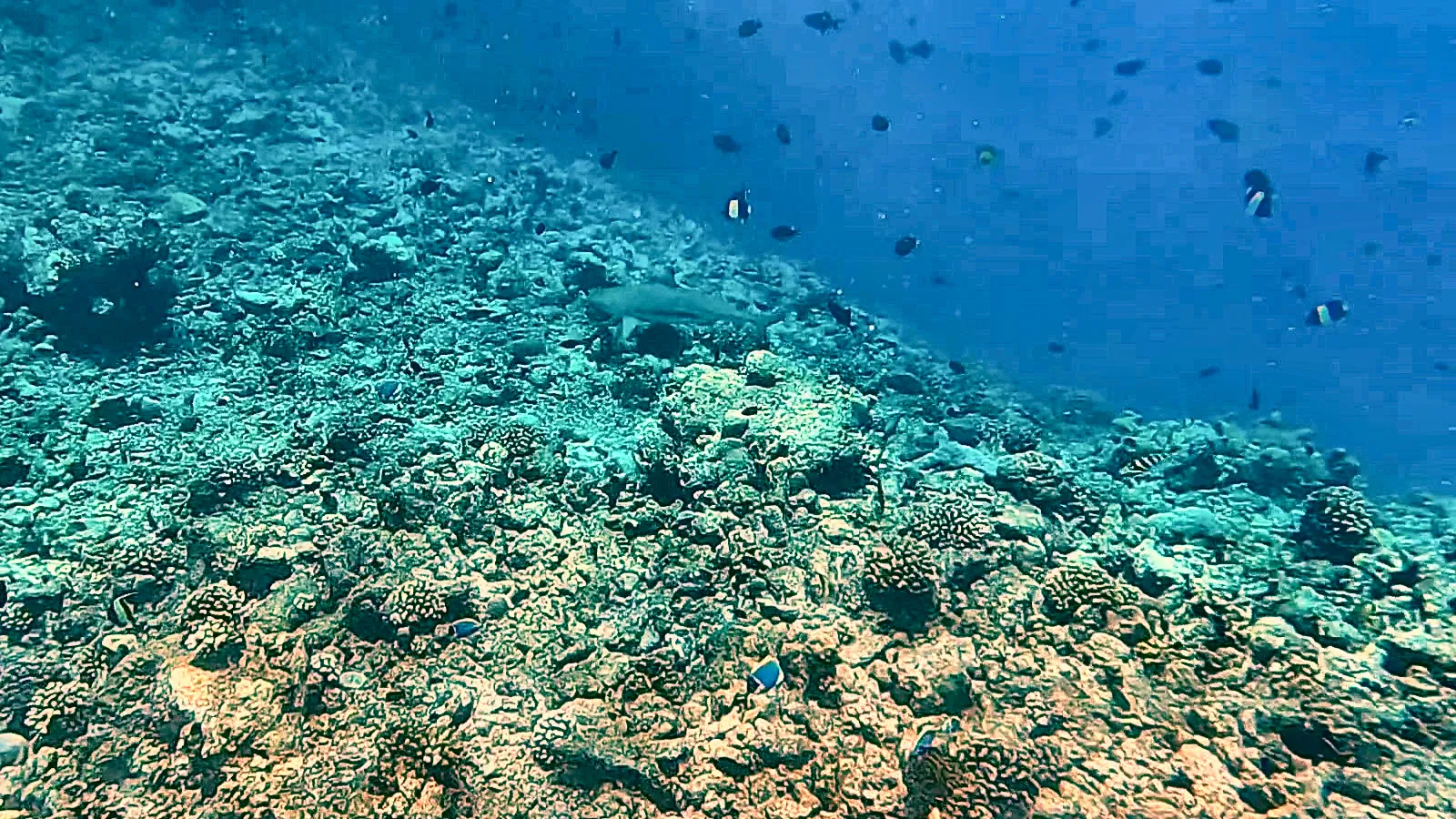
Below me, a shark moves over the reef. No flinching, no hurried turning around. It simply swims its path, just above the coral bottom. All around it, the bustle of the small reef fish. They are just as little bothered by it as it is by us. For a few seconds I follow it with my eyes, then it has disappeared into the blue.
A quick word first, in case you’re planning right now: The reef sharks at Turtle Reef are blacktip reef sharks and harmless to snorkelers. Nobody feeds them there, and that is exactly why they stay calm: they move along their path and don’t turn toward you. Ten minutes by boat from Rasdhoo, an hour and a half in the water, the reef sits two to five meters below the surface. You don’t need to be able to dive for it.
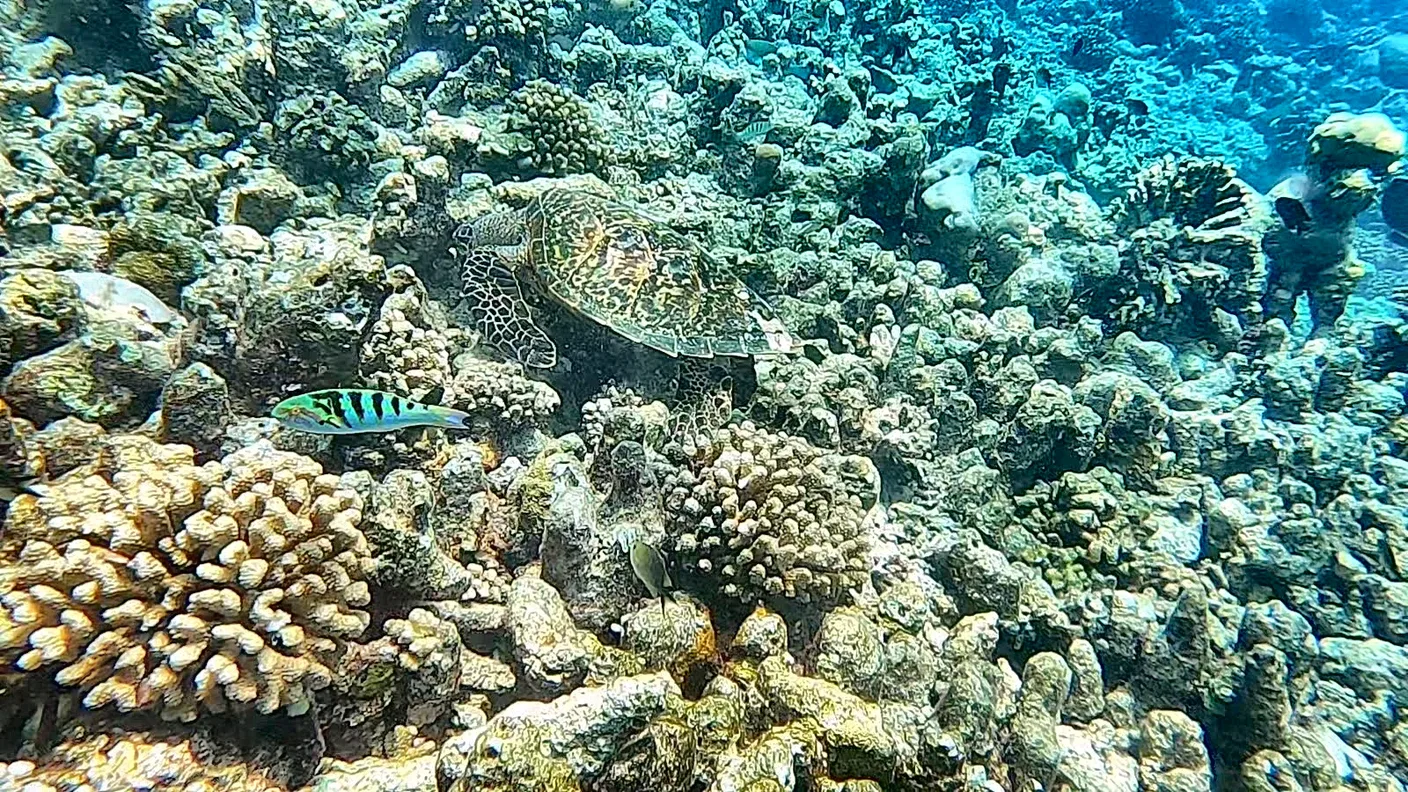
That day we had gone out to snorkel with turtles, to a reef in the middle of the sea near Rasdhoo Atoll in the Maldives. Ten minutes by boat from the island, on the east side of the atoll between Madivaru and Veligandu: close enough that you go out in the morning and are back by midday. By now I also know its name: Turtle Reef, the reef of turtles. The name says it all. How this trip went and what we experienced there with around ten turtles is told in a report of its own. Here it’s about the reef’s other residents. The ones with dorsal fins.
We were in the water for a long time that day, an hour and a half at a stretch. And every now and then during that time, a shark or two appeared. Never with any warning: a moment ago there was reef and blue, then somewhere a familiar silhouette slid into view. It moved past, kept its distance and was gone again. Interest in us: none. Good.
At my very first encounter, right on the day we arrived at the house reef, an appearance like that had still kept me quite busy. The story is in “My first shark”. At Turtle Reef, a few days later, nothing of that was left. The sharks simply belonged to the reef like the turtles and the schools of fish. We didn’t have to concern ourselves with them, nor they with us. So we could focus entirely on what we had come for: the turtles, the reef and its colorful residents.
That you spot the animals this early at all is down to how the reef is built. It begins two to five meters below the surface. Narrow, maybe twenty meters wide, but very long. On both sides it drops off steeply. From the water you can therefore take in almost all of it: the edge on the left, the edge on the right, the reef flat in between. If you drift on top, you see everything coming instead of being surprised by something. All the measurements for this spot are on the island page for Rasdhoo.
A tip that will spare you trouble when booking: there is more than one Turtle Reef in the Maldives. A second one lies off Dhigurah, a different atoll, several hours away. So if you book a tour, ask about the atoll, not the name.
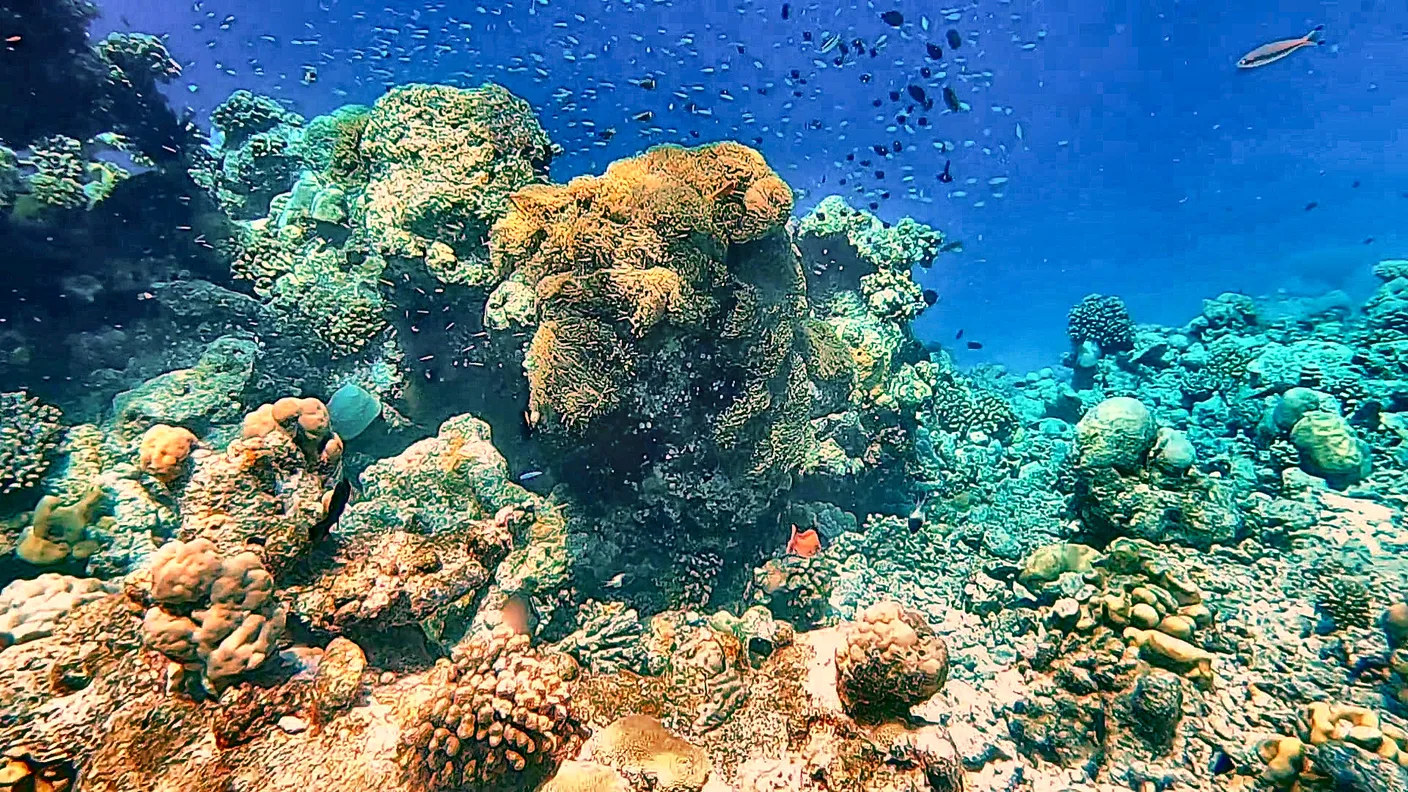
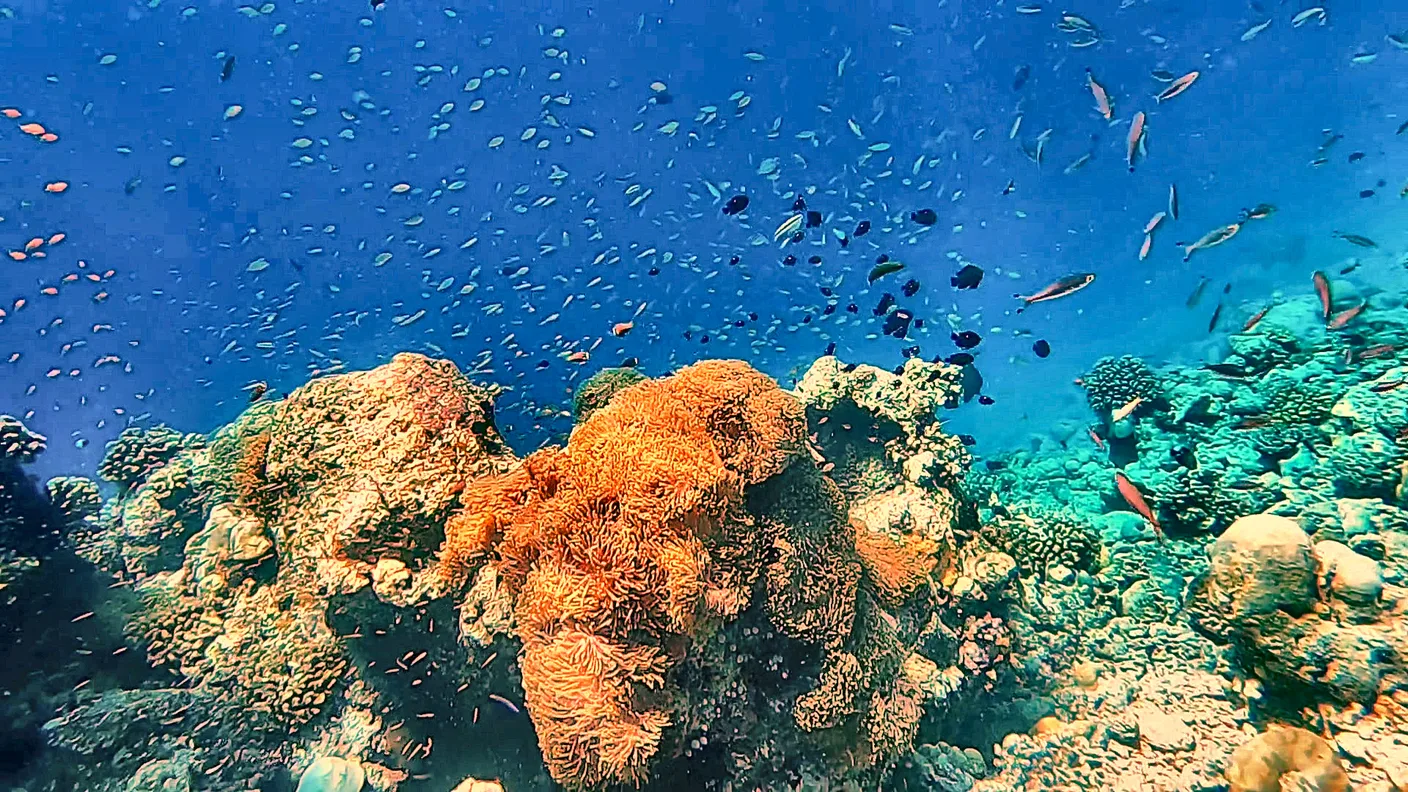
And there was plenty of that. At the side, the reef drops off steeply into the deep blue, and above the edge a school of small dark fish hung in the water, hundreds at a glance. In between, coral blocks; on one of them a large anemone swayed in the current, surrounded by a cloud of tiny fish. The cover photo at the top is a still from our video of this day: forty seconds of everyday life at Turtle Reef, first the shark, then the reef.
In case you still gulp at the word shark: I know that well; I felt exactly the same before my first encounter. What helped me was understanding the animals a little. The sharks you meet while snorkeling on shallow Maldivian reefs like this one are mostly blacktip reef sharks. They usually grow to around one and a half meters, are considered shy and give way to people. That’s exactly what we experienced: we didn’t give way to them; they gave way to us.
At Turtle Reef it didn’t stop at these encounters. Around Rasdhoo, sharks are part of everyday life, and in three quite different settings. On the shallow stretch in front of the house reef, which you reach from the beach, they cruise by regularly. Sometimes within five meters, right in knee-deep to hip-deep water. At Turtle Reef they move along the edge. And at Madivaru Corner, the dive site off the island, the larger species hang out: gray reef sharks, whitetips, plus eagle rays and barracudas. A snorkeler doesn’t get to see those; good to know before you get your hopes up.
The local dive team gave us one sentence about it that says it all: don’t touch anything, don’t take a fish in your hand. Then they ignore you completely. That’s exactly how it was, on every single day.
How different it looks when someone helps things along, I saw a week earlier. At a boat stop, nurse sharks were being fed, and calm bottom dwellers turned into a crush in which an animal nudged my leg. The story is in my report on the nurse sharks; it is the counterpart to this day here. The same island, the same week, and the whole difference lies in whether someone has brought a bucket.
At the end of this day, the shark was neither the highlight nor the moment of fright. It appeared, moved along its path and left us with the turtles. A shark encounter while snorkeling doesn’t need to be anything more.
Turtle Reef snorkeling at Rasdhoo: good to know about the sharks
- Where: Turtle Reef (SSI spot no. 530005), on the east side of Rasdhoo Atoll between Madivaru and Veligandu, about ten minutes by boat from Rasdhoo. We went there on a boat trip organized by our hotel.
- Conditions (April 2025): 29 °C water temperature, over 20 meters visibility, around 5 meters of water depth while snorkeling. Values from my logbook.
- The reef: sits two to five meters below the surface and drops off steeply at the sides. Easy to take in from the water, ideal for snorkelers.
- Which sharks: mainly blacktip reef sharks, usually around one and a half meters long. They are considered shy and retreat when people come closer. For us, in an hour and a half, it stayed at two or three brief encounters, always at a distance.
- Behavior in the water: stay calm and don’t swim after anyone. The sharks take care of the distance all on their own.
- Don’t mix them up: There is a second Turtle Reef off Dhigurah, in a different atoll. When booking, ask about the atoll, not the name.
- What else was on the reef: besides turtles and sharks, also moray eels, anemones and dense coral blocks. The full account of what we found at this spot is on the island page for Rasdhoo.
- Sharks elsewhere on the island: On the house reef, which you reach from the beach, blacktip reef sharks cruise right into the shallow water. The larger species (gray reef sharks, whitetips, eagle rays, barracudas) hang out at Madivaru Corner. I dove there; my wife and our son snorkeled there at the same time.
- Without feeding: There is no feeding at this reef, and that is exactly what sets the calm tone. What it’s like with feeding is in the nurse shark report.
- If the topic is on your mind: What the very first shark encounter feels like, I wrote down in “My first shark”.
- When visibility is best: On Rasdhoo, this showed up as a pattern over the week: around 25 meters in the morning, from midday more like 15. If you want to see the sharks at Turtle Reef in clear water, you should insist on a morning tour; in the afternoon the same reef is the same spot, but not the same picture. The measurements for every spot on the island are on the island page.
- The whole week in context: Rasdhoo and Fulidhoo, two islands on one trip, as told in the travel report; all the islands and seasons in the Maldives destination guide.