Travel report
Fulidhoo beach snorkeling, Maldives: rays instead of a reef
Translated from the German original.
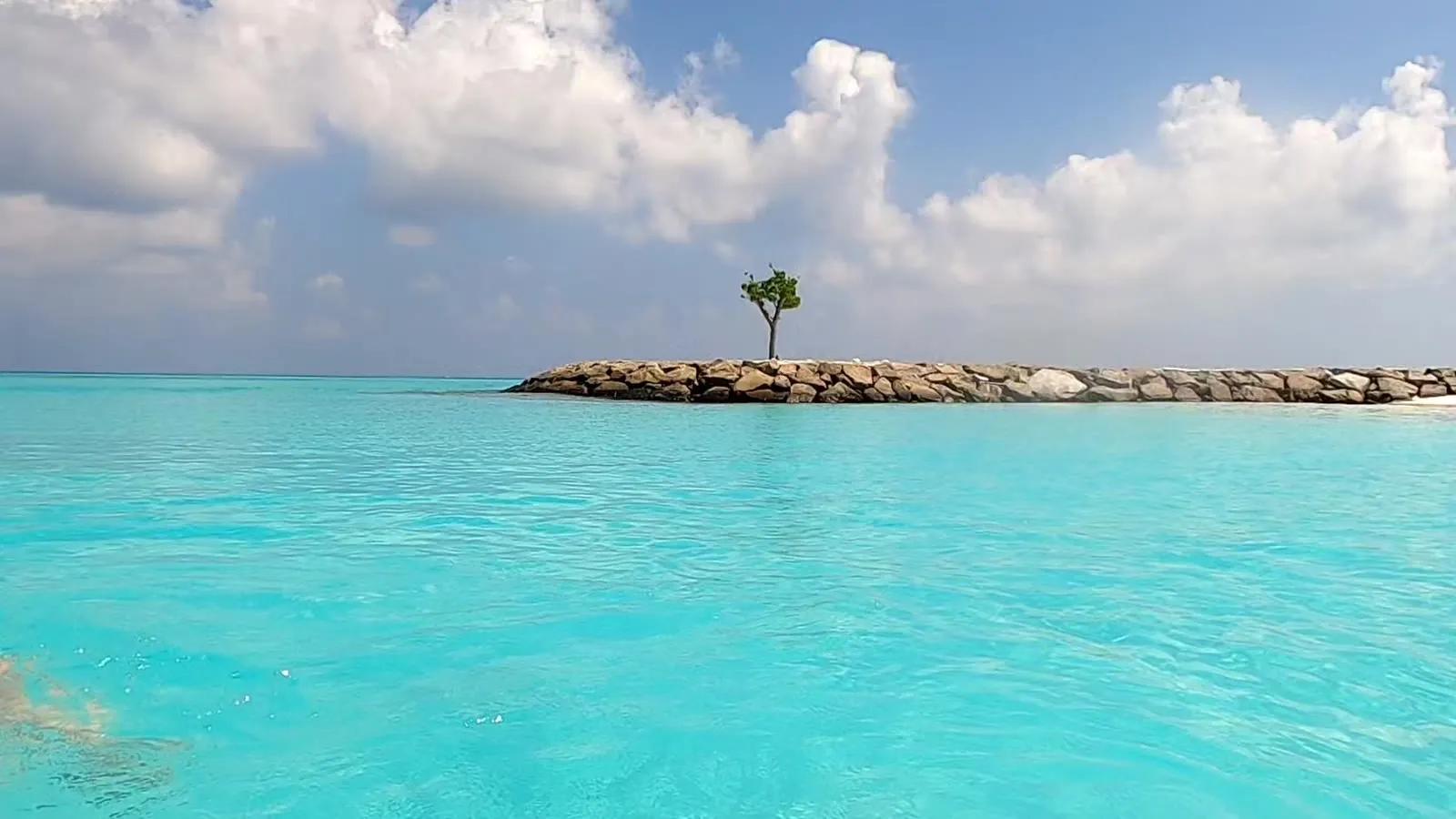
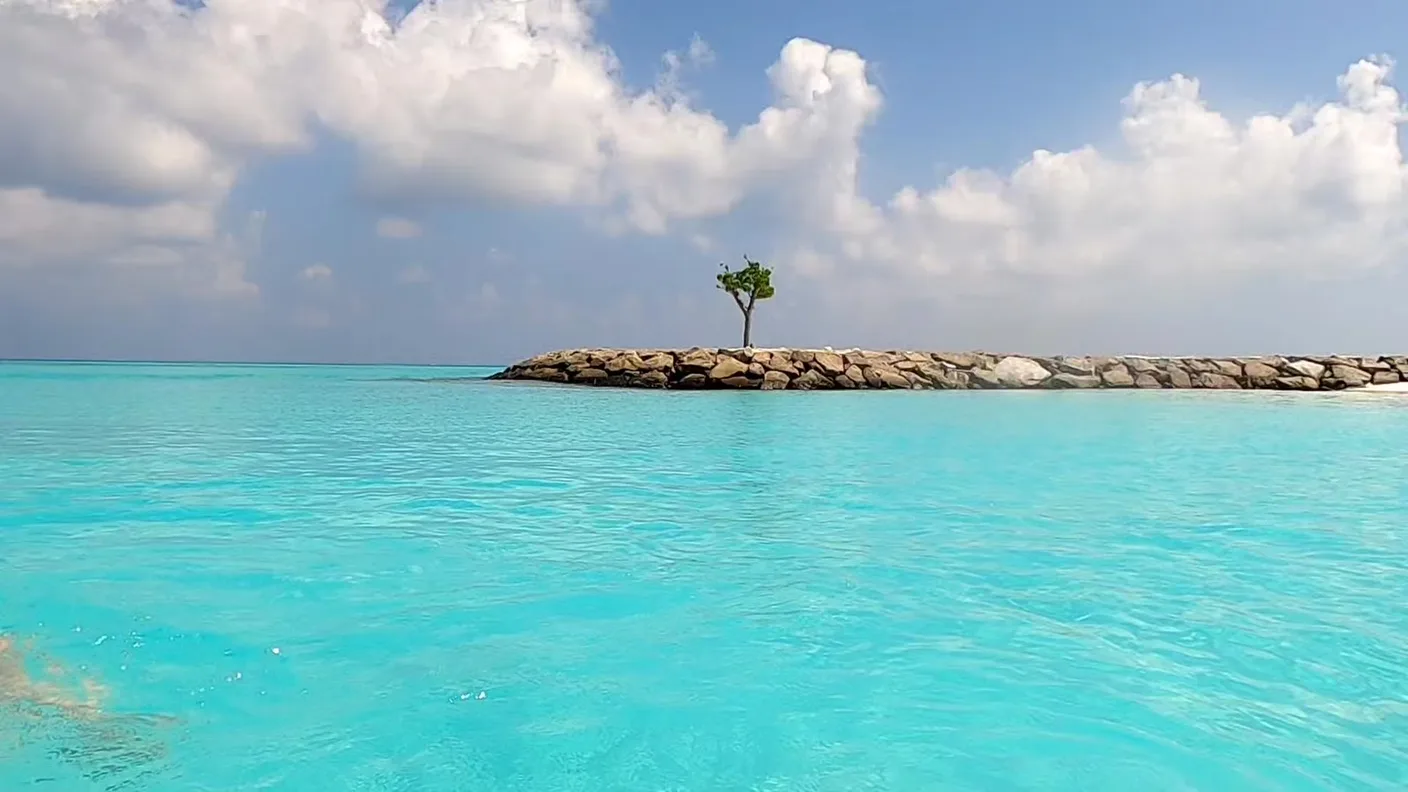
I swim out a hundred meters, head in the water, and wait for it to begin. Sand. A bigger stone. Sand again. The visibility is so good that I still see the bottom sharply when it lies five meters below me — thirty meters of everything simply clear. And still: no reef.
A quick note first, in case you’re planning right now: You don’t go to Fulidhoo for the Bikini Beach if you want to snorkel. I didn’t find a reef there from the shore, not even after a hundred meters. What the island has instead is the shallow water: pale sand, over twenty meters visibility, and rays making their rounds there. The actual reef lies farther out and is a matter for a boat.
That is the most honest answer I can give to the question of whether snorkeling at Bikini Beach on Fulidhoo is worth it. I didn’t find a reef there. Either it lay farther out than I swam — or it is on the other side of the island. There actually is one there. I was never in the water there, though.
Fulidhoo Bikini Beach: first sand, then more sand
Like most local islands, Fulidhoo has its own stretch of beach for tourists. It’s called Bikini Beach, and it starts the way you imagine the Maldives: pale, fine sand, the water shallow and turquoise. For playing and relaxing, that’s wonderful. We spent a lot of time in the water there with our son.
But if you start snorkeling from there, you stay over sand for a long time. Here and there a bigger stone lies around, then nothing again. After about a hundred meters it’s maybe five meters deep, the water is still crystal clear, and the bottom stays sandy.
The fish are the same story. It doesn’t get colorful here. What I saw were the inconspicuous species that feel at home over pale sand — gray, silvery, well camouflaged. If you are looking for the riot of color you know from reef pictures, you’ll look for it in vain here.
And then a ray comes along
What you do get, again and again, are the big rays. They are the same ones that pass by the jetty in the evening — the story is in Fulidhoo in the evening.
At the jetty you stand up top and look down. In the water it’s something completely different. There they seem a good third bigger again, and they aren’t shy in the slightest. There’s no slow approach you could get used to. A moment ago there was only sand, and the next moment something huge slides right up next to you.
It gives me a proper fright. Every single time, at least the first few times.
You get used to it faster than you’d think. Because what happens next is always the same: the ray looks at me once — I can’t describe it any other way — and then glides on, completely relaxed. Curiosity, nothing more behind it. The animals’ calm rubs off on you, and after a few encounters you look forward to the next one instead of flinching.
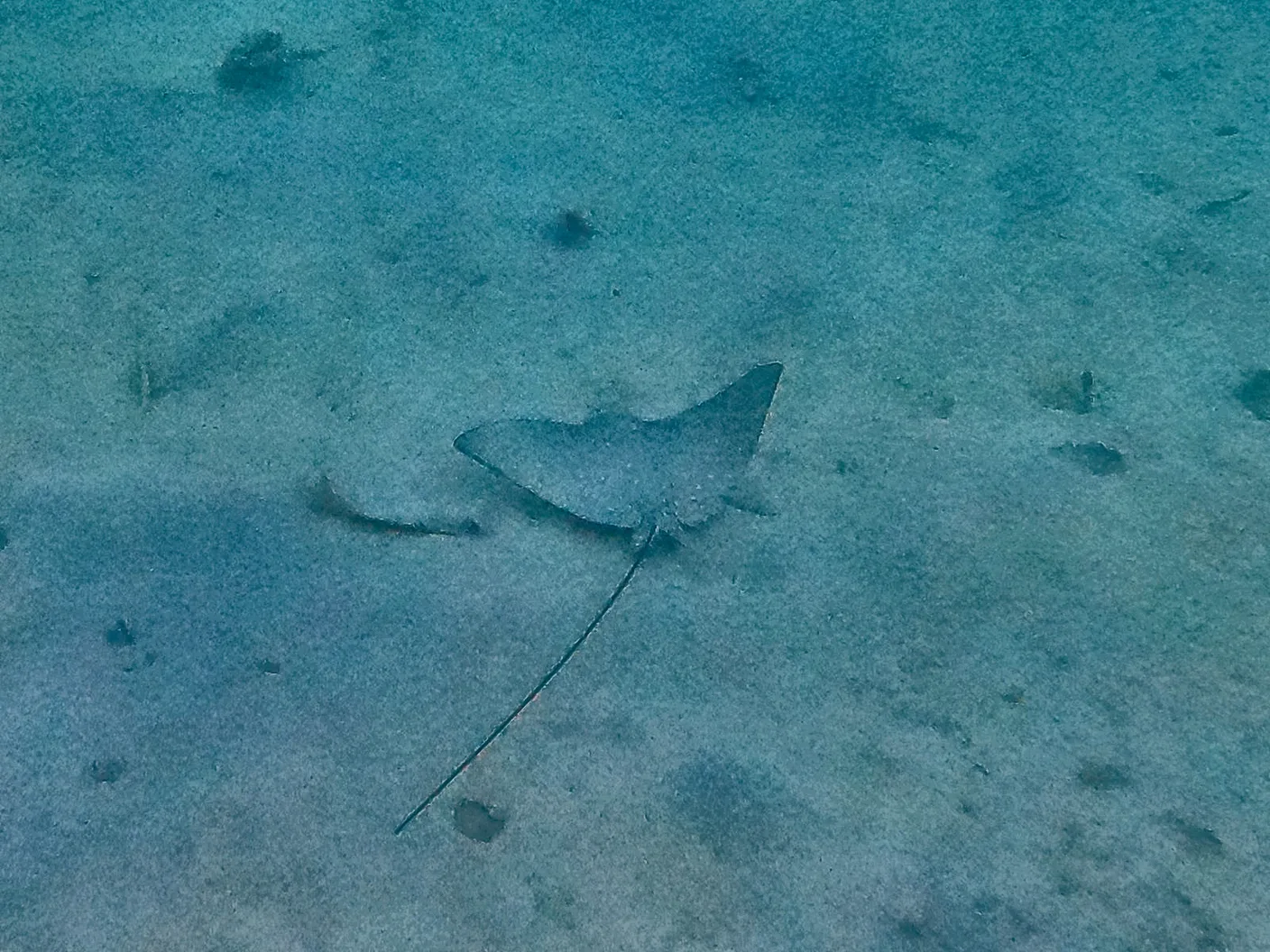
Once there was a different one among them, one I never saw a second time. Much smaller, with pointed wings swept back and a very long, thin whip-like tail. A completely different build from the broad, round rays at the jetty. It moved right through a school of fish over the sand and was gone again.
Current, tides and time of day at Fulidhoo beach
On the Bikini Beach side I had no current worth mentioning — not on any day. I was in the water from morning to evening, and nothing changed that would have made me change my plans.
I didn’t notice low and high tide at all while snorkeling. That was a point I was unsure about before the trip, and in hindsight it turned out to be a non-issue.
On the other side of the island, where women can go swimming covered, there is a reef, on the other hand — and there is current there too. I wasn’t in the water there, so I can’t tell you anything about it. From above, though, it looked promising.
A strange feeling, but not a bad one
Fulidhoo was our first stop in the Maldives. I had just arrived, had seen the big rays and the nurse sharks at the jetty in the evening — and the next day I was swimming around over exactly this water.
That was a strange feeling. Not negative, no fear. More excited and a little nervous, like before something you’ve been looking forward to for a long time and where you don’t know exactly what’s about to happen.
Looking back, that’s exactly what Fulidhoo was for us: arriving. Playing in the water with our son, getting used to the island, going out to eat in the evening. Rasdhoo was then the start of real snorkeling — scanning the reef, looking closely, with a completely different goal in mind.
The island itself: restaurants on Fulidhoo
Fulidhoo is small and, luckily, hardly touristy. There are maybe three restaurants; we always went to the same one. The food was really good every evening. And the people were so nice that they simply let us sit and play cards after dinner. Nobody eyed the table.
One evening there was even live music. Nothing local, covers of pop songs — but the singer was really good.
Where is the reef on Fulidhoo?
Fulidhoo does have a reef — just not on this side. On the other side of the island, where women can go swimming covered, there is one, and there is current there too. I was never in the water there, so I can’t tell you anything about it. From above, though, it looked promising. If you’re planning the island, you should know this: Bikini Beach is meant for swimming, not for reef snorkeling. All of the island’s measurements are on the island page for Fulidhoo.
If you want a reef right off the beach, you’re better off on other islands. On Rasdhoo you reach the reef edge on foot — a hundred meters over shallow reef, then it drops off into the blue. There, blacktip reef sharks also come into the shallows, and in the morning in August a manta even came by.
What this beach offers instead
That sounds like a rejection now, and it isn’t. For a child, Bikini Beach is the better water: shallow, clear, no current, with a sandy bottom instead of sharp corals. We spent a lot of time in there with our son, and that was the real purpose of those first days.
On top of that comes something you don’t get on any reef: the big rays that pass the jetty in the evening, you meet here during the day in open water. No boat, no tour, no waiting — you swim out and at some point they’re there. How those evenings at the jetty went is in Fulidhoo in the evening.
And one more thing belongs to being honest: boat trips with several snorkeling stops leave from Fulidhoo, among others to the nurse sharks. So if you want a full snorkeling program here, you get it — just from the jetty, not from the beach.
For context: at Bikini Beach the visibility was over twenty meters, and after around a hundred meters you’re standing in about five meters of water. All the island’s spots with their measurements are on the Fulidhoo island page.
Is snorkeling at Fulidhoo beach worth it?
If you come to Fulidhoo for the snorkeling and expect a reef right in front of you, you’ll be disappointed at Bikini Beach. It’s sand, and it stays sand for a long time.
If you’re counting on the big rays in open water, very good visibility and a beach where children feel at home — then Fulidhoo is just right. Plus evenings when nobody shoos you away from the table.
Nothing there was bad for me. It was just something different from what I had expected.
How the week on Fulidhoo and Rasdhoo went overall is in the travel report; all the islands and seasons are in the Maldives destination guide.