Tips
Are moray eels dangerous to humans? On the reef in the Maldives and Egypt
- Maldives and Egypt
- considered not aggressive
- bites when fed or touched
- October 2025 and August 2026
In short A moray eel is not dangerous for snorkelers as long as you keep your hands to yourself.
Translated from the German original.
While snorkeling I estimated visibility, water temperature and depth, just as I experienced them on the days I was there. On dives the dive computer measured depth and duration, and values with a named source show what is usual there, not how it was for me.
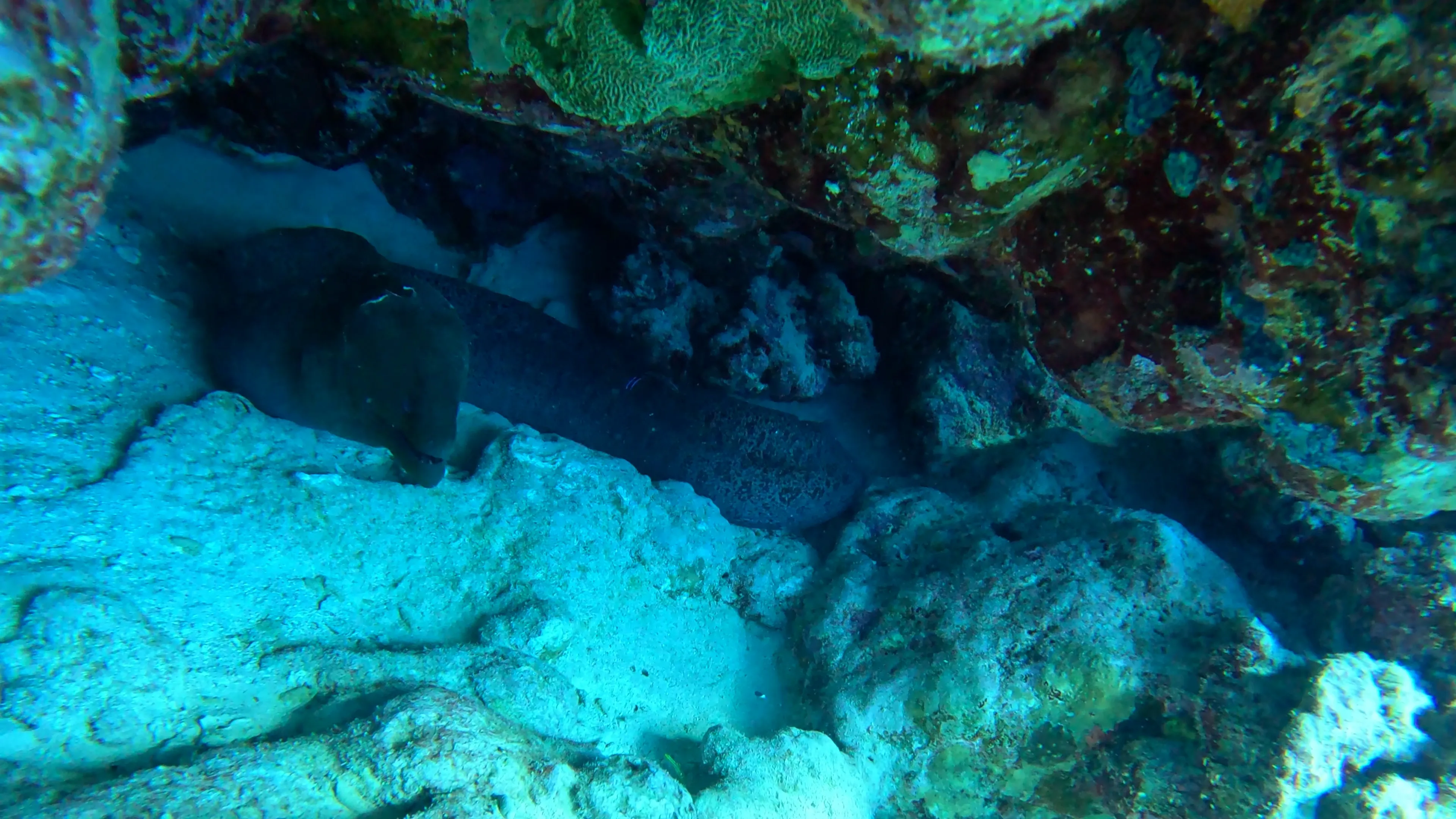
Its mouth is open, and you can see the teeth. The moray eel is tucked into a rock crevice on the reef in Ras Mohammed National Park in Egypt. It is 27 October 2025. I don’t have a diving certification yet at that point. There were no practice drills beforehand, so the instructor doesn’t let go of me for a moment. This is exactly how you know moray eels from photos. It looks like a threat. As a rule, it is breathing.
A moray eel is not dangerous for snorkelers as long as you keep your hands to yourself. That is how we experienced them in the Red Sea and in the Maldives. Moray eels are considered non-aggressive. Most bites happen when someone feeds them, touches them or reaches into their crevice with a hand.
At a glance
| Dangerous? | Not for snorkelers who keep their distance. Moray eels are considered non-aggressive |
| The open mouth | usually breathing, not a threat |
| When bites happen | when feeding, when touching, with a hand in a crevice |
| Poisonous? | The risk from a bite is mainly bacteria. Every bite should be seen by a doctor |
| Where we saw them | Maldives: Rasdhoo house reef, August 2026 · Egypt: Ras Bob house reef off Sharm El Sheikh, dive in Ras Mohammed National Park, October 2025 |
| Where they lie | under rocks, in crevices and under overhangs, at the reef edge |
Contents
Why do moray eels open their mouths?
Moray eels pump water over their gills by regularly opening and closing their mouths. Because you see the teeth every time, the breathing looks like a threat. If a moray eel really does threaten, it opens its mouth wide and holds it that way until the danger has passed. Other animals are even allowed inside. Cleaner shrimp and cleaner wrasses pick the leftovers out from between their teeth.
What do moray eels do during the day?
Moray eels see poorly. In return, they have an excellent sense of smell. They grab their prey with the teeth at the front of the mouth, then a second jaw shoots forward from the throat and pulls it in. In the Red Sea, groupers sometimes recruit a giant moray as a hunting partner. The grouper swims up to it and gives it a signal. After that, the two search the reef together.
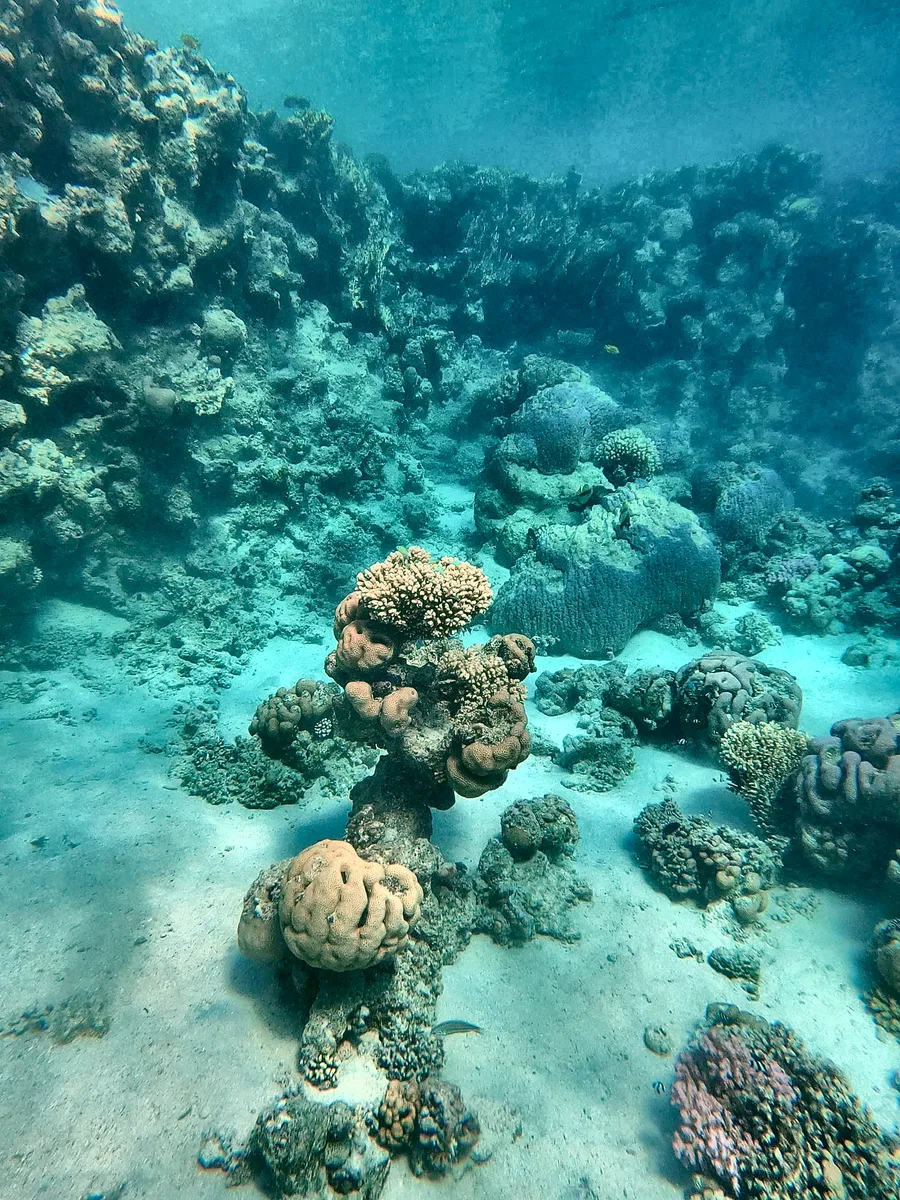
At Ras Mohammed, the moray eel stayed in its rock crevice. It lay there calmly and breathed in a relaxed way. On the Ras Bob house reef off Sharm El Sheikh, by contrast, a white moray eel was out and about, moving through the reef. The one at Ras Mohammed is typical. Most moray eels leave their hiding place completely only at night, if at all, to hunt.
Where do moray eels live on the reef?
Our son found the moray eel on Rasdhoo. On an August morning in 2026, the three of us had swum out from Bikini Beach to the edge. The water was very clear that morning, an estimated 25 meters of visibility and an estimated 29 degrees. And there it lay, half hidden under a rock. Its head stuck out in front, behind it a piece of the long body. It didn’t move and just looked at us. When we came back twenty minutes later, the spot was empty.
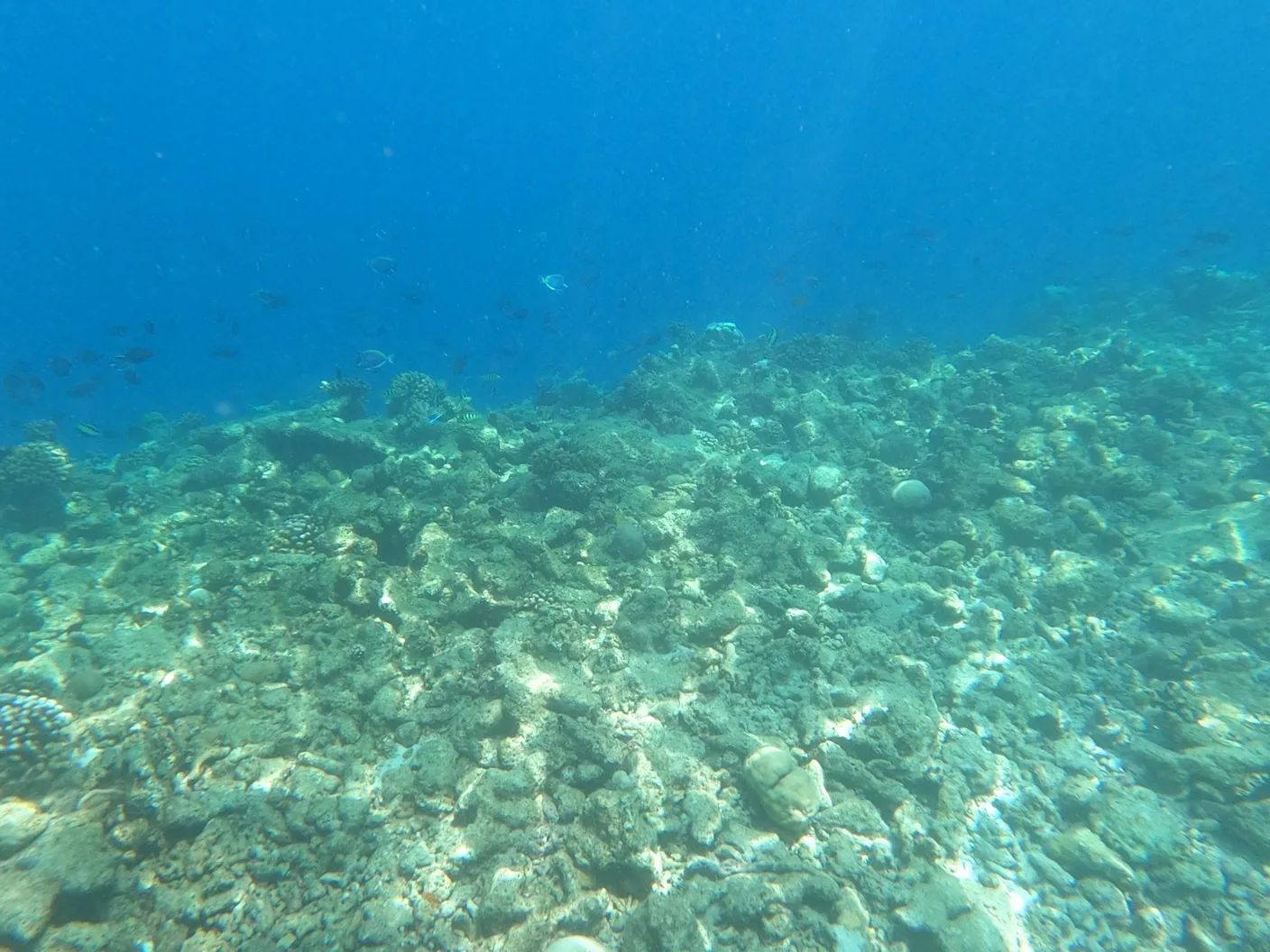
On this house reef, moray eels could be seen again and again in August. You don’t need a boat for that. From the beach to the edge it is about fifty meters of reef flat, and at Ras Bob in Egypt it is similar. Moray eels lie where it gets dark: under rocks, in crevices and overhangs. If you drift slowly over the edge and look down, you can see into these corners.
Do moray eels bite humans?
A moray eel bites when it feels threatened. Food is the biggest risk. Anyone who feeds them holds a hand that smells of fish in front of an animal that sees poorly and smells very well. The owner of a dive center in Florida was bitten on the wrist this way during a feeding and afterward blamed himself.
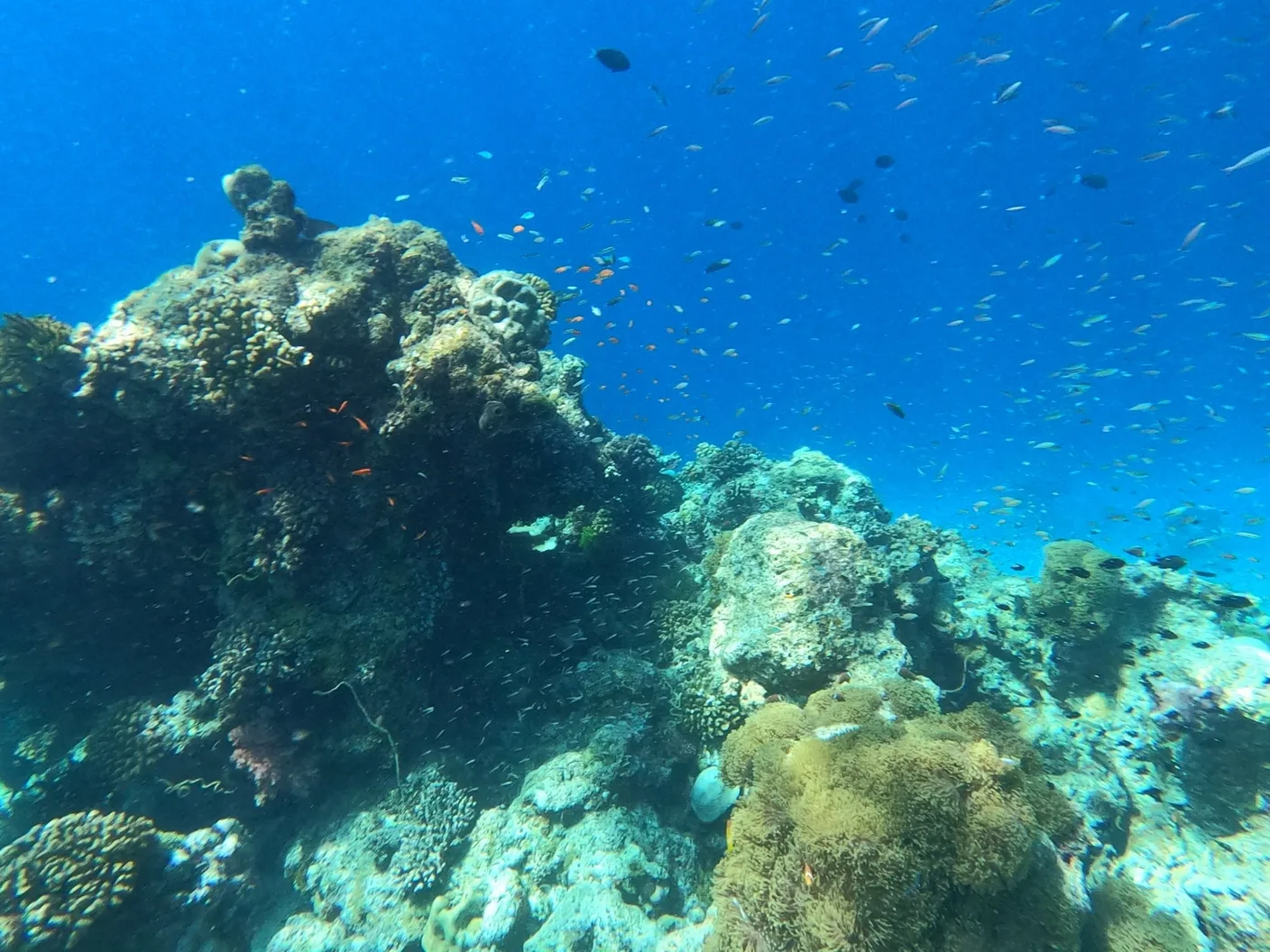
I don’t recommend tours where animals are fed. Food from human hands is not part of life on the reef.
A moray eel can be lying in a crevice where you can’t see it from above. Snorkelers drift over it anyway, and if you keep your hands to yourself, you won’t get too close to it.
I didn’t feel unsafe on a single day in Egypt, neither when diving nor when snorkeling.
What to do if a moray eel bites you
A moray eel’s bite can go deep. The biggest danger is the bacteria in the mouth.
- Stop the bleeding with firm, direct pressure.
- Rinse the wound with clean water.
- See a doctor, even for a small wound.
- Only take medication if a doctor prescribes it.
Moray eel bite wounds can heal poorly. Doctors in Chicago treated three hand bites with thorough wound care and antibiotics, and none of them became infected.
My conclusion
For me, moray eels are among the special animals on the reef, like eagle rays and the Napoleon wrasse. If you spot one with its mouth open in its crevice, take your time and watch it.
I will tell the story of the Napoleon at Ras Mohammed in an article of its own.
Frequently asked questions
Are moray eels poisonous? With a bite, toxins from the mouth can get into the wound. The greater danger, though, is the bacteria. That is why every bite should be seen by a doctor.
How big do moray eels get? Depending on the species, between 17 centimeters and four meters. Of the moray eel on Rasdhoo we only saw part, not its full length.
Are moray eels dangerous in Egypt or in the Maldives? The same applies there as on any reef. The moray eels we saw in Egypt and in the Maldives were lying in their hiding places or moving through the reef.
Are Mediterranean moray eels dangerous? The Mediterranean moray lives throughout the Mediterranean on rocky coasts with many crevices and caves. It is considered very calm and usually grows 80 centimeters to a good meter long. The same applies to it as on the coral reef.
Where the information comes from: Breathing and threatening, seeing and smelling, hunting at night, cleaner shrimp and size from the Wikipedia articles Moray eels and Mediterranean moray; that moray eels are not aggressive and bite when they feel threatened, from the conservation authority of Western Australia; toxins in the mouth, prevention and first aid from the diver network DAN in South Africa (2021); the bite during feeding from the DAN magazine (November 2024); the treatment of the bites from a medical case study from Chicago (1992); the second jaw from a study by the University of California, Davis (2007), shown with videos and X-rays; the joint hunt with groupers from a study by the University of Neuchâtel (2006). Accessed on September 25, 2026. We experienced what is described here in Egypt in October 2025 and in the Maldives in August 2026.
Further reading
- Diving without certification at Ras Mohammed: the dive without certification and the Napoleon at the reef wall
- Snorkeling in Sharm El Sheikh: how to get into the water at Ras Bob and Ras Umm Sid
- Red Sea reefs for beginners: which reefs there you can reach from the beach