Tips
Maldives local islands: which island is right for snorkeling?
Translated from the German original.
On our first day in the water on Dhigurah, I saw almost nothing. The wind was strong, the waves high, and white sand drifted in the water until the colors could hardly be made out. Five meters, no more. So I got out again and played in the waves with my son. We both enjoyed that. It just wasn’t a day for snorkeling.
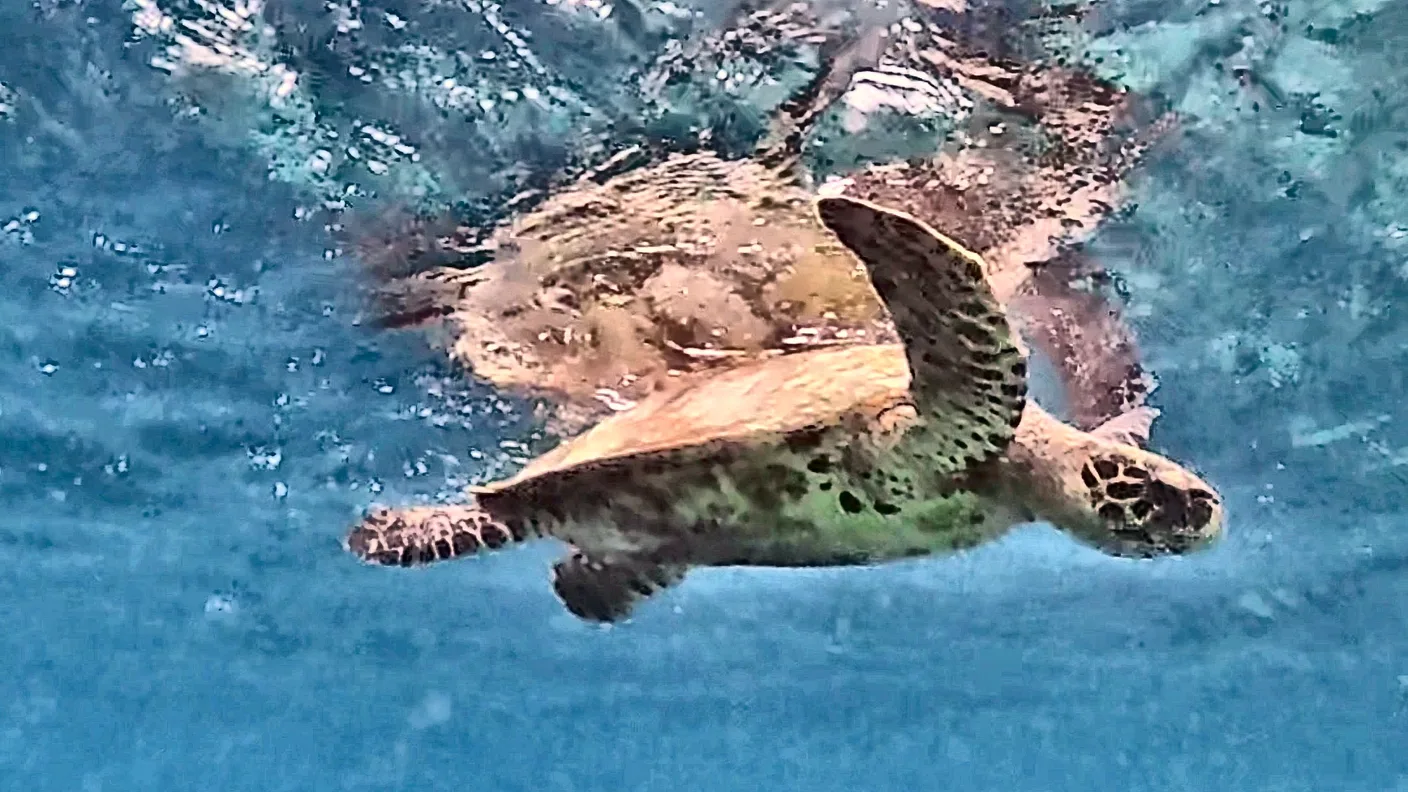
A few days later, first day on Kamadhoo: In front of the beach, a turtle was swimming over the reef.
The same trip, the same family, a different island.
We have seen five local islands in the Maldives, on two trips: Fulidhoo and Rasdhoo in April 2025, then Dhigurah, Kamadhoo, Maalhos and Rasdhoo once more in August 2026. Underwater they were very different.
First, the fork where everything is decided: whether in the morning you want to head to the reef in your swimsuit or onto the boat.
Kamadhoo and Rasdhoo have their reef right in front of the beach. Maalhos has it too, but the special part lies farther out there. On Dhigurah and Fulidhoo you can’t reach a good reef from the Bikini Beach. In return, Dhigurah has the whale shark and Fulidhoo the evening at the jetty.
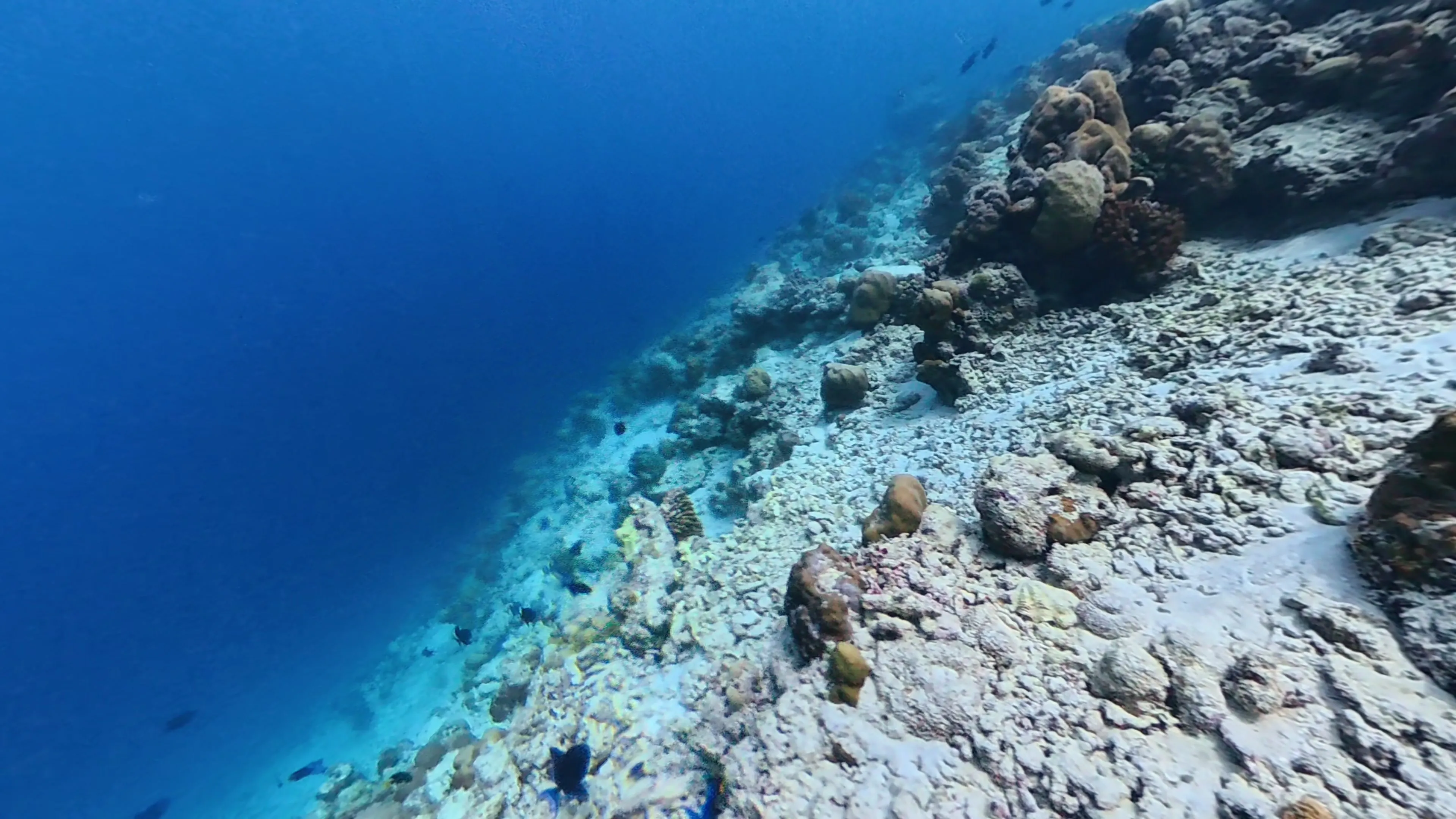
Kamadhoo snorkeling: thirty meters, and you’re at the reef
You swim over sand and the first corals, and after around thirty meters the reef begins. No boat, no booking, no guide. The water was twenty-eight degrees Celsius.
The monsoon rain of the morning had passed through; it was the second afternoon on the island. We were standing on the beach and saw dolphins out at the reef edge. I snorkeled in their direction, the sea slightly choppy. I also saw a big turtle that afternoon. Farther out a reef shark appeared, busy with a few groups of fish. The day before it had been an eagle ray and blacktip reef sharks.
So much for the water. On land, Kamadhoo is orderly and tidy: well-kept beach, good food, good hotels, and for that the island is rather expensive. There is a lot of construction, up to eight stories high.
There is one catch. Close to the beach, the first corals already lie in the sand. You really should wear water shoes here.
Contents
- Kamadhoo snorkeling: thirty meters, and you’re at the reef
- Rasdhoo snorkeling: the same reef in two seasons
- Maalhos in Baa Atoll: the island isn’t the point, the boat is
- Dhigurah snorkeling: the whale shark and the sandbank
- Fulidhoo snorkeling: the evening belongs to the rays
- Maldives water visibility: why is the same reef sometimes clear, sometimes murky?
- Which Maldives local island works with a child?
- My conclusion
- Maldives local islands compared: how do they differ in the water?
- At a glance
- Frequently asked questions
- Further reading
Rasdhoo snorkeling: the same reef in two seasons
We saw Rasdhoo twice, in April and in August.
April 2025, dry season. For a manta I had to go out by boat. August 2026, in the middle of the rainy season: Every morning a reef manta passed by the house reef.
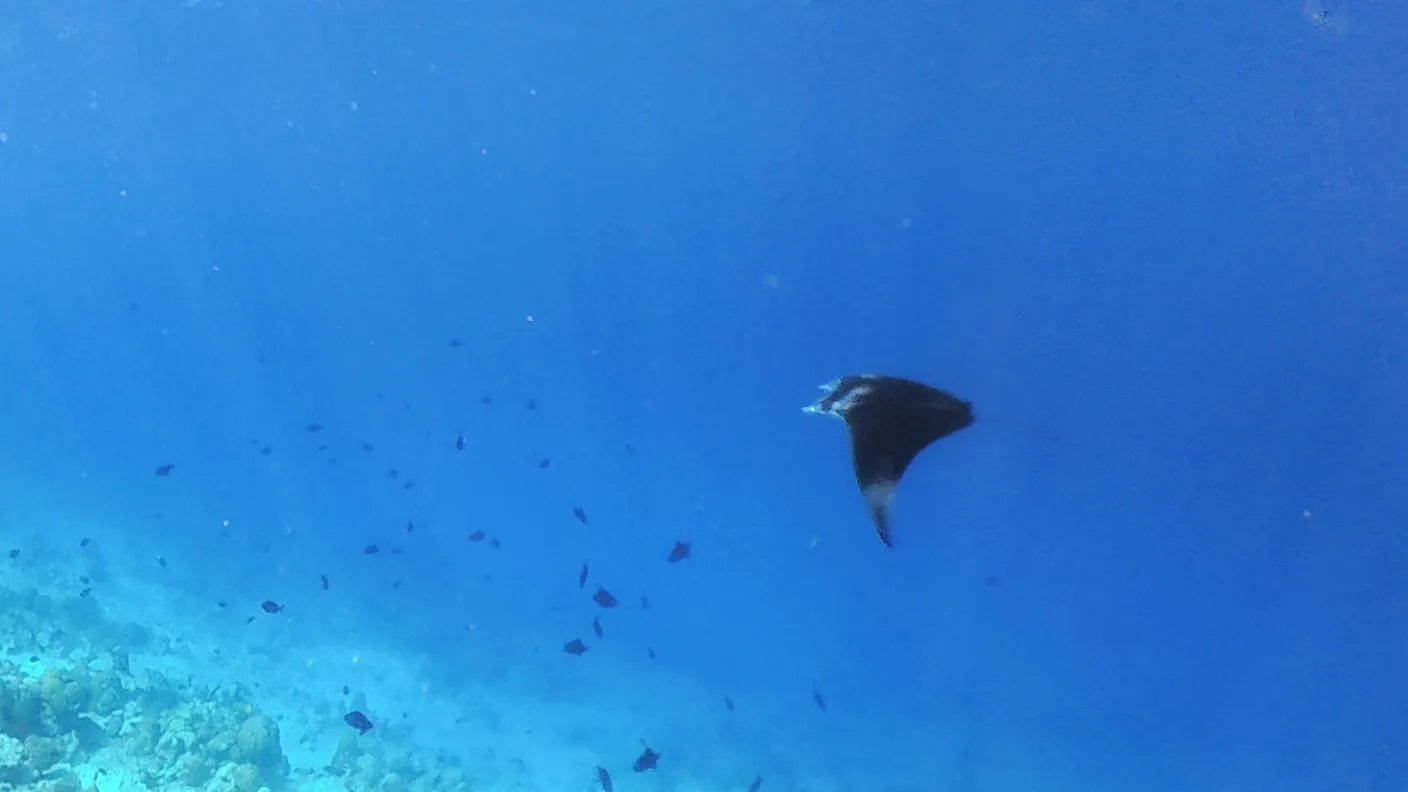
To reach the edge, you swim about fifty meters over shallow reef. At low tide there is only half a meter of water above the corals in places. Beyond it, the bottom drops into the deep blue.
At this edge in August there were morays, once an octopus and all kinds of different sharks on the move. I often saw blacktip reef sharks already on the shallow stretch before it, sometimes very close. They left us alone. In April, too, I came across a shark here, on the day we arrived, at a different section of the same reef.
In the morning I could see around twenty-five meters. From midday the rising tide pushed colder water in, I felt it on my body, and everything blurred to about fifteen meters.
Maalhos in Baa Atoll: the island isn’t the point, the boat is
Maalhos, too, has its reef very close to the beach, and it is easy to reach. Between the shallow water and the reef, however, lie many sandy transitions, and the tides stir up the sand. Beyond the edge, where there is no more sand, it was clear. Red lionfish, lots of color, at the edge a school of yellow snappers.
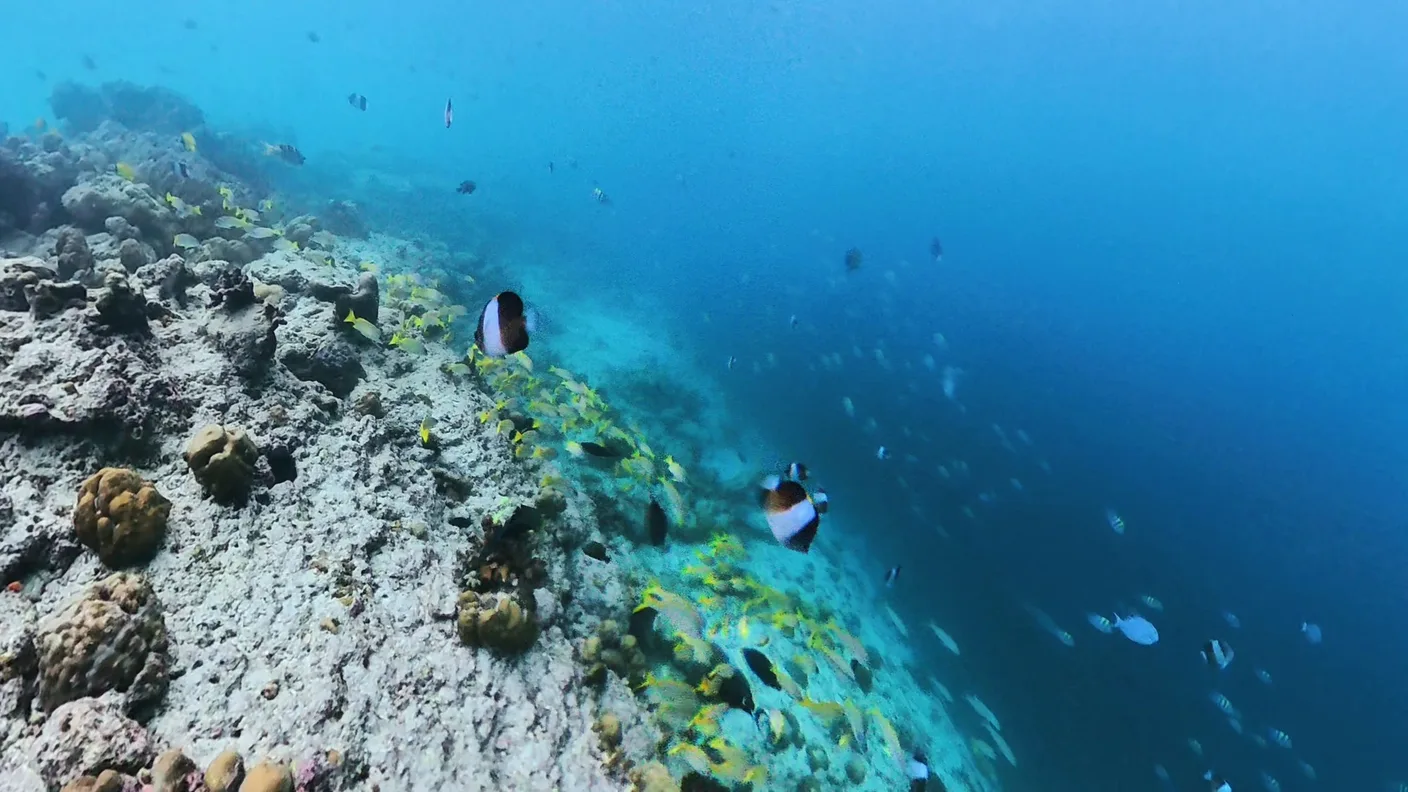
The special part lies farther out. On three of five days we went out, and the excursions here partly cost half of what we would have paid on the other islands.
On the first tour, the boat stopped between two reefs in the middle of the open sea. Mantas had been spotted at a cleaning station, we were told. Into the water we went, and they were actually there. Afterwards, several turtles at the reef.
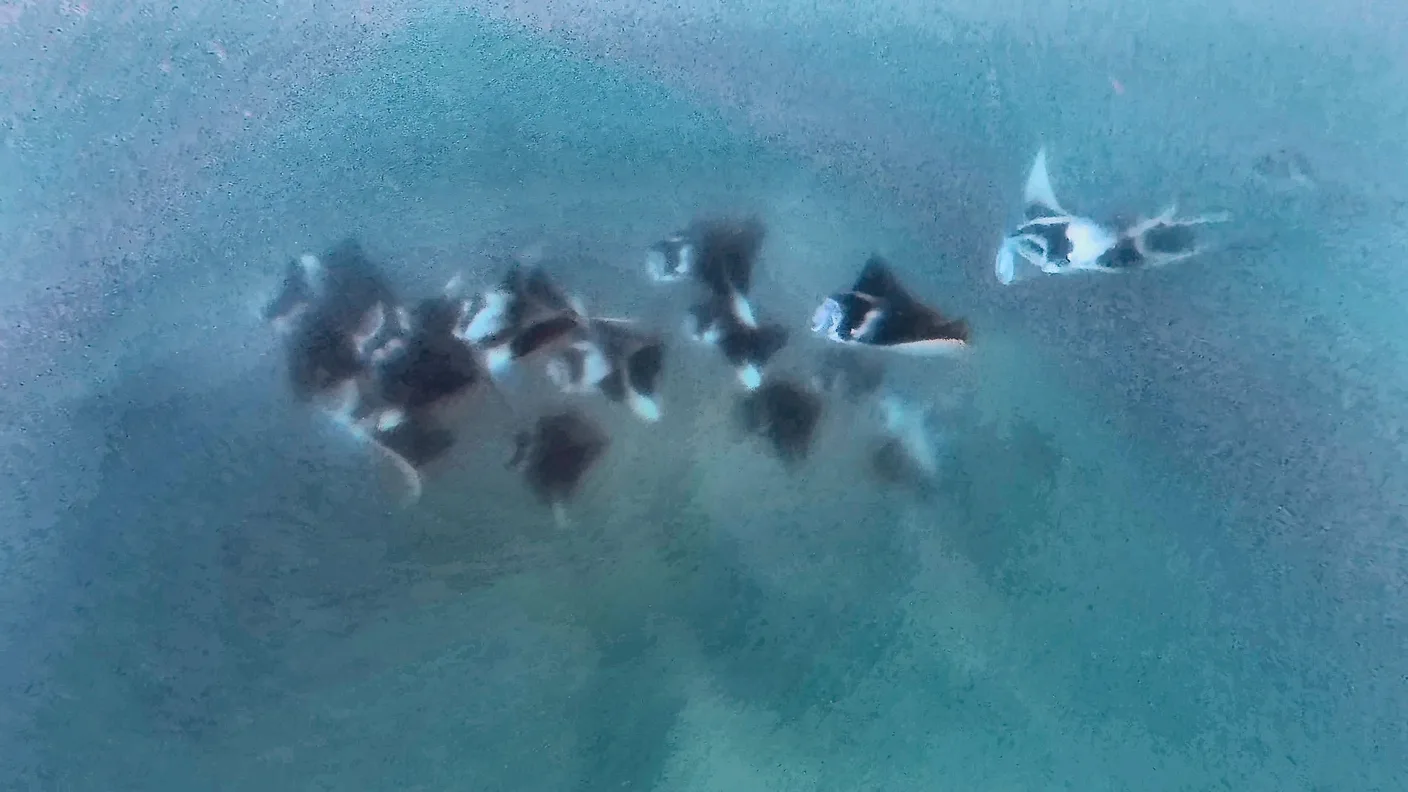
The following afternoon we went in the rain to Hanifaru Bay, around twenty minutes away by boat. At least fifty mantas pass beneath us there in formation flight. The water is full of plankton, and that’s exactly why the animals are there. The visibility was one of the worst of the whole trip. Even so, some come within barely a meter. Rangers keep watch, and how many snorkelers may go in at the same time is limited.
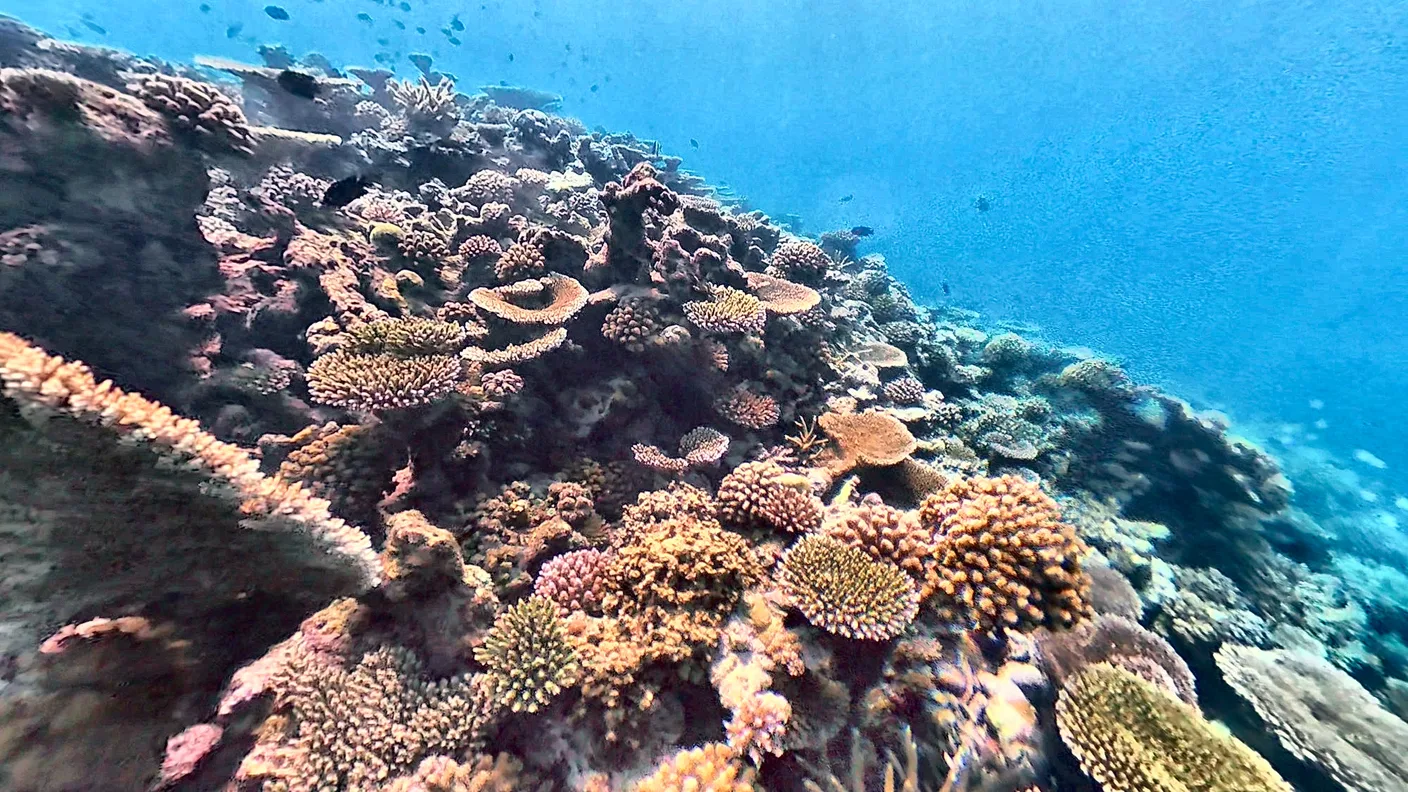
Two days later we went to Faana Faru, which our guide called Coral Garden. The name fits. He used to dive there all the time, he told us; it had been something like his office. I’d like one like that too.
On land, Maalhos is the counterpart to Kamadhoo, even though only a short ferry ride lies between them: more original, the old houses lived in, and you quickly get talking with people. Once we were spontaneously invited to a wedding on the beach.
Dhigurah snorkeling: the whale shark and the sandbank
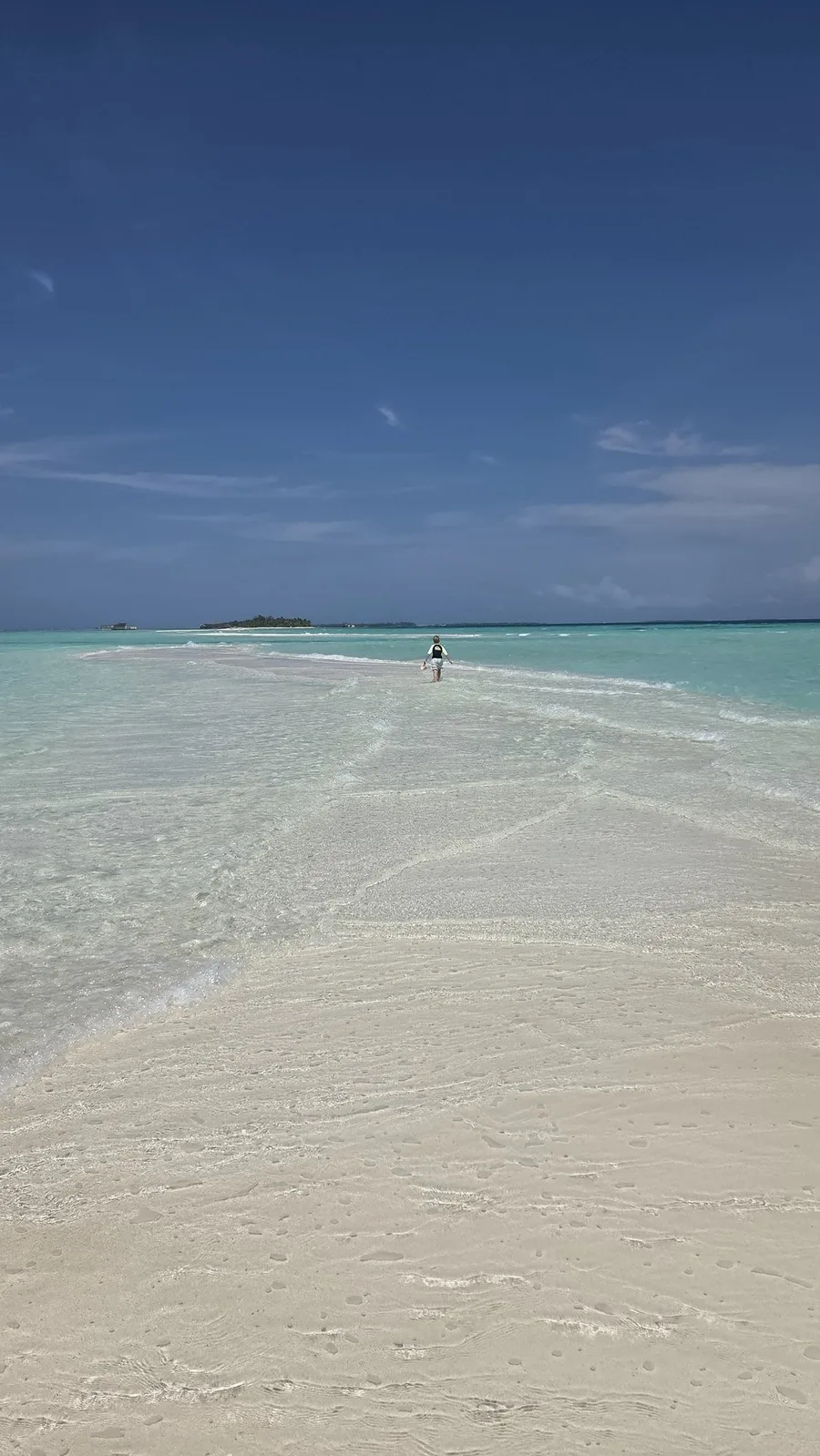
I’ll keep it short. For snorkeling from the beach, Dhigurah was for me a two and a half out of five. On the Bikini Beach side there are only small reef blocks, at the sandbank seagrass grows, and in between lay the first sea urchins. For divers the island is surely fantastic. I can only describe what I saw from above.
Above the water, on the other hand: a very long sandbank, turquoise sea, shade under palm trees. Loungers and swings are there for everyone.
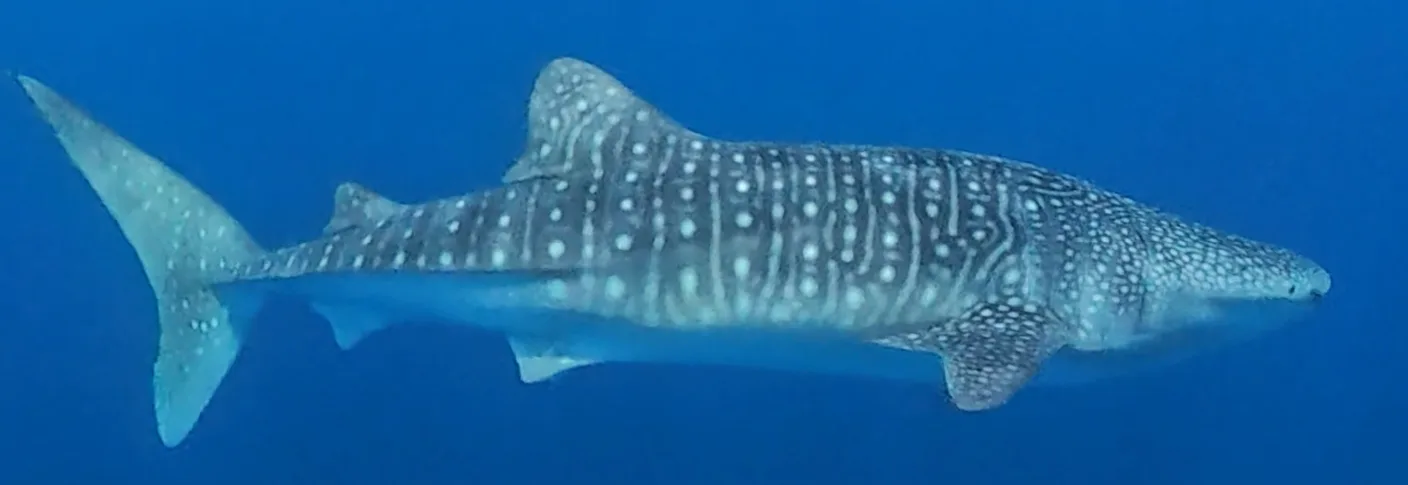
And then the whale shark. I lower myself into the water, look down, and a young whale shark comes straight toward me and glides beneath me. About five meters long, so still a young animal.
It was crowded, though. There was a crush of a kind we didn’t have in Hanifaru Bay. Afterwards we went to a reef where only our boat was, drifted along it with the current and saw two small reef sharks and a turtle. That felt like relaxation after a stressful day.
To Turtle Reef you also go by boat. We didn’t see a single turtle there. At high tide the reef edge lies so deep that you would first have to dive down quite a bit.
Fulidhoo snorkeling: the evening belongs to the rays
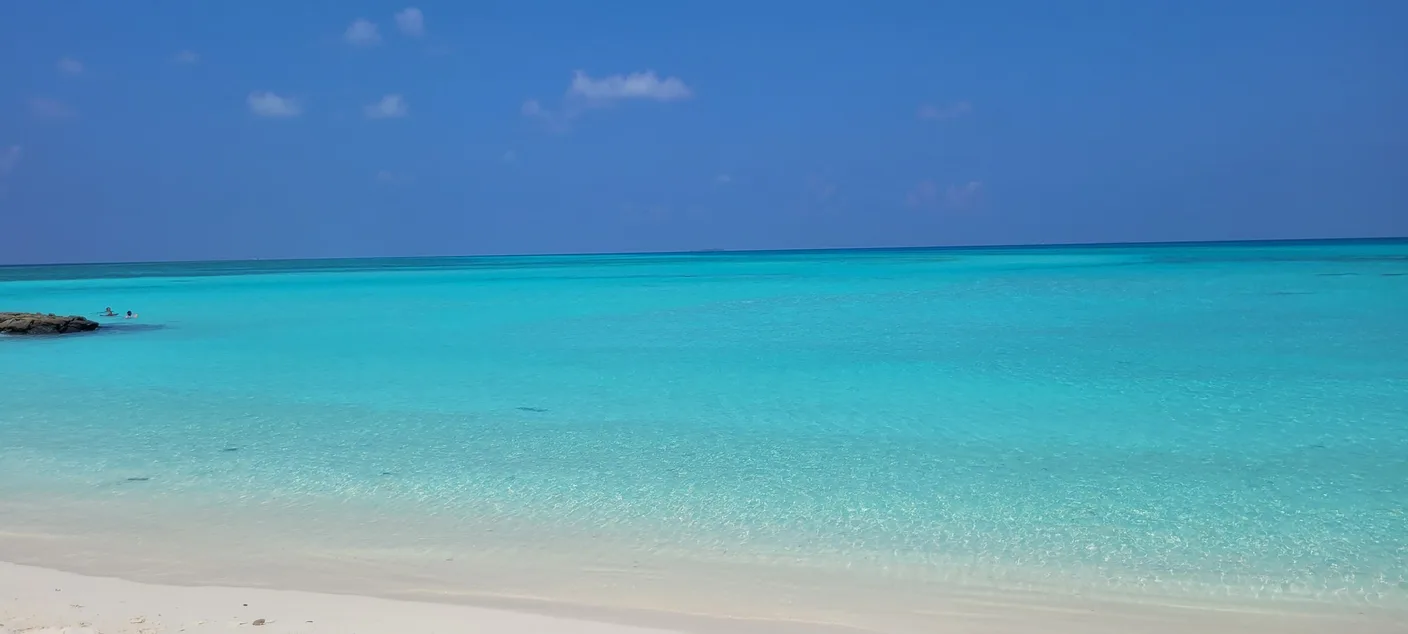
Fulidhoo was our first stop in the Maldives in April 2025, and there everything was the opposite of Dhigurah. The water was so clear that I could see around thirty meters.
Only: I didn’t find a reef. Not even after a hundred meters. Bright sand, now and then a larger stone, and above it gray, well-camouflaged fish. At least large rays passed over the bottom.
What makes this island comes after dinner. Almost every evening we went to the jetty, and nurse sharks and stingrays came into the shallow water on their own. No boat, no food.
Once a ray glided over my feet. Its skin felt rougher than I had expected.
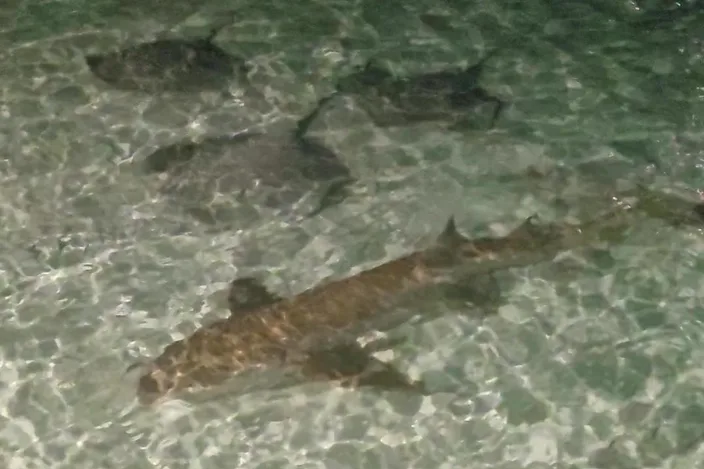
On one boat tour, nurse sharks were fed at one stop. I don’t recommend tours like that. For the animals it is neither a natural environment nor a natural situation.
Maldives water visibility: why is the same reef sometimes clear, sometimes murky?
At the Bikini Beach of Kamadhoo I could barely see ten meters at the surface. It wasn’t the sand.
The tide was just coming in. Cooler water was pushing in beneath the warm water, and where the two layers mixed, everything shimmered. I dive down. A few meters deeper the layer is behind me, the water turns clear, and suddenly I can see twice as far as up top.
The same pattern followed us the whole trip, only with different causes. Rasdhoo was clear in the morning and blurry from midday, because the tide brought colder water. Off Dhigurah, wind and waves stirred up the sand. Off Maalhos it was the tides over sandy ground.
So anyone who sees little for a day hasn’t necessarily picked the wrong island. On Rasdhoo it was the hour, on Dhigurah the weather.
Which Maldives local island works with a child?
Kamadhoo is quite nice for families, and you don’t need a boat there for the reef. For splashing around, though, the Bikini Beach is no good; close to the beach the first corals already lie in the sand. Instead there is a large water playground on the local beach side. It was the other way around on Fulidhoo and Dhigurah: no good reef, but shallow water in which we played a lot.
Our son did a Bubblemaker on Maalhos at the age of eight, the taster course in diving. Underwater he was calm and relaxed, and he got a lot of praise from the dive instructor. At Madivaru Corner off Rasdhoo he went snorkeling with my wife while I was down below.
If you ask him what was best on Maalhos, he says: riding the boat and diving. Not the turtles. Not the mantas.
One last piece of advice: Pack mosquito repellent, for everyone. Our son had lots of bites, scratched them open, and at some point he didn’t want to go into the water anymore because it stung.
At the reef itself, the same applies everywhere: touch nothing, keep your distance. Much of it there grows for decades and is broken in a second. And you yourself don’t get off unscathed either, because fire corals sting and lionfish sting.
My conclusion
You have to settle on the island in advance. Not the excursions: We booked all of those at short notice in August depending on the weather, not a single one in advance.
- Reef in front of the beach, without a boat: Kamadhoo.
- House reef and good tours at the same time: Rasdhoo.
- Lots of excursions, some at half price: Maalhos.
- Whale shark: Dhigurah.
- Arriving, settling down, the rays at the jetty in the evening: Fulidhoo.
About the sharks I came across on these islands, I will tell in an article of its own.
Maldives local islands compared: how do they differ in the water?
I estimated the visibility in the water. My ratings from one to five are the same as on the island pages, as of August 2026, for Fulidhoo April 2025.
| Rasdhoo | Kamadhoo | Maalhos | Dhigurah | Fulidhoo | |
|---|---|---|---|---|---|
| Atoll | North Ari | Baa | Baa | South Ari | Vaavu |
| When we were there | April 2025, August 2026 | August 2026 | August 2026 | August 2026 | April 2025 |
| Getting in | Bikini Beach | Bikini Beach | beach | Bikini Beach side | Bikini Beach |
| To the reef | around 50 m over shallow reef | around 30 m | very close, many sandy transitions | no good reef access, only small reef blocks | no reef found after around 100 m |
| Visibility | mornings around 25 m, from midday around 15 m | at the top around 10 m, from 5 m depth around 20 m | around 15 m, murky over sand | 5 m, hazy (first day) | around 30 m |
| Current | light | light | rather weak | light | none |
| Seen at the house reef | reef manta, sharks, morays, octopus | turtles, eagle rays, reef sharks | red lionfish, lots of colorful fish | hardly anything, stirred-up sand | large rays, otherwise sand |
| The island above water | 3 | 3 | 5 | 4.5 | 5 |
| Reef access from the beach | 4 | 5 | 4 | 2.5 | 2 |
| Underwater life at the house reef | 4.5 | 4 | 3 | 2.5 | 2 |
| Excursions in the atoll | 4.5 | none booked | 5 | 4.5 | 3.5 |
For Kamadhoo, the rating for excursions is missing. We didn’t book any there. That doesn’t mean there aren’t any.
At a glance
| The five islands | Fulidhoo and Rasdhoo in April 2025, Dhigurah, Kamadhoo, Maalhos and Rasdhoo once more in August 2026 |
| House reef from the beach | Kamadhoo: reef after around 30 meters · Rasdhoo: around 50 meters over shallow reef to the edge |
| Excursions | On Maalhos sometimes only half as expensive as on the other islands (August 2026). Whale shark tour from Dhigurah: 90 US dollars per adult, 45 US dollars for children under 12 (August 2026) |
| Getting there | By speedboat from Malé, to Dhigurah a good two hours — the operators state 2:15 to 2:30 hours, in calm seas it’s faster. In the Baa Atoll, RTL, the ferry company for the short routes within the atoll, runs between Kamadhoo and Maalhos |
| Accommodation | We stayed in the lower to mid price range, on Rasdhoo at the Summer Vibes Beach Front, on Maalhos at the Madi Beach Guesthouse |
| Travel time | experienced ourselves: mid-April 2025 (dry season) and August 2026 (rainy season) |
| For whom | Family and reef without a boat: Kamadhoo · house reef and tours: Rasdhoo · excursions: Maalhos · whale shark: Dhigurah · peace and quiet for arriving and rays at the jetty: Fulidhoo |
Frequently asked questions
What is a local island? An island where locals live and guests stay in guesthouses and hotels instead of in a resort. The Maldives is a Muslim country. Every local island I know therefore has its own stretch of beach, the Bikini Beach. There tourists, especially women, can go into the water in a bikini and lie on the beach.
Do you need a boat for snorkeling on a local island? Not on Kamadhoo and Rasdhoo; there the house reef lies in front of the Bikini Beach. On Dhigurah and Fulidhoo you can’t reach a good reef from the Bikini Beach; I didn’t try the other side of each island. Maalhos has its reef in front of the beach, but the special part lies farther out.
How do you get back and forth between the islands? From Malé by speedboat. In the Baa Atoll, RTL runs the short routes between the islands; that’s how we got from Kamadhoo to Maalhos. From Maalhos we took the ferry to Malé and from there the speedboat to Rasdhoo. The crossing from Dhigurah to Kamadhoo was very unpleasant in high waves.
Can you snorkel on a local island in the rainy season? Yes, but not on every day. On our day of arrival on Dhigurah the waves were too high for our son, and on Kamadhoo we stayed on land one morning because of rain and wind. More about the seasons is in the Maldives destination guide.
Further reading
- Kamadhoo, Rasdhoo, Maalhos, Dhigurah and Fulidhoo: the island pages with everything we experienced on each island
- Snorkeling with mantas on Rasdhoo: the boat trip to the manta in April 2025
- The shark at the house reef of Rasdhoo: the shark on the day we arrived in April 2025
- The Maldives in April and in August: the same reef of Rasdhoo in the dry season and in the rainy season
- Fulidhoo in the evening: the rays and nurse sharks at the jetty
- Fulidhoo: snorkeling from the beach: what the sand in front of the Bikini Beach looks like
- Report on the nurse sharks: the stop on the tour from Fulidhoo
- Maldives destination guide: the seasons and all the places we were