Travel report
Nurse sharks in the Maldives: dangerous when snorkeling? My experience
Translated from the German original.
Something presses against my calf, brief and firm. I turn around, and there is a broad head, light brown in the sunlight. A nurse shark. It comes from behind; I didn’t see it coming. Its skin is smooth and rough at the same time. And I think just one single sentence: This feels wrong.
All around me is commotion. Sharks from every side, none of them shy. Right in the middle, directly between the sharks, rays glide along their paths, and small fish hang like confetti in the water. It is beautiful. And still I want out of here.
Are nurse sharks dangerous? Not on their own. They are considered calm bottom dwellers that mostly sleep in crevices and caves during the day. Things get restless where boats feed: then the animals crowd at the surface, and anything that flashes in the water can look like food to them. My verdict after two trips in the Maldives is clear: I don’t recommend trips that involve feeding. I saw nurse sharks at their most beautiful in the evening at the jetty on Fulidhoo, with no boat and no bucket.
At a glance
| Where | Boat trips from Fulidhoo (Vaavu Atoll) and Rasdhoo (North Ari Atoll), Maldives |
| When we were there | April 2025 |
| Conditions | 29 °C water, over 20 meters visibility, around 5 meters depth (own logbook, April 2025) |
| Fed? | at both stops we experienced: yes |
| Getting in | from the boat, right in the middle of the group |
| Without a boat | in the evening at the jetty on Fulidhoo, no feeding and no entry fee |
| My advice | skip stops with feeding or watch from the boat |
Contents
- How does a nurse shark tour in the Maldives work?
- What is it like to swim with nurse sharks?
- Why does feeding make nurse sharks restless?
- Would I swim with nurse sharks again?
- Where can you see nurse sharks without feeding?
- My conclusion
- Frequently asked questions
How does a nurse shark tour in the Maldives work?
We had booked two boat trips in the Maldives. The first left from the local island of Fulidhoo, the second a week later from Rasdhoo. Both made several stops, and both included the nurse sharks. Before the first trip we were really keyed up. Sharks. Within arm’s reach.
What awaited us first of all was other boats. We arrived at the spot, and several were already there, all with the same plan as us. Tourists were floating everywhere in the water. You could feel the excitement, down in the water and up on deck. It was that kind of tingle that slides back and forth between anticipation and nerves.
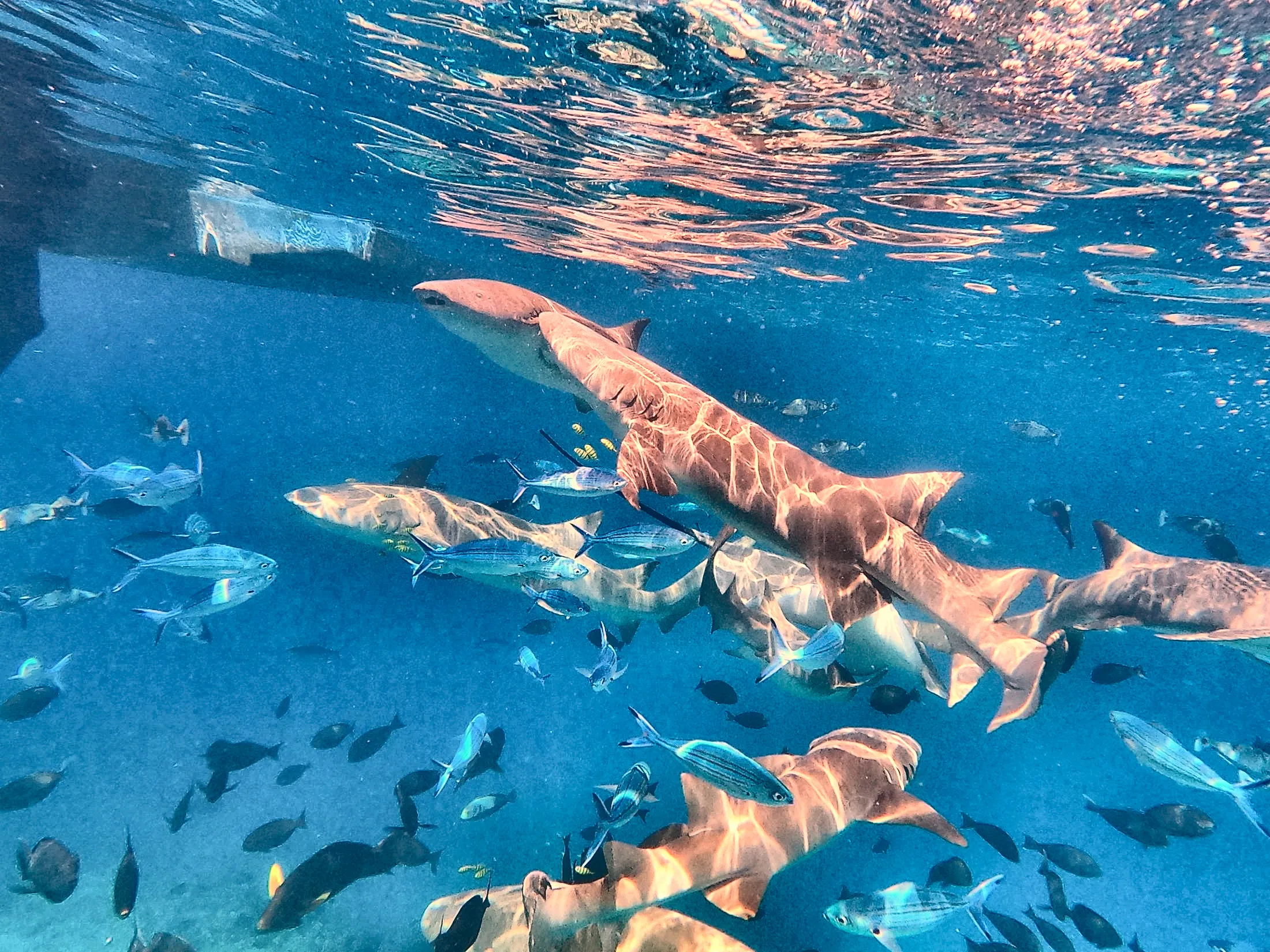
Then we stopped, and there they were. What animals. And so big. They moved along just below the surface, completely calm in their movement. I could have watched forever. “You can go in,” we were told. Phew. All right. Here goes.
Nurse sharks are basically harmless to us humans. It’s just that the boat crews had been feeding here. And that is exactly what I don’t like at all.
What is it like to swim with nurse sharks?
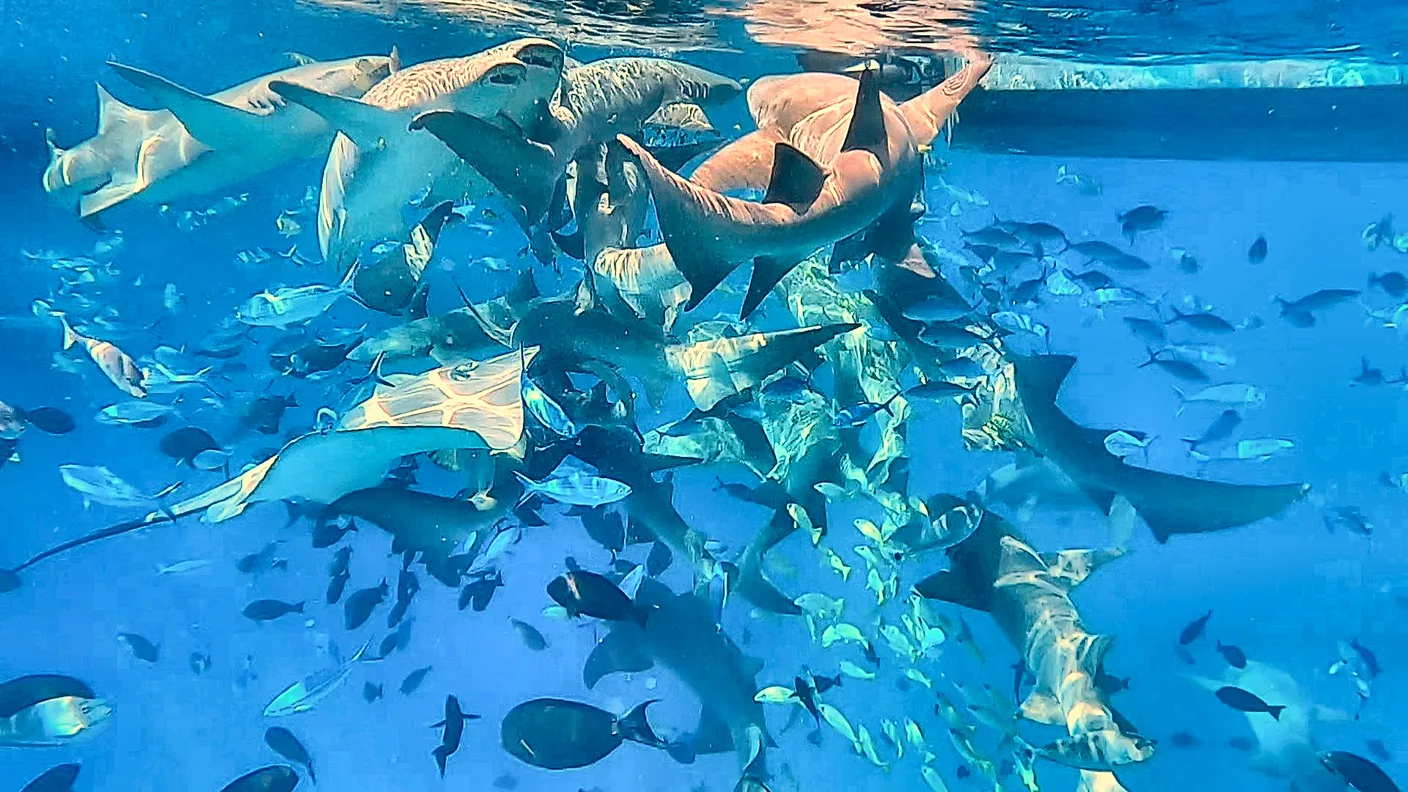
So here I am, lying right in the middle of it. Sharks scrape along my body. A nudge here, a shove there, all of them looking for food; it has nothing to do with me, and yet it keeps brushing against me. Usually my breathing turns calm as soon as I’m below the surface. Not this time. It’s too much, and above all too unnatural. Too crowded. Too agitated.
The nudge on my calf wasn’t even the worst part. It didn’t feel good because I hadn’t seen the shark beforehand. It wasn’t the shark itself; it was the situation.
And then even getting out becomes a task. A few boats have been feeding right between us and our own boat. So I have to go back through the densest spot, to where the most snapping is going on. Of all things, the way out leads right through the middle of what I want to leave behind.
Once I’m up, I pull myself onto the boat and watch the rest from there. From above I like it much better. The sharks under the glittering surface, the rays, all the coming and going, without my having to be in the middle of it. My wife and my son, who were both in the water with me, felt exactly the same. We didn’t even need to talk it over. This one stop was not for us.
Why does feeding make nurse sharks restless?
Feeding changes the animals’ behavior permanently. They learn that boats and people mean food, and so they come closer and closer. That has nothing to do with tameness; it has paid off for them.
And it’s not the animals’ fault. A nurse shark doesn’t snap at a person. It snaps at what it takes for food. A foot flashing in the sunlight, or a pale calf, looks from below like one of the pieces of fish that were just thrown into the water. That’s why you don’t let a bare sole or an open palm flash in front of them.
How to recognize a spot like that is something I learned that day. If several boats are already there, and the animals are hanging just below the surface instead of on the bottom, there is feeding. Nurse sharks are actually bottom dwellers. If you’re unsure, ask before booking whether there will be feeding.
I experienced the same crowding again in August 2026, with a completely different animal: on the whale shark tour from Dhigurah, around fifty snorkelers swam after a single whale shark. There was no feeding there, but the pattern was the same.
Would I swim with nurse sharks again?
Not at a feeding stop. A week later, on the trip from Rasdhoo, we came to a similar stop with the same nurse sharks. This time we stayed seated in the boat right away. No long deliberation. We had seen it once, we knew how it feels, and we knew we didn’t need it a second time.
For the animals, a feeding stop is neither a natural environment nor a natural situation. That fits with what I already wrote in the article about my first shark: I want to look at nature, not interfere with it.
A wild shark making its rounds on the house reef and completely ignoring me: wonderful. A group of sharks used to being fed, snapping for fish scraps between the soles of feet: not for me. Watch, enjoy, and do it from a distance that is good for the animals and for me too.
If you go in anyway: fins on, hands close to your body. Stay calm, and it stays calmer for the animals too. What I wear for this is listed under my gear.
Where can you see nurse sharks without feeding?
While snorkeling, I never saw nurse sharks outside these trips. Where there is no feeding, you see them rather rarely. Without any mask, on the other hand, I did: Fulidhoo had long since shown me there is another way.
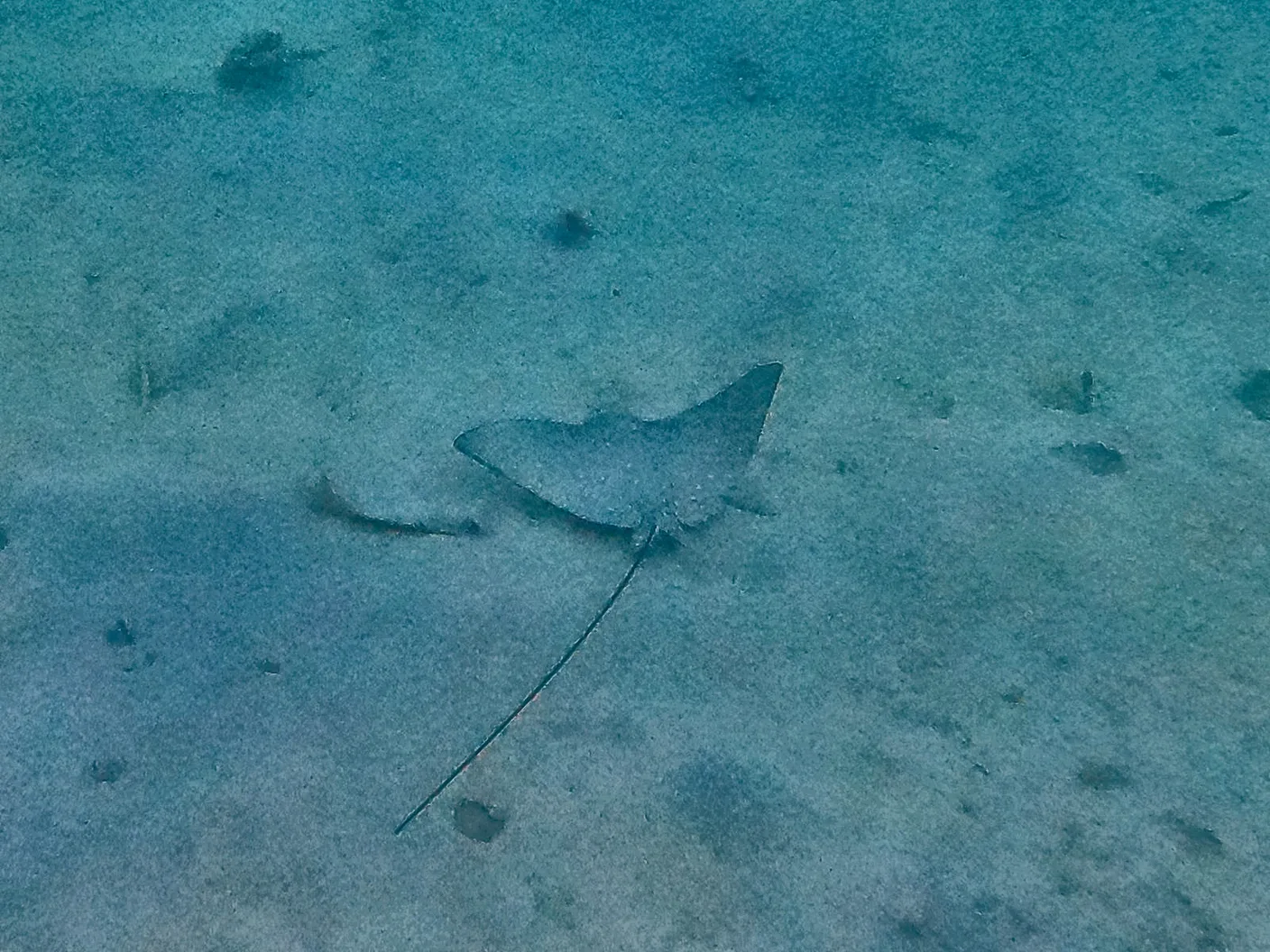
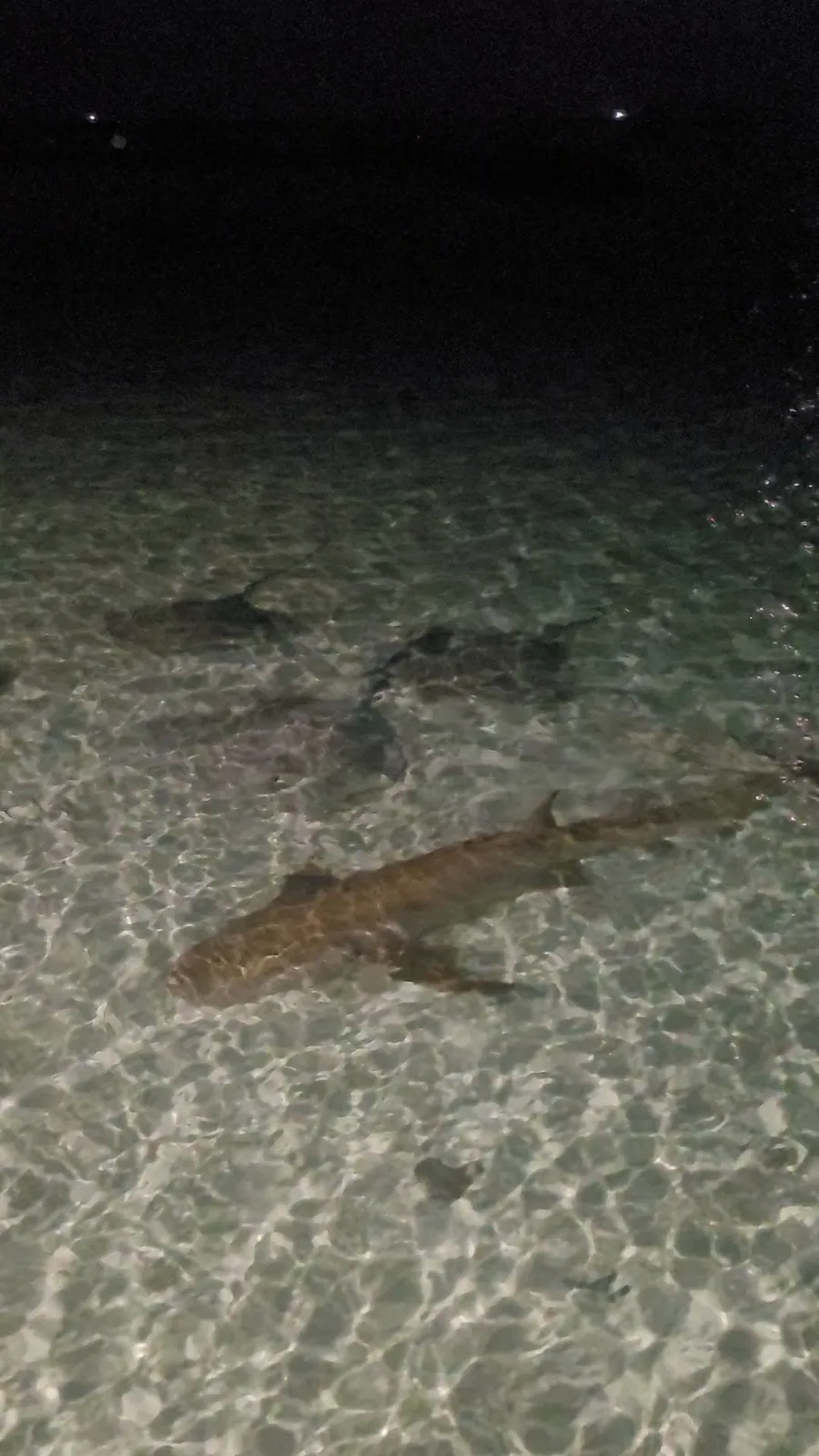
Every evening, nurse sharks and rays show up at the island’s boat landing. Fulidhoo is known for that. In the evening, seen from the beach, they moved past close to the shore. No boats, no food, no swarm. Just the animals in the shallow water, in the last light of the day. That’s how I liked them. Our son stood in the water with us, and when the rays glided over our feet, he was excited, but not scared. How those evenings went is told in Fulidhoo in the evening. You can also meet the big rays from the jetty during the day when snorkeling from the beach on Fulidhoo.
That there was feeding at the boat stop is no fluke in Vaavu Atoll. Off the island of Alimatha, in the same atoll, dozens of nurse sharks gather at night at a fixed feeding spot, and dive boats head there on purpose. So what separates the jetty on Fulidhoo from the boat stop is neither a different species nor a different place. Both are covered, with sources, on the island page for Fulidhoo.
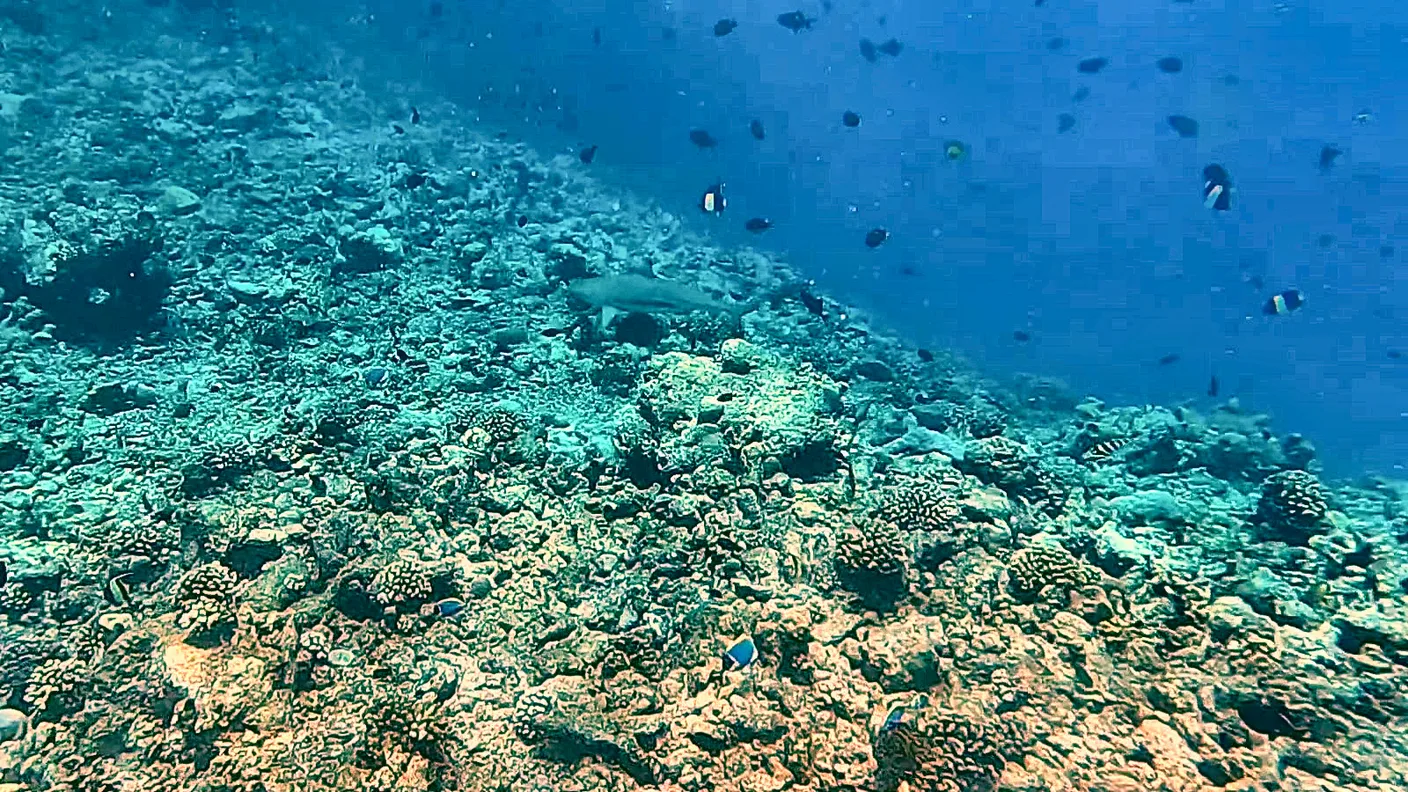
On Rasdhoo I saw what sharks look like without feeding, even though those were reef sharks. On the shallow stretch in front of the house reef, blacktip reef sharks often cruise by, sometimes within five meters. The local dive team gave us one sentence about it that says it all: don’t touch anything, don’t pick up any fish. Then they ignore you completely. That’s exactly how it was. At Turtle Reef, the same picture: the sharks move past, keep their distance and are gone again.
My conclusion
You don’t need to fear nurse sharks. The uneasy feeling at that stop came from the food and the crowding; the animal itself did nothing to me. What stayed with me from that week is not the nudge at the feeding stop, but the evening at the jetty when our son stood among the rays and wasn’t the least bit afraid.
What the whole week on Fulidhoo and Rasdhoo was like is in the travel report, and all the islands and seasons are in the Maldives destination guide. Which other sharks I came across while snorkeling in the Maldives, I will tell in an article of its own.
Frequently asked questions
Are nurse sharks dangerous to humans?
Not on their own; they are considered calm and mostly sleep in caves during the day. They get restless where boats feed. At a feeding stop, I got a nudge against my leg, nothing more.
Where can you see nurse sharks in the Maldives?
We saw them on boat trips from Fulidhoo and Rasdhoo, both times at stops with feeding. Without a boat, they come to the jetty on Fulidhoo in the evening. Off Alimatha in Vaavu Atoll, dive boats go out at night to a feeding spot.
How do I recognize a trip that involves feeding?
When several boats are already at the spot and the nurse sharks are hanging just below the surface instead of on the bottom. The easiest way is to ask before booking.
Can you visit the nurse sharks with children?
At the jetty, yes; at a feeding stop, no. Our son was six at the time. At the feeding stop he was in the water with us, and he felt the same way we did. At the jetty on Fulidhoo he stood in the shallow water in the evening, excited about the rays, not scared.