Tips
Maldives in August: weather, rain, snorkeling
- Dhigurah, Kamadhoo, Maalhos, Rasdhoo
- water 28 to 29 °C (estimated)
- rain for a few hours
- August 2026
In short It did not rain every day in August, mostly only for a few hours; snorkeling visibility depended more on the tide, wind and waves than on rain.
Translated from the German original.
While snorkeling I estimated visibility, water temperature and depth, just as I experienced them on the days I was there. On dives the dive computer measured depth and duration, and values with a named source show what is usual there, not how it was for me.
August 10 begins with monsoon rain in the morning, and I stay on land. It is windy, and I walk across the island. In the afternoon I snorkel at Bikini Beach on Kamadhoo: a large turtle, a reef shark, and visibility of ten to fifteen meters.
That is how August 10 went, and August 13 was similar: first rain, then water you could snorkel in. We were on four local islands in the South Ari, Baa and North Ari Atolls from August 4 to 21, 2026. It did not rain every day, and when it did, it was mostly only for a few hours. Visibility underwater depended more on the tide, wind and waves than on rain. This article tells the story of those 18 days; for the comparison with April and the months at a glance, see “Further reading” under “Two seasons, the same reef” and “Maldives travel time for snorkeling”.
At a glance
| Topic | Our experience |
|---|---|
| Travel dates | August 4 to 21, 2026: Dhigurah, Kamadhoo, Maalhos, Rasdhoo, and Malé at the end |
| Water | estimated 28 °C on Kamadhoo and Maalhos, 29 °C on Rasdhoo |
| Rain | not every day, often only for a few hours, heavy in the morning on a few days |
| Visibility snorkeling | from murky to about 25 m depending on the day, place and tide (estimated) |
| Accommodation | €87 to €114 a night, for three people together, via Booking |
| Hanifaru Bay | €150 for the three of us from Maalhos (list: 70 US dollars per person), our son stayed on board |
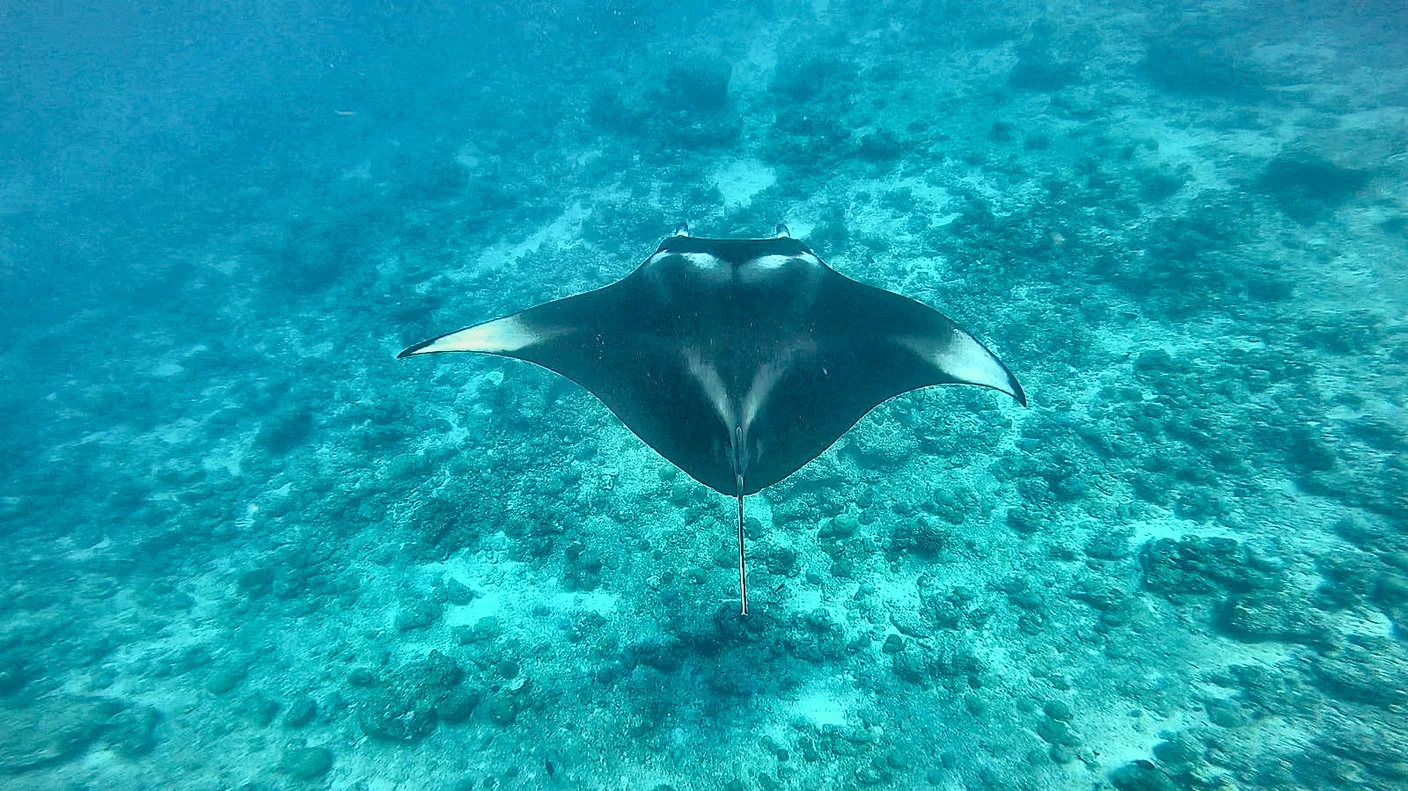
| Mantas | around 50 in Hanifaru Bay on August 14, a reef manta on two mornings at the house reef of Rasdhoo |
Contents
- At a glance
- Maldives weather in August: how wet is it really?
- Is August good for snorkeling in the Maldives? Visibility, waves and current
- Which animals can you see in the Maldives in August?
- Do ferries and speedboats run during the monsoon?
- What did accommodation, transfers and excursions cost in August?
- What should you watch out for on local islands in August?
- Who is August right for, and who less so?
- Frequently asked questions
- Where the information comes from
- Further reading
Maldives weather in August: how wet is it really?
It depended on the day. On some mornings it poured and the afternoon was dry; on other days the weather was bad from morning to night. This is how it looked for us:
| Date | Island | Weather |
|---|---|---|
| August 6 | Dhigurah | no rain during the day, the days before were bad |
| August 10 | Kamadhoo | monsoon rain in the morning, windy |
| August 11 | Kamadhoo | bad weather |
| August 12 | Maalhos | rain with dry spells |
| August 13 | Maalhos | heavy monsoon rain in the morning, nice weather afterward |
| August 14 | Maalhos | bad weather all day |
| August 15 | Maalhos | nice weather all day |
| August 19 | Rasdhoo | very sunny |
The trip to Hanifaru Bay on August 14 began in the rain, under an overcast sky. How the same reef differs between April and August is in Two seasons, the same reef, with values from both trips side by side. The figures on the monsoon come from others: according to the 1991 to 2021 averages of the Maldives Meteorological Service, as reported by edition.mv, the southwest monsoon begins in May, and in Malé, depending on the evaluation, 146 to 175 millimeters of rain fall in August.
Is August good for snorkeling in the Maldives? Visibility, waves and current
Yes, if you take the days as they come. When it rained in between, visibility was often poor, but the cause usually lay elsewhere, in sand stirred up by the tides and wind. In calm seas and sunshine it was very high. It varied a lot. This is how it looked on the four islands:
It was five meters on August 5 at the beach of Dhigurah, so foggy from the stirred-up sand, and around ten at Turtle Reef two days later. On Kamadhoo it reached about ten meters at the top and around twenty at five meters of depth. When the tide comes in, colder water slides under the warm water, the layers mix, and a few meters down it becomes clear. Visibility was poor on Maalhos on August 12. Between the shallows and the reef there are many sandy stretches. The two reefs of the boat trips, on the other hand, were very beautiful, including a coral garden. At the house reef of Rasdhoo, we got about twenty-five meters on August 18; in the afternoon it was a little foggy because of the tides.
Waves, current and access differ from island to island. On the first day, Dhigurah had waves too heavy for snorkeling, and on the beach side at Bikini Beach there is no easy way to a good reef. At high tide the reef edge at Turtle Reef is already five to eight meters deep. On Kamadhoo the reef begins after thirty meters, with hardly any current and a choppy surface, and water shoes are badly needed because near the beach there is sand with the first corals. Off Rasdhoo you first cross shallow reef to reach the edge, and on the dive on August 19 the current was strong.
At the house reef of Rasdhoo, which we know from both seasons, we judged visibility on our August mornings to be the same as in April, around twenty-five meters. Over the whole trip, though, the water was cloudier in August. What lowers visibility is mostly sand stirred up by the tides and wind, and rarely heavy rain. In the morning it was usually clearer at the reef edge than at midday: from eleven or twelve o’clock the tides and current change, and visibility drops, at the house reef of Rasdhoo on August 18 from about 25 to about 15 meters.
Which animals can you see in the Maldives in August?
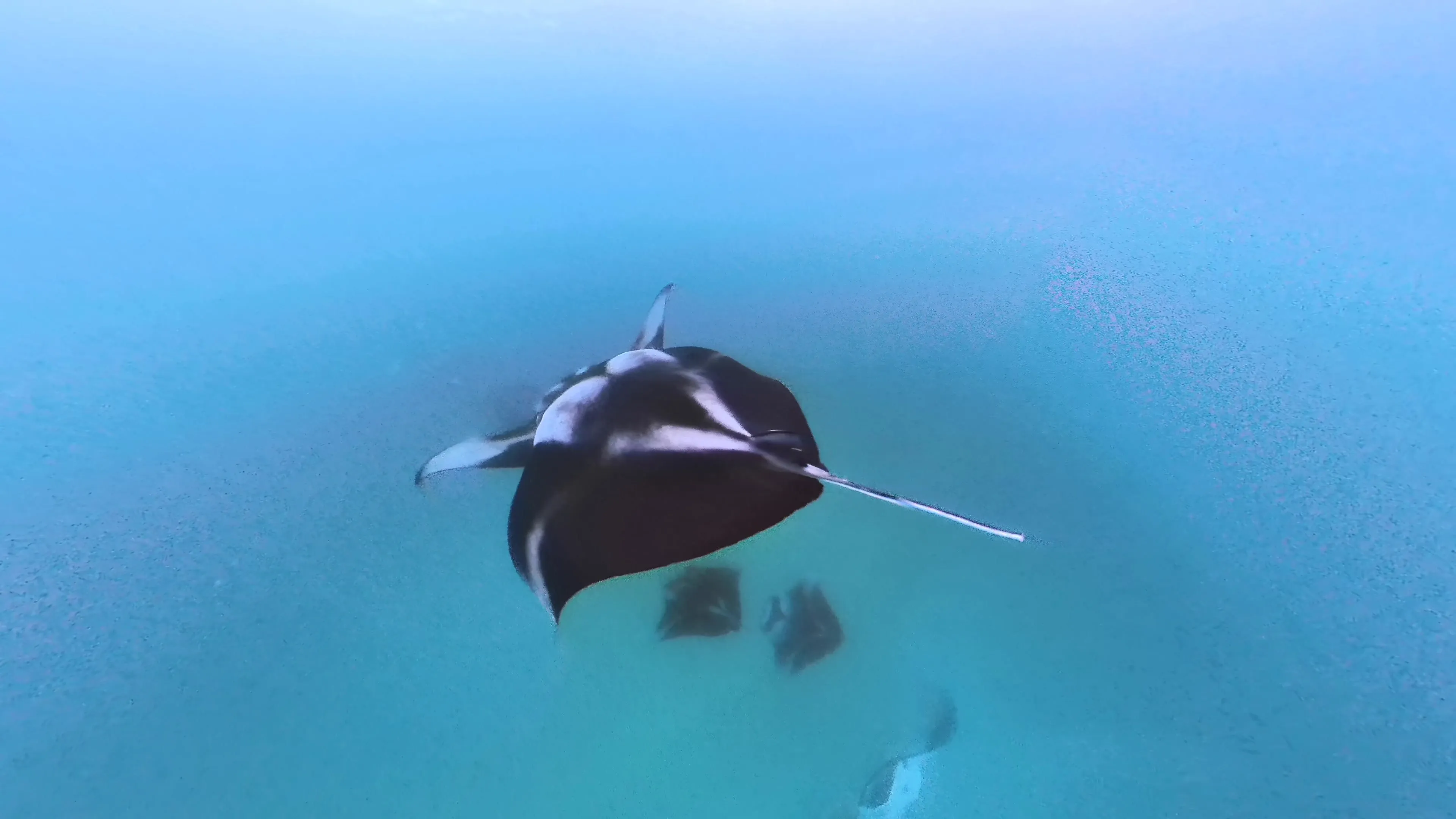
The day in Hanifaru Bay was the highlight. Around fifty mantas passed beneath us in formation on August 14, so close together that at times you had to pull in your arms and legs. The bay lets in only about sixty snorkelers at a time, and according to the Manta Trust, August is the time of the largest gatherings there. How the afternoon went is in the report on the bay.
A different day was a tour with two reefs on August 13. On the ride from one reef to the other, the boat stopped far out at a cleaning station. We got in the water and saw the mantas, in the middle of the blue. At the house reef of Rasdhoo, a reef manta swam past on two mornings, on August 18 and 20; in April it had been difficult to find one there. The house reef also had moray eels and an octopus.
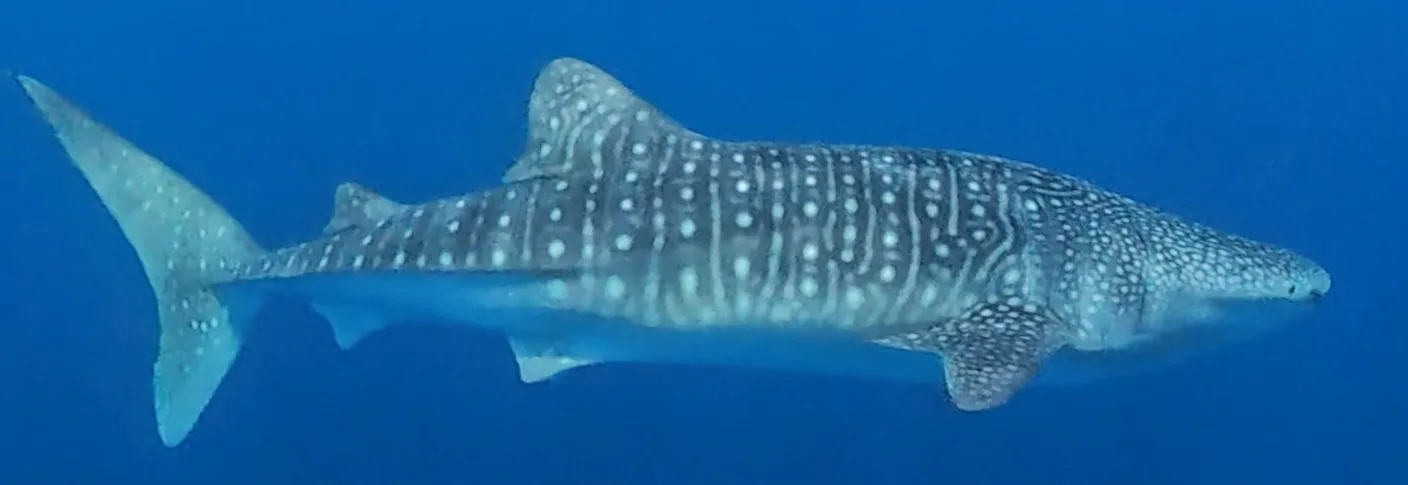
The whale shark of Dhigurah remained a mixed experience: a young animal of about five meters, surrounded by boats and snorkelers. The tour has its own report. According to the Maldives Whale Shark Research Programme, whale sharks live off Dhigurah all year round. We booked the tour through our accommodation, which works with a dive base on the island. Our price in August 2026 was 90 US dollars per adult and 45 for children under twelve; it is best to ask for prices directly at your accommodation. The tour can also be booked online in advance; on GetYourGuide it started at 300 US dollars per person on November 3, 2026, and the link is at the end of the text.
Do ferries and speedboats run during the monsoon?
They ran, but not always comfortably. From Dhigurah to Kamadhoo the boat rocked heavily on August 8, and many fellow passengers were sick. The waves on the way out on the whale shark tour on August 6 were relatively strong.
From Malé we took the speedboat to Kamadhoo, from there the public ferry to Maalhos, and then early in the morning by ferry via Malé to Rasdhoo. The schedules of the public ferries change, so no departure times are given here. Ask at your accommodation; it arranges the trips.
What did accommodation, transfers and excursions cost in August?
We booked the accommodations through Booking. For three people together they cost:
| Accommodation | Island | Nights | Total |
|---|---|---|---|
| Infinity Beach | Dhigurah | 4 | €349 |
| Biosphere by Hawks Hotels | Kamadhoo | 4 | €395 |
| Madi Beach Guesthouse | Maalhos | 5 | €472 |
| Summer Vibes Beach Front | Rasdhoo | 3 | €342 |
That is around 87 to 114 euros a night. Add the transfers, for example the speedboat from Malé to Kamadhoo for 65 US dollars per person, booked through the hotel and paid on the spot; for cash, US dollar bills from the 2017 series or newer are wanted, and with a card 3.5 percent is added.
For Hanifaru, the accommodation on Maalhos quoted 70 US dollars per person, for at least two people. From Kamadhoo we were quoted 144 US dollars per person on request, plus 17 percent tax and 10 percent service. On top comes the fee for the protected area, which is charged only for those who go in the water. In August we paid 150 euros for the three of us. Our son stayed on board because of the mosquito bites and did not have to pay the fee. What the whale shark tour cost is in the section on the animals. The prices of other excursions and islands are in the cost article under “Further reading”.
What should you watch out for on local islands in August?
Mosquito protection belongs in your luggage. On a few days a child could not go in the water: scratched-open bites sting in salt water. Spray beforehand, something for after the bite (it cooled a little, but it did not stop the scratching), and no seat under trees. Usually it helps to walk a few meters away; then you get stung much less. The German Federal Foreign Office reports (as of November 3, 2026) more cases of dengue fever in the Maldives since the beginning of the year.
Children with a life jacket or confident swimming technique can come along to the mantas. The animals are harmless, and the guides were reliable.
On the sea, the Federal Foreign Office writes: “dangerous ocean currents are often underestimated by vacationers”.
For entry, the following applies: the passport must generally still be valid for six months, though at present, according to the Federal Foreign Office, an exception of one month applies. In addition, the Maldives require the digital form IMUGA, which you fill out up to 96 hours before arrival.
Who is August right for, and who less so?
If you can live with changeable weather, August suits you. For us it brought mantas, turtles, sharks and, on good days an estimated twenty-five meters of visibility, with water around 28 degrees.
It suits less if the days are meant to be firmly plannable. The weather changes quickly. August 14 brought bad weather, August 15 nice weather, and a boat trip can bring high waves. Of the days on which I noted the weather, five were rainy or bad and three were dry.
Frequently asked questions
Does it rain in the Maldives every day in August? Not for us. It came for a few hours, and on some days not at all.
How warm is the water in August? Kamadhoo and Maalhos had an estimated 28 degrees, Rasdhoo 29.
Can you see mantas in August? Yes. In Hanifaru Bay there were around fifty on August 14, and at the house reef of Rasdhoo a reef manta passed on two mornings.
How far can you see underwater in August? From murky to about twenty-five meters, depending on the tide, wind and place.
Do you need mosquito protection for the Maldives in August? Yes, definitely.
Where the information comes from
Weather, water, visibility, current, animals, prices and trips we experienced, noted or paid for ourselves in August 2026. Visibility figures are estimated. The notes on dengue, ocean currents, swimming accidents and the passport come from the safety advice on the Maldives from the German Federal Foreign Office, as of November 3, 2026. Information from others without our own experience: the start of the southwest monsoon in May and the rainfall for Malé (Maldives Meteorological Service, averages 1991 to 2021, as reported by edition.mv), the mantas in August (Manta Trust, Baa Atoll report 2019), the whale sharks off Dhigurah (Maldives Whale Shark Research Programme, Scientific Reports 2021) the online price of the whale shark tour (GetYourGuide, read on November 3, 2026) and the IMUGA form (Maldives Immigration).
Further reading
- Two seasons, the same reef: the same reef in April and in August compared
- Maldives travel time for snorkeling: all months at a glance
- What a week on a local island costs: accommodation, transfers and excursions in detail
- Hanifaru Bay: snorkeling with mantas: how the day in the bay went
- Whale shark tour from Dhigurah: what happened on the tour on August 6