Tips
Maldives rainy season or dry season? The same reef in April and in August
Translated from the German original.
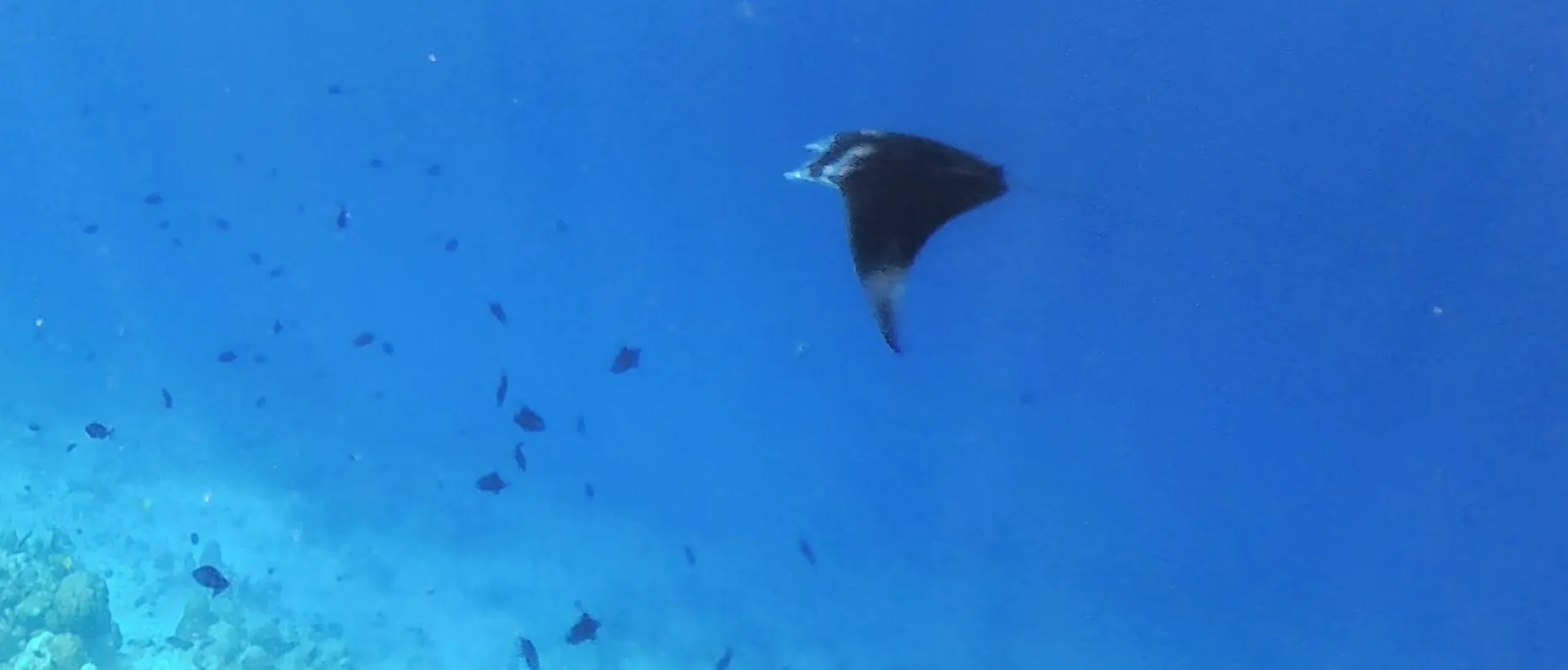
The water is twenty-nine degrees Celsius, and my breath in the snorkel is the loudest thing I hear. From the beach at Bikini Beach on Rasdhoo, it is around fifty meters over shallow reef to the edge. Then the bottom drops away, and we drift above the edge. My wife, my son and I. My son is the one who finds the moray. It lies under a rock, and all you can see is its head and its long tail. It watches us and does nothing else. We snorkel on along the edge, and five minutes later he finds a manta. A reef manta, maybe ten meters away at its closest, broad and flat and in no hurry. The water is so clear this morning that nothing seems to stand between us. Half a minute, then we can’t see it anymore. Twenty minutes after the moray, we are back at the same rock. It is gone. That was August 18, 2026, in the last week of the trip. Sixteen months earlier I had already been to this reef once. No manta came by then.
In case you’re wondering right now when to fly to the Maldives: If you want to see the reef in lots of light and calm seas, pick the dry season from January to March. Even in mid-April, when we were there, it was still sunny almost all the time. If the big animals matter more to you, come in the rainy season from mid-May to November. The weather is more changeable then, but prices are considerably lower. I would fly in the rainy season again myself. If you only have one week, though, I’d advise against it. It can happen that there is a lot of rain and wind and you don’t feel like going in the water.
At a glance
| April 2025 | August 2026 | |
|---|---|---|
| Season | Mid-April, transition at the end of the dry season | Rainy season (southwest monsoon) |
| Water at the Rasdhoo house reef | 29 °C | 29 °C |
| Visibility there | around 25 meters | around 25 meters in the morning, around 15 meters from midday on |
| Reef manta at the house reef | none; we saw one on a boat trip | from the beach, on August 18 and on August 20 |
| Weather | sunny almost all the time | not rain every day, and when it rained, mostly for a few hours; two days of bad weather, one of them from morning till night |
| Accommodation | — | around 90 to 115 euros per night for three people, via Booking |
| Trips | Boat trips to smaller reefs and to the mantas; no tour to the whale sharks and none to Hanifaru Bay | nothing booked in advance, on site depending on the weather |
Contents
What is snorkeling in the Maldives like in April?
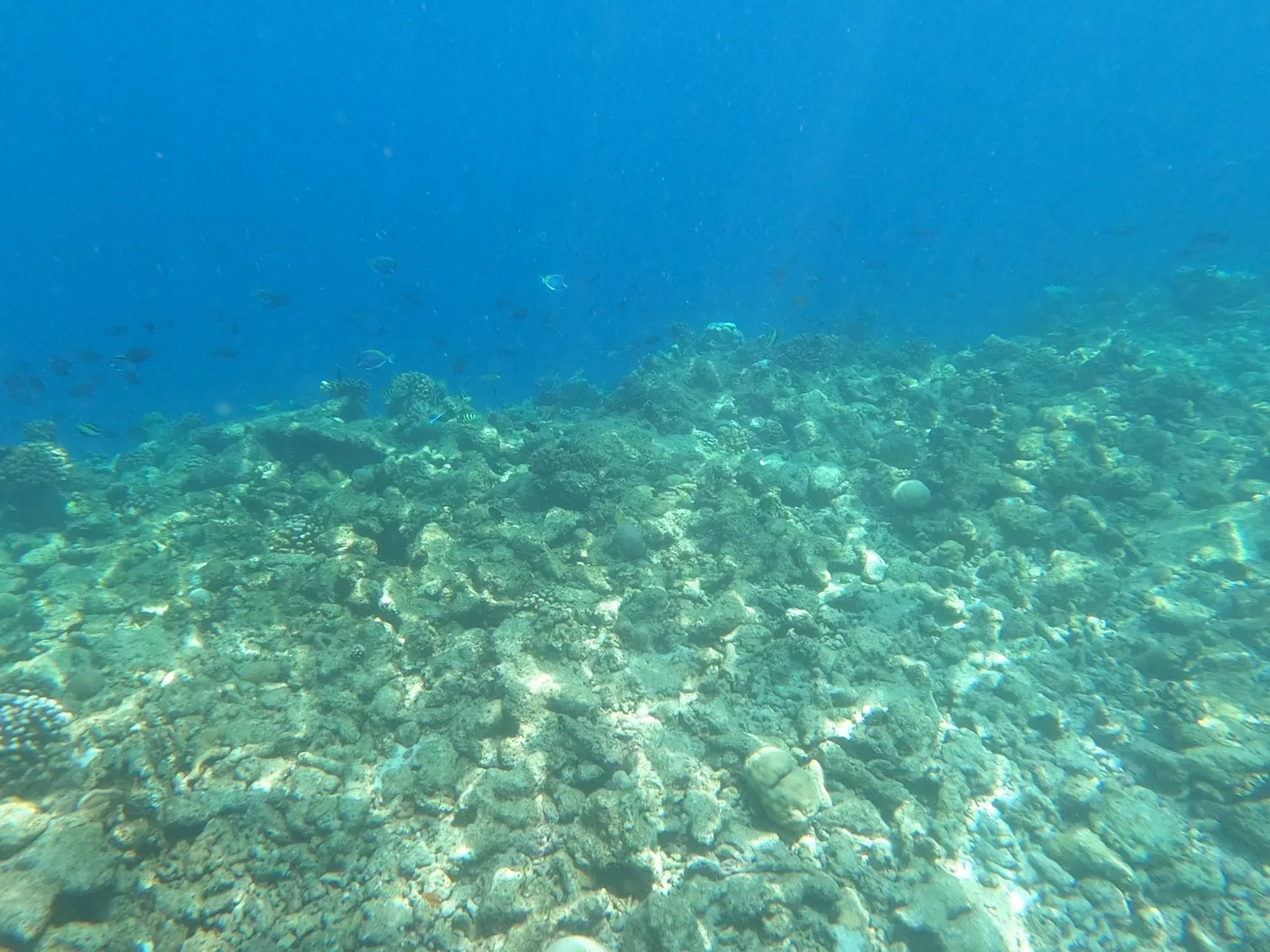
In mid-April 2025 I was on Rasdhoo, at the end of the dry season. Back then we went into the water at the hotel, not at Bikini Beach. The same reef, a different section.
Underwater it was almost the same picture. Sharks, squid, colorful fish, pretty much exactly the same ones as sixteen months later. The water was equally warm both times, and the view reached equally far both times.
The only thing I didn’t see there in April was a reef manta.
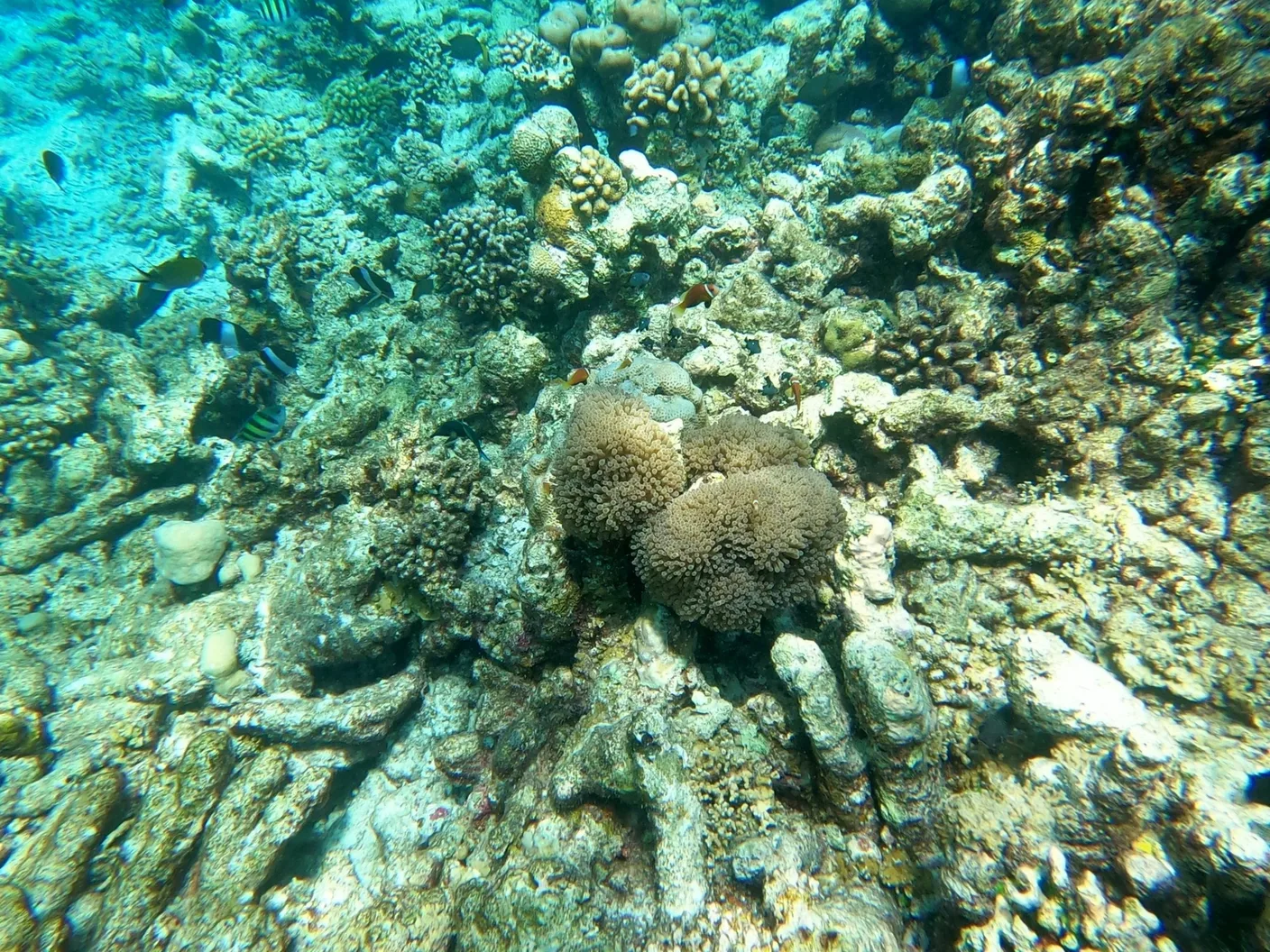
I did see a manta back then, just not from the beach. We had booked a boat trip, and when we booked, the hotel already told us it wasn’t really the season for it: quite possible that we wouldn’t see a single one. We headed out for half an hour by boat, and twice the boat stopped for nothing. Then it lay ten meters below us, a good four meters from one wing tip to the other.
Do you see more big animals in the Maldives rainy season?
The August trip took us across four islands. On the third day already, a young whale shark passed beneath me, on the tour from Dhigurah. Then we went on to Kamadhoo and from there to Maalhos. The next morning, heavy monsoon rain fell. After that it turned nice, and we went out to two reefs as planned. On the way, the boat stopped in the middle of open water because someone had seen mantas at a cleaning station. We went in, and they were there.
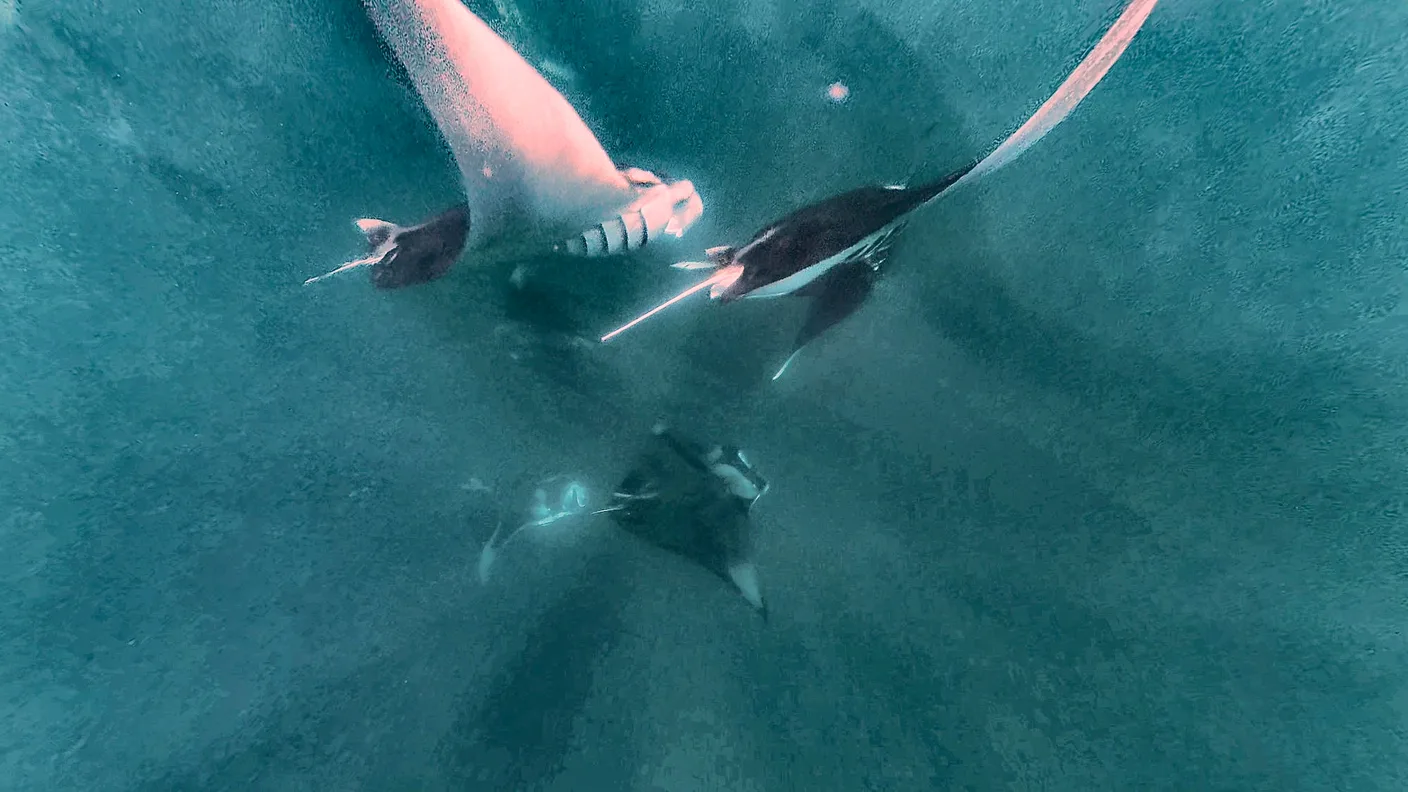
The next day the weather was bad all day. We went to Hanifaru Bay in the afternoon anyway, and we had barely left the harbor when it started to rain. In the bay the water was full of plankton; you couldn’t see far. There were at least fifty mantas. In a good half hour in the water, there were maybe two minutes when I didn’t have one in view. Some of them came to within one meter, and sometimes I pulled in my arms and legs, they glided beneath me so closely.
Rangers keep watch there, and the number of snorkelers is limited. Everyone spreads out, because the bay is large. At the briefing we were told: stay with the guide and don’t touch the animals. Not touching anything applies at every reef: corals grow for decades and are broken in a second, and you don’t get off unscathed yourself either: fire corals burn, lionfish sting. More about that afternoon is in Hanifaru Bay: in the water with fifty mantas. In April we hadn’t booked any of this, neither a whale shark tour nor a trip to Hanifaru Bay.
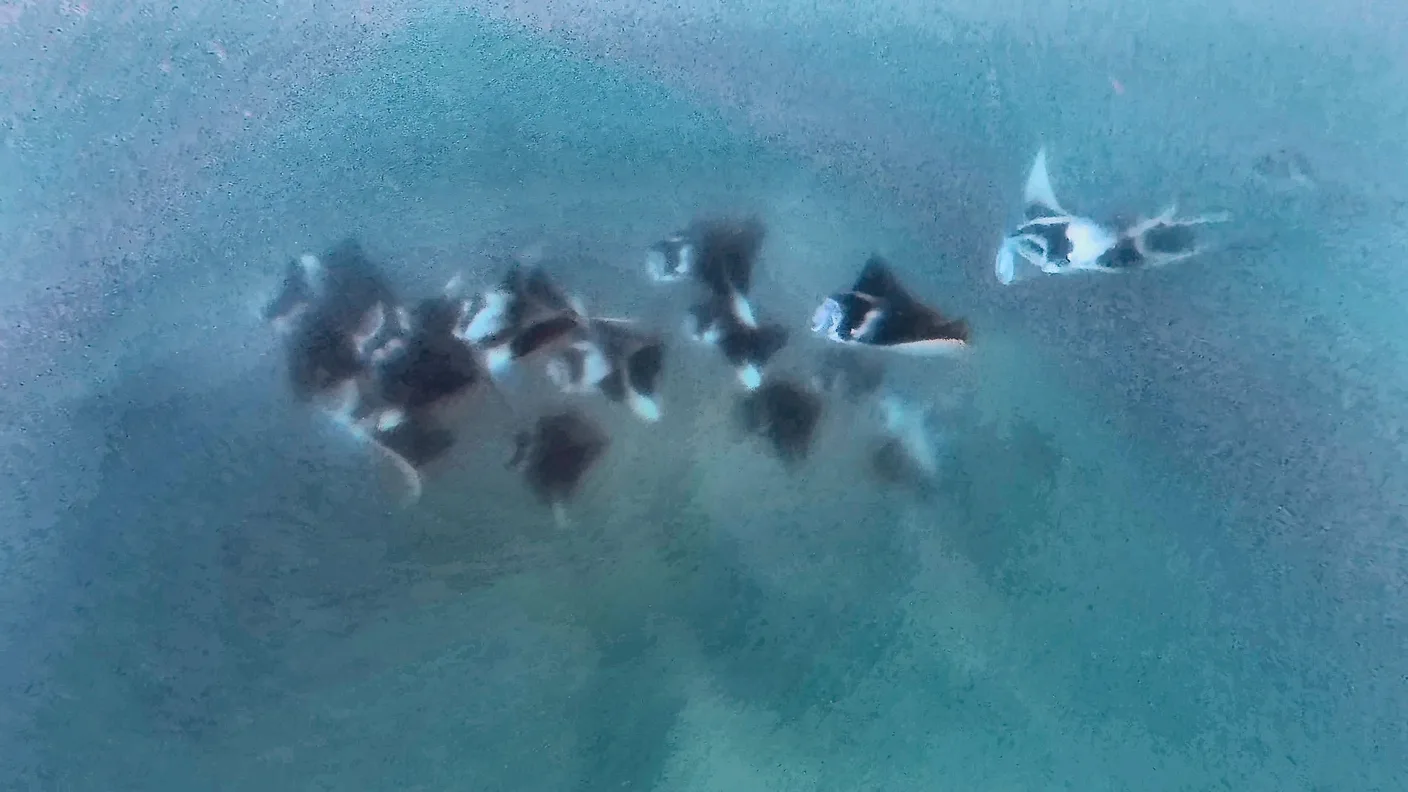
Last of all we went to Rasdhoo. At the house reef on those days, besides the moray and the manta, we saw an octopus and a Giant Triggerfish, a large triggerfish.
Our son was mighty proud that he had spotted the manta before us. After all, he had already found the moray too.
On the last morning, my wife and I went out once more, without our son. And again a reef manta passed by, and we saw sharks too. For the two of us, that was a great end to the trip.
When is manta season in the Maldives?
There is no season for the whole country, but there is for individual places like Hanifaru Bay. According to a 2021 study in PLOS ONE, reef mantas are in the atolls all year round and switch sides with the monsoon.
From December to March they are on the western side of the atolls, from April to November on the eastern side, because the wind drives their food there. Our April trip fell exactly in the month in which the switch begins. Whether that explains the difference at our reef, I don’t know.
In my own article about the first manta off Rasdhoo, it said for a long time that November to April was manta season. I had read that rather than experienced it. I have corrected it.
What is the weather like in the Maldives rainy season?
The rainy season has its unpleasant sides too. The first came even before the first snorkel. From Malé we took the speedboat a good two hours to Dhigurah, and several fellow passengers felt sick on the way. It didn’t get us; my son even fell asleep on the ride. On the day we arrived, the waves off the beach were too rough for him, and the water was churned up anyway. We didn’t even go in.
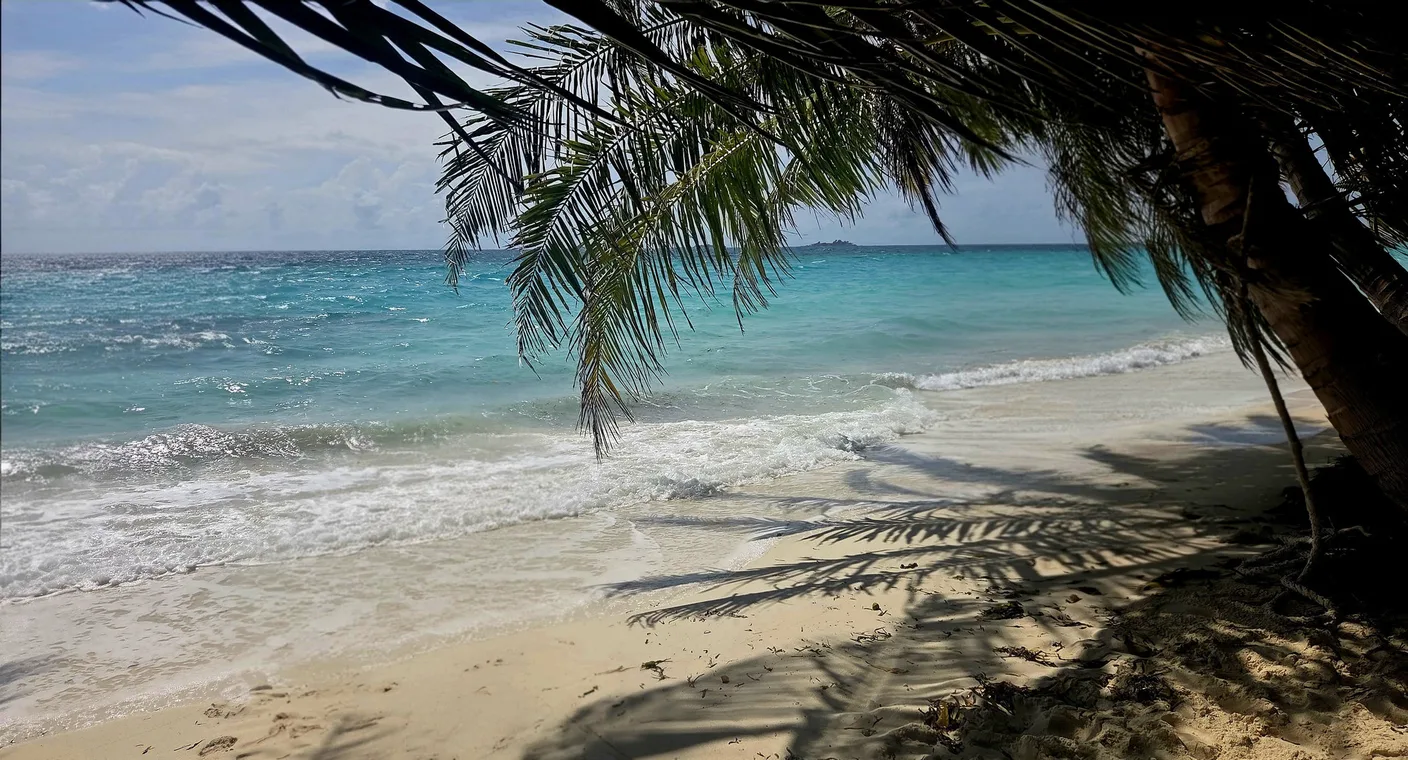
On Kamadhoo it rained on and off for a whole morning, with wind as well. We walked across the island. In the afternoon we did go into the water at Bikini Beach after all and saw a big turtle and a reef shark. For us that was fine, though we did have three weeks of vacation.
On Maalhos we were offered snorkeling with whale sharks in the dark. We didn’t go because of the bad weather.
That I would still fly in the rainy season again is because of the big animals I saw during that time. The lower price comes on top of that.
My conclusion
The same reef can look almost the same twice and still have one more animal the second time. No season promised me that. Ask on the island what is around right now, and don’t commit beforehand. We booked all our trips in August at short notice, depending on the weather. Sometimes we asked the locals beforehand whether the trip to a spot made sense right then.
I’ll tell you about Kamadhoo in an article of its own. There the reef starts just thirty meters off the beach.
Frequently asked questions
When is the rainy season in the Maldives?
According to the Maldives weather service, the rainy season with the southwest monsoon normally lasts from mid-May to November. The dry season with the northeast monsoon runs from January to March; December and April count as transition months (as of September 25, 2026). Our trip in mid-April was therefore in the transition, at the end of the dry season.
Does it rain all day in the Maldives rainy season?
No. For us, in August 2026 it didn’t rain every day, and when it did, mostly for a few hours. We also had one day of bad weather from morning till night, of all days the day at Hanifaru Bay.
Is visibility worse in the Maldives rainy season?
At the house reef of Rasdhoo, the view reached around twenty-five meters in April, and in August just as far in the morning. From midday on it was around fifteen meters there. Taken over the whole August trip, visibility was still worse. The sky was cloudy more often, rain and wind made the water choppier, and off Dhigurah the waves stirred up the sand.
Do you need mosquito repellent in the Maldives?
Yes, pack it next to the sunscreen, a spray and something for after the bite. Our son had scratched open lots of bites, and the salt water stung in them so much that at some point he didn’t want to go into the water anymore. Mosquitoes gather under trees; even a few meters of distance helps.
Where the information comes from: Rainy season and dry season from the Maldives weather service, accessed on September 25, 2026. Where the mantas are depending on the monsoon, from the study by Harris and Stevens (2021) in PLOS ONE. Everything experienced is from our trips in April 2025 and August 2026.
Further reading
- Snorkeling with mantas on Rasdhoo: the boat trip in April 2025 when we found the manta after all
- Visibility at low tide, high tide and in rain: what visibility in the Maldives depends on in the first place
- Rasdhoo: the island with the house reef from both trips
- Dhigurah: where the August trip began with wind and high waves
- Kamadhoo: the rainy morning and the reef close to the beach
- Maalhos: from here we went to the cleaning station and to Hanifaru Bay
- Maldives destination guide: all islands and months at a glance