Rasdhoo snorkeling, Maldives: the house reef and what's around it
Translated from the German original.
If you’re looking for an island where snorkeling works without a boat trip, Rasdhoo is a good choice. It’s an inhabited local island in North Ari Atoll — also called Rasdhoo Atoll — about 60 kilometers west of Malé.
I was here twice: in April 2025 in the dry season and in August 2026 in the middle of the rainy season. So I don’t have to guess the difference.
And it turns out differently than the name “rainy season” suggests. At this reef there is no difference in visibility at all: both times about 25 meters at 29 °C water temperature. What clouds the visibility isn’t the rain but stirred-up sand — mostly the tide stirs it up, in wind the waves, rarely a heavy shower. That’s why the time of day matters more here than the month.
Over the whole trip, the season still makes a difference: in the rainy season the sky is more often overcast and the sea rougher from rain and wind. At this reef, neither came through.
What is Rasdhoo island like?
Rasdhoo is somewhat bigger than the other islands of this trip — and it changed a lot between my two visits. Many small restaurants and guesthouses have been added, plus shops for self-catering, souvenir shops and cafés. It’s striking how strongly the island is shaped by Spanish-speaking guests.
There’s a lot of construction: new hotels up to eight stories, mostly with foreign money. For the locals with their small guesthouses this is becoming a problem — an owner on site told us so.
The bikini beach is very beautiful, and it lies at one of the most beautiful reefs we have seen in the Maldives at all. Tours can be booked in many places here; we went out with a dive center with its own boat.
Getting there: Rasdhoo lies about 60 kilometers west of Malé. By speedboat from Malé to the harbor, from there a short walk.
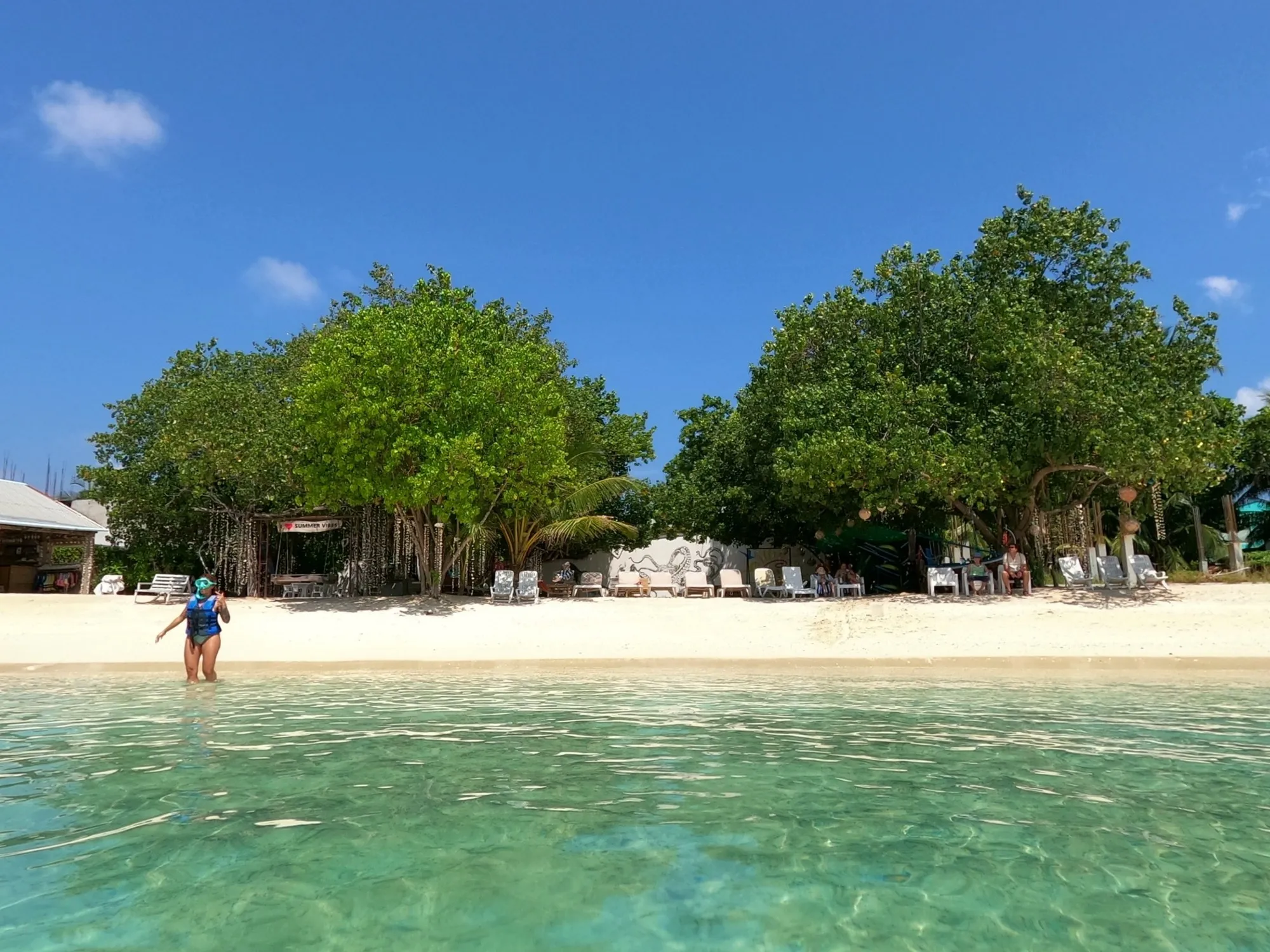
Rasdhoo Beyru — the house reef
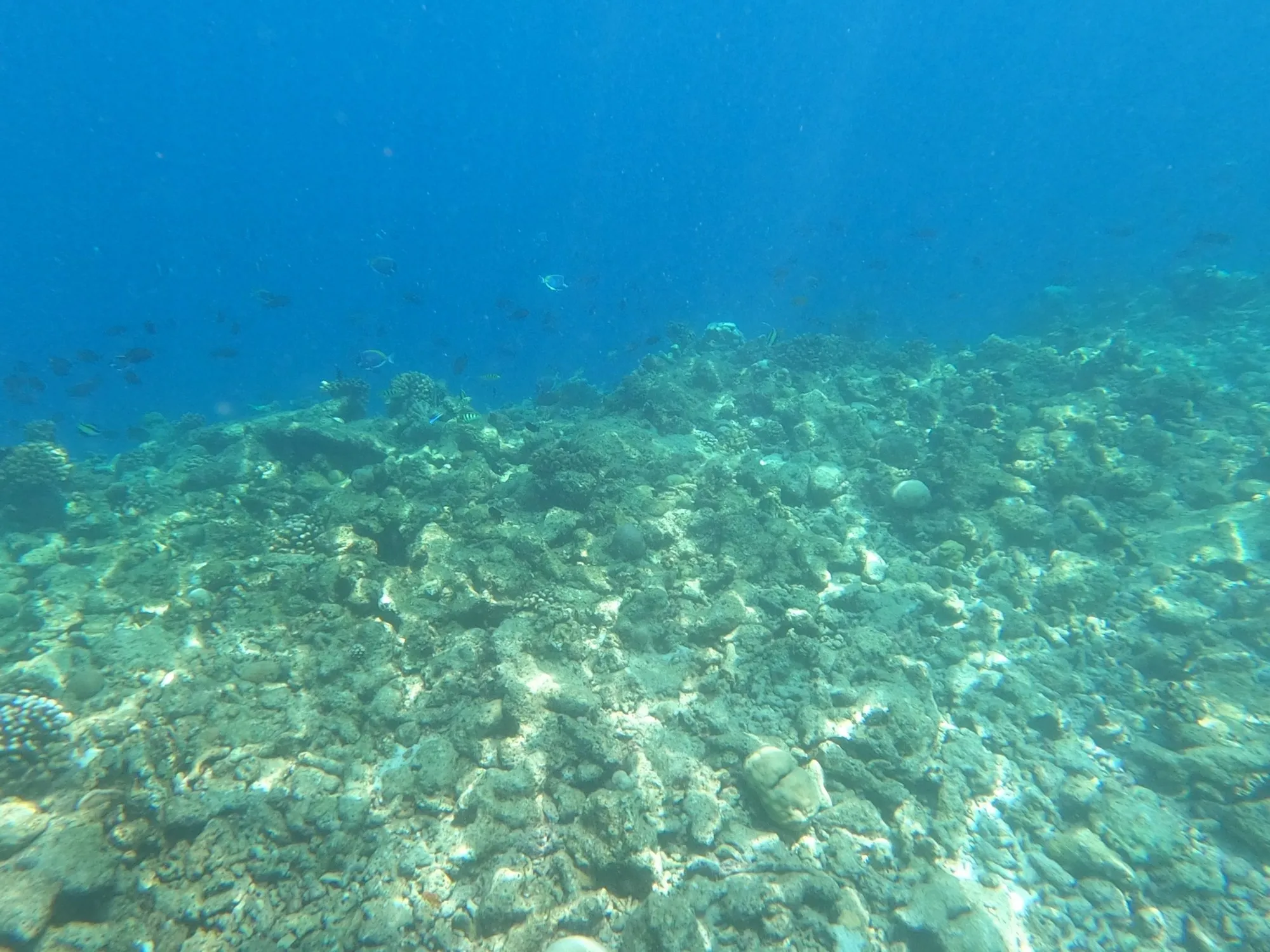
You reach the house reef directly from the beach — across the shallow reef to the reef edge, where it drops off into the deep blue. No boat, no booking. At the edge I simply linger.
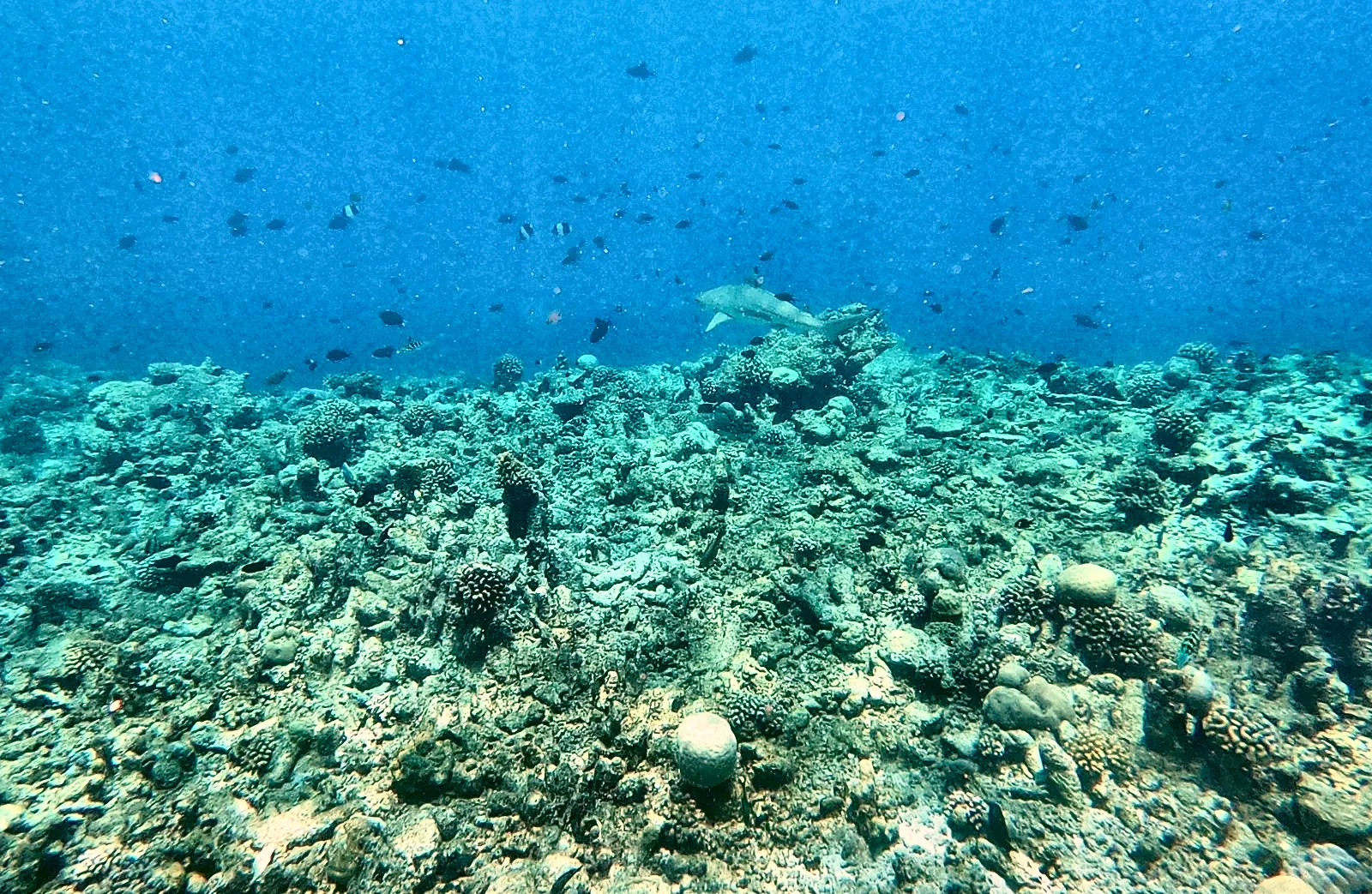
The way there is longer than it looks from the beach, though: about 50 meters across the shallow reef. At low tide it gets tight — then in places only 50 centimeters remain between you and the corals. On exactly this shallow stretch I often saw blacktip reef sharks, sometimes only 5 meters away. They ignore you, and they are harmless too — still, that isn't pleasant for everyone.
Mornings are the most beautiful. I had about 25 meters of visibility at 29 °C water temperature, and on the very first morning a reef manta passed by. From midday it turns: the tide stirs up sand, then it's only about 15 meters, and everything looks blurry.
Two days later, again in the morning, it was about 20 meters — and again a reef manta and sharks. If you only have one morning, spend it here.
Sharks are part of everyday life here. The advice of the dive team on site: don't touch anything, don't take a fish in your hand — then they ignore you completely. That's exactly how we experienced it.
And something else surprised me: in April we had to go out by boat just to see a manta at all — it was difficult, and we were lucky. In August a reef manta passed the house reef every morning. So the rainy season here has something the dry season doesn't.
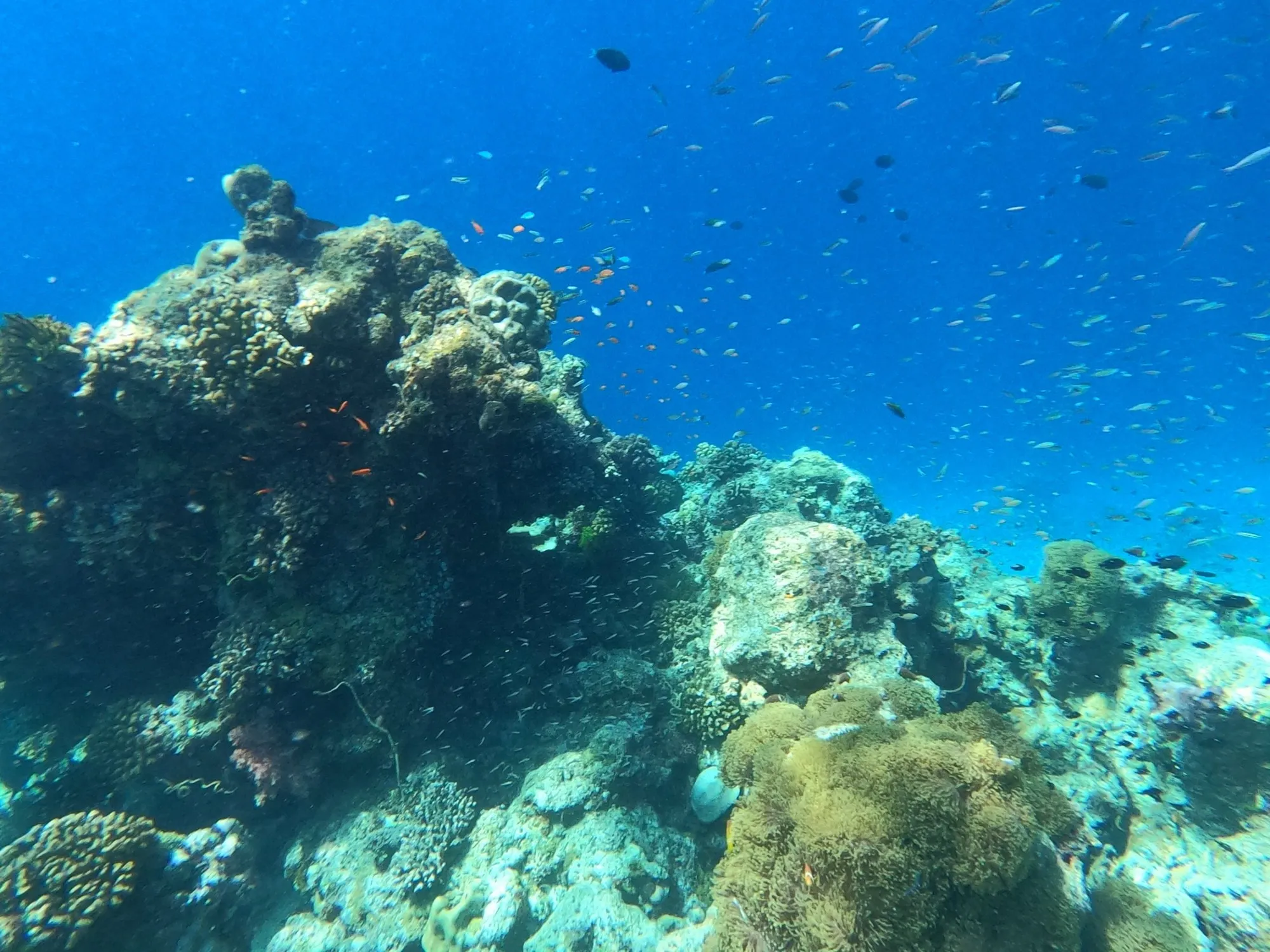
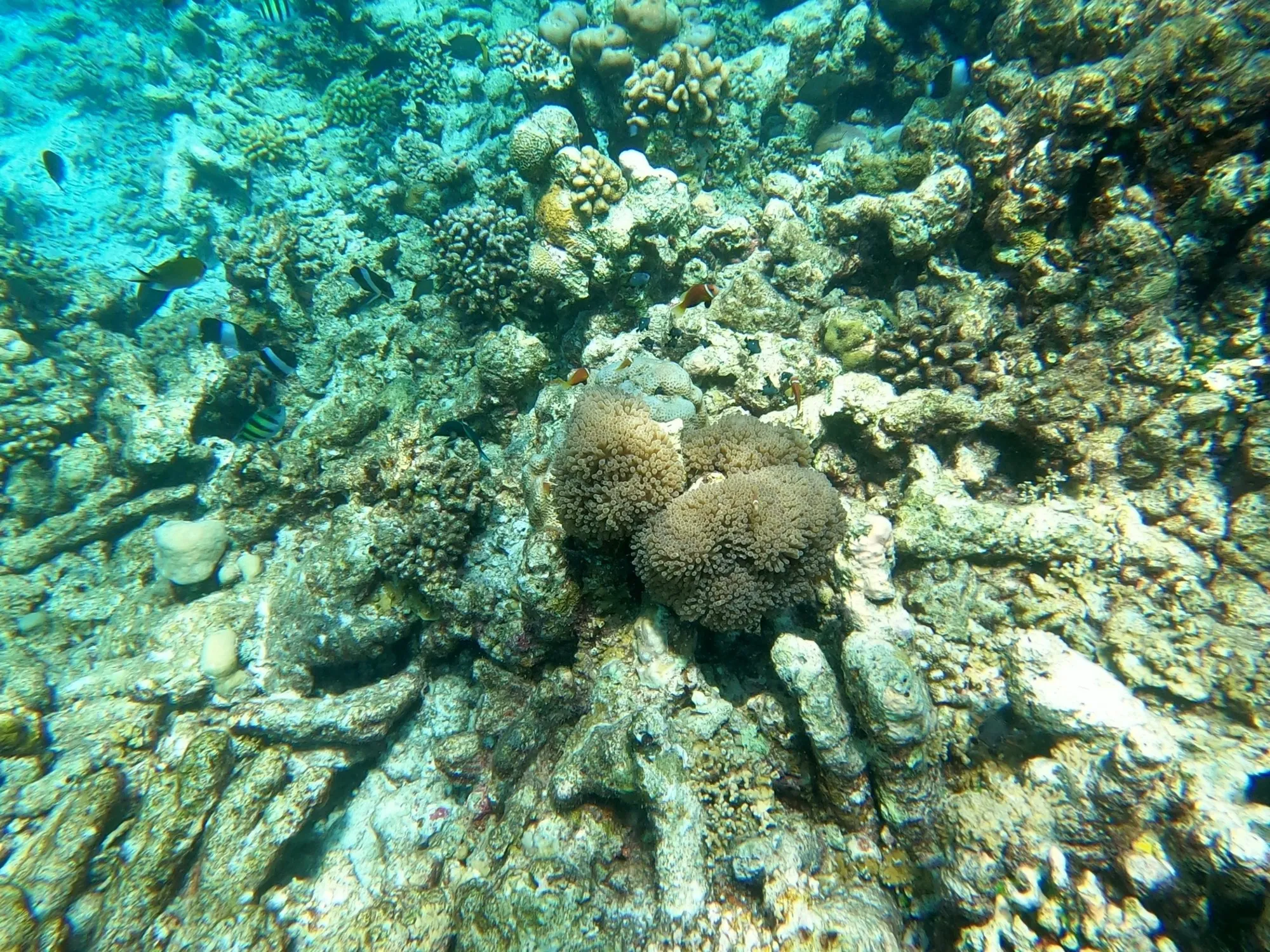
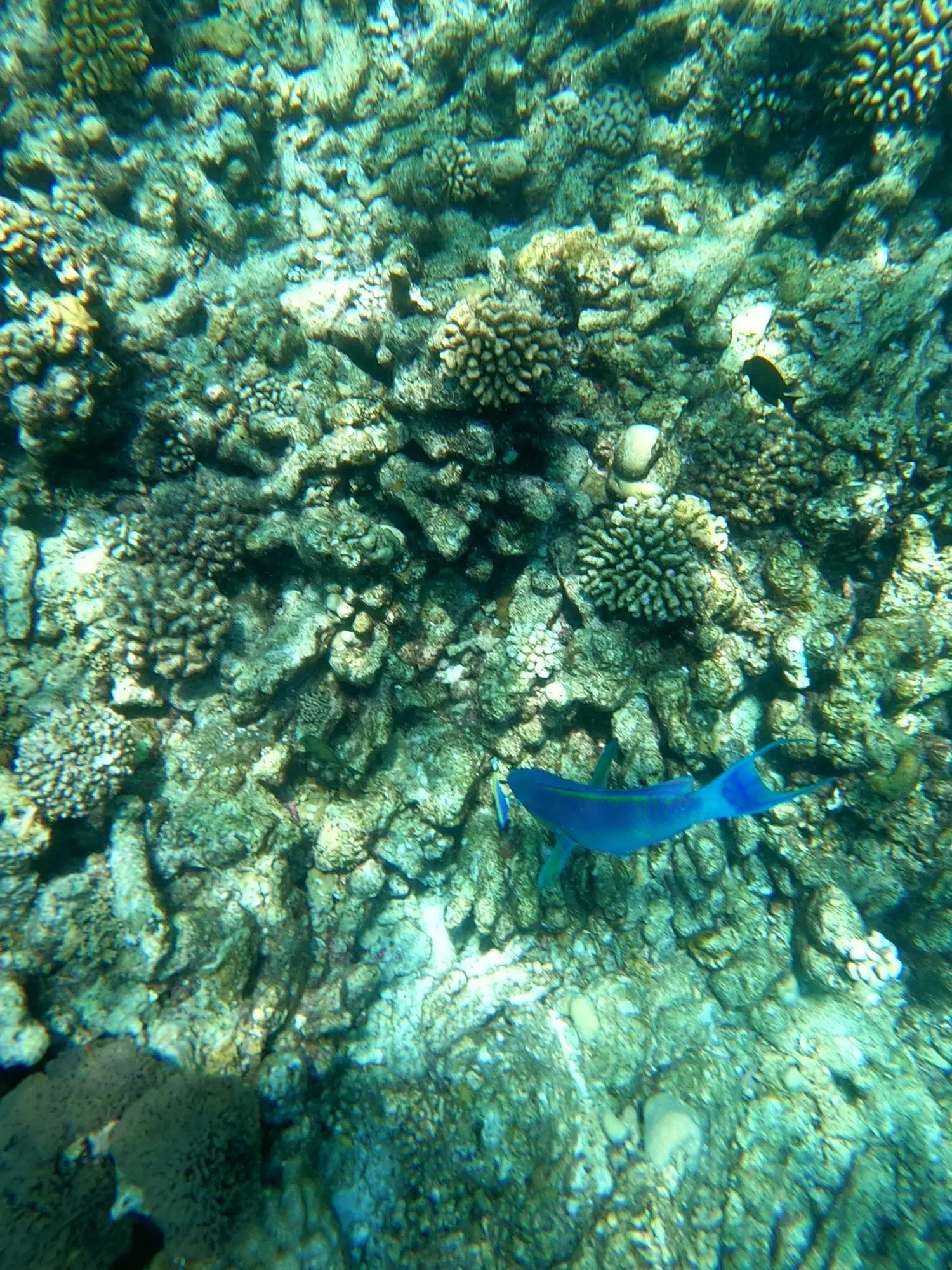
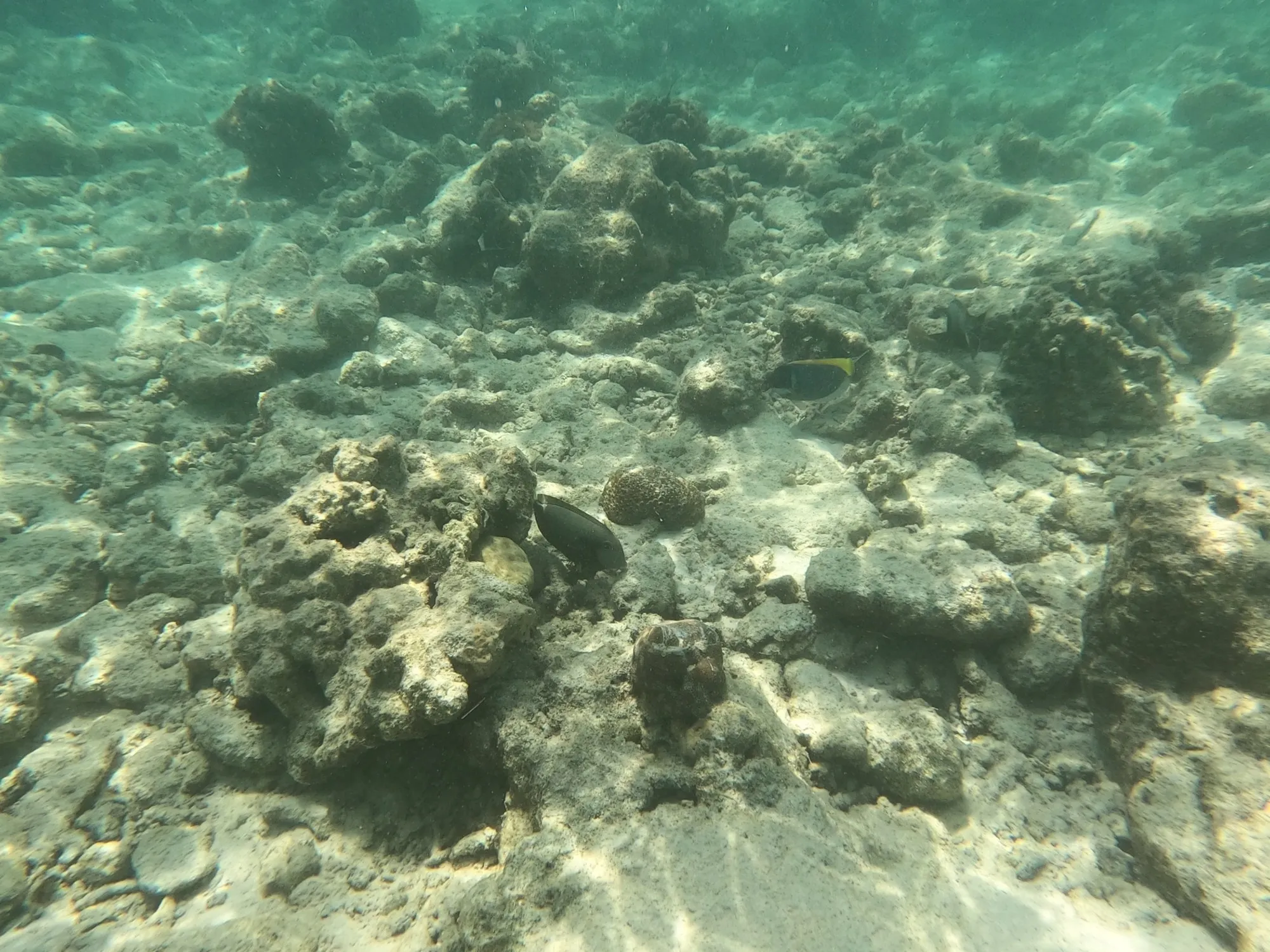
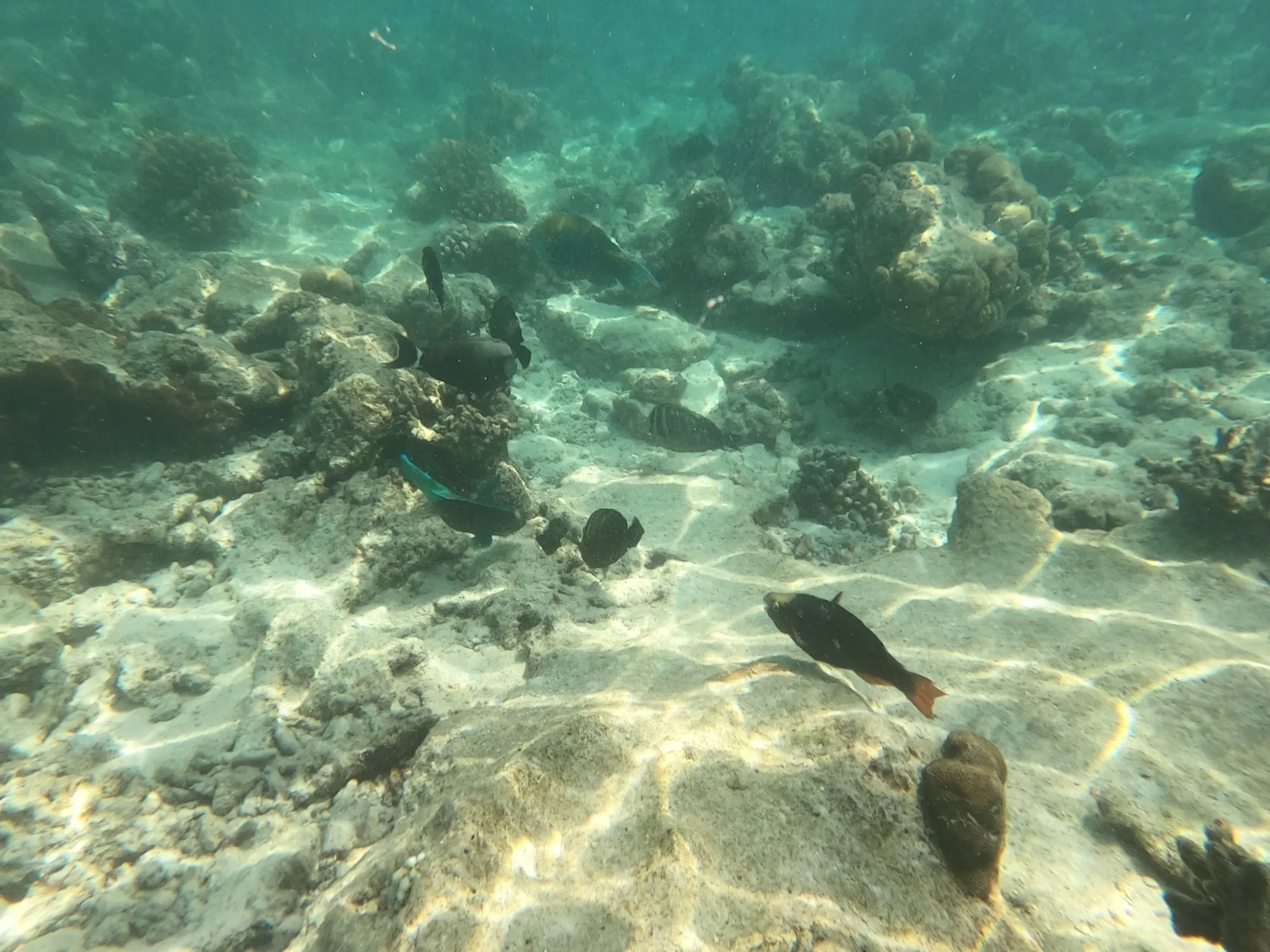
House reef, Entry from the beach · Visibility about 15–25 m · Water 29 °C · Current light · seen myself April 2025, August 2026
Seen: Reef manta, Blacktip reef shark, Moray eel, Octopus, Giant triggerfish.
Turtle Reef
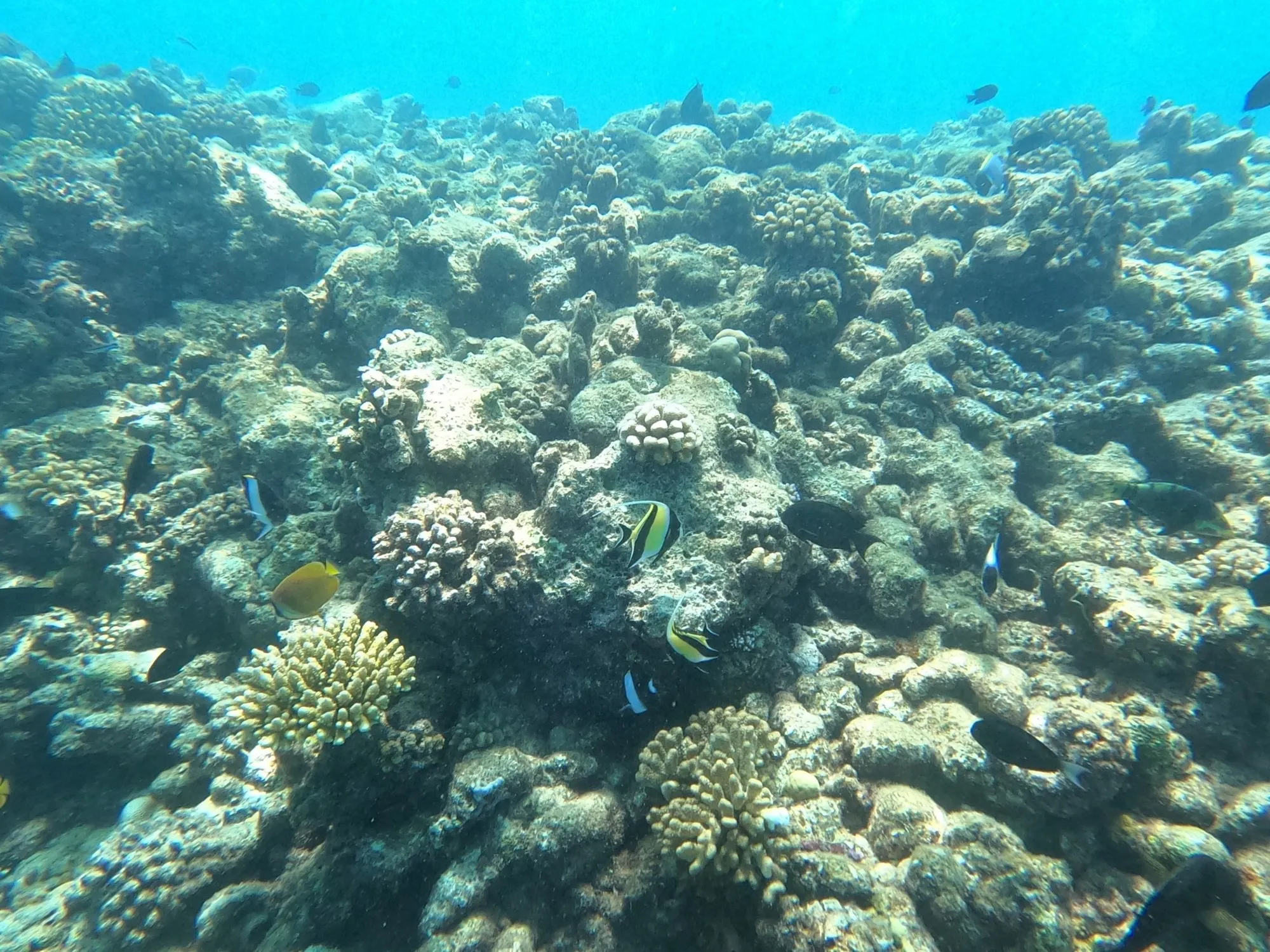
Turtle Reef is a boat trip from Rasdhoo. It lies on the east side of the atoll between Madivaru and Veligandu, about ten minutes away by boat. Not to be confused with the Turtle Reef near Dhigurah — that belongs to a different atoll.
The name keeps its promise: about ten turtles in an hour and a half. The reef starts two to five meters below the surface, is narrow — about twenty meters — but very long, and drops off steeply on both sides. Easy to survey from the water, ideal for snorkeling.
I was there in April, at 29 °C water temperature and over 20 meters of visibility. Sharks show up here along the way, mostly blacktip reef sharks of around one and a half meters. They swim past, keep their distance and are gone again.
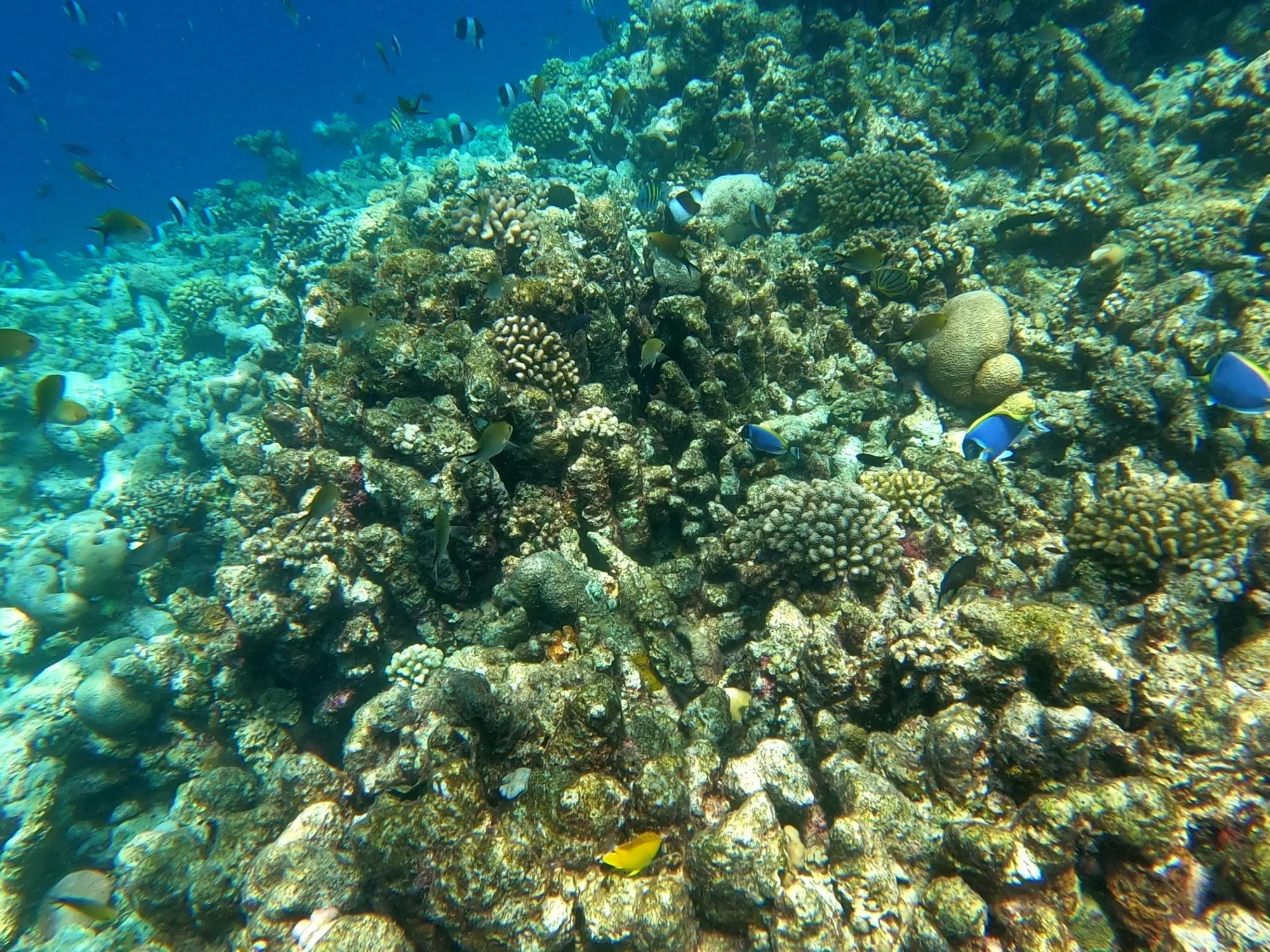
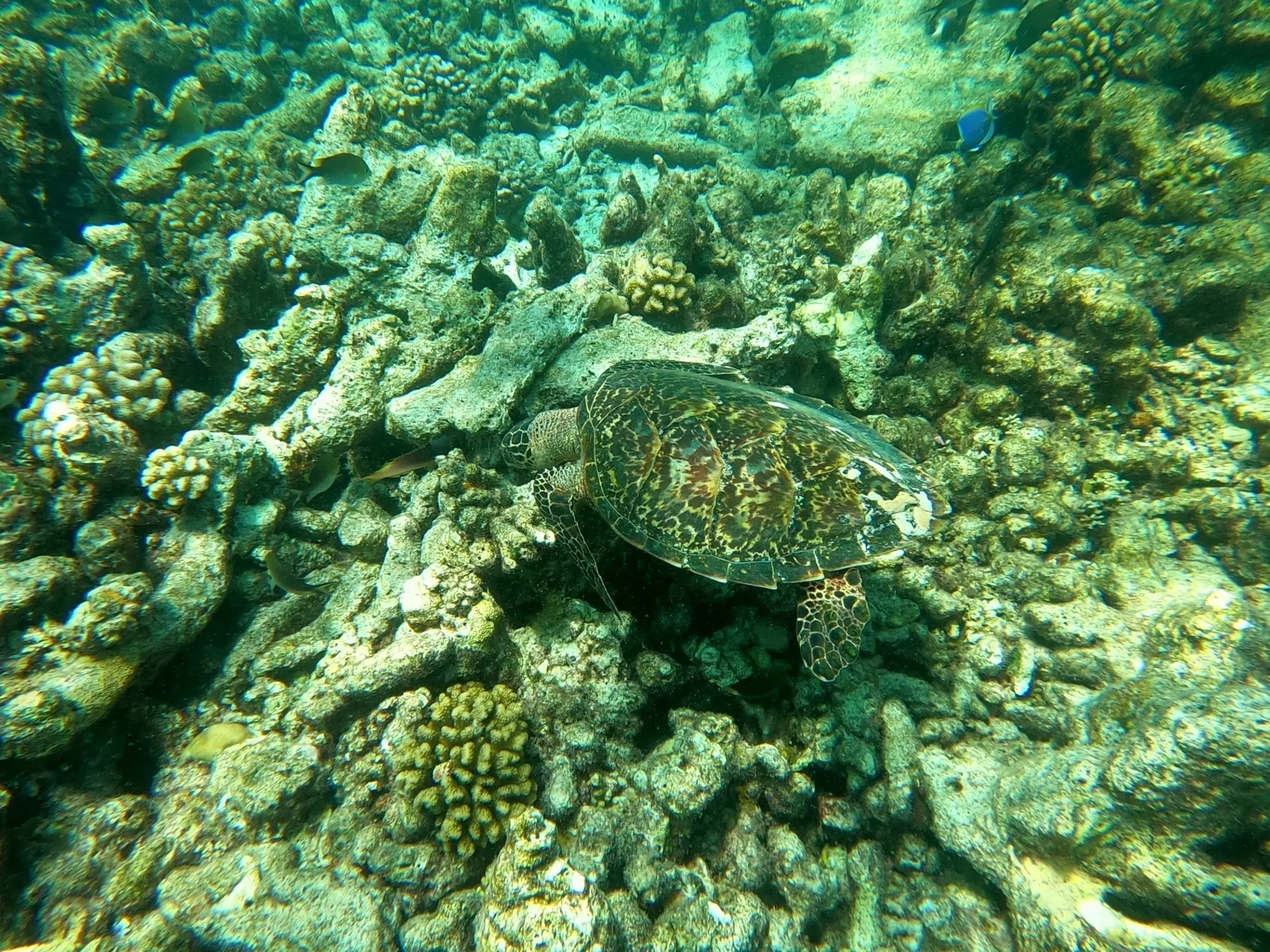
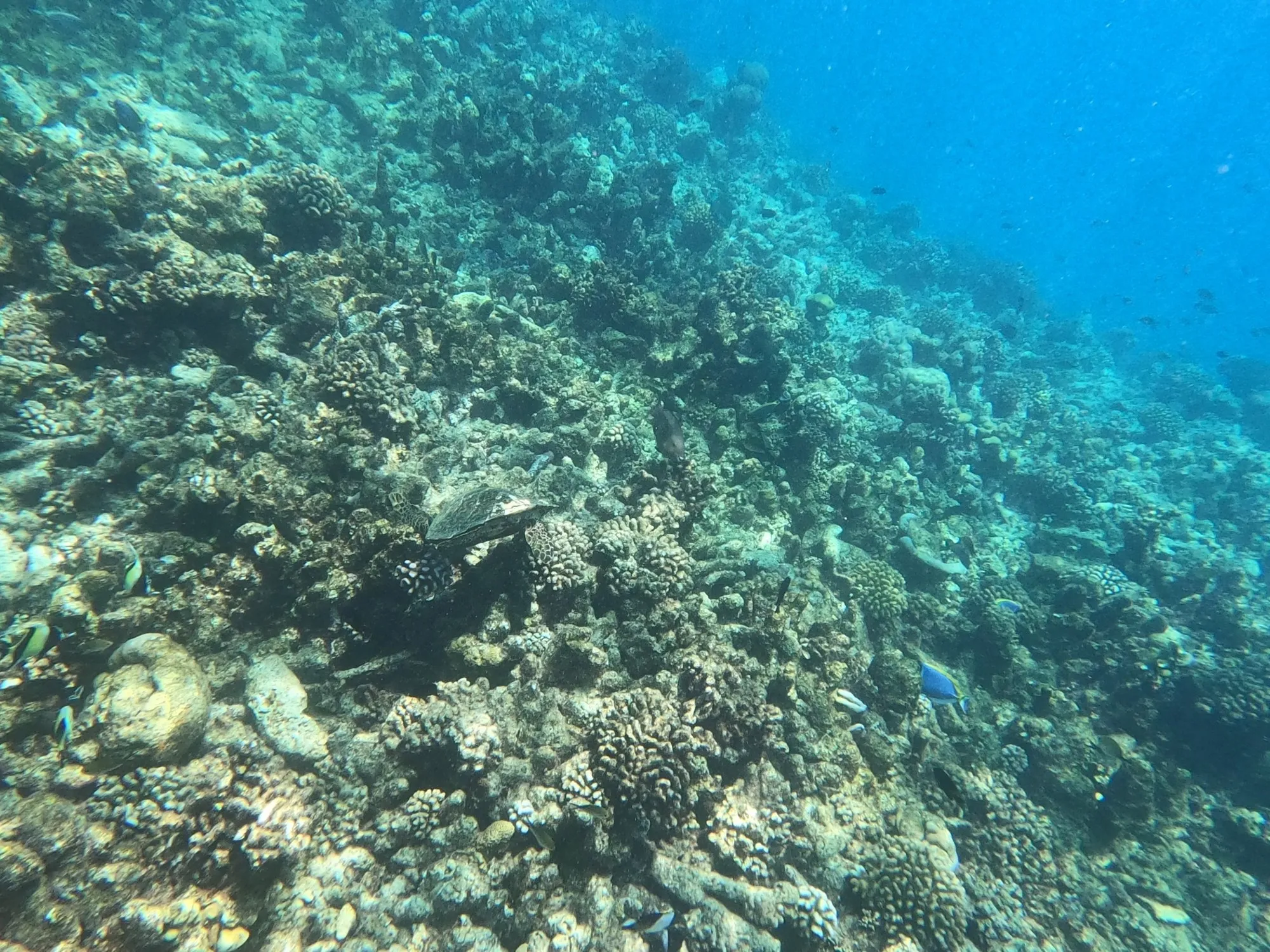
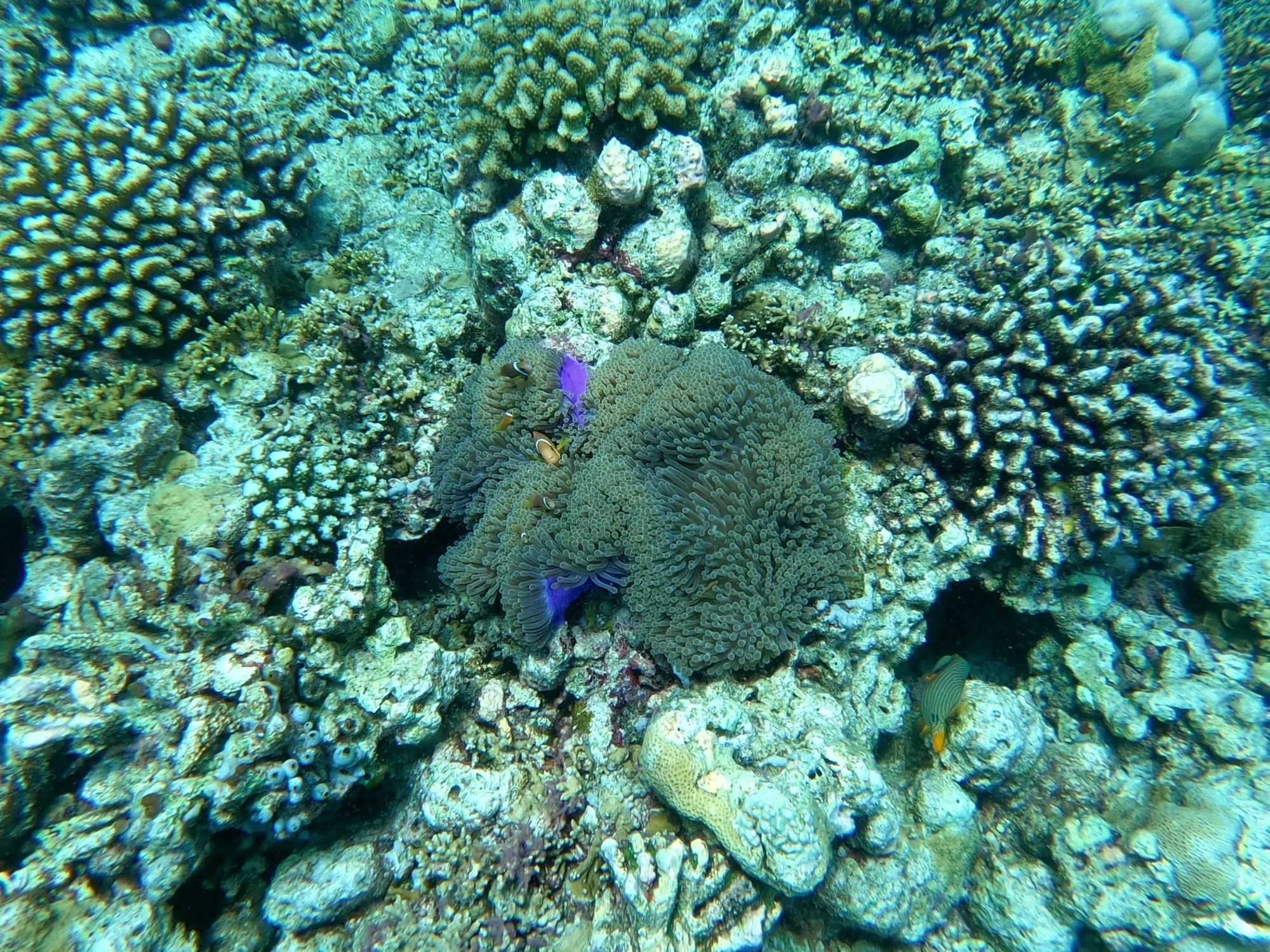
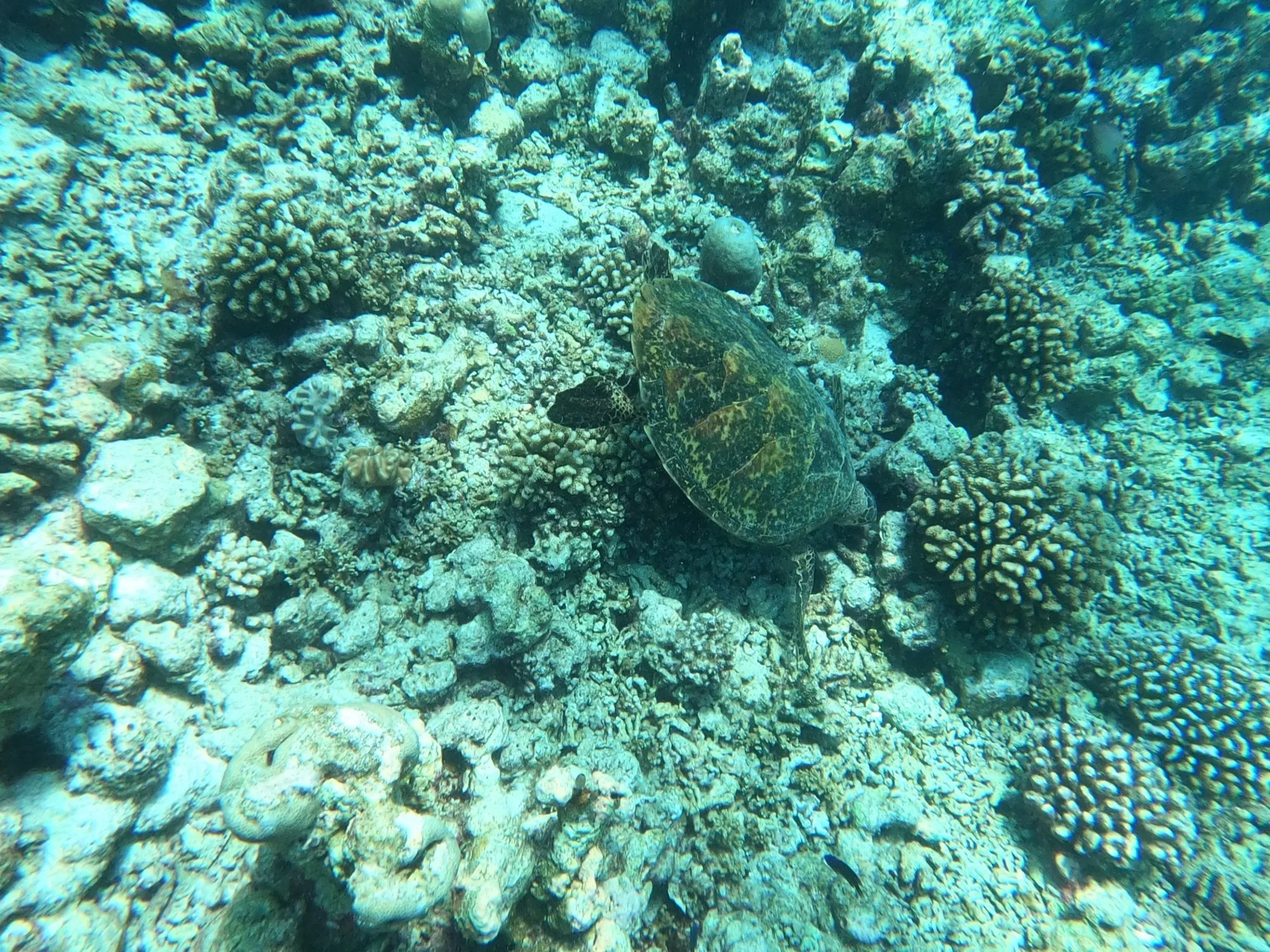
Reef, Entry from the boat · Visibility over 20 m · Water 29 °C · Current light · seen myself April 2025
Seen: Turtles, Blacktip reef shark, Moray eels.
Madivaru Corner
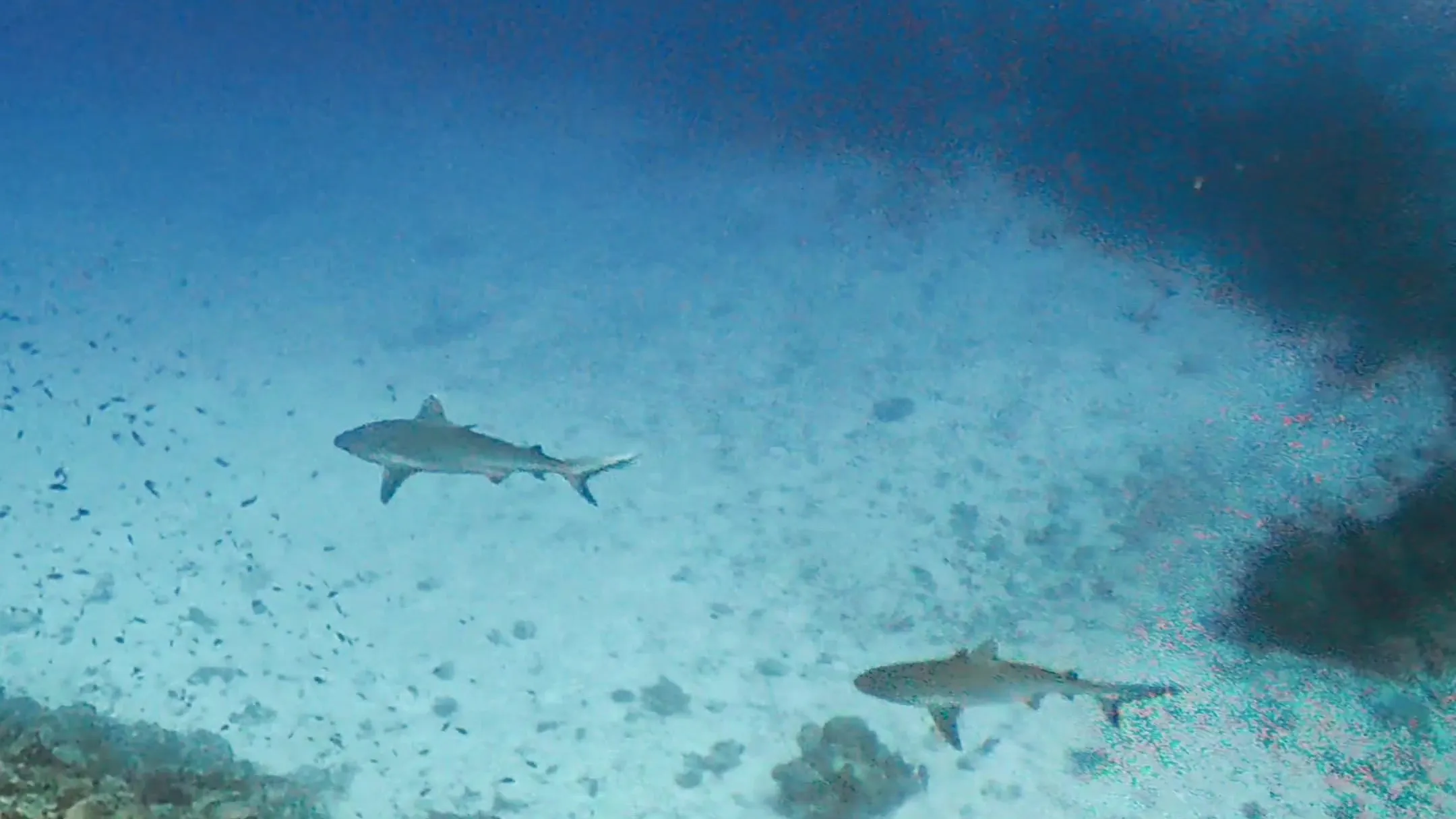
Madivaru Corner is known as a dive site — but you can snorkel there too. While I was diving, my wife and my son were snorkeling there.
Down below it was impressive: 42 minutes at 17 meters, in a strong current, the visibility was 20 meters. Gray reef sharks, whitetips, eagle rays and barracudas — animals I didn't see at the house reef. The site is reached by boat.
Reef, Entry from the boat · Visibility 20 m · seen myself August 2026
Seen: Gray reef shark, Whitetip reef shark, Blacktip reef shark, Eagle ray, Barracuda, Groupers.
Where I tell more about it
- Blacktip reef sharks in the Maldives: my first, snorkeling on the house reef of Rasdhoo
- Manta rays in the Maldives: my first encounter, snorkeling off Rasdhoo
- Turtle Reef in the Maldives, at Rasdhoo: where sharks appear and bother no one
- Swim with turtles in the Maldives: Turtle Reef off Rasdhoo
- Nurse sharks in the Maldives: dangerous when snorkeling? My experience
- Maldives rainy season or dry season? The same reef in April and in August
- Maldives local islands: which island is right for snorkeling?
At a glance
- Local feel touristy
localtouristy
- The island above water
- 3/5
- Access to the reef from the beach
- 4/5
- Underwater life at this reef
- 4.5/5
- Trips in the atoll
- 4.5/5
Highlights of the island
A reef manta at the house reef, every morning in August · Sharks right into the shallows, directly from the beach · A bikini beach at one of the most beautiful reefs of the trip
Highlights in the atoll
Turtle Reef — about ten turtles in an hour and a half · Madivaru Corner: gray reef sharks, eagle rays, barracudas
My personal assessment, as of August 2026.
What it was like
Here the time of day decides, not the month: in the morning the water is clearest, from midday the tide stirs up the sand and everything looks blurry. I was here twice, once in the dry season and once in the middle of the rainy season — I didn't notice any difference in the visibility at this reef.
What the atoll is known for
I did not see this myself — it is here because it belongs to this atoll. Documented, not experienced.
- Madivaru Corner has a second name: Hammerhead Point.
- Scalloped hammerheads rise from the depths there at dawn. The boats leave around 5:45 a.m., the descent goes to about 30 meters into the open blue.
- This is a dive for advanced divers, not a snorkeling spot — and an encounter is never certain.
- The basic certification isn't enough for this depth: Open Water ends at 18 meters, only the next level (Advanced) goes to 30. That applies to SSI as well as PADI.
- Even without hammerheads, gray reef sharks, eagle rays, barracudas and tuna are around there.
Asked locally — not seen myself, but asked about myself:
- You can also dive shallow there, at 12 meters or less. So the certification doesn't decide whether you come along — but what you get to see.
- If you want to see hammerheads in season, you should have at least the Advanced: the site is deep, and the sharks don't come up far.
- When we were there in August 2026, no one had seen hammerheads for five days. In the time before that, they had been there fairly reliably.
Sources: PADI: depth limits of Open Water and Advanced Open Water · Splashpacker: diving with sharks at Madivaru Corner · Rasdhoo Divers: dive sites in Rasdhoo Atoll