Tips
Baa Atoll Maldives: which local island, how to get there, what it costs
- Kamadhoo and Maalhos
- speedboat or domestic flight
- mantas 1 May to 1 December
- fine with kids
In short Kamadhoo is tidy and well organized, Maalhos more natural and original – there, the Hanifaru trip cost 70 instead of 144 US dollars per person.
Translated from the German original.
While snorkeling I estimated visibility, water temperature and depth, just as I experienced them on the days I was there. On dives the dive computer measured depth and duration, and values with a named source show what is usual there, not how it was for me.
The same trip to the same bay had two prices in Baa Atoll in the Maldives. When we wrote to both accommodations before the trip, the ride to the mantas in Hanifaru Bay from Maalhos cost only half of what we were quoted on Kamadhoo. The accommodations, on the other hand, cost about the same.
In August 2026 we spent nine nights in the atoll, four on Kamadhoo and five on Maalhos. Both are inhabited islands with the reef close to the beach, and from both you go out to the bay. They are still different, namely in character: Kamadhoo is neat and well organized, Maalhos more natural and unspoiled. The atoll has thirteen inhabited islands; we know two of them.
At a glance
| Location | In the central west of the Maldives. Since 2011 the whole atoll has been a UNESCO biosphere reserve |
| Which island | The two we stayed on: Kamadhoo — neat, well organized, reef thirty meters off the beach. Maalhos — more natural and unspoiled, the Hanifaru trip cost 70 instead of 144 US dollars per person there |
| Getting there | No public boat from Malé. Domestic flight to Dharavandhoo or speedboat through the accommodation, for us 65 US dollars per person |
| Within the atoll | RTL ferry since July 2025, 35 to 70 rufiyaa each way (about 2 to 4 euros). It doesn’t run on Fridays |
| Accommodation | Around 100 euros a night for three people (August 2026); considerably different depending on season and occupancy |
| Travel time | May 1 to December 1 — almost only then do the mantas gather in the bay. The best visibility on the reef, on the other hand, is between December and April |
| In the bay | At most eighty snorkelers at a time, at most forty-five minutes, no scuba diving, three meters of distance; entry fee 310 rufiyaa (about 17 euros) only for those who go in the water |
| For whom | For families too. Children may go along to the mantas if they swim confidently or wear a vest |
| Be sure to pack | Water shoes for getting in, and mosquito protection |
Contents
- At a glance
- Kamadhoo or Maalhos: which local island in Baa Atoll?
- How do you get to Baa Atoll from Malé?
- Baa Atoll ferry: how do you get from island to island?
- What does a stay in Baa Atoll cost?
- Hanifaru Bay: why do the mantas gather in this one bay?
- Baa Atoll manta season: is it worth it from December to April?
- What do you do when there are no mantas?
- Can children go along to the mantas?
- What rules apply in Hanifaru Bay?
- My conclusion
- Frequently asked questions
- Further reading
Kamadhoo or Maalhos: which local island in Baa Atoll?
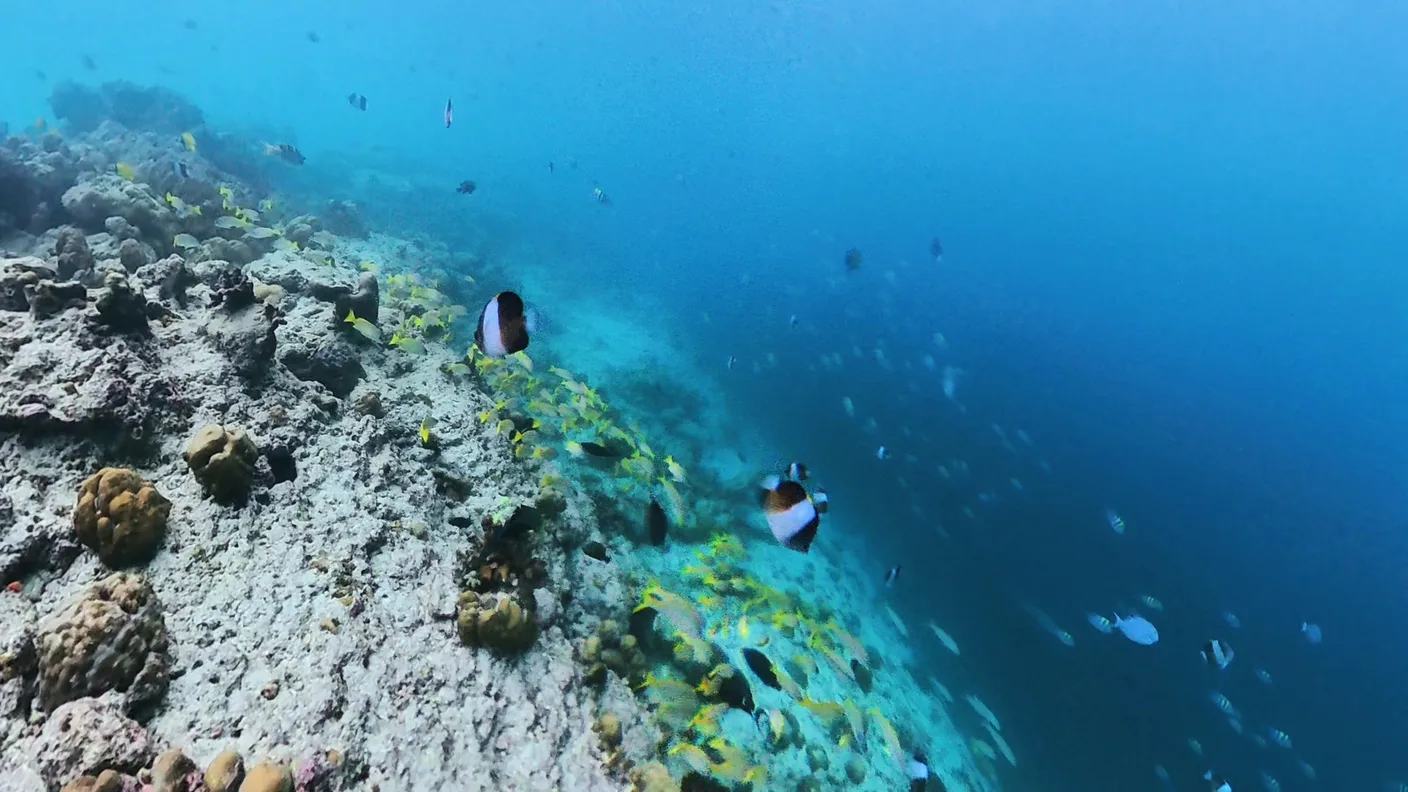
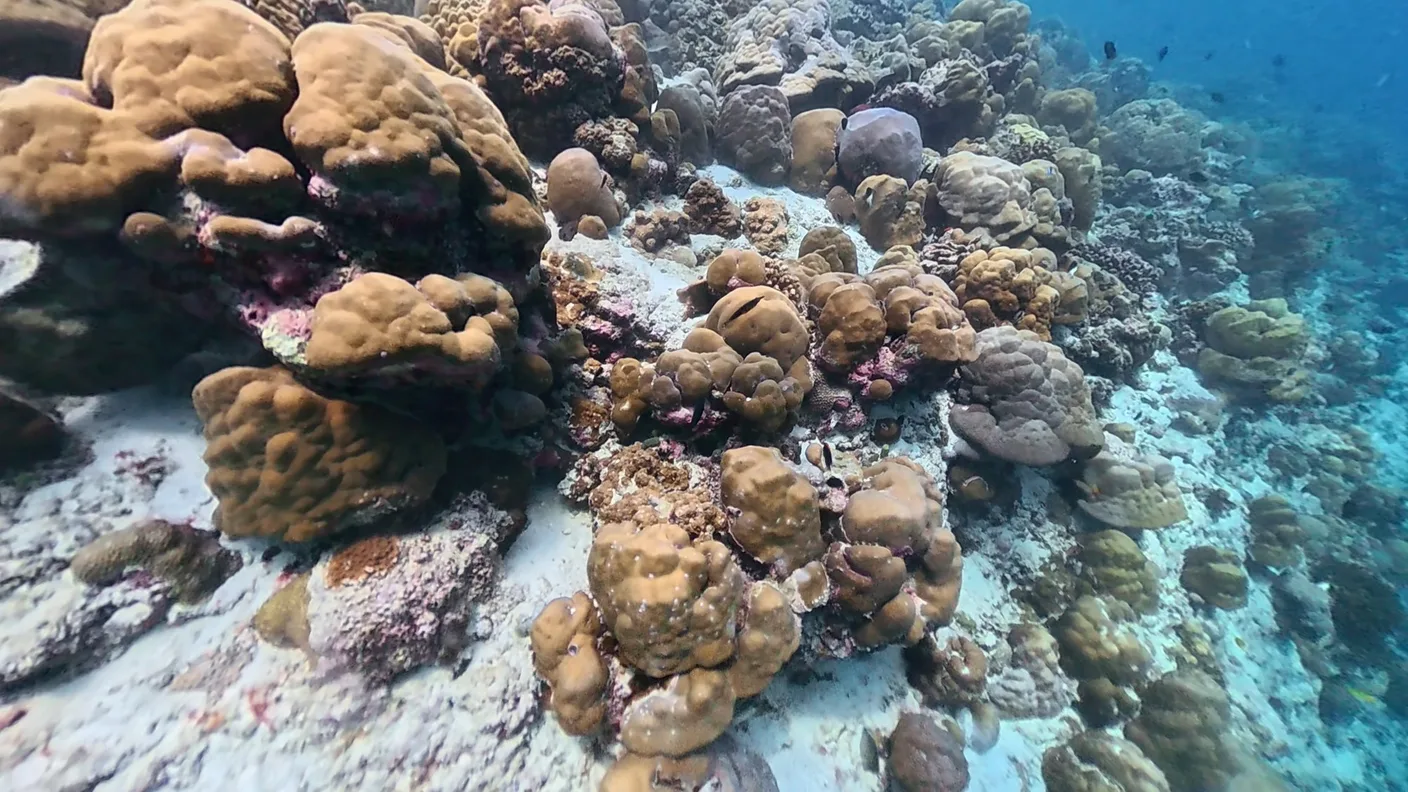
If you stay on Kamadhoo, you walk from the sand into the water at the bikini beach. After thirty meters over shallow water, the reef begins. You still need water shoes; the first corals lie in the shallows. Maalhos also has its reef close to the beach, and the current on the house reef is usually weak. You shouldn’t touch anything on either reef. Much of what grows there takes decades and is broken in a second, and anyone who touches something also takes a risk themselves: fire corals sting, lionfish sting.
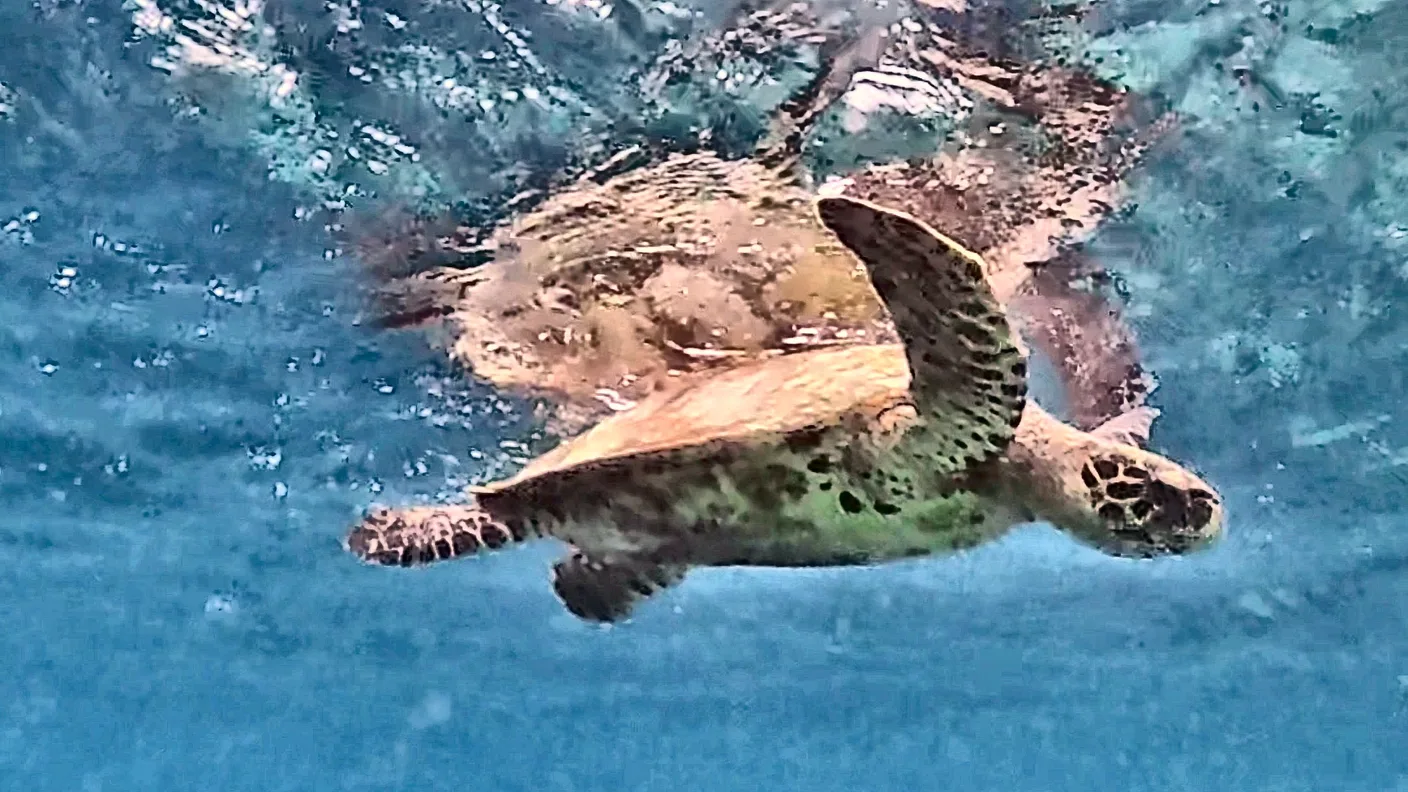
On the first day at the house reef of Kamadhoo, a turtle swam past us just below the surface. Later eagle rays and blacktip reef sharks showed up, and on one afternoon dolphins moved along the reef edge further out, visible from land. At the house reef of Maalhos we didn’t see anything special, but lots of typical reef fish.
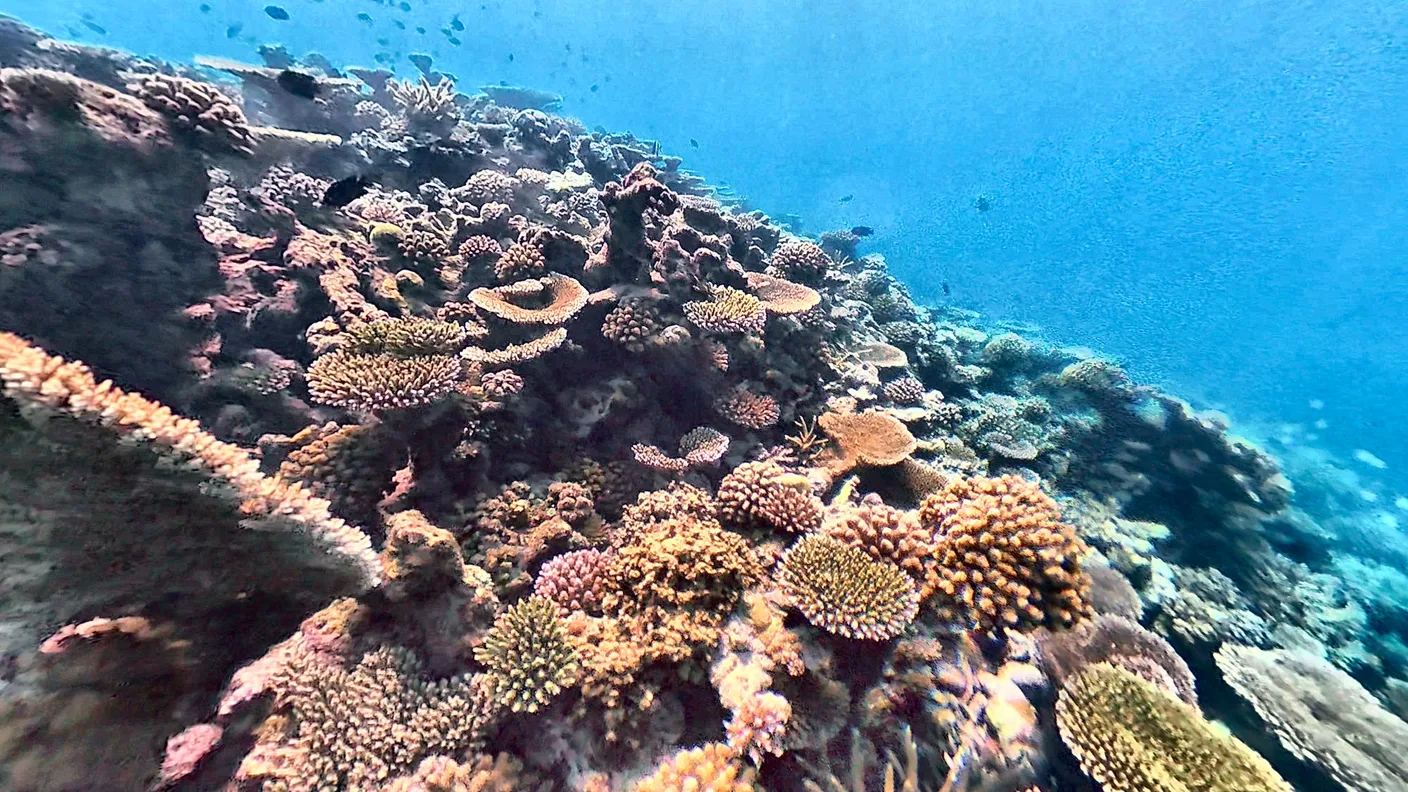
From Maalhos we went out to reefs twice. One is called Faana Faru. Our guide called it Coral Garden and said he always used to dive there; it was something like his office. From Maalhos it is twenty minutes by boat to Hanifaru Bay.
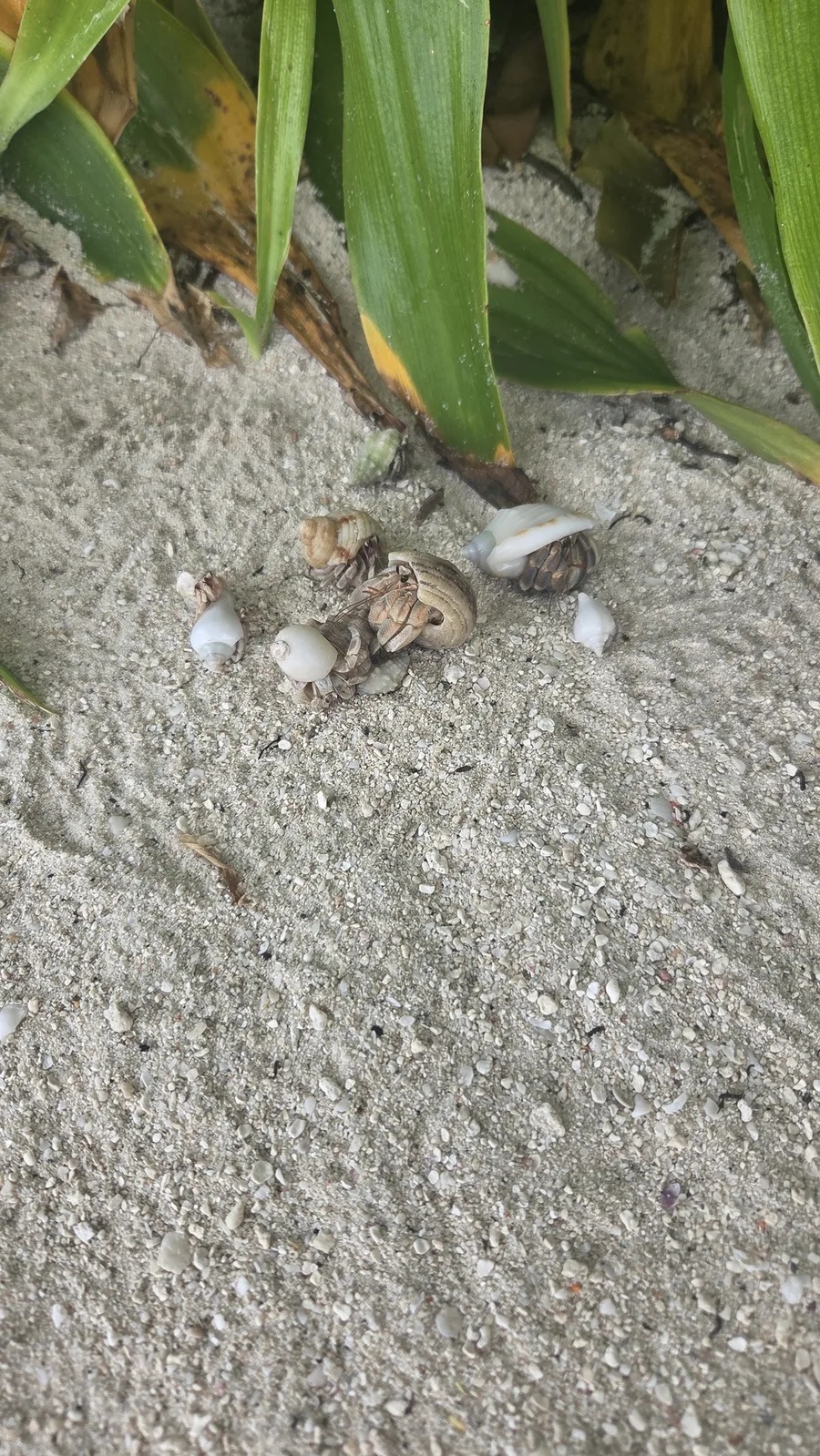
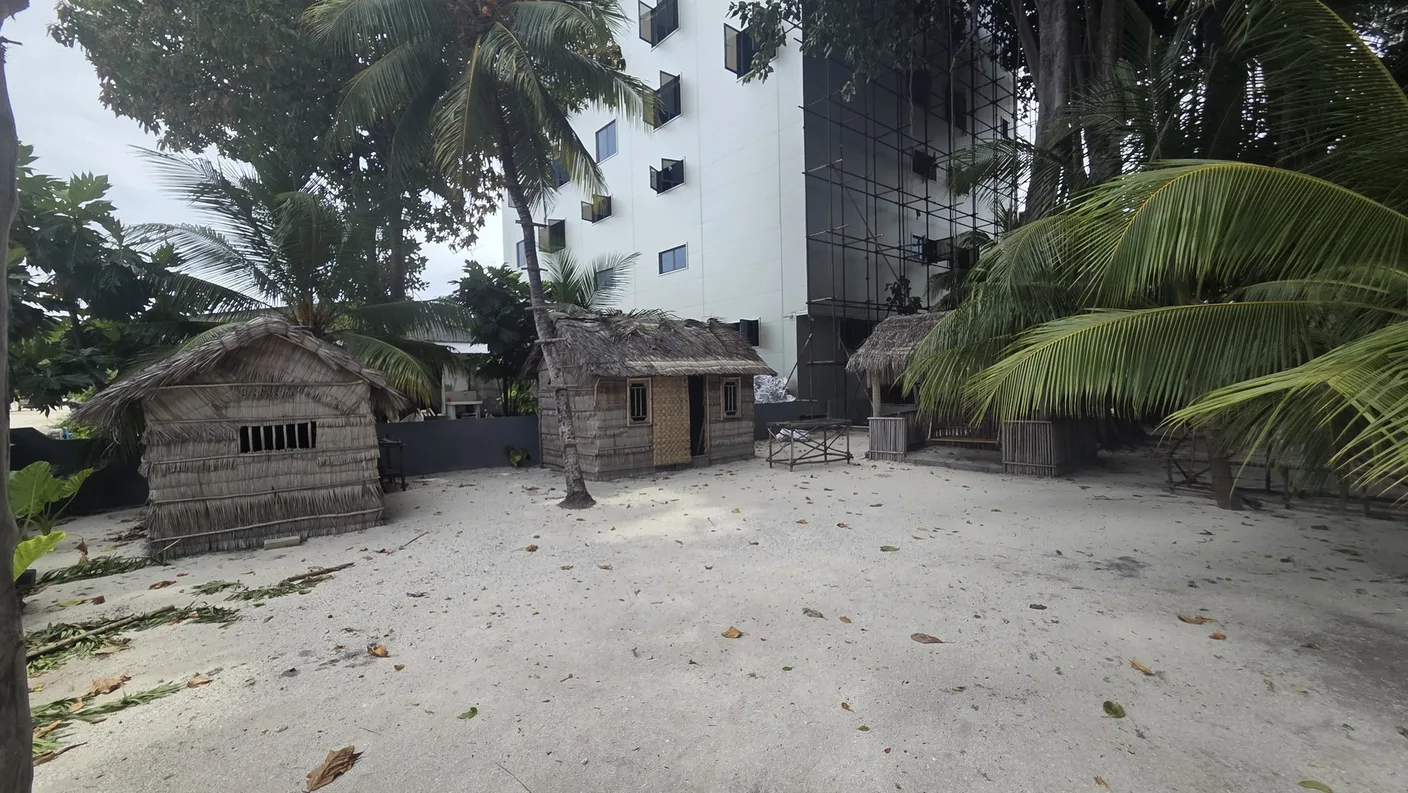
On land the two islands are very different. Kamadhoo is neat and tidy: the beach is well kept, things are organized, and food, accommodation and offerings are at a higher level. At the same time the island is tiny, six hundred by five hundred meters, with about four hundred inhabitants who belong to three families. And it is growing fast: in August there were six hotels on little space, one chain keeps building, and the new buildings have up to eight floors. Maalhos is more natural and unspoiled and in August was still not very touristy, with a few shops and few cafés.
Muslim village communities live on both islands. Swimwear belongs on the designated bikini beach; elsewhere shoulders and knees stay covered, and there is no alcohol at the guesthouses.
How do you get to Baa Atoll from Malé?
There is no public ferry from Malé. The state ferry network RTL doesn’t have a single stop in Malé Atoll. There are cheap public ferries in the Maldives, but only to destinations closer to the capital.
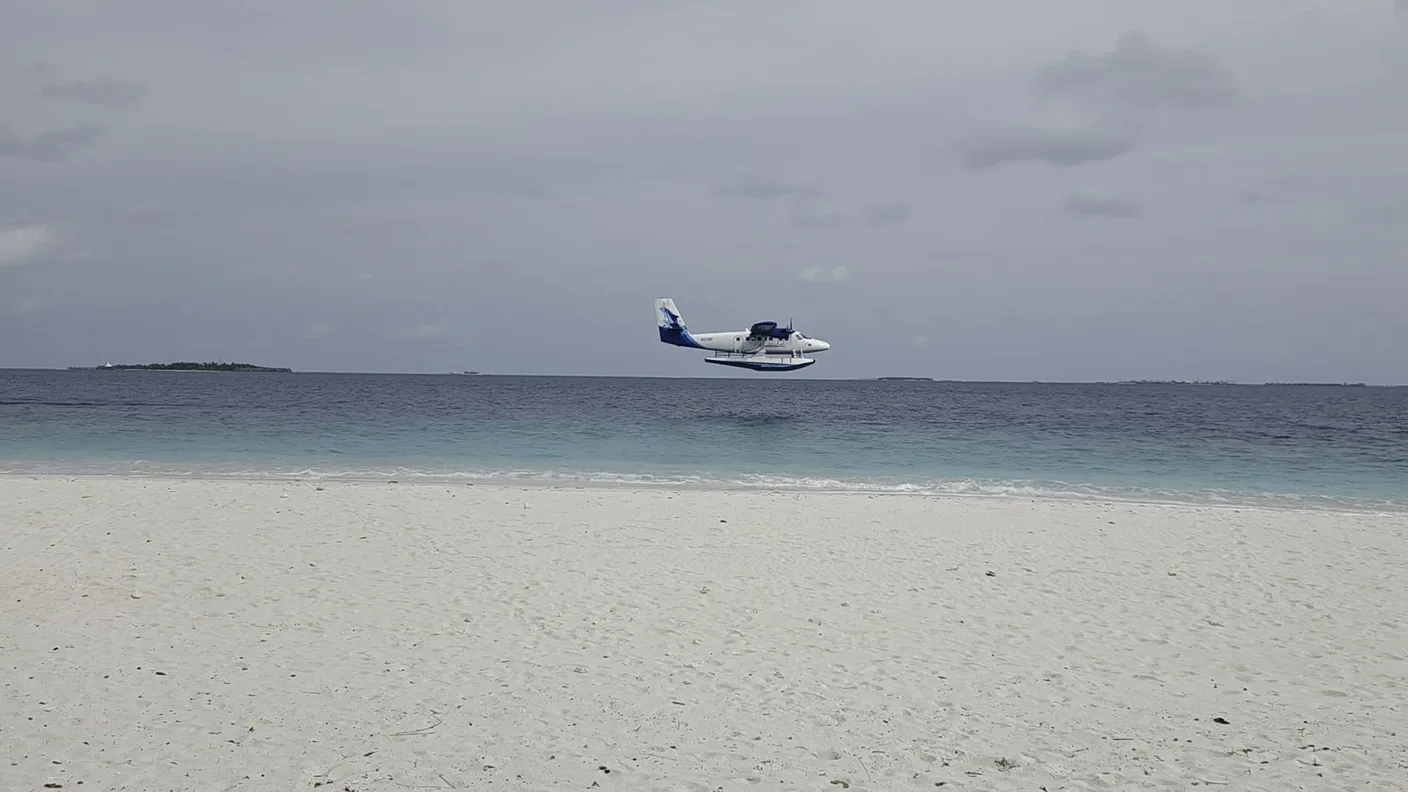
That leaves two ways. The domestic flight goes to Dharavandhoo, the airport island of the atoll, and takes twenty to thirty minutes. The speedboat takes two to two and a half hours from Malé. Neither of the two airline websites publishes a tourist fare for the flight; one travel site names 110 US dollars one way. Plan for waiting time in Malé.
A domestic flight is not the same as a seaplane. The domestic flight is a propeller plane and lands on a runway. Seaplanes land on the water and mainly fly to the resorts. Still, you can get to a local island with one: for our trip to Kamadhoo, a seaplane was planned as an alternative to the boat, twenty-five minutes for 170 US dollars per person, children under twelve half price.
For the speedboat to Kamadhoo, 65 US dollars per person had been agreed, to be paid on site in US dollar bills from series 2017 or by card with a 3.5 percent surcharge. On the trip to Kamadhoo it got very choppy and unpleasant. Our son slept the whole way.
If you book the boats through the accommodation instead of through a portal, you pay less; how that works is shown in the article about island hopping on your own.
The domestic flight back to Malé is occasionally canceled. So it shouldn’t be scheduled tightly before the flight home.
Baa Atoll ferry: how do you get from island to island?
Since July 28, 2025, the state RTL fast ferry has been running in Baa Atoll, connecting thirteen islands. For snorkelers that changes a lot: you change islands for a few rufiyaa instead of chartering a boat. We took it from Kamadhoo to Maalhos and paid 190 rufiyaa together for two adults and our son, about 11 euros.
In September the fares were between 35 and 70 rufiyaa each way, so about two to four euros. From Dharavandhoo it is ten to fifteen minutes to Maalhos, forty to Kamadhoo.
Nothing runs on Fridays. Heading north, meaning to Kamadhoo and beyond, there is only one trip a day, and it leaves in the afternoon. For the day of arrival that means: time your flight so you still catch the ferry, otherwise you’ll need your own boat.
What does a stay in Baa Atoll cost?
| Item | What it costs |
|---|---|
| Speedboat Malé → Kamadhoo | 65 US dollars per person, payable on site (booked through the accommodation, August 2026) |
| Domestic flight Malé → Dharavandhoo | no tourist fare published; one travel site names 110 US dollars one way (as of January 2026) |
| Crossing within the atoll by RTL | 190 rufiyaa (about 11 euros) for two adults and one child (paid ourselves) |
| Accommodation on Kamadhoo | about 400 euros for four nights, two adults and one child (paid ourselves, August 2026) |
| Accommodation on Maalhos | about 470 euros for five nights, two adults and one child (paid ourselves, August 2026) |
| Hanifaru trip from Maalhos | 70 US dollars per person according to the price list; we paid about 150 euros for the three of us; there was no entry fee for our son because he stayed on board |
| Hanifaru trip from Kamadhoo | 144 US dollars per person according to the price list, plus 17 % tax and 10 % service charge |
| Entry fee Hanifaru Bay | 310 rufiyaa (about 17 euros), due only for those who go in the water (official rate) |
So nine nights in Baa Atoll cost us about 870 euros for accommodation, around 100 euros per night for three people. Both were booked through a booking portal: a hotel on Kamadhoo, a guesthouse on Maalhos. Don’t rely on that figure. What a place costs depends on the season and on how fully booked it is.
Ask about the prices of excursions before booking, because that’s where the biggest difference lies. The guesthouse on Maalhos sent us a whole list, from the reef trip for 50 to the picnic on another island for 70 US dollars.
Hanifaru Bay: why do the mantas gather in this one bay?
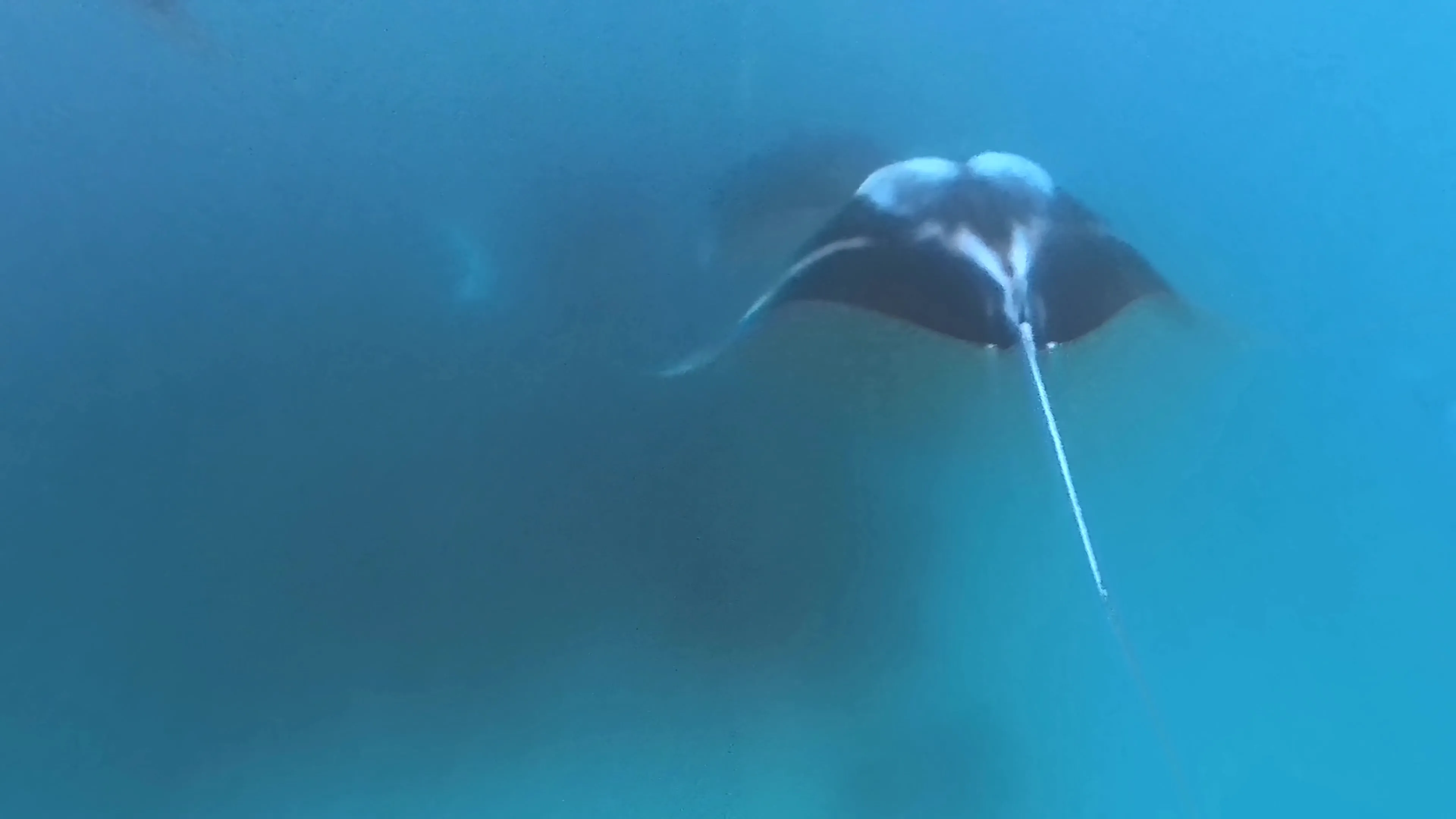
In the water I first see a few mantas, then more and more. They pass beneath me in formation, sometimes so close that I pull in my arms and legs. None of them touches me; they move aside with a small change of course.
We were in the water for a good half hour, and for maybe two minutes of it I didn’t have a manta in view.
Our guide explained the many animals with the shape of the bay, and that has since been worked out by calculation. Hanifaru Bay is a dead end, seven hundred by two hundred meters, enclosed all around by shallow reef and open only over seventy-five meters. A current simulation by the University of Plymouth shows what happens then: behind a small nose in the entrance, a closed eddy forms on the rising tide. It holds the plankton in place. On the falling tide, the water simply flows through the bay. So the food builds up faster than the current washes it out, but only while the tide is coming in.
The visiting window runs from May 1 to December 1, that is, mostly through the southwest monsoon: ninety-five percent of the manta visits recorded with tags fall in this period. Within the season they cluster around full and new moon and shortly after high tide.
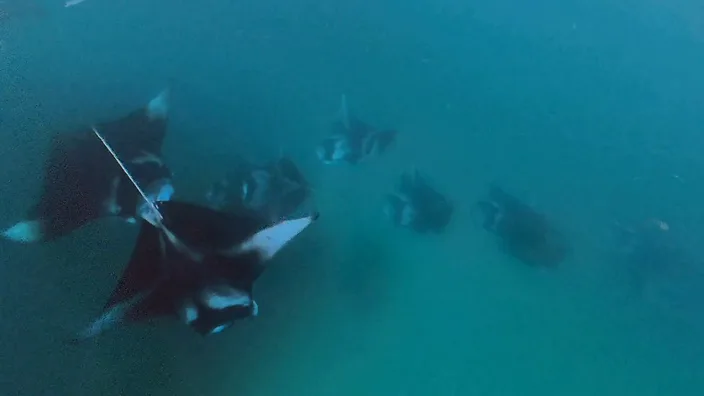
Many sites advertise with records. On average there are about thirty-five animals in the bay during a feeding event. More than 200 animals occurred only five times in 14 years of counting.
Baa Atoll manta season: is it worth it from December to April?
For mantas: no. The bay is closed and the animals are gone: in the northeast monsoon, from January to March, they use the western sides of the atolls. In 2024 the Manta Trust counted 4,592 manta sightings in the whole of Baa Atoll, three quarters of them in Hanifaru Bay. Not a single one fell outside May to November.
For snorkeling: yes, definitely. December to April is high season in the Maldives, and the dry season falls between January and March. Above all, visibility is at its best then: the Soleni dive center in the atoll gives up to fifty meters of visibility for December to April, and in manta season fifteen to twenty. What else determines visibility when snorkeling in the Maldives is shown in the article about visibility at low tide, high tide and in rain.
The figures for manta season fit our August. At the house reef of Maalhos, visibility reached about fifteen meters. At the reefs the boat from Maalhos took us to, it was about twenty.
What do you do when there are no mantas?
Nobody can guarantee the animals, and you still have to pay for the trip. One resort in the atoll only calls its guests once the mantas are in the bay. I didn’t find a guesthouse that handles it that way. So pick an island where you’re happy in the water even without an excursion.
On Maalhos, the boat stopped one day in the middle of the open sea. Mantas had been sighted at a cleaning station. We went into the water. The mantas were actually there, outside the famous bay. We also met our first manta at a completely different reef. On the reef, the same applies everywhere: keep your distance, don’t swim after it, the animal decides how close it comes.
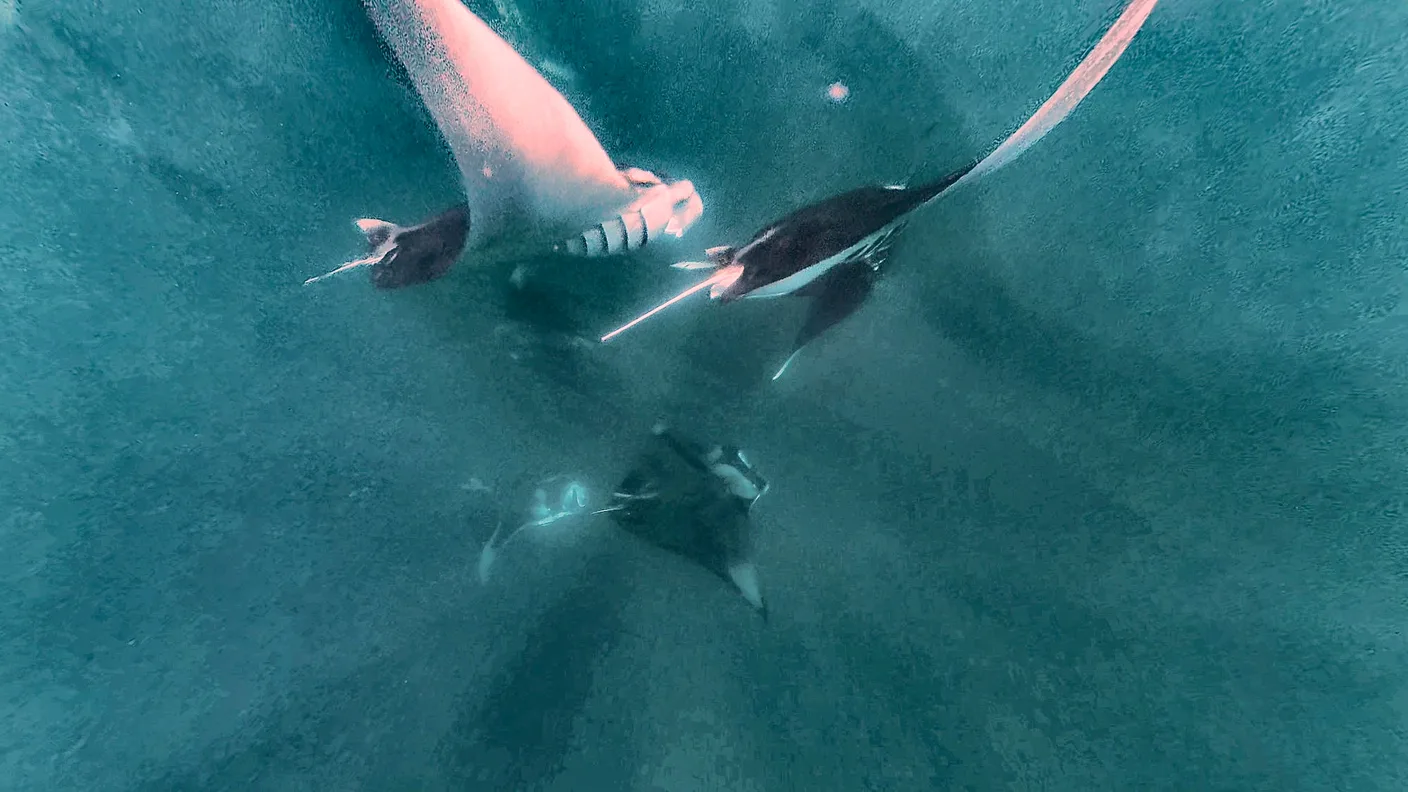
On Maalhos we were also offered night snorkeling with whale sharks. For this, spotlights are pointed at the water, which brings the plankton up, and usually mantas or whale sharks follow. Everything stays confined to the beam of light, and far fewer people are out. We didn’t go because of the weather; the guides spoke much more positively about it than about the daytime tours.
Can children go along to the mantas?
Yes, if they swim confidently or wear a vest. The mantas are harmless. They filter plankton, and they move out of your way instead of touching you. We found the local guides reliable.
In the end, something completely different kept our son on board: scratched-open mosquito bites that stung too much in the salt water. That wasn’t the only day it kept him out of the water.
Bring mosquito protection, and both kinds: something against the mosquitoes and something for after the bite. And don’t sit under the trees. That’s where the mosquitoes gather, and a few meters of distance are enough for far fewer bites.
For our son, the best part of the excursion day was that he was allowed to steer the boat on the way back.
What rules apply in Hanifaru Bay?
The limits are set by the Maldivian government’s management plan. Rangers monitor them. At most eighty snorkelers in the water at a time, at most forty-five minutes, no scuba diving, three meters of distance from the animals. You snorkel at the surface, led by a licensed guide; you may only dive down briefly after agreeing it with him.
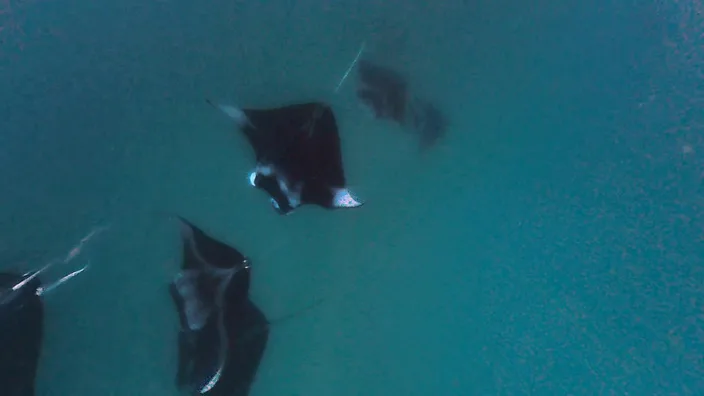
On top of that there is a rotation that was mentioned on board: one day it’s the resorts’ turn, the next day the local islands’. If you only stay two nights, you may therefore have only one day to choose from.
My conclusion
Baa Atoll works without a resort. The effort is manageable: a flight or a speedboat, then a ferry for a few rufiyaa. If you want to see the bay and the mantas, come between May and December — and choose an island whose reef is worth it even without an excursion.
Frequently asked questions
Is there a ferry from Malé to Baa Atoll?
No. The state ferry network RTL has no stop in Malé Atoll. That leaves the domestic flight to Dharavandhoo or a private speedboat; the boat is best booked through the accommodation.
Kamadhoo or Maalhos — what’s the difference?
Kamadhoo is neat and well organized, with a higher standard of food, accommodation and beach care; there is also a lot of construction there. Maalhos is more unspoiled, and the Hanifaru trip costs only half there. On both, the reef lies close to the beach; on Kamadhoo it is thirty meters.
When are the mantas in Baa Atoll?
The bay is open from May 1 to December 1, and the gatherings fall in the southwest monsoon. Around full and new moon and shortly after high tide the chances are greatest.
Can you dive in Baa Atoll?
In the atoll yes, in Hanifaru Bay no. Scuba diving is prohibited there.
Where the information comes from: rules, fee and visiting window of the bay from the management plan of the Maldivian government, location, biosphere reserve and the number of inhabited islands from UNESCO, schedule and fares from the RTL ferry’s booking system. The sighting figures come from the Manta Trust’s annual report for Baa Atoll, the current simulation from Cairns and colleagues (University of Plymouth, 2026). Online sources accessed on September 23, 2026, the location on October 15, 2026. Everything experienced is from our trip in August 2026. The euro amounts for the rufiyaa are rounded, converted at the exchange rate of September 23, 2026.
Further reading
- Hanifaru Bay: what the day with the mantas in the bay felt like
- Kamadhoo island page: reef and village in detail
- Maalhos island page: more from the days on the island
- Sharks in the Maldives: the blacktip reef sharks off the beach, also at the Bikini Beach of Kamadhoo
- Comparison of the local islands: Kamadhoo and Maalhos alongside islands in other atolls
- Rainy season and dry season: how the two travel seasons differ
- My snorkeling and diving gear: what we bring along
- Overview of the Maldives: all the islands of this trip