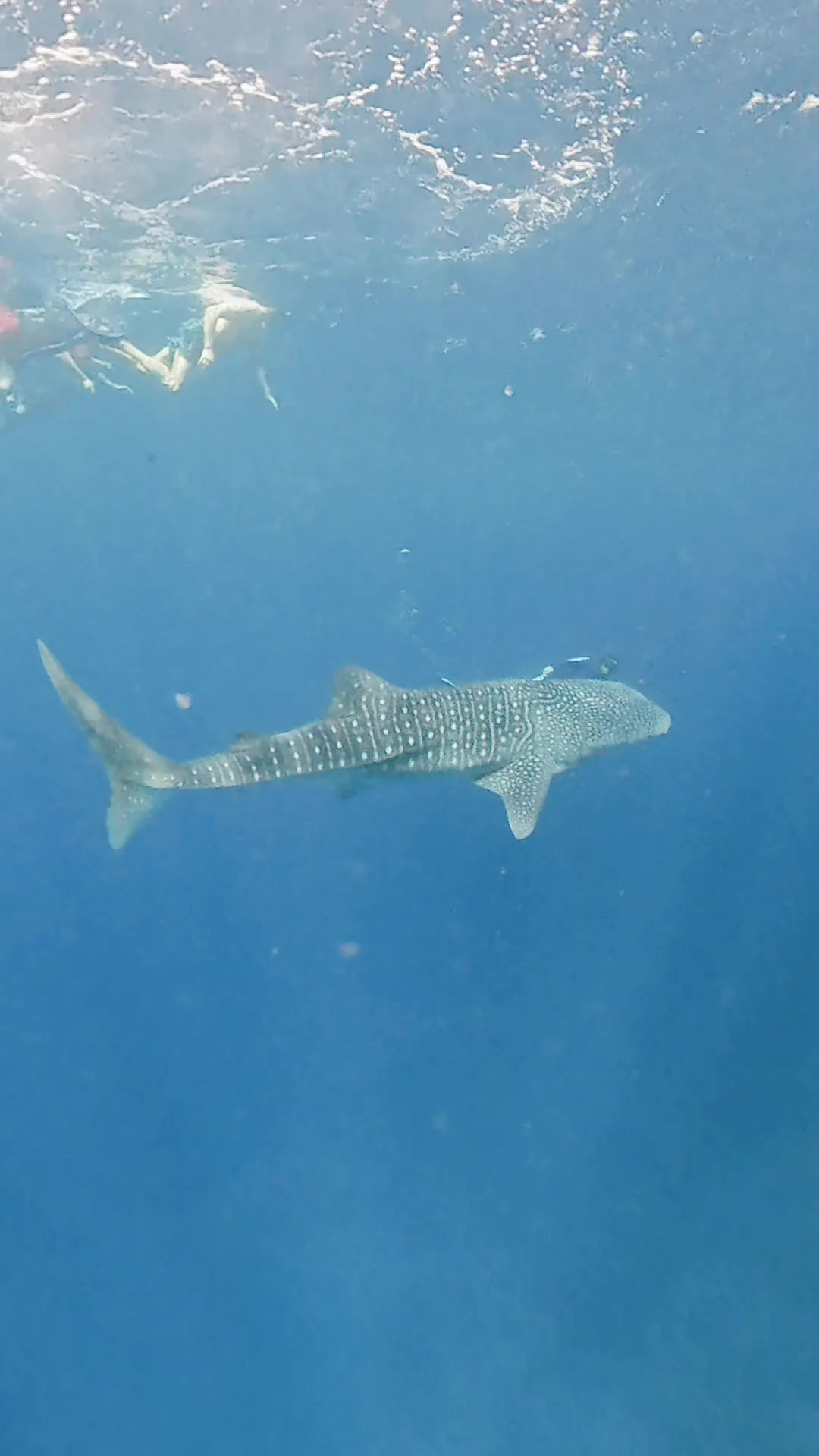
Travel report
Whale shark Maldives: the tour from Dhigurah, five meters of whale shark and fifty snorkelers
- Dhigurah, South Ari
- boat trip
- 90 US dollars, child 45
- August 2026
In short The whale shark was there – and with it fifty snorkelers and ten divers.
Translated from the German original.
While snorkeling I estimated visibility, water temperature and depth, just as I experienced them on the days I was there. On dives the dive computer measured depth and duration, and values with a named source show what is usual there, not how it was for me.
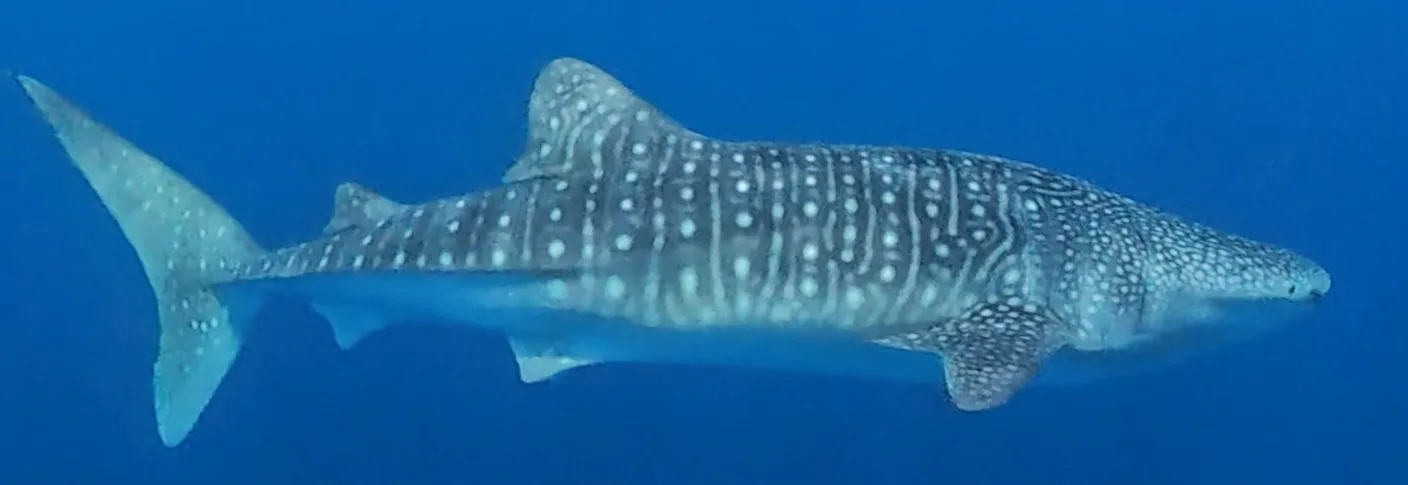
Mask on, fins on, into the water. I look down, camera on, and there it is, swimming straight toward me and passing underneath me. What a beautiful animal. Great colors in the sunlight. Its movements are so slow, and yet it is so fast. I estimate it at five meters. For a whale shark, that is still a young animal.
Then comes the rest. Behind the animal there are about fifty snorkelers and ten divers in the water, and they roll over us like a train. It’s like the final sprint of the Tour de France in Paris: fins, hands, arms, everywhere. Terrible.
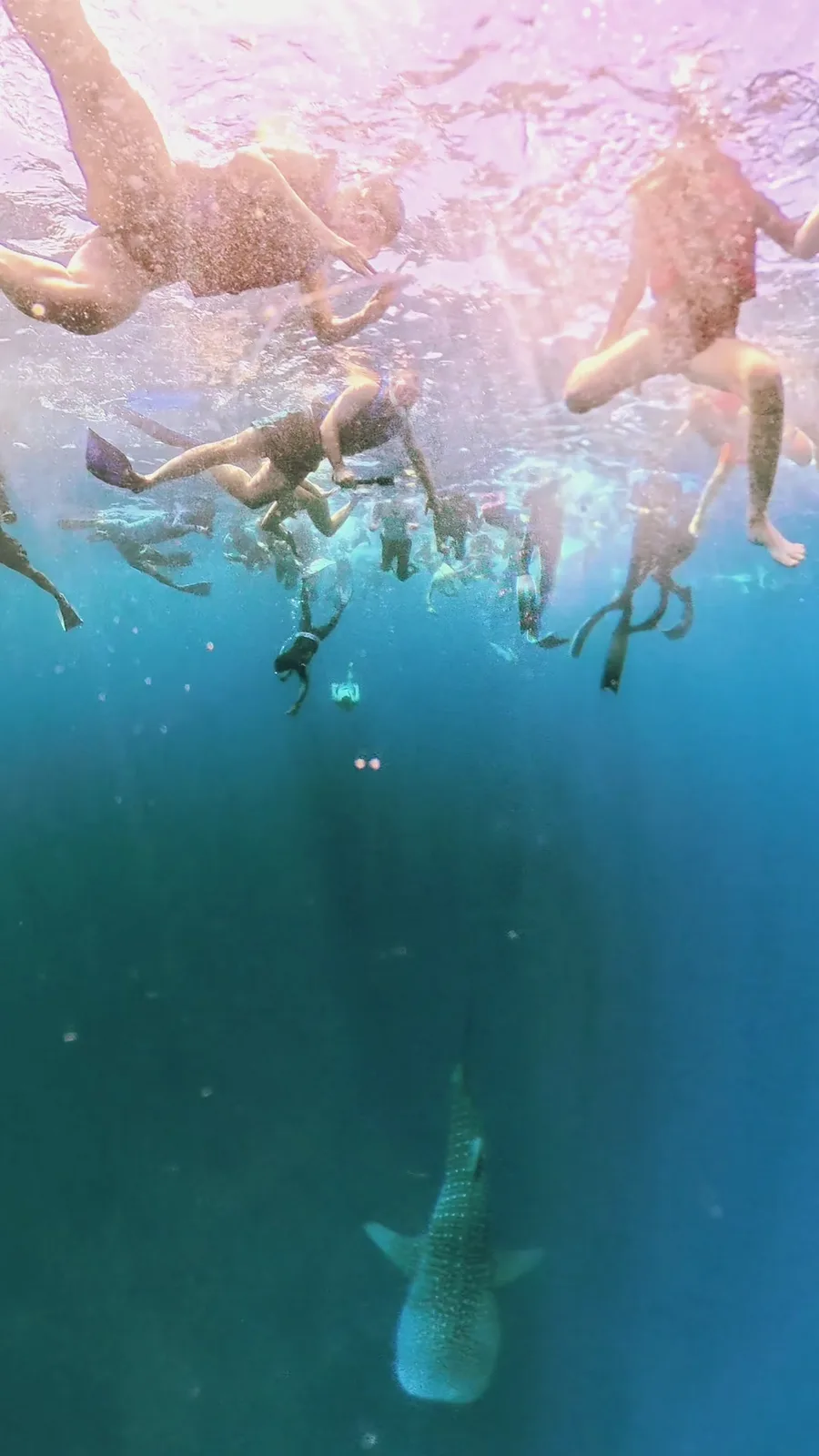
Is the whale shark tour in the Maldives worth it? For the animal, yes, but you need to know about the crowd before you book. Whale sharks are in South Ari Atoll all year, and from Dhigurah it is about an hour by boat. You are not alone with them there: on our day in August 2026 about ten boats were at the spot. If you want it calmer, the Hanifaru Bay in Baa Atoll around the full moon is an alternative. I saw many mantas there, but no whale shark.
At a glance
| Where | Rangali Madivaru in the South Ari Atoll, Maldives, about an hour by boat from Dhigurah |
| Getting to Dhigurah | by speedboat after landing in Malé; the operators state 2:15 to 2:30 hours, in calm seas it’s faster (August 2026) |
| Price | 90 US dollars per adult, 45 US dollars for children under 12 (August 2026) |
| When to go | whale sharks all year round in the South Ari Atoll (Scientific Reports, 2021). There is no guarantee: in our week, on Monday and Tuesday, no operator saw an animal |
| Getting in | from the boat, ahead of the animal; life jackets for children and anyone who wants one |
| Crowds | on our day about ten boats, around fifty snorkelers and ten divers at one animal |
| Our day | August 6, 2026, 12 noon: about 20 meters visibility, sunny, 30 minutes in the water; heavy swell on the way out |
| Rules | at least 3 meters distance from the body, 4 meters from the tail, no touching, approach calmly from the side (Visit Maldives, press release of October 13, 2024; as of October 30, 2026) |
| Difficult for | anyone who doesn’t want to swim alone in the crowd |
Contents
- At a glance
- When is the best time to see whale sharks in the Maldives?
- How does the whale shark tour from Dhigurah work?
- How crowded is it with the whale shark, really?
- What do the guides say about the crowds?
- What rules apply when swimming with whale sharks?
- Why is this so hard to regulate?
- Is snorkeling with the whale shark harmful to the animal?
- Are there calmer alternatives to the whale shark tour?
- My conclusion
- Frequently asked questions
When is the best time to see whale sharks in the Maldives?
There is no whale shark season in the strict sense in South Ari Atoll. The protected area reaches as far as Dhigurah. According to a study in the journal Scientific Reports from 2021, individual whale sharks stay there all year. Almost all of them are young males, about five meters long on average. We were there in early August, in the rainy season, and even then there were days without a single animal.
For individual months I found no source I would trust. Travel sites give different times, one for example sees the months January to April as more reliable. The study, on the other hand, speaks of a stay all year round. I can’t offer more than this contradiction.
We had four nights on Dhigurah, and that was good: we could wait for a sighting. Also expect waves. The ride out was rough for us, and the crossing to Kamadhoo two days later was rough too, with high waves.
I describe the manta season in the Hanifaru Bay in Baa Atoll in more detail in the article about the Hanifaru Bay. There it is a different question.
How does the whale shark tour from Dhigurah work?
The whale shark tours start from Dhigurah, a local island in South Ari Atoll. Dhigurah is the island for boat days. From the beach on the Bikini Beach side you don’t easily get to a good reef. Above water I found the island beautiful: a very long sandbank, turquoise sea, shade under palm trees.
On Monday and Tuesday of our week not a single operator had seen an animal. The boats pass on sightings to each other by radio. On Wednesday one was sighted again, and we thought: then let’s risk it. On Thursday, August 6, 2026, we went out. On board there were life jackets for children and anyone who wanted one.
Our guides had told us fairly before booking that it would be crowded. I had also seen videos of it myself. I hoped for the best anyway, and that is part of being honest.
About an hour of travel in heavy swell, then about ten boats are already on the horizon. The spot is called Rangali Madivaru. Everyone gets ready, mask on, fins on. The crew let us into the water ahead of the animal.
How crowded is it with the whale shark, really?
After the first moment under me, we try to follow. Sometimes I still catch a glimpse of the whale shark, but mostly an arm is in the way or a snorkeler right next to the animal. For a photo or a video I almost never have a clear view. Only when it changes direction can I film freely for a few seconds. What the Insta360 brought me in this crowd is in my camera comparison under “Read more”.
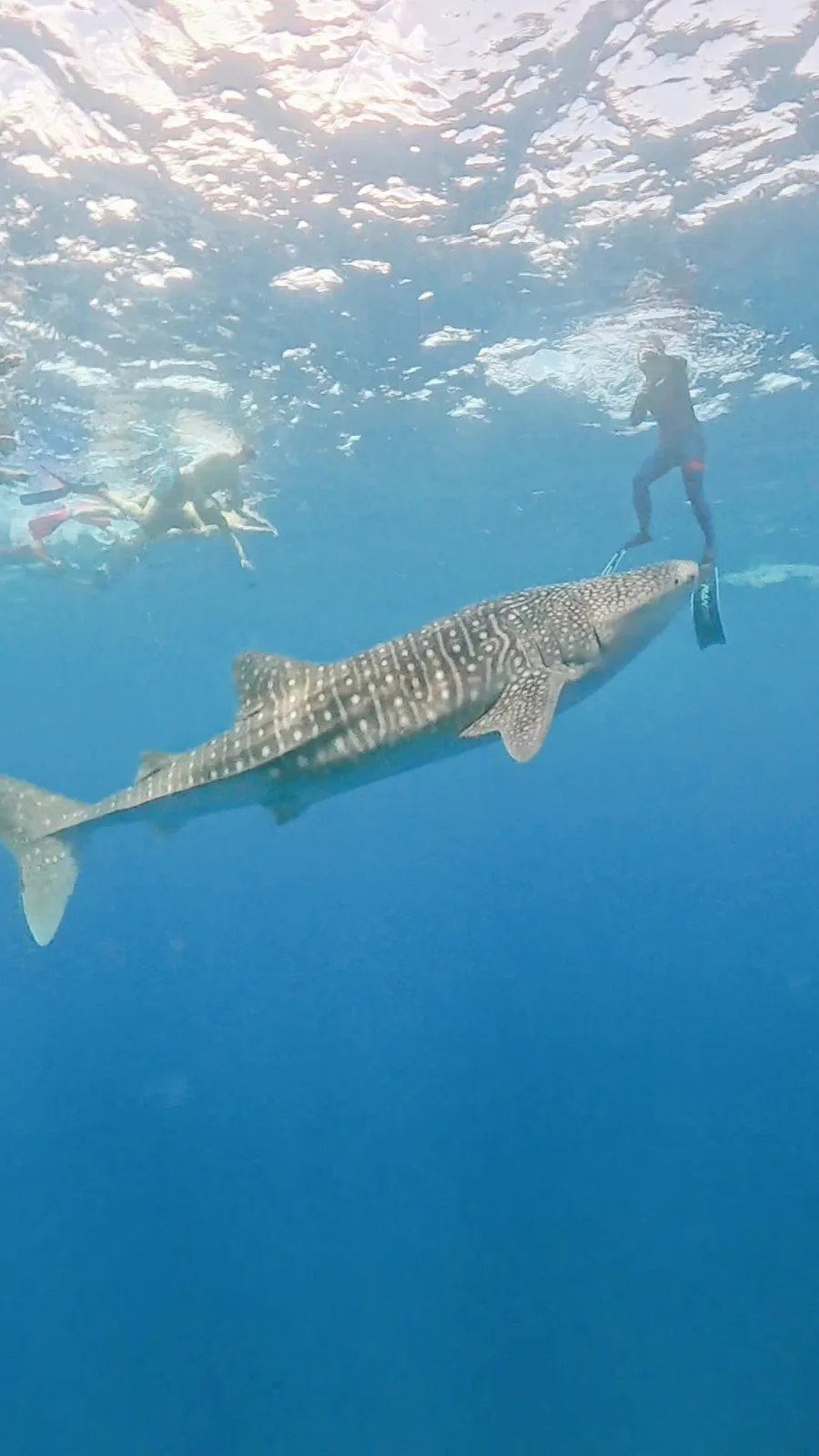
At some point it gets to be too much for me, and I swim back to the boat. On my last look down I see it slowly sinking into the depth.
On board we were of course happy, we were excited. But afterwards nobody was really cheerful and content. One fellow traveler did not see the animal at all. She had lost her companions right at the start and didn’t want to swim alone among all the others. So she went back to the boat. An hour’s ride out, and then this.
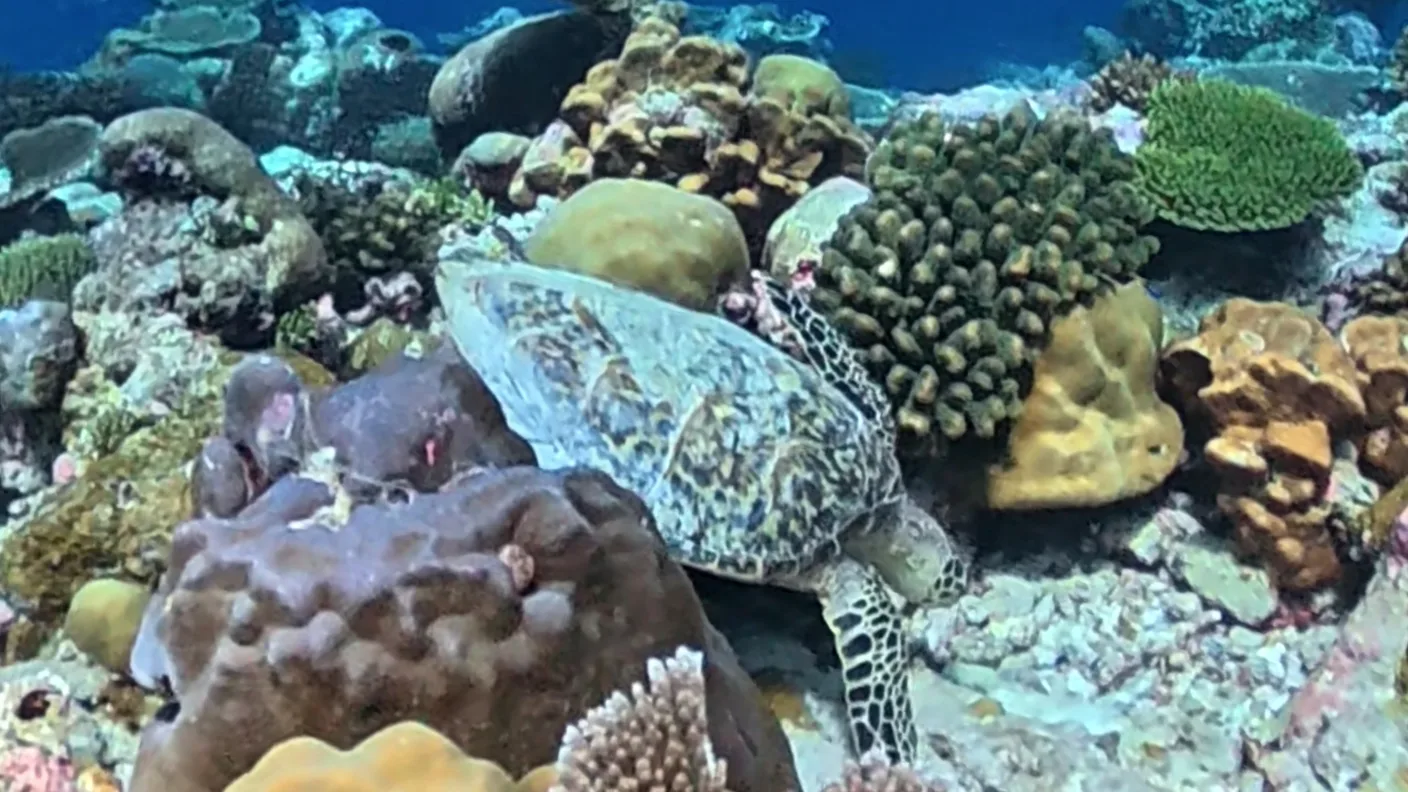
The second stop of the same day showed how it can work. At Bodufinolhu Thila there was only our boat with about ten people. We drifted along the reef for half an hour with the current and saw two small reef sharks, a turtle and many colorful fish. Twenty meters of visibility, sunny. It was mostly the calm, and that nothing was hectic. It felt like relaxing after a stressful day.
What do the guides say about the crowds?
Back at the hotel I talked to the guide of our tour about it. The answer was clear: it has gotten worse. By now it is difficult to find a whale shark at all that doesn’t already have a big cluster of tourists around it.
On another island the subject came up again. We agreed: these tours should be regulated, the way it has long been done in the Hanifaru Bay. And we also agreed that this is hard to put into practice.
That was not a survey. But the guide of our tour is out at sea every day.
What rules apply when swimming with whale sharks?
According to Visit Maldives (press release of October 13, 2024), a nationwide regulation for the protection of whale sharks applies in the Maldives. Three rules are stated clearly:
- at least three meters distance from the body, four meters from the tail
- do not touch the animal
- approach calmly from the side
In addition there is a contact zone of 250 meters around the animal. What applies there to boats and people in the water, the sources I could read state differently. I did not find the official text of the regulation. That’s why I give no number for it.
The status is October 30, 2026. A lot may have changed on site, ask the operator about the current rules.
Why is this so hard to regulate?
On paper there are rules. How far the ten boats on our day were from the whale shark, I did not see. Behind it swam fifty people, plus ten divers. The 2021 study notes that the voluntary codes of conduct in place at the time are known to be broken often. The regulation that Visit Maldives reports on in 2024 is newer than that study.
In the Hanifaru Bay the limit works because it is a bay. A manageable area that you drive into, with rangers who keep an eye on it.
With the whale sharks there is nothing of that. Rangali Madivaru is open sea. No edge, no access, no area that could be marked off. The whale shark follows its path, the boats find it by radio. You would have to control the open sea and every operator who has a boat.
I could write here that I wish for fewer boats at the animal. That is not for me to say. I booked the tour even though the guides had told me beforehand that it would be crowded, and even though I knew the videos. I was one of the fifty. What I can do instead: tell what it is like when fifty people swim after the same animal at the same time. Whoever reads this and goes anyway does so with open eyes. I had the warning too.
Is snorkeling with the whale shark harmful to the animal?
I can’t answer that. This is about the animal, not about the people. I can contribute two things: the research and my own observation.
The 2021 study examines how injuries affect the survival of whale sharks in the protected area. It names boats as one cause of injuries. Its recommendation: speed and propeller zones. I don’t pass on numbers from the study here, because I have not recalculated them one by one.
What I saw was fins, hands and arms, everywhere around the animal. Whether any of them hit the whale shark, I did not see. How the animal experienced the day, I don’t know either. On my last look it was sinking slowly into the depth, I saw nothing more.
Are there calmer alternatives to the whale shark tour?
On the same trip I came across two ways to see big animals without the crowd. One I experienced myself, the other I was only told about.
On August 14 I was in the Hanifaru Bay, and there I saw for myself that it can be different. The bay is part of the excursion program of Maalhos. Rangers watch over it, and according to the government’s management plan 2025 to 2030 at most eighty snorkelers may enter the water at the same time. Boats enter very slowly so that no animals are injured.
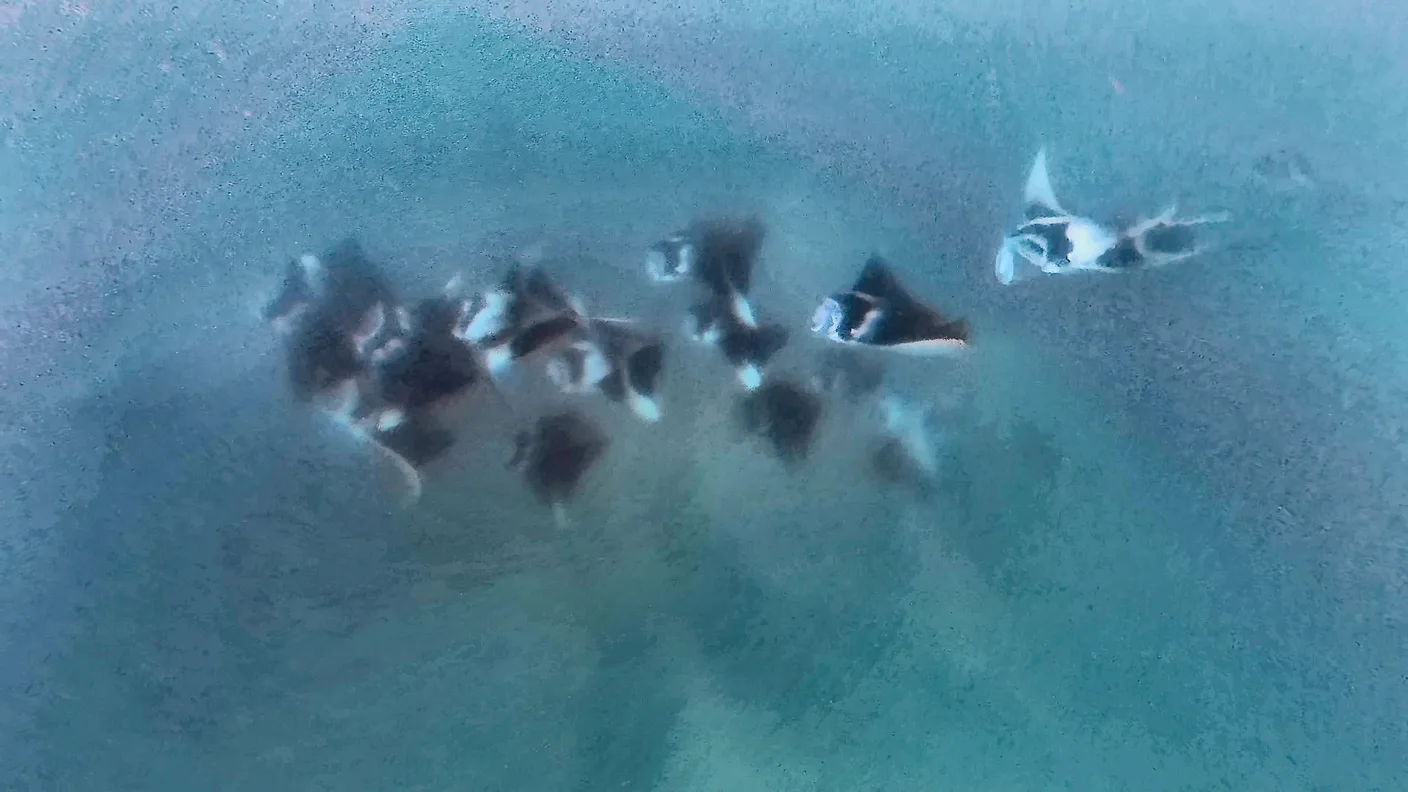
The result: about fifty mantas, thirty to forty minutes in the water. Because the bay is big, people spread out. It was not the kind of chaos you get with the whale sharks. I did not see a whale shark there. If you can plan your day around the full moon, you have, as my tip from the trip, good chances of seeing mantas there. Just at a place with regulated access. That is the difference.
The second option was also offered to us on Maalhos: snorkeling with whale sharks at night. Floodlights are aimed at the water, the light brings the plankton up, and mantas or whale sharks usually follow the plankton. Everything happens in this one cone of light, with far fewer people. We did not take part, the weather was too bad. So I don’t know what it is really like there. But the guides spoke of it much more positively than of the day tour.
My conclusion
The whale shark was one of the most beautiful and impressive animals I have seen in the sea. But the crowd behind it is just as much a part of the tour from Dhigurah. Plan several nights on the island, then you can wait for a sighting instead of booking on the off chance. And if you decide on the tour, do it with open eyes: ask the operator about the rules beforehand and keep to the distances.
Frequently asked questions
When is the best time to see whale sharks in the Maldives?
In South Ari Atoll whale sharks live all year, there is no fixed season there. A sighting is never certain anyway: in our week in August no operator saw an animal on two days.
Is the whale shark tour suitable for children?
Children under twelve pay half, and there are life jackets on board. Expect swell on the ride and a crowd in the water: one fellow traveler did not see the animal because she had lost her companions.
How much does the whale shark tour from Dhigurah cost?
In August 2026 we paid 90 US dollars per adult, children under twelve 45 US dollars. We booked the tour through our accommodation, which works with a dive base on the island. It is best to ask for prices directly at your accommodation. A travel site named 80 to 120 US dollars for Dhigurah in March 2026 (Travelliving, accessed October 30, 2026). That is a rough guide, not a market price.
How big does a whale shark get?
In the South Ari protected area the researchers of the 2021 study measured animals between 2.5 and 8 meters, about 5 meters on average. I estimate our animal at five meters.
Are there whale sharks at night too?
On Maalhos we were offered a night tour with whale sharks. We did not take part and can’t judge it.
Is the whale shark guaranteed?
No. In our week, on Monday and Tuesday, no operator saw an animal. On Wednesday one was reported, on Thursday we saw it.
Where the information comes from: Stay, size and injuries of the whale sharks from the study by Harvey-Carroll et al. in Scientific Reports 11 (2021). The rules from the press release “The Maldives Takes Significant New Step to Enhance Conservation of Whale Sharks With National Regulation” by Visit Maldives of October 13, 2024. The price range from Travelliving (March 18, 2026) as a rough guide. The upper limit of eighty snorkelers in the Hanifaru Bay from the government’s management plan 2025 to 2030 (accessed in September 2026). Accessed October 30, 2026. Everything experienced is from our trip in August 2026.
Read more
- South Ari Atoll on your own: the rules in the protected area, getting there and costs
- The manta season in the Hanifaru Bay: if you want it calmer
- Kamadhoo: the island after Dhigurah
- GoPro and Insta360 underwater: what the camera brought in the crowd
- Nurse sharks lured with food: another crowd
- Turtle Reef near Rasdhoo: sharks without baiting
- My first manta on Rasdhoo: completely without crowds
- Snorkeling in the Maldives: all four islands of this trip
- Rasdhoo: reef sharks and mantas