Travel report
Blacktip reef sharks in the Maldives: my first, snorkeling on the house reef of Rasdhoo
Translated from the German original.
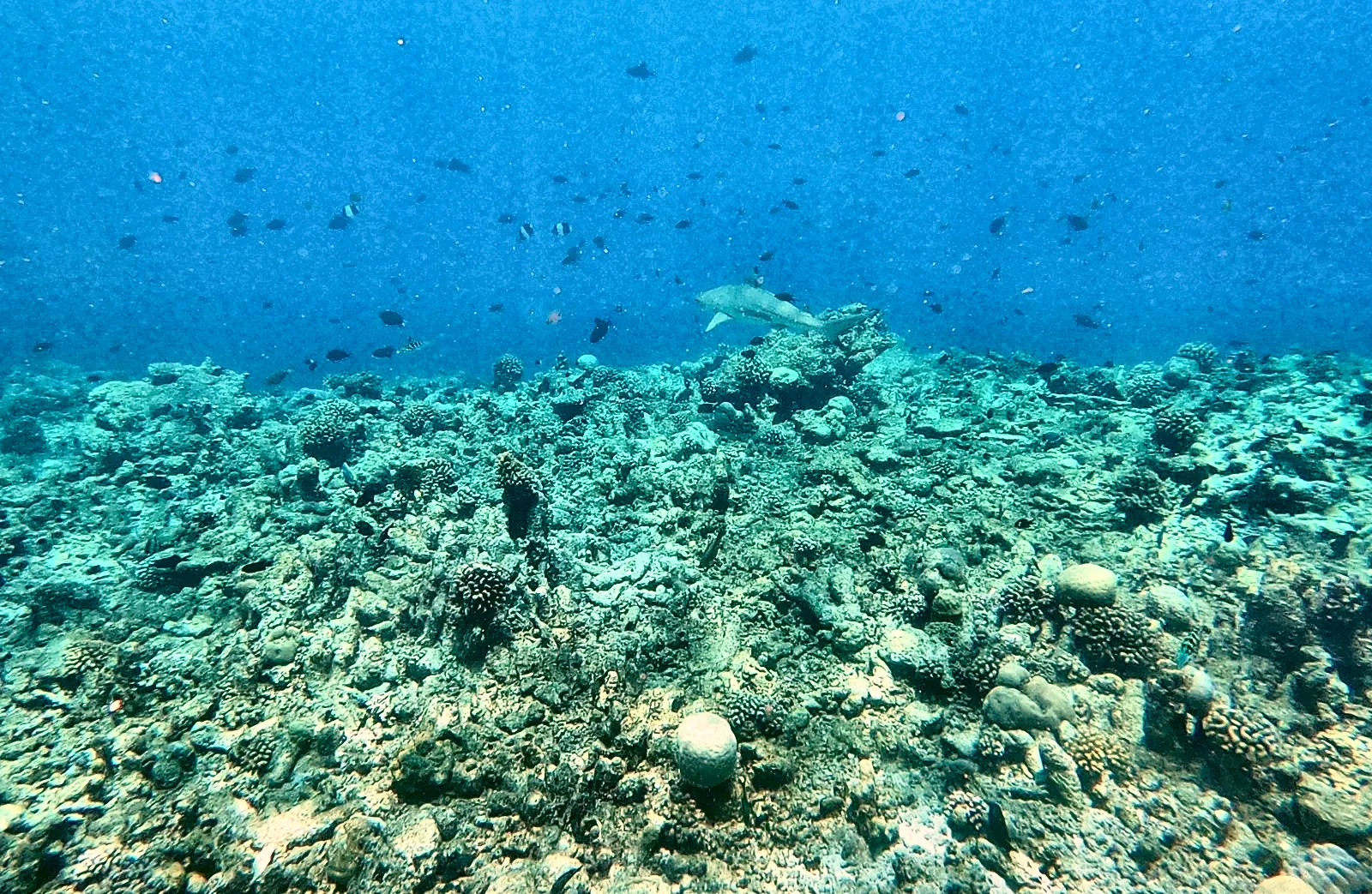
At the reef edge, I simply stay put. Below me the reef drops away into the deep blue, colorful fish flash through the sunlight everywhere, and all I think is: WOW. How beautiful is this. We only arrived today, and I went straight from the room into the water: a first round over the shallow house reef of Rasdhoo, a small local island in the middle of the Maldives. The fins still unfamiliar on my feet.
And then there is a shark.
A quick word first, in case the word shark makes you flinch a little: On the house reef of Rasdhoo, they are blacktip reef sharks, usually around one and a half meters long. They are considered shy and avoid people. Nobody feeds them there, and that is exactly why they stay calm. You reach the reef on foot from the beach; you don’t need a boat.
My first. Until that moment, I only knew sharks from television, and television, as we all know, doesn’t treat them kindly. The feeling in the pit of my stomach was uneasy accordingly. I turn around and snorkel back toward the shore, my pulse clearly higher than on the way out. A look back: the shark is coming into the shallow reef too. Only: it couldn’t care less about me. It moves along its path just above the corals, looking for small fish, I think. And while I’m there, half in flight, I still see how the sunlight makes the reef glow in every color. And how beautiful this animal actually is. Both at once: a pounding heart and wonder.
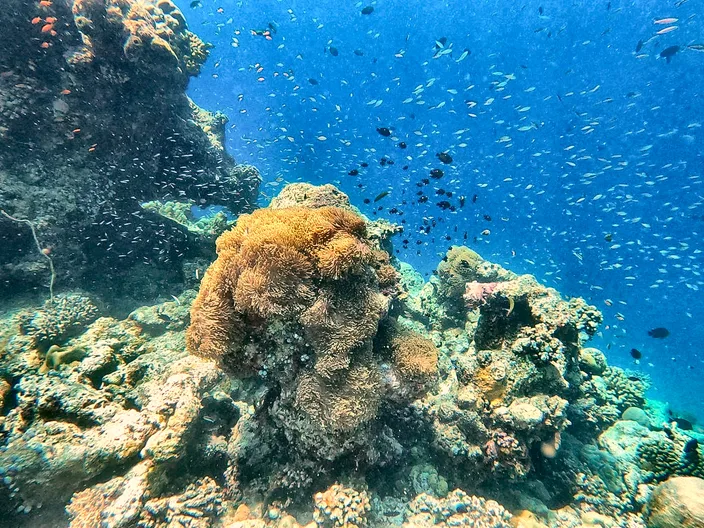
On land, I told the owner of our hotel and his dive manager about my encounter, and about the uneasy feeling. The two of them just smiled. Yes, they’re everywhere here, they said. They come right up to the shore. But: they don’t do anything at all. Don’t hold a fish or a dead octopus in your hand, and they will ignore you completely. I could live with that.
And then came the real gift: the two of them offered to snorkel along the reef together with us as a family, so that we would feel more comfortable. So, into the fins. The dive manager took our son, six at the time, by the hand, my wife and I behind. The uneasy feeling turned into one of the most beautiful afternoons of the whole trip. The fear? Completely gone. I was happy about every single shark we saw. What beautiful animals. And that’s when it became very clear: the sharks tended to steer around us. They simply had no interest in us troublemakers.
Do you know that feeling, when a fear dissolves into thin air and makes room for real wonder? That was exactly this day.
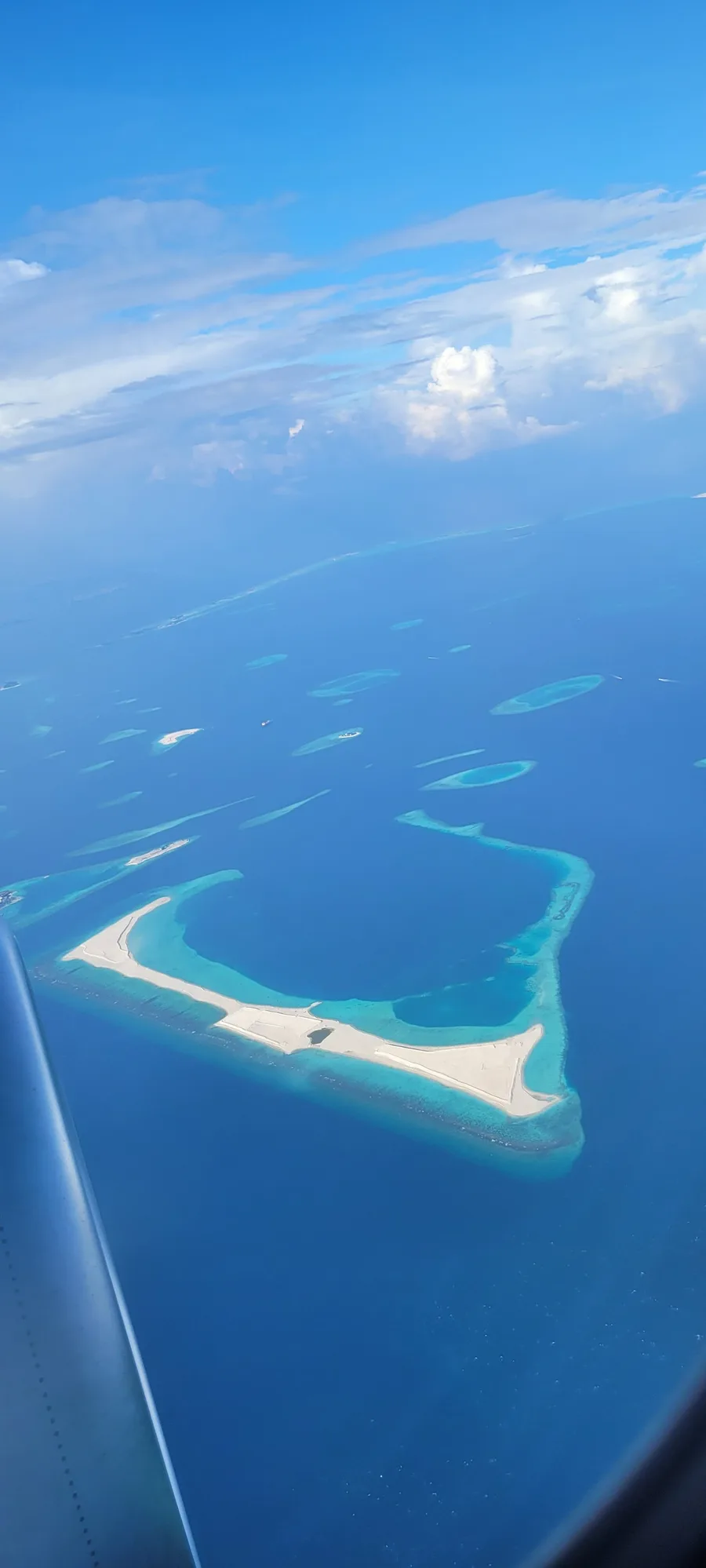
From Malé it isn’t far to Rasdhoo: around sixty kilometers to the west, by speedboat to the harbor, and from there a short walk. By Maldivian standards that is a short hop, and it decides more than you’d think beforehand. If you land on an island whose reef lies right outside the door, you still go into the water on the day you arrive. That is exactly why I was at the reef edge on that first afternoon at all, instead of booking a tour on the second day. On our first island of the same trip, Fulidhoo in the Maldives, it was different: there the animals came to the jetty in the evening, but there was no reef to snorkel out to.
Rasdhoo house reef: the way to the edge is longer than it looks
From the beach to where it drops off into the blue, it’s around a hundred meters over the shallow reef. From the shore it looks like a few fin kicks; in the water it’s a fair distance. At low tide it gets tight: then in places only fifty centimeters remain between you and the corals. On exactly this shallow stretch I later often saw blacktip reef sharks, sometimes just five meters away. They ignore you, and they’re harmless too; still, it isn’t pleasant for everyone.
And one more thing has to do with timing: in the morning I had around twenty-five meters of visibility, from midday only about fifteen. The tide stirs up the sand, and then everything looks blurry. If you only have one morning, spend it here. All the measurements for this spot are on the island page for Rasdhoo.
Snorkeling with sharks in the Maldives: what became of the uneasy feeling
A few days later we were at Turtle Reef, a reef ten minutes by boat off the island. Sharks kept appearing there, moved along their path and disappeared, and I hardly paid attention to them anymore. They belonged to the reef like the turtles we had actually wanted to snorkel with; how that day went is in Snorkeling with turtles.
On the same trip, a first manta came along as well. Between the shark on the first day and the manta there were not even two weeks. In between, one thing above all had changed: I knew that the animals leave me alone as long as I leave them alone.
What it looks like when this principle doesn’t apply, I saw later. At a boat stop, nurse sharks were being fed, and calm bottom dwellers turned into a crush, as you can read in my report on the nurse sharks. The difference isn’t the species. It’s the question of whether someone helps things along.
Are blacktip reef sharks dangerous to humans?
I know that feeling, and it’s nothing to be ashamed of. What helped me was not courage but knowledge: the sharks you meet on shallow Maldivian reefs while snorkeling are mostly blacktip reef sharks of around one and a half meters. They are considered shy and give way. I didn’t give way to them; they gave way to me.
If you’re generally unsure in the water, a calm, shallow reef suits you better than a boat tour. What such a start can look like, I described for the Red Sea: Reefs for beginners. And what I wear for it is in my gear; it isn’t much.
By the way, we stayed at Summer Vibes Beach Front on Rasdhoo; the house reef starts practically outside the door. Out of an unsettled first-time snorkeler, the team there made a family that looks forward to every shark. We were so satisfied that we’re going back this year. The photo at the top is of exactly this reef: one of our sharks, out and about in its living room.
How shallow it really is only shows in the numbers: the house reef begins barely a hundred meters from the beach, and there the water is around five meters deep. With twenty-five meters of visibility in the morning, that means: you see the bottom, the edge and the blue beyond it all at once. All the values are on the Rasdhoo island page.
Rasdhoo snorkeling & the house reef: short & practical
- Where: Rasdhoo, an inhabited local island in Rasdhoo Atoll (Maldives), around 60 kilometers west of Malé.
- Conditions (April 2025): 29 °C water temperature, over 20 meters visibility, around 5 meters of water depth while snorkeling. Values from my logbook.
- Snorkeling: You reach the house reef directly from the beach, over the shallow reef to the reef edge, where it drops off into the deep blue.
- Sharks: Encounters are an everyday thing here; the animals come right into the shallows. The advice of the local dive team: don’t touch anything, don’t take a fish in your hand, and they will ignore you completely. That’s exactly how we experienced it.
- For families: Our son was six when the dive team took him by the hand; snorkeling with a guide is explicitly available here.
- The way to the edge: around a hundred meters over shallow reef. At low tide, in places only fifty centimeters of water remain above it; better to wait then.
- Best time: mornings. Around twenty-five meters of visibility; from midday the tide stirs up sand and it’s only about fifteen.
- The whole trip: Rasdhoo and Fulidhoo in one week: travel report. All the islands and seasons in the Maldives destination guide.