Kamadhoo, Maldives: snorkeling from the beach, reef after 30 meters
Translated from the German original.
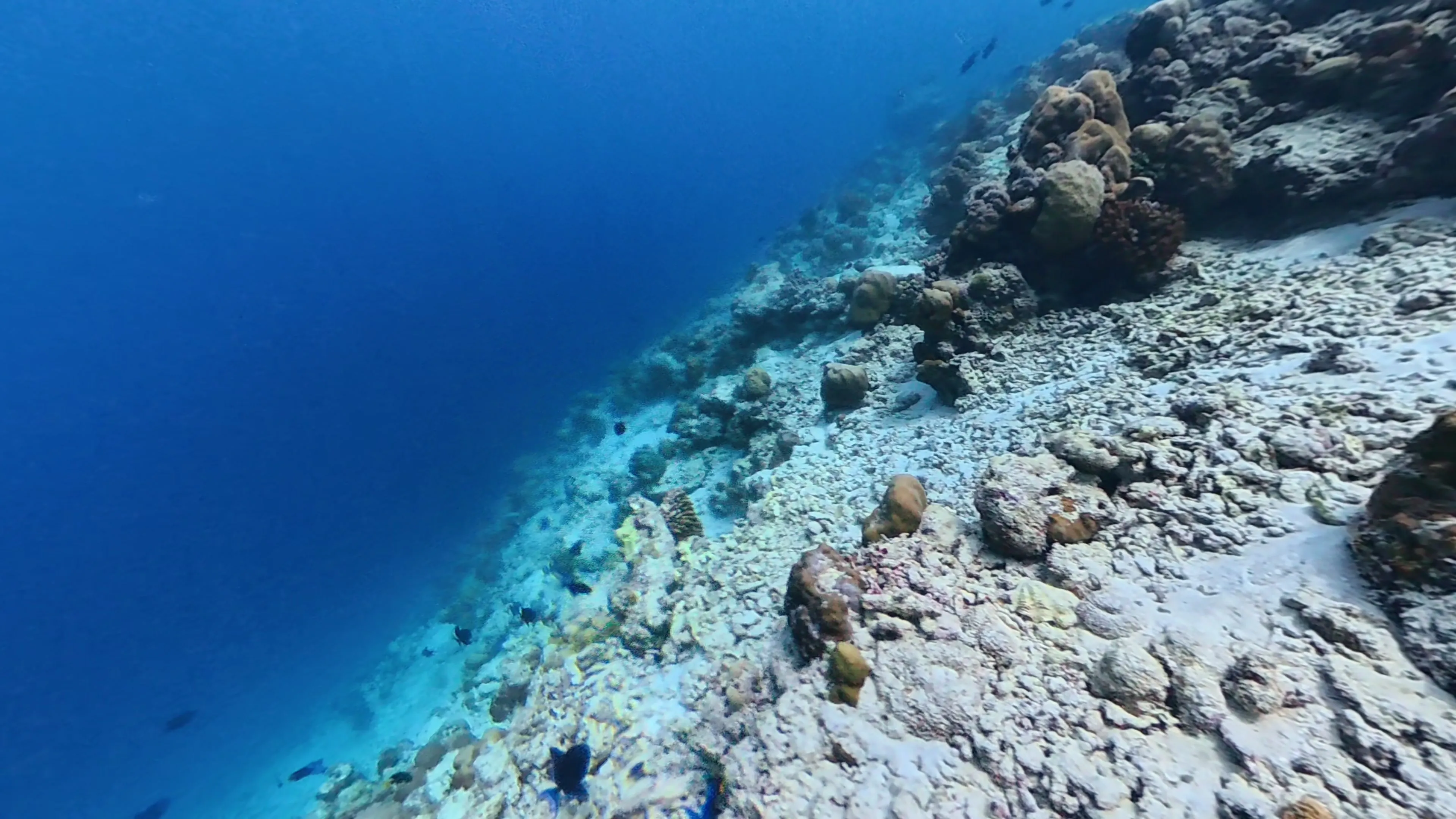
On the second afternoon on Kamadhoo, we saw dolphins passing out at the reef edge from Bikini Beach. Kamadhoo in the Baa Atoll of the Maldives was the island on this trip where snorkeling from the beach worked best. The reef starts about thirty meters off the beach; you only swim briefly over sand with the first corals.
On both days I was in the water there, something big came in front of my mask: on the first a turtle, an eagle ray and blacktip reef sharks, on the second a big turtle and a reef shark. One of the reef sharks I only saw quite far away; it was busy with small groups of fish.
Can you snorkel on Kamadhoo without a boat?
Yes, and in the Maldives that’s less obvious than it sounds. Whale sharks, mantas, the well-known reefs: almost everything you want to see there costs a boat ride. The whale shark tour from Dhigurah cost us ninety US dollars per adult. On Kamadhoo you simply walk into the water, without registration and without a fixed time.
On this trip I also got from the beach to the reef on Rasdhoo and Maalhos. On Rasdhoo the way is longer, about fifty meters over shallow reef. On Maalhos the reef is also close, but the way leads over sandy transitions that cloud the water. On Fulidhoo I swam out a hundred meters from Bikini Beach the year before and found only sand below me.
Water shoes belong on Kamadhoo; close to the beach, the first corals already lie in the sand. Which ones I bring is listed under my gear.
Is Kamadhoo good for families?
Yes. The paths are short, and anyone still unsure in the water always has the beach behind them. On the local beach side there’s a large water playground for kids. Bikini Beach is not much good for splashing around. You do find shade there, though.
What is Kamadhoo island like?
Kamadhoo is small, about six hundred by five hundred meters, with about four hundred inhabitants who belong to only three families. There is no crime there, our guide said on the island tour. The beach moves with the seasons.
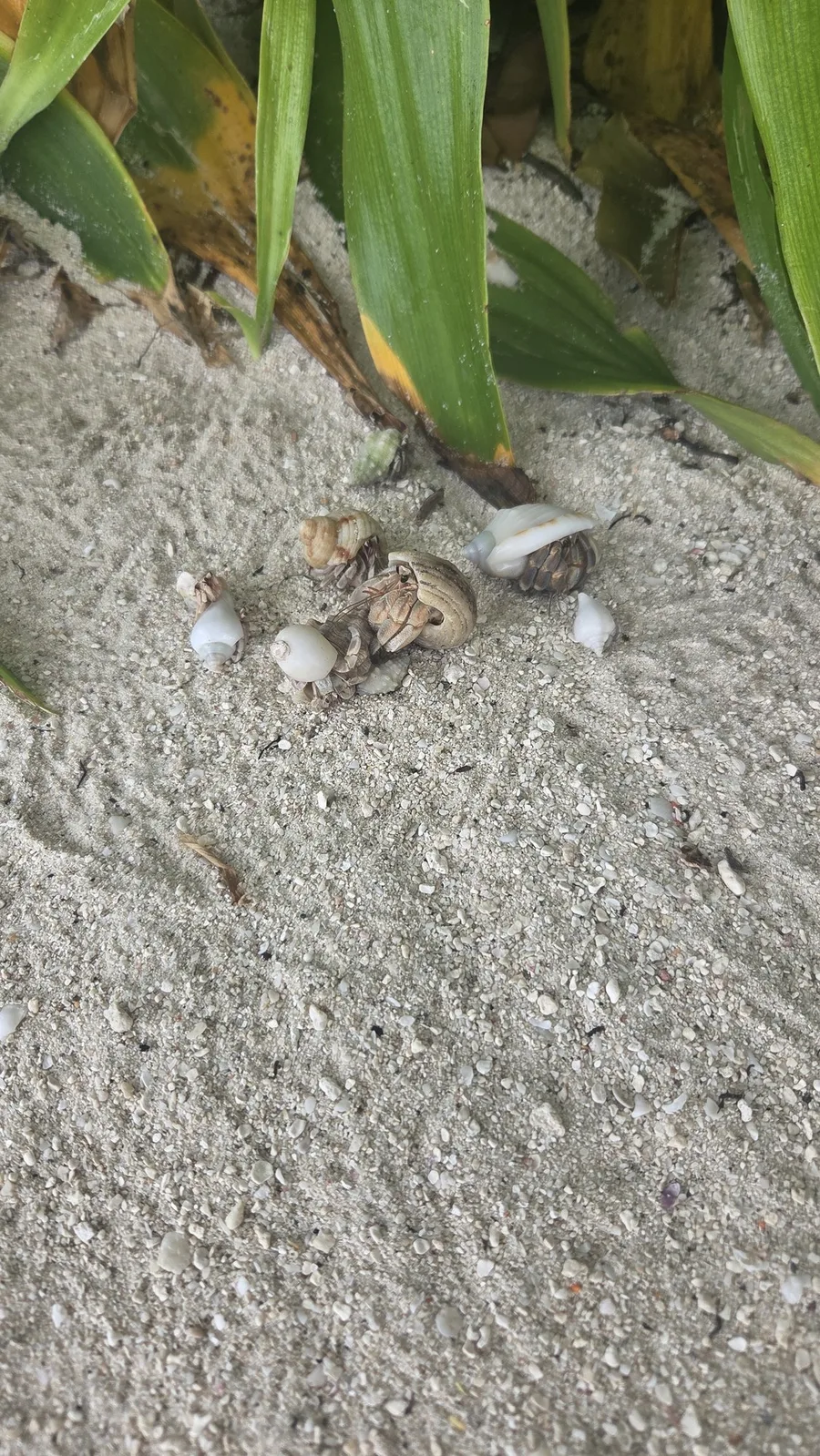
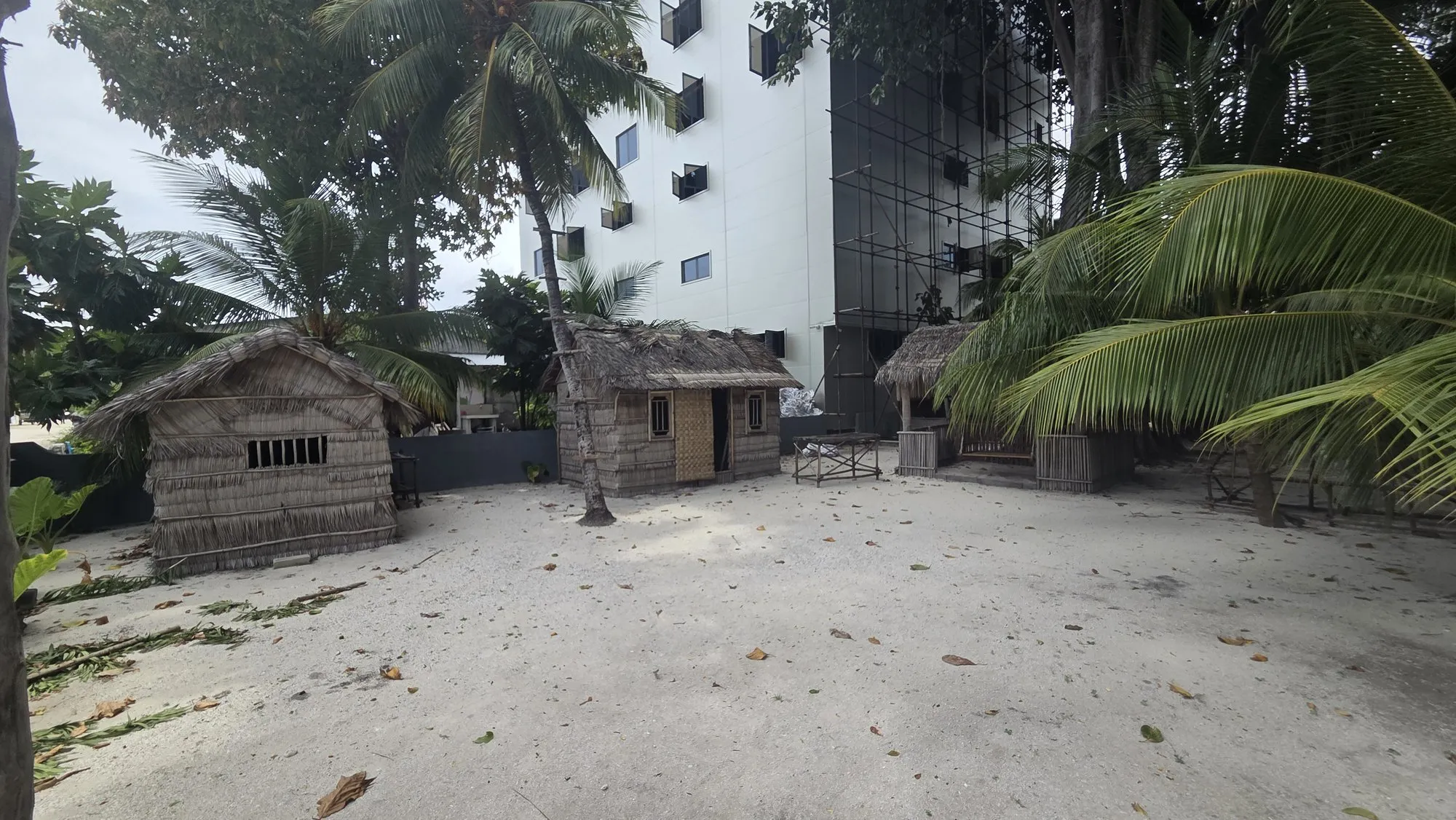
Worth seeing is the historic village with its old village museum. There are only a few restaurants, but the food there is good. It’s striking how clean the island is. That fits its surroundings, because all around lie islands with nothing but resorts on them.
Kamadhoo is changing fast right now. There’s a lot of construction, buildings up to eight stories, six hotels in a small space. The local charm is getting badly lost in the process. We travel on a small to medium budget, and for that the island is rather expensive. If you’re looking for the original local island, you’ll find it in the same atoll on Maalhos, where the old houses are still lived in.
Can you get to Hanifaru Bay from Kamadhoo?
Yes, it lies in the same atoll, and the whole Baa Atoll is a UNESCO Biosphere Reserve. We went there from Maalhos and were in the water with about fifty mantas: Fifty mantas in Hanifaru Bay. The tour is also offered from Kamadhoo. According to our accommodation’s price list, it cost 144 US dollars per person, plus tax and service charge.
Getting there: Speedboat transfer from Malé, organized by the accommodation. Our crossing from Dhigurah via Malé was very unpleasant: high waves, and many people on board threw up. On the island it's a short walk from the harbor. Within the atoll, the local operator RTL runs the short routes between the islands — a good and inexpensive connection.
Bikini Beach — the house reef
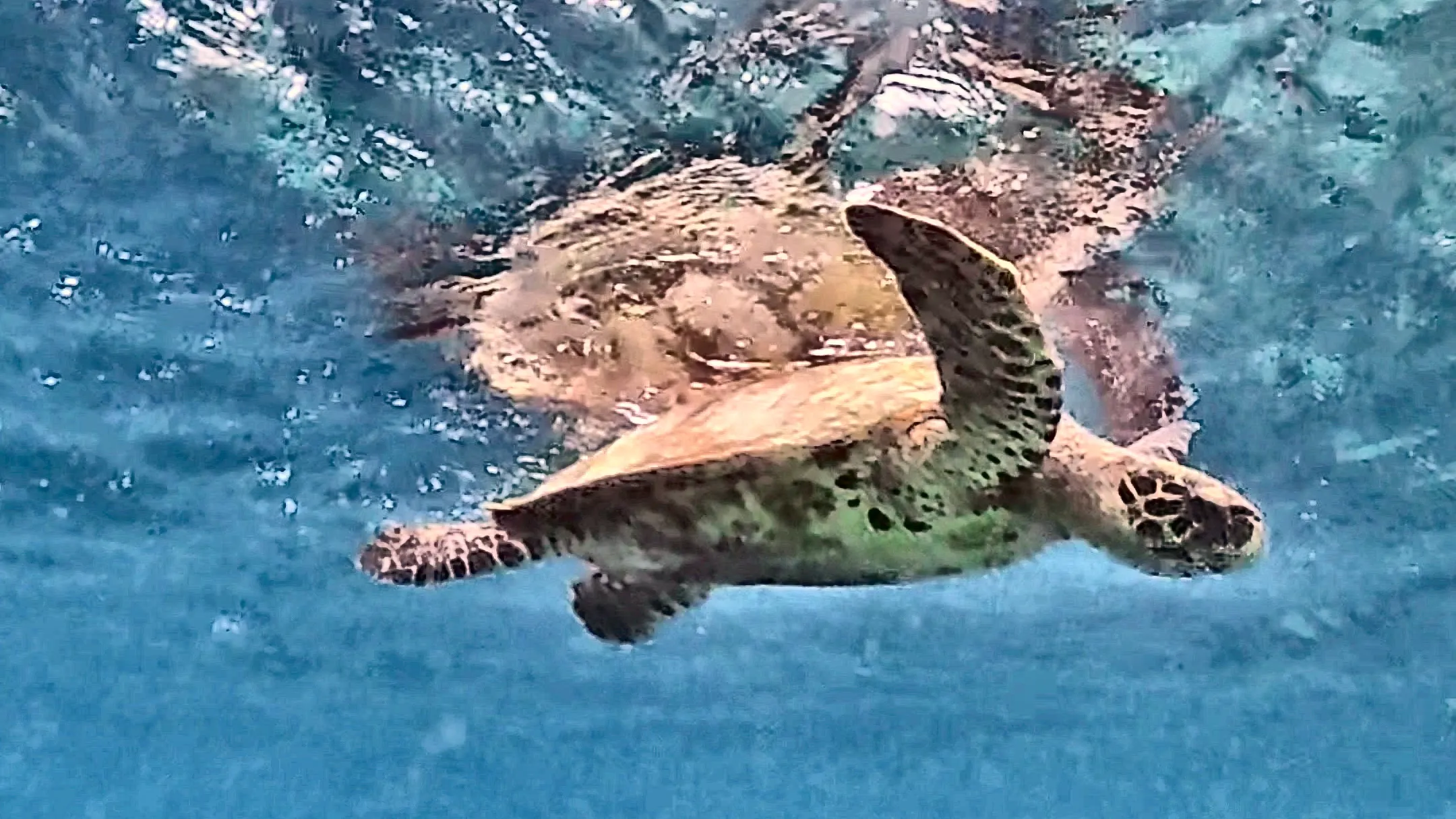
Behind the sand lies the reef top: light coral rubble, in between single coral heads. Farther out, the reef edge drops off into the deep blue; that's where the dolphins passed by too.
The visibility here depends on how deep you are. At the surface it was about 10 meters, from about 5 meters depth on, by contrast, about 20. The current was light both times, the surface choppy. Water 28 °C, air 29.
On the second morning, monsoon rain came with wind, so we didn't even go into the water and walked around the island instead.
Close to the beach, the first corals already lie in the sand. That's why the beach isn't suitable for playing in the water.
House reef, Entry from the beach · Visibility 10–15 m to about 10 m at the surface, from 5 m depth about 20 m · Water 28 °C · seen myself August 2026
Seen: Turtle, Eagle ray, Blacktip reef shark, Dolphins (from land).
The harbor basin in the evening
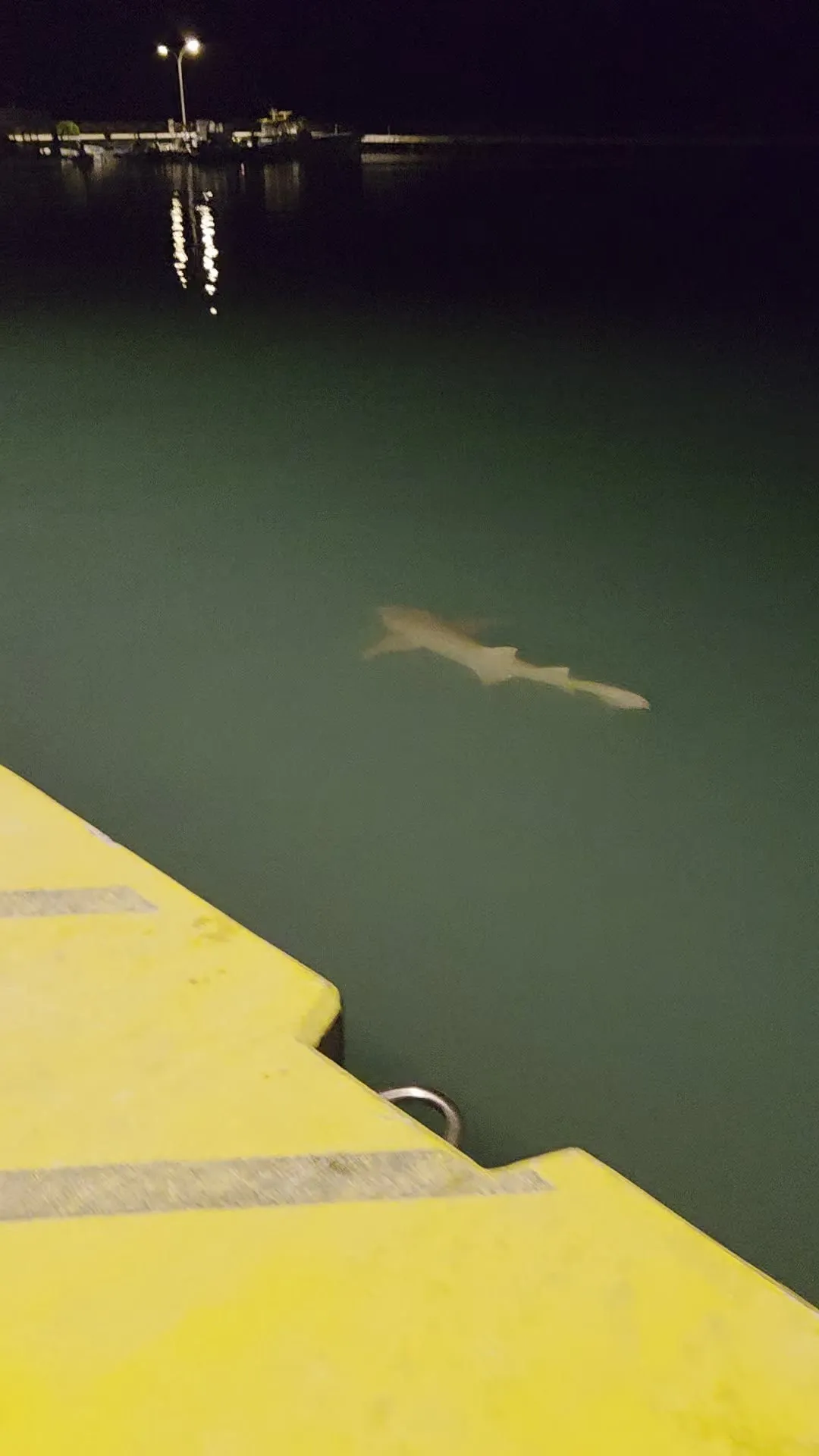
If you walk along the harbor basin in the dark in the evening, you almost always see something: on the evenings in August 2026, nurse sharks and eagle rays made their rounds there. To see them, you need no boat and no tour, only the short walk to the harbor and some patience at the edge of the basin.
In the evening the fishermen come in and clean their fish, and whatever falls off ends up in the water.
Bay, Entry from the jetty · Current light · seen myself August 2026
Seen: Nurse sharks, Eagle rays.
Where I tell more about it
At a glance
- Local feel touristy
localtouristy
- The island above water
- 3/5
- Access to the reef from the beach
- 5/5
- Underwater life at this reef
- 4/5
- Trips in the atoll
- not experienced myself
Highlights of the island
Turtle, eagle ray and reef sharks right off the beach · Nurse sharks and eagle rays at the harbor basin, in the evening from land · The historic village with its museum · A large water playground for kids
My personal assessment, as of August 2026.
What it was like
On both days the surface was choppy. On the first day the water got noticeably clearer a few meters deeper.
What the atoll is known for
I did not see this myself — it is here because it belongs to this atoll. Documented, not experienced.
- Kamadhoo lies in Baa Atoll, which as a whole is a UNESCO Biosphere Reserve.
- Hanifaru Bay, the largest known manta aggregation in the world, lies in the same atoll. Diving is prohibited there; snorkeling is allowed for at most 45 minutes under the supervision of rangers.
- The manta season runs from May to November; the largest aggregations fall in July to October.
- In season, whale sharks also come into the bay.
- Within the season, the days around full and new moon are the strongest: then the tides run most powerfully and push the plankton into the bay. If you can time your trip, put your Hanifaru day in this window.
Asked locally — not seen myself, but asked about myself:
- Hanifaru Bay is also visited from Kamadhoo. According to our accommodation's price list, the tour cost 144 US dollars per person for two hours in August 2026, from two people; a pure manta search without the bay 108 US dollars. On top of both prices come 17 percent tax and 10 percent service charge.
Sources: Study: environmental factors of manta visits in the Maldives (PMC) · Study: mantas feed on tide-driven plankton patches in Hanifaru Bay (PMC) · Fehivelaa Dive: Hanifaru Bay · No Troubles Just Bubbles: Hanifaru Bay, Baa Atoll · Snorkeling Report: snorkeling with mantas in Hanifaru Bay