Travel report
Maldives snorkeling trip report: Rasdhoo and Fulidhoo
Translated from the German original.
I drift over the reef edge and look into the blue. Below me the reef drops away, the water gets deeper and cooler, and for a few seconds I hear only my own breathing. A school of small fish suddenly flips direction. A little farther on, a shark slides along the slope without so much as a glance at me.
A quick word first, in case you’re torn between the islands: Rasdhoo has the house reef — a few fin kicks from the beach, and the edge drops into the blue. Fulidhoo doesn’t have that; there the reef lies farther out, but in the evening the rays come to the jetty. If you want to get in the water every day without a boat, go to Rasdhoo.
That is the house reef of the Summer Vibes Beach Front on Rasdhoo, a local island in Rasdhoo Atoll in the Maldives. A few fin kicks over the flat reef, then the edge, then the open blue. And you get to see what a reef like that has to offer: sharks, colorful fish, corals, squid, now and then a moray peeking out of its crevice. Because hardly anyone snorkels here, the animals aren’t bothered by me. You’re a silent observer, nothing more.
It had all started two weeks earlier, in April, actually high season. Still, nothing was overrun. On the small islands we had our peace, and the boat tours were relaxed. No hundred people in the water crowding for the same photo. It got hectic exactly once, with the nurse sharks, but that’s a story of its own.
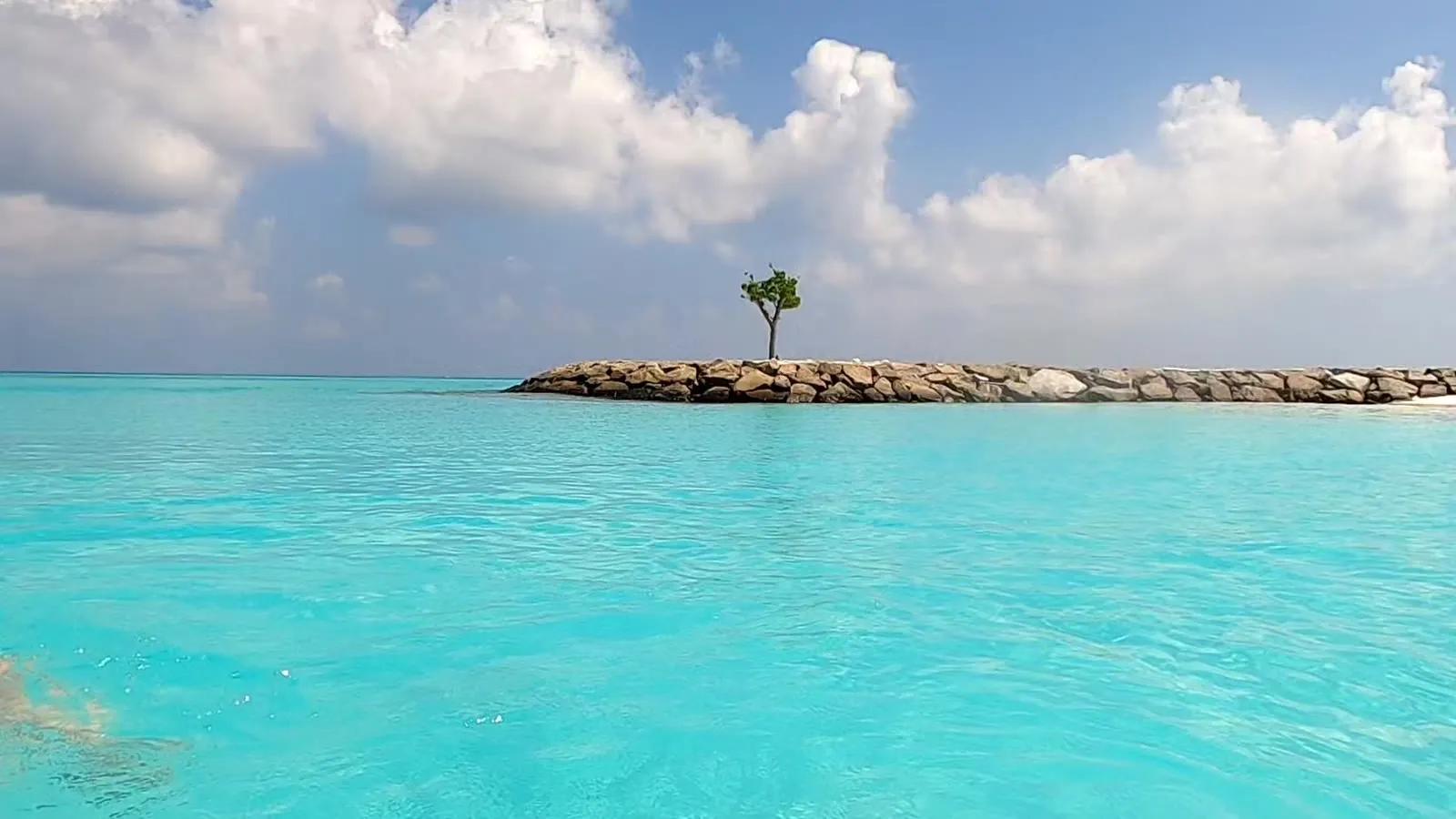
First we were on Fulidhoo in Vaavu Atoll. The island is known for the rays in the shallow water and that bright turquoise in which you see your own shadow dancing on the sandy bottom. For snorkeling right off the beach, the island honestly isn’t ideal: the bottom is sandy, the actual reef lies farther out. But romping with my son in the shallow, warm water at Bikini Beach and gliding over the white bottom — that has a value of its own. It has nothing to do with the reef. What still comes by there, I wrote up later in a separate report about Bikini Beach. In the evening, something completely different happens at the same spot: the rays glide over your feet.
For snorkeling we booked a boat tour. First stop: the nurse sharks. After that we went to a reef with lots of beautiful corals and smaller fish. Nice. But honestly, nothing I would still have talked about in the evening.
It only got really exciting after we changed islands, on Rasdhoo. My very first time in the water on the day we arrived brought a reef dweller I hadn’t counted on: my first shark. From then on, I was drawn to the house reef every day.
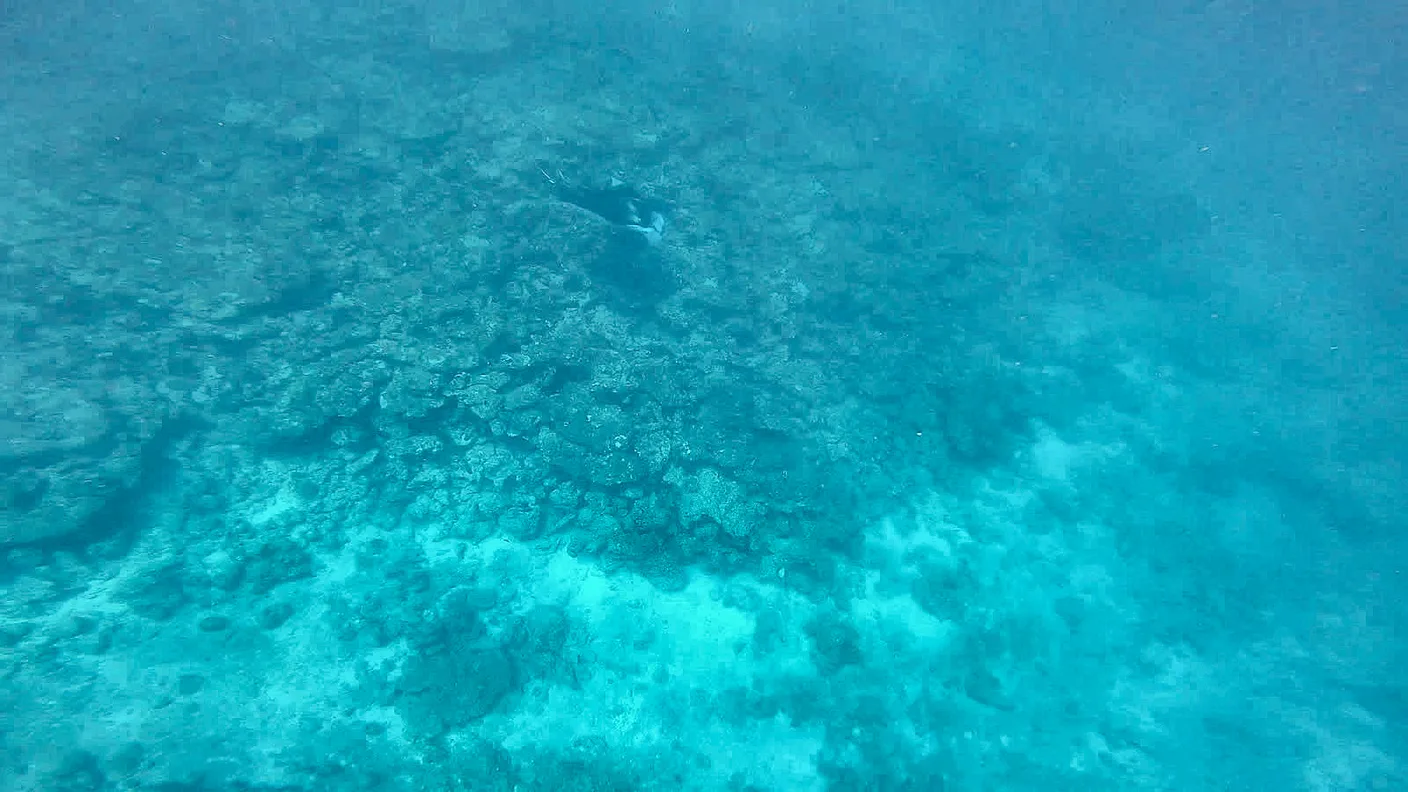
On Rasdhoo we booked a tour too, this time through the hotel. Again it went to the nurse sharks first, which I skipped this time. Then the boat headed more or less straight for Turtle Reef, with a stop that turned everything upside down: my first manta. Actually, my day was already complete at that point. I could have turned around and been satisfied.
In between, we stopped at a tiny island. There was something to eat and drink, for me even a beer. That’s not a given in the Maldives: in the strictly Muslim country, alcohol is legally served only on a few resort islands; on the inhabited local islands there is none. After that we went into the shallow water. The shallows were teeming with small fish and with small sharks, not even fifty centimeters long, practicing hunting between the rocks. A nursery for sharks. I just stood there and watched.
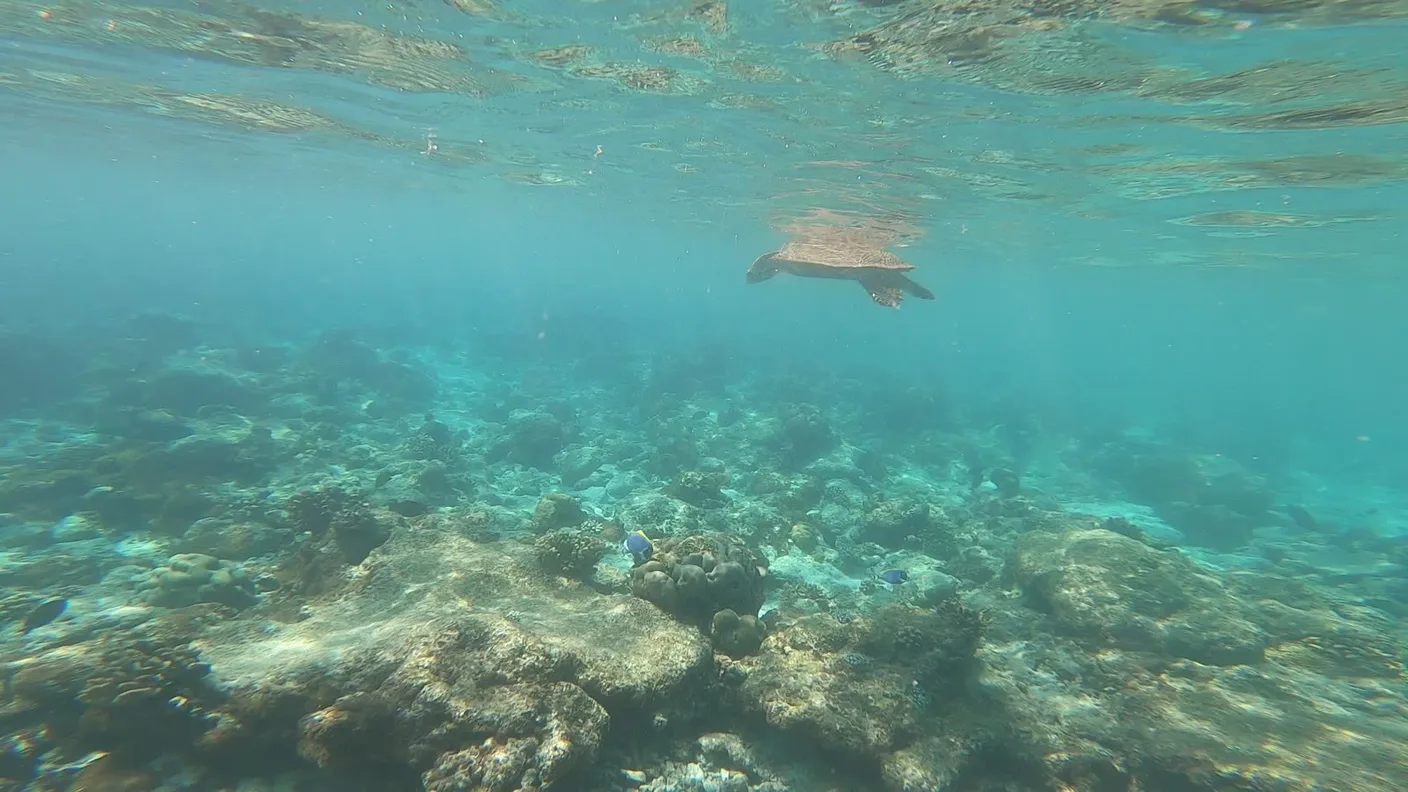
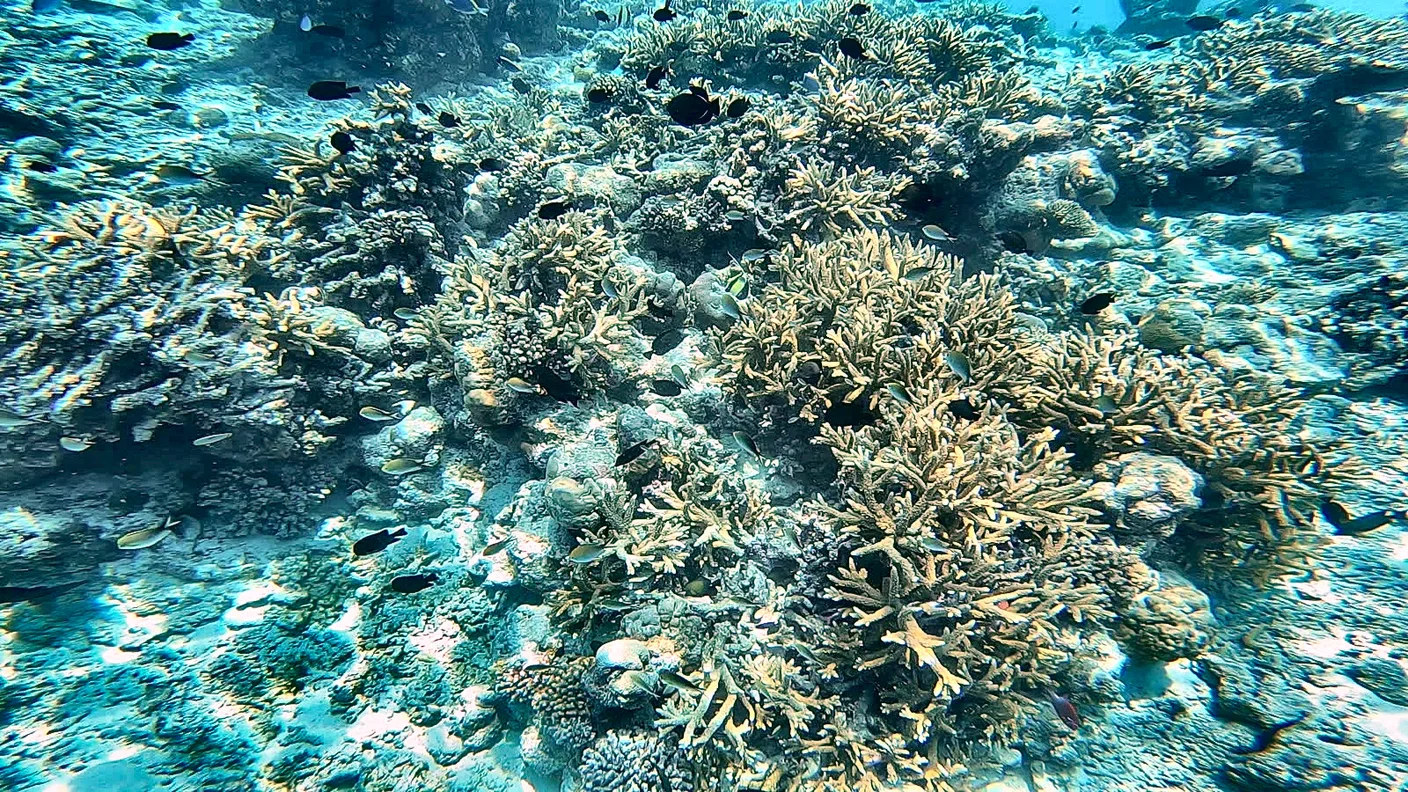
And then, at Turtle Reef, came the part you book tours like this for. A reef, mostly still colorful and alive. And sadly, that is not a given. On the way I had seen too many pale, almost ghostly white reefs that had lost their color. That’s not my imagination. In 2024 there was the strongest global coral bleaching ever measured. When the water is too warm, corals expel the algae that give them color and food. They turn white. The Indian Ocean was part of it, the Maldives too. Of all places, the central atolls around Rasdhoo and Fulidhoo were hit hardest: on average over 40 percent loss of live hard coral. The south was almost spared. Still, it’s no reason to despair: back in 1998, almost all the shallow corals here died, and the reefs recovered over about sixteen years. All the more I enjoyed every intact piece of reef.
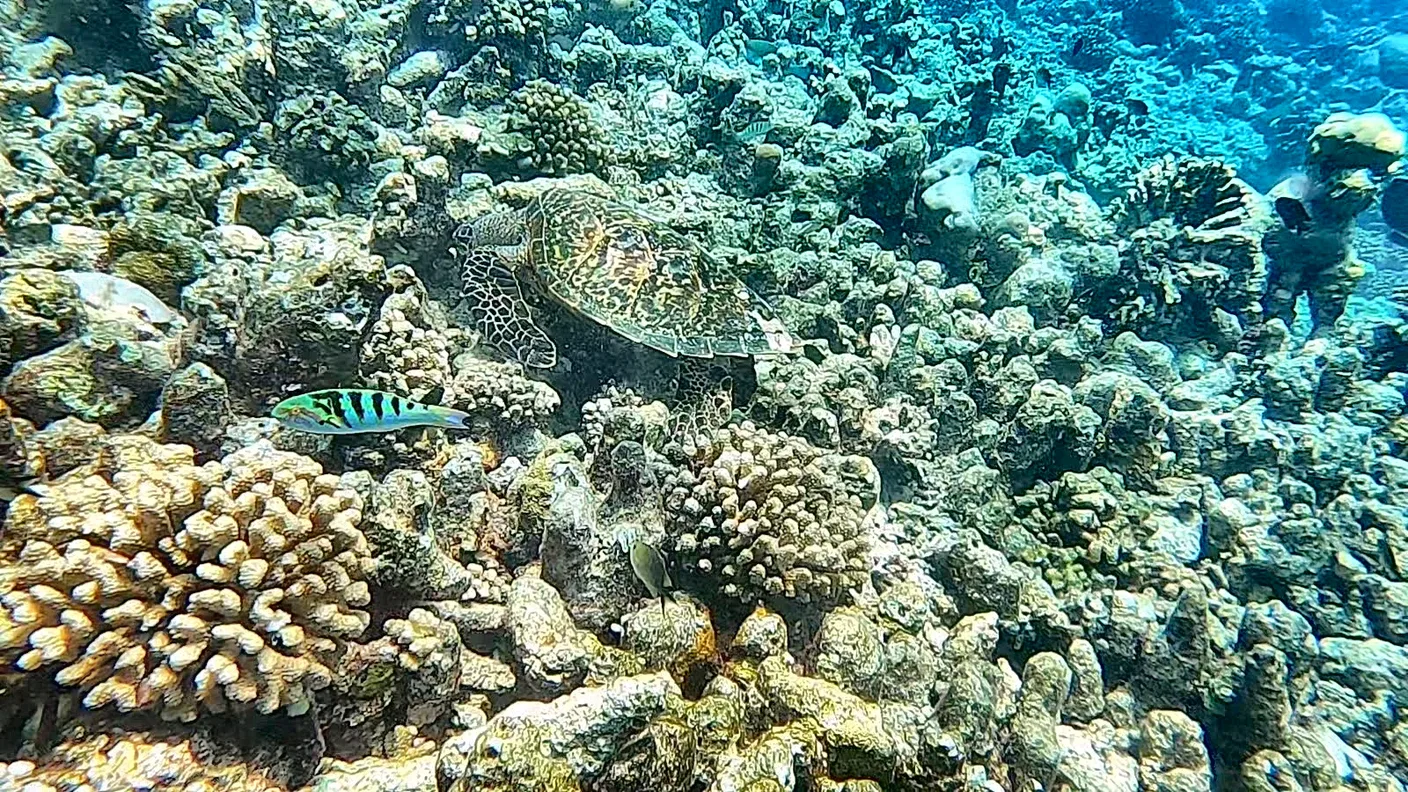
At Turtle Reef we were allowed to do that for a long time. We were the only boat, maybe six, seven people in the water, and we snorkeled along the reef for an hour and a half. A few turtles here, a blacktip reef shark there, colorful fish and corals everywhere. No crowds, no time pressure. Just water, breath and the next detail.
There were around ten turtles that morning — more than I had seen in my whole life before. What it was like when one animal after another appears below you and none of them takes any notice of you is in Snorkeling with turtles off Rasdhoo. And because the same reef also showed sharks several times that day, there is a second report on that: Sharks at Turtle Reef.
A year later I went to the Maldives once more, in the rainy season and to four other islands. That was a completely different trip — with a whale shark that fifty snorkelers circled around, and with reefs that had noticeably more sediment in the water. If you want to compare both seasons, you’ll find the months in the Maldives destination guide.
For comparison with a completely different sea: what the same kind of reef edge feels like in the Red Sea is in Red Sea reefs for beginners. And how little of it remains in a shallow lagoon, in Snorkeling from the beach in Flic en Flac on Mauritius.
Rasdhoo and Fulidhoo could hardly be more different: the one calm and for playing in the shallows, the other with a house reef that leaves little to be desired. I can recommend both. You just have to be willing to be quiet and to wait. Then the reef shows you everything.
Rasdhoo & Fulidhoo — short & practical
- Where: Two Maldivian local islands in the central atolls: Rasdhoo in Rasdhoo Atoll, about 60 km west of Malé, and Fulidhoo in Vaavu Atoll. Getting there from Malé by speedboat or public ferry.
- Conditions (April 2025): 29 °C water temperature, over 20 meters visibility, around 5 meters water depth while snorkeling. Values from my logbook.
- Fulidhoo: Known for rays and nurse sharks in the shallow water and very clear turquoise. For snorkeling, best by boat tour (the reef lies farther out); the island’s swimming section is called Bikini Beach and is sandy, ideal for swimming and for children.
- Rasdhoo: Strong house reef right off the coast (for us at the Summer Vibes Beach Front), plus boat tours to manta cleaning stations, to the nurse shark spot and to Turtle Reef (SSI spot no. 530005), where blacktip reef sharks make their rounds. Few snorkelers, relaxed atmosphere.
- Best time: We were there in April and had lots of peace despite the season. All months with water temperature, visibility and animals are in the Maldives destination guide.
- The two islands in detail: every spot individually, with readings and sighting reports, on the island pages for Rasdhoo and Fulidhoo.
- Gear: What I travel with and what I would buy differently today is in my gear list.
- Reef condition: After the 2024 bleaching the picture is mixed; some reefs are pale, others still colorful and alive. If you’re considerate (don’t touch anything, keep your distance), you help keep it that way.