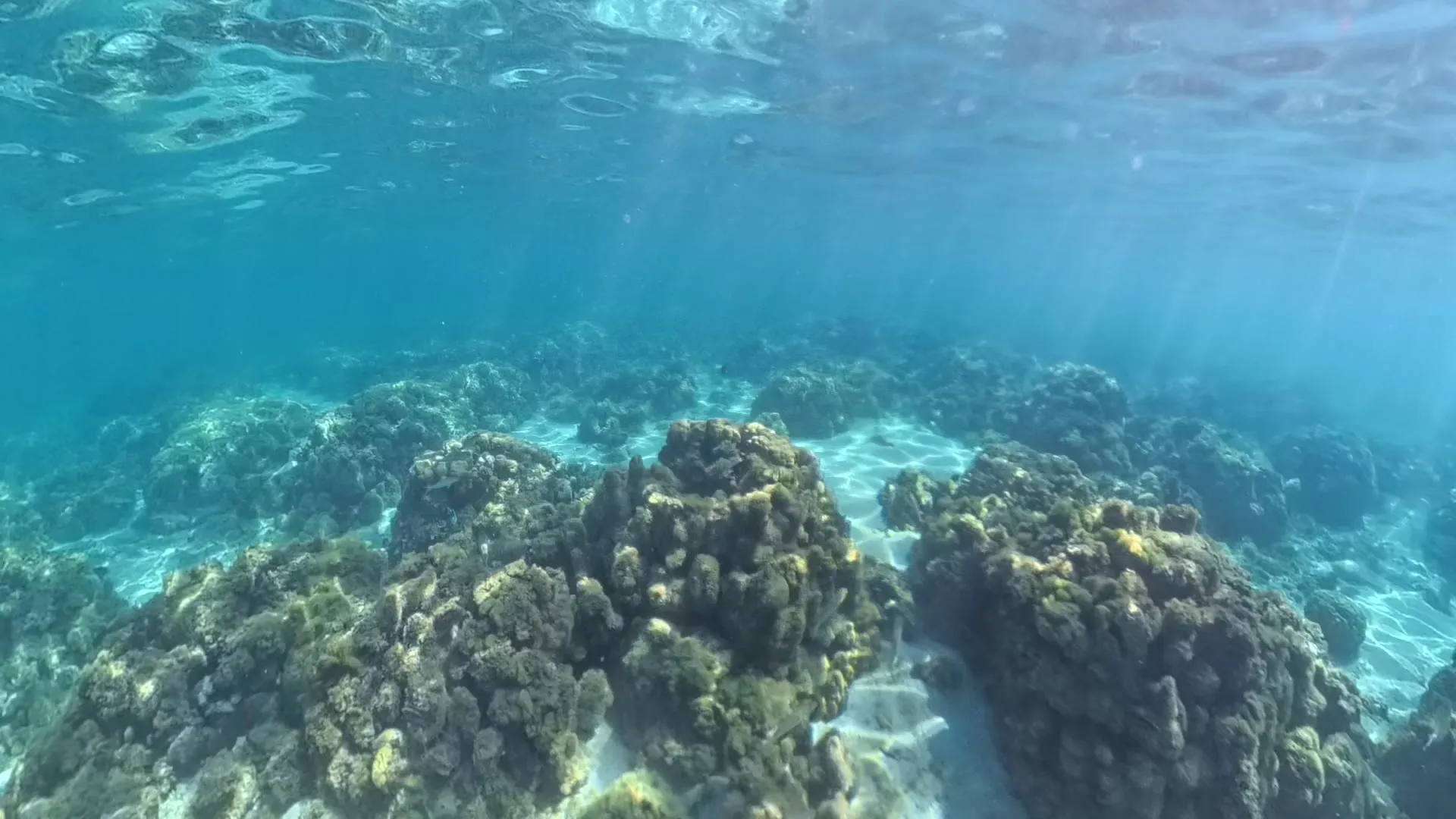
Flic en Flac, Mauritius: snorkeling the lagoon, Turtle Point and Crystal Rock
- West coast, Mauritius
- three spots
- about 20 m visibility, 27 °C February average
- February 2026
In short Three spots, one straight from the beach – the lagoon is shallow, the reef lies further out.
Translated from the German original.
While snorkeling I estimated visibility, water temperature and depth, just as I experienced them on the days I was there. On dives the dive computer measured depth and duration, and values with a named source show what is usual there, not how it was for me.
Flic en Flac lies on the west coast of Mauritius and is the easiest place on the island for snorkelers: you walk into the water and you’re there. What awaits you there, however, is something different from what the pictures of Mauritius promise.
The island is almost entirely enclosed by a belt of reef. Between this reef and the beach lies a lagoon — shallow, calm, almost without current. That is the big advantage: no boat, no journey out, no fixed time. It is also the reason why so little grows down here.
Where we stayed: at the Seastar Hotel, close to the beach. It is clean, the service is friendly, and on the roof terrace you can have a drink in the evening, now and then with live music. I can recommend it.
See places to stay in Flic en Flac (Advertisement)
I experienced three spots in the water myself between 30 January and 5 February 2026: the lagoon off the beach, Turtle Point with its turtle, and Crystal Rock in the southwest. My estimates below each carry the day I was there. How clear the water was at the other places is on the visibility page.
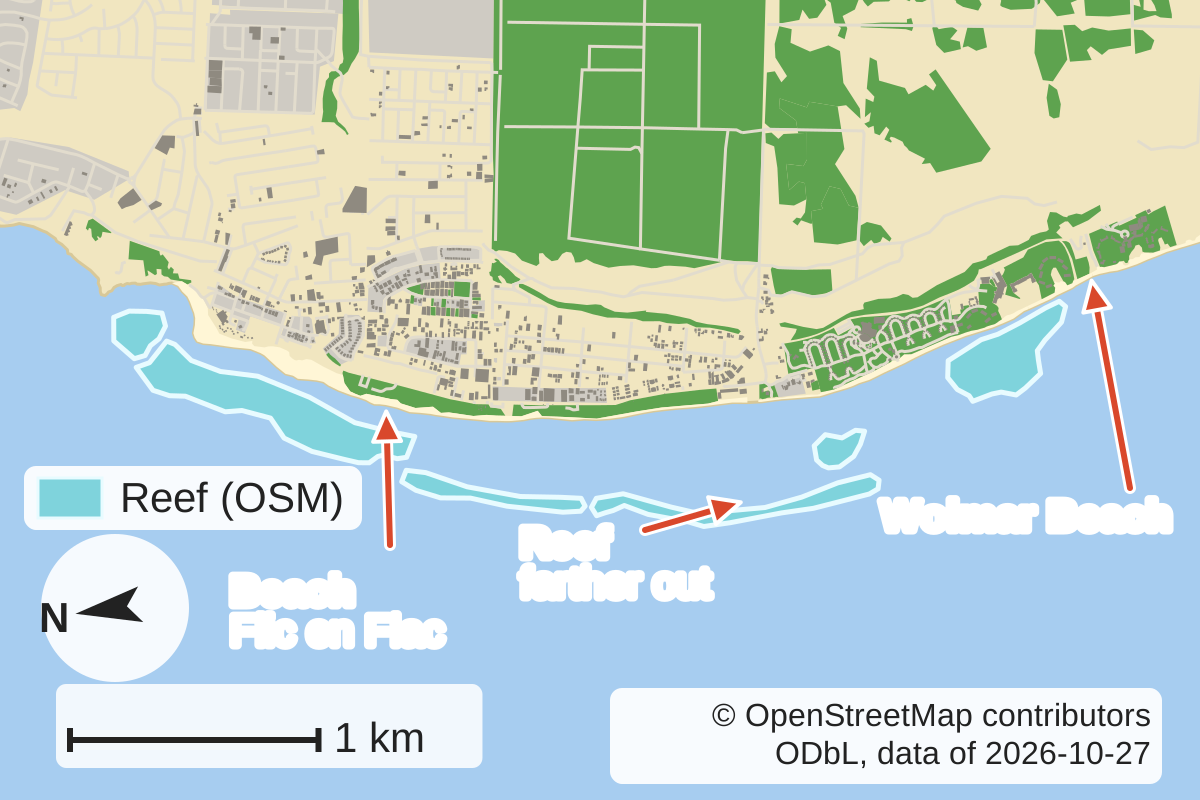
Flic en Flac beach snorkeling: can you go without a boat?
Yes. We often set off from the Seastar Hotel, across the sand and in.
At a glance
- Local feel touristy
localtouristy
- The place above water
- 4/5
- Access to the reef from the beach
- 2/5
- Underwater life at this reef
- 2/5
- Trips in the area
- 3/5
Highlights on site
From the hotel into the water on foot — no boat, no set time · A long, wide beach that many consider the most beautiful on the island · Landscape, food and hospitality carry the trip even without a reef
Highlights in the area
A turtle in the shallows, not even an arm's length away · Crystal Rock, half above and half below the water · Grilled food on Île aux Bénitiers
My personal assessment, as of February 2026.
The beach itself is long, and some consider it the most beautiful on Mauritius. I can’t compare; I don’t know the island’s other big beaches. It is beautiful. It’s just that my wife and I don’t like lying in the sun for half the day. We’re drawn to the water.
It stays calm because the waves break far out at the surf wall. Between the wall and the shore lies a shallow, still expanse. No wave knocks you over, and you only feel the current on the way out.
Contents
- Flic en Flac beach snorkeling: can you go without a boat?
- What lives between the beach and the surf wall?
- Is there a house reef at Flic en Flac?
- Is the surf wall at Flic en Flac dangerous?
- What do you need for the lagoon?
- What time of year is best for snorkeling in Flic en Flac?
- Is a boat trip worth it in Flic en Flac?
- How much do the boat trips in Flic en Flac cost?
- Frequently asked questions
- Further reading
- Sources
What lives between the beach and the surf wall?
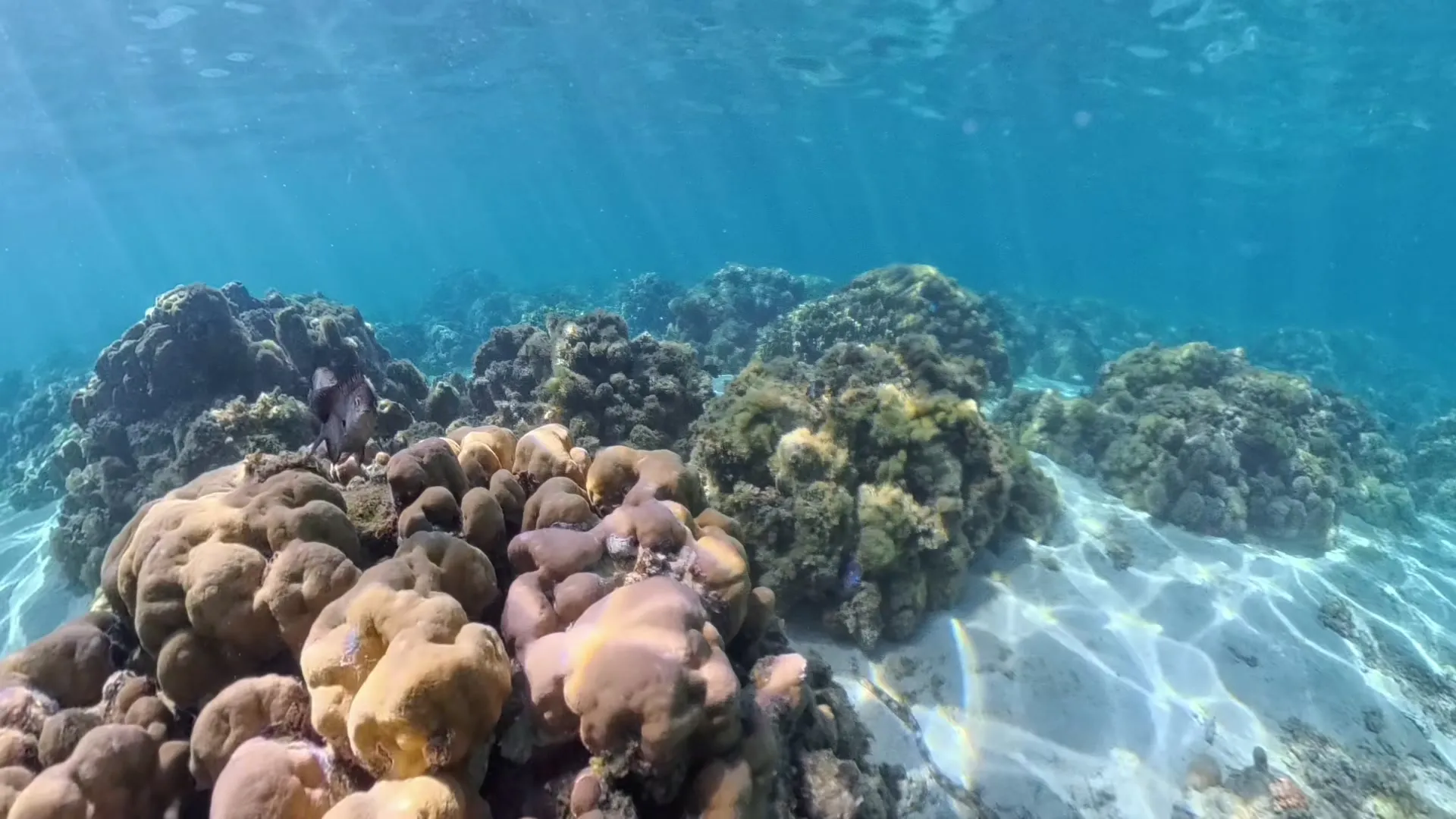
Pale sand alternates with fields of gray, dead coral rubble, with coral domes standing in between. I had underestimated the damselfish in this rubble.
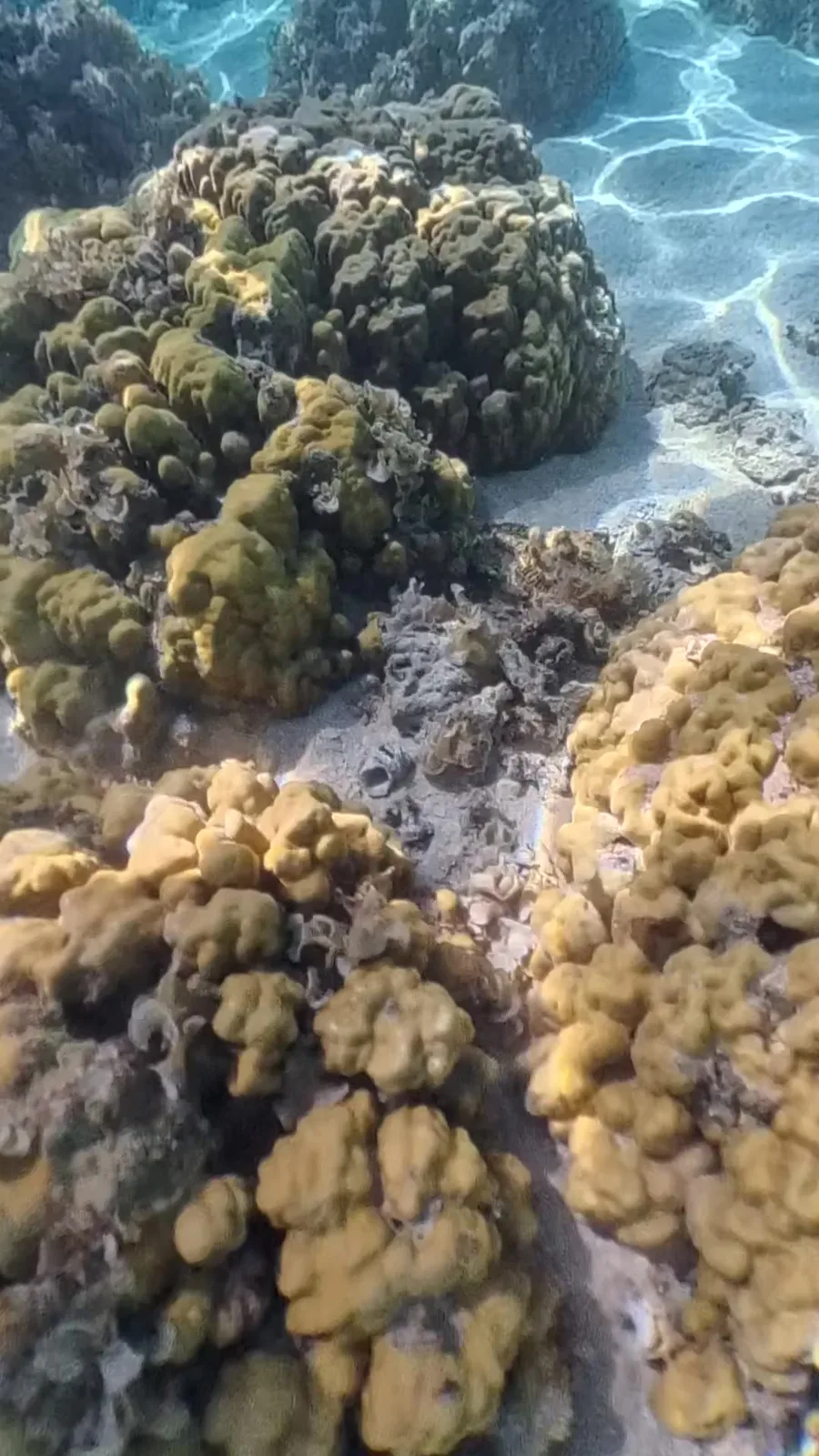
All the way out, the picture changes. A few lionfish hover under the rocks of the surf wall, and the fish there are more colorful overall. This narrow strip is worth the long way out.
Is there a house reef at Flic en Flac?
Not the way you know it from the Maldives. On Kamadhoo, the reef began after around thirty meters. Off Flic en Flac you swim a fair distance over sand and rubble before the wall comes. Which hotel on this coast lies closer to living coral, I can’t say. I only know this one stretch.
Is the surf wall at Flic en Flac dangerous?
Nowhere else in the lagoon do you have to be as careful as here. Out at the wall the water is an estimated two meters deep at most, and the sharp corals reach almost to the surface. There isn’t much room to get out of the way.
I paid attention to every movement there. Anyone who lies down or props themselves up breaks the coral off, and its edges cut into the skin. You shouldn’t touch anything there, not even a rock that a lionfish might be under.
Then there’s the distance. It’s a fair way to the wall, and on the way the current sometimes pushes from behind and sometimes comes from the front. Without fins that gets tiring, and if in doubt you don’t make it back to where you wanted to go.
These days I wear open-heel fins with neoprene booties underneath. At the wall in Flic en Flac, I would already have wished for exactly that.
What do you need for the lagoon?
In Flic en Flac, what mattered were fins, neoprene shoes, time and a slow pace. What else I bring and why I switched fins is in my snorkeling gear list.
- Fins: for the distance out, with and against the current.
- Neoprene booties: rocks and dead rubble are sharp. This is protection, not comfort.
- Time: It takes a while to get out there. Just jumping in for a moment gets you nothing here.
- Swimming slowly: Only then do the damselfish show themselves in the rubble.
What time of year is best for snorkeling in Flic en Flac?
We were there in late January, early February. In February the water averages 27 °C (German Weather Service, Plaisance station), and the lagoon lay completely still. For a day in the water, that was just right.
One of our boat trips was supposed to go to the spot that many call the best on the island. The weather put an end to it. We got our money back; we never saw the spot itself.
The overview of snorkeling on Mauritius lists every month with the water and the humpback whale season. In the southern winter, the sea cools down. According to the local weather service, the cyclone season on Mauritius runs from November 1 to May 15.
| Water over the year | 27 °C from January to April, coolest in August at 22 °C (German Weather Service, Plaisance station in the southeast) |
Is a boat trip worth it in Flic en Flac?
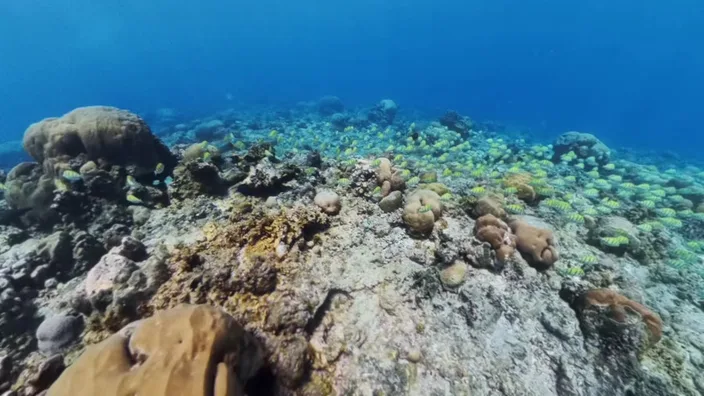
For a clear reef, yes. Our beach had left us rather disappointed; the coral stop of the trip to Crystal Rock on February 1, 2026 was very nice by contrast. How the whole trip went is told in the report on the boat trip to Crystal Rock. Where the lagoon had alternated between gray and damselfish, at the coral stop, between round blocks in clear water, there were finally colorful fish, down to an estimated four meters deep, plus needlefish and pufferfish that we had never seen off the beach. It was nice to see a clear reef for once.
How much do the boat trips in Flic en Flac cost?
The trip to Crystal Rock with the coral stop cost about 80 euros per person. The boat trip to the turtle at Turtle Point, on a different day, cost about 50 euros per person.
Frequently asked questions
Can you snorkel in Flic en Flac? Yes, right from the beach. You swim over sand and coral rubble with many damselfish; it only gets more colorful at the surf wall.
Where is the best snorkeling in Flic en Flac? From the beach, all the way out at the surf wall. That’s where the lionfish and the more colorful fish were. We only found a reef in clear water at the coral stop of a boat trip.
Is snorkeling in Flic en Flac dangerous? In the lagoon it was calm and shallow. You have to be careful out at the wall, where the sharp corals reach almost to the surface, and on the way out, where the current pushes. The Federal Foreign Office warns of strong, changing undercurrents off the coast and advises never to snorkel alone.
Can you swim with turtles in Flic en Flac? No, that is prohibited on Mauritius, as are feeding and harassing them, according to a notice from the Ministry of Fisheries dated January 25, 2022. How close one can still come if you keep your distance is told in the article about the turtle at Turtle Point.
Do you need water shoes in Flic en Flac? At the wall, yes. Rocks and dead coral cut, and barefoot you can easily get a wound there. In the shallows, stonefish can also hide in the sand or between rocks. The Federal Foreign Office advises wearing water shoes on the beach and in the water.
Further reading
- Mauritius in February: water, rain by coast and the wind
- Maldives or Mauritius for snorkeling?: reef edge, lagoon and boat tours compared
- Maldives: islands with the reef right in front of the beach
Sources
The details that don’t come from my own experience are in these sources. Accessed on September 28, 2026.
- Turtles: Notice from the Ministry of Fisheries dated January 25, 2022, published by the Tourism Authority
- Undercurrents, water shoes and stonefish: Federal Foreign Office advice on Mauritius
- Cyclone season: Technical Note on the Cyclone Season, Meteorological Services
- Reefs around the island: Mauritius National Audit Office, Performance Audit Report No 11 on beach erosion, November 2013, accessed on 14.10.2026
- Water temperature: German Weather Service climate table for Plaisance, measured in the southeast of the island
Getting there: Flic en Flac is on the west coast. Several access points lead from the town straight to the beach — no boat, no registration, no fixed time. The boat tours to Crystal Rock also start here.
The lagoon from the beach
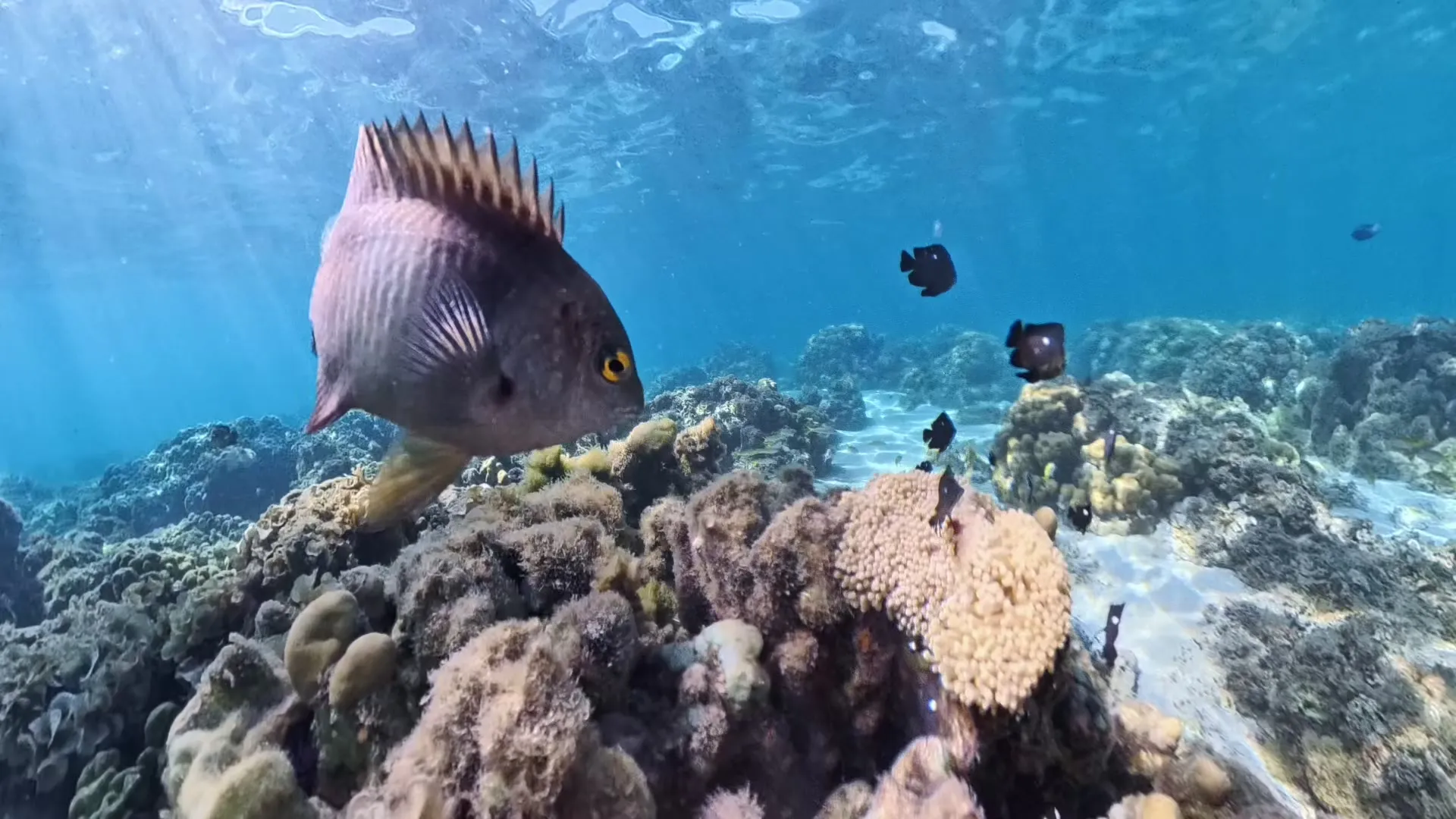
Snorkeling hardly gets more convenient. During our stay from 30 January to 5 February 2026, that meant: fins under your arm, two hundred meters to the beach, and in. That is exactly the reason to come here — and at the same time the point where you have to be honest.
Mauritius is almost entirely enclosed by a belt of reef. Everything you reach from the beach is the lagoon behind it: shallow, calm, sandy. In late January, early February the visibility was around 20 meters — only there is little to see at 20 meters. You snorkel over long stretches of dead coral. If you slow down, you notice: plenty lives there, above all damselfish. A broken reef is not an empty reef.
It only gets livelier right out at the surf wall, where lionfish hover under the rocks. There, though, the water is at most 2 meters deep over sharp corals, and you don't have much room to move aside.
Fins are a must — the stretch is long and you swim with or against the current. If you stay out by the wall, you need neoprene shoes: rocks and dead coral are sharp.
At the surf wall, sharp corals lie just below the surface. Without shoes and without an eye for your own movements, you get cuts there — and damage what is still alive.
House reef, Entry from the beach · Visibility around 20 m · Current light · seen myself February 2026
Seen: Damselfish, Lionfish.
Turtle Point
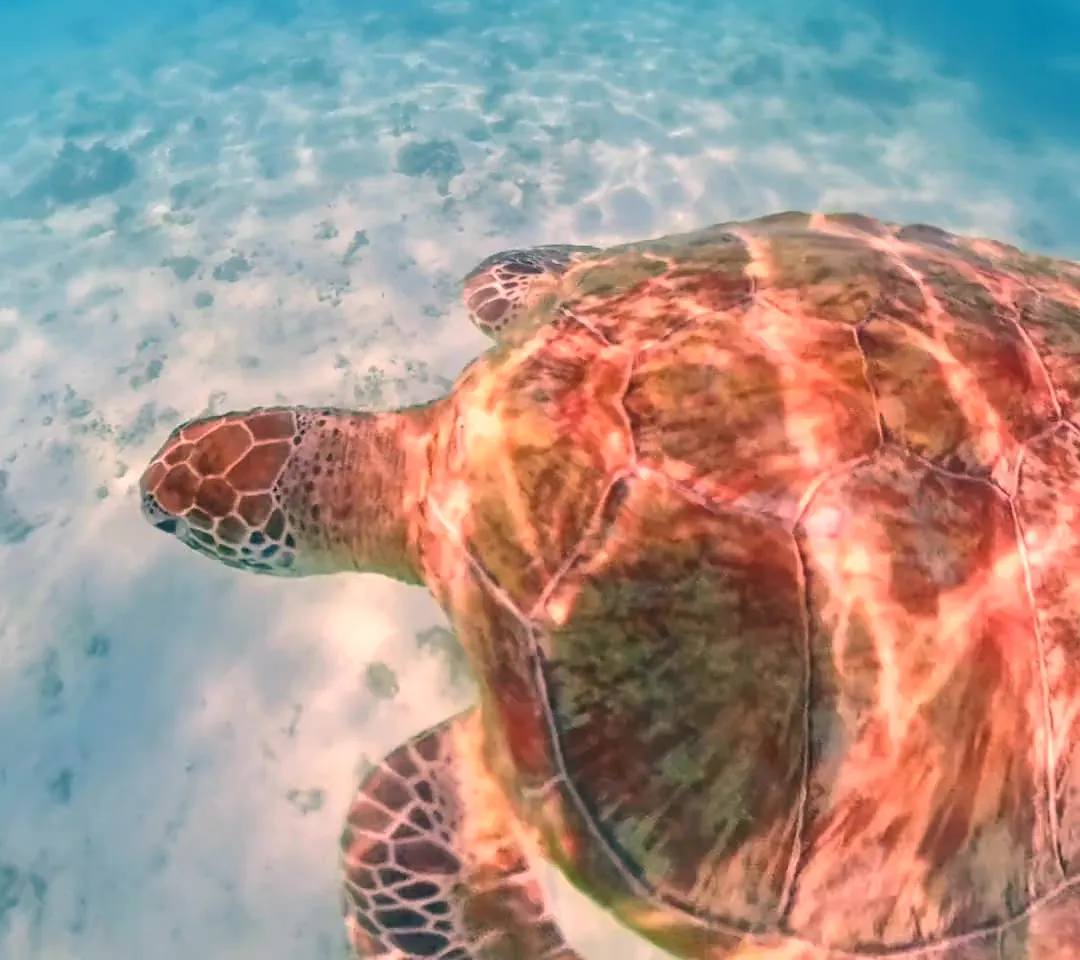
The one place on this coast where something happens that you don't forget. The turtle we saw here in late January, early February 2026 was about fifty meters off the beach in shallow lagoon water — strictly speaking you don't need a boat tour for it, even though one is offered everywhere.
In late January, early February the visibility was 20 meters, and at the reef it was 2 to 3 meters deep; the deepest point I was at was about 8 meters. That is quite enough: a turtle in shallow water shows from afar as a dark spot above the light bottom.
And it was exactly one turtle — accordingly, lots of snorkelers crowded around this one animal. We left it in peace and moved away. Ten minutes later it came to us on its own. That is the lesson of this spot: whoever breaks away from the crowd sees more.
Don't swim after them and don't touch anything. Turtles have to come up to the surface to breathe; whoever swims between them and the light makes exactly that hard for them.
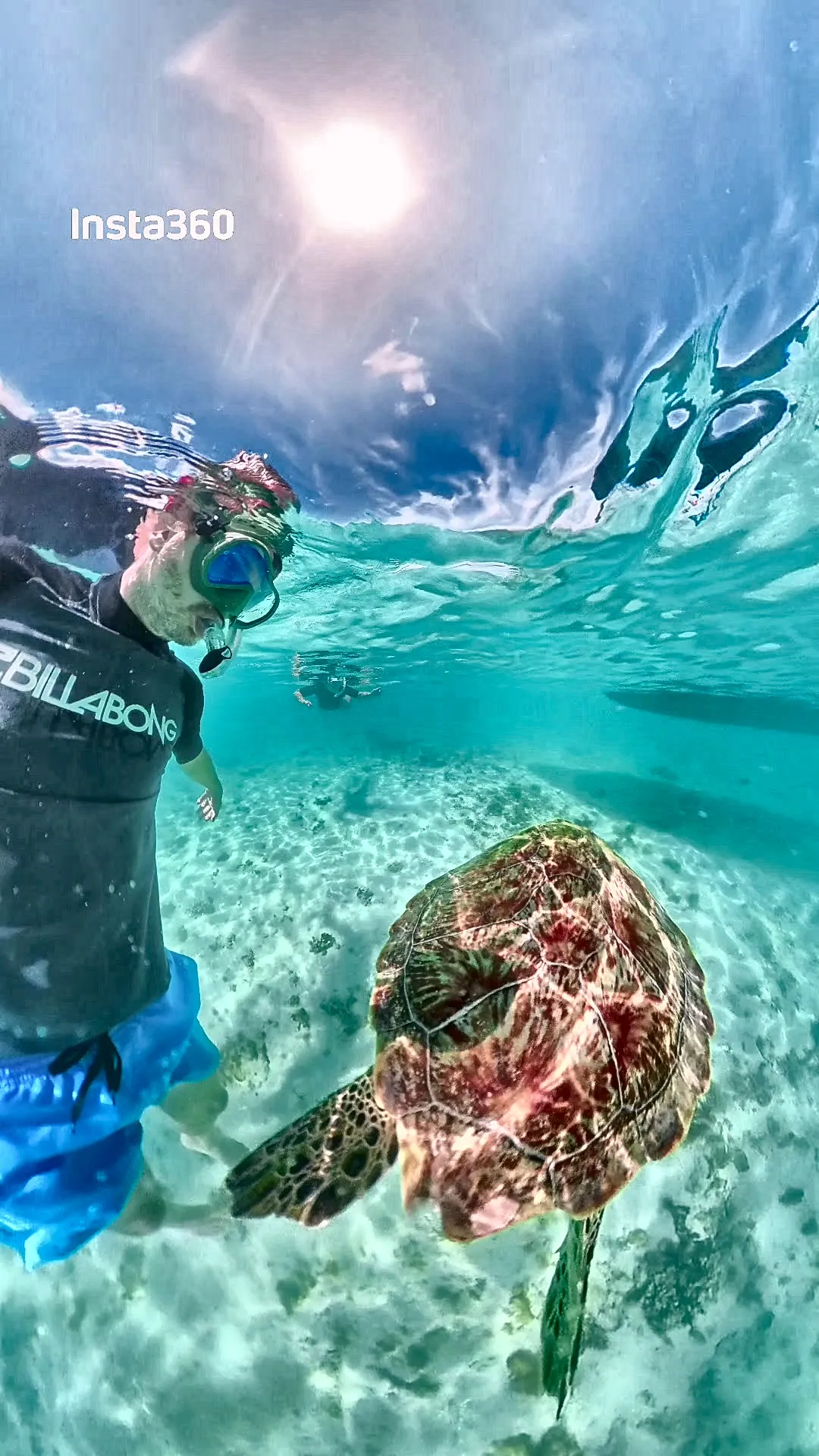
Swim with turtles in Mauritius? Rules and Turtle Point →
Reef, Entry from the boat · Visibility 20 m · Current none · seen myself February 2026
Seen: Green sea turtle.
Crystal Rock and Île aux Bénitiers
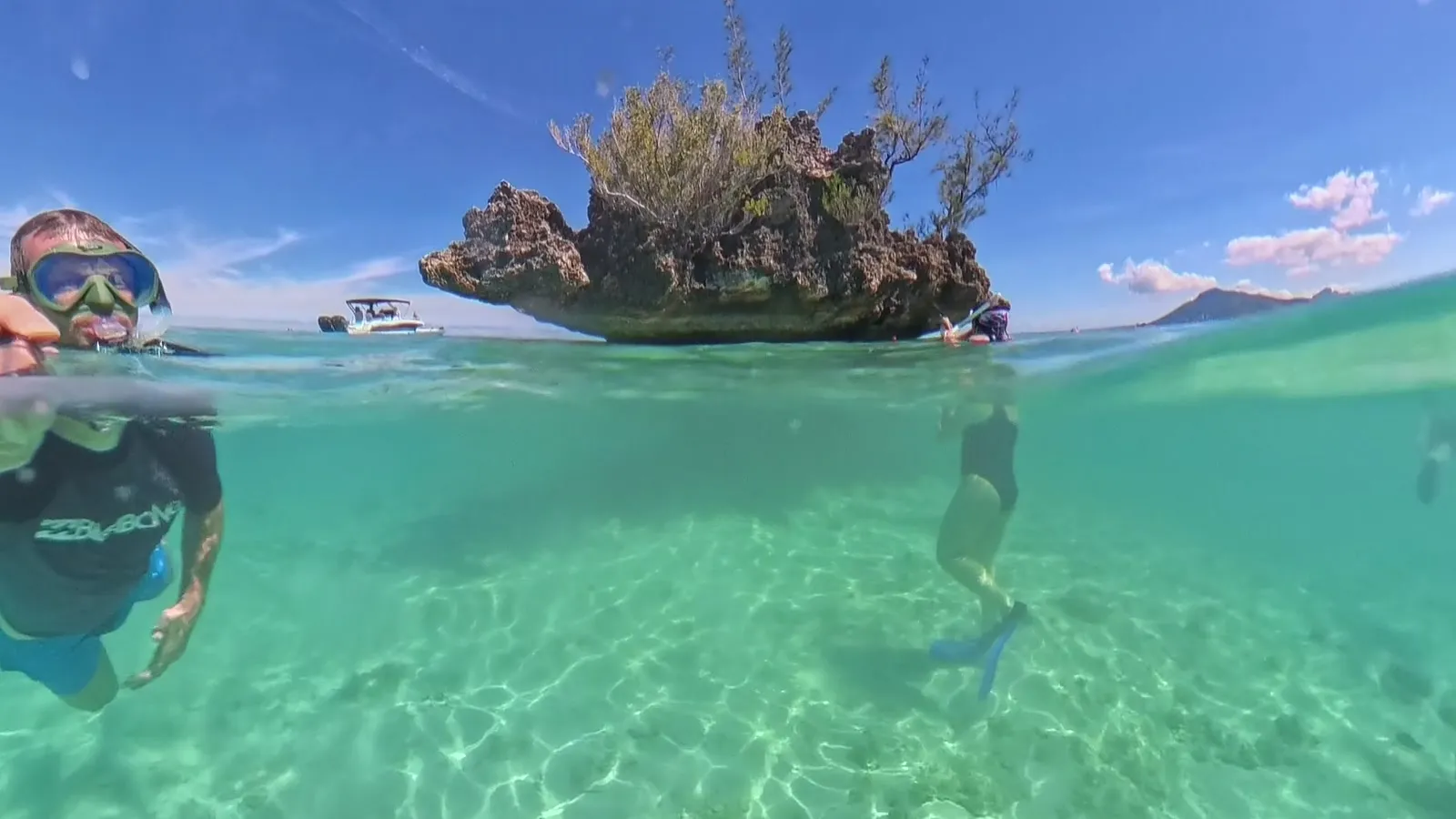
The boat tours start in Flic en Flac, but the destination lies in the southwest: Crystal Rock stands in the middle of the lagoon. From our boat in February 2026, it was a few hundred meters west of Île aux Bénitiers, with no island beneath it. From the side it looks as if it were just resting on top of the water.
Underwater it is brighter and clearer here than off the beach: on 1 February 2026 20 meters of visibility, at the coral stop down to about 4 meters deep, at the rock itself hip-deep, at the anchorage in front of it 3 to 4 meters. The bottom is sand in shallow ripples, with round coral blocks in between. I didn't see any spectacular schools of fish there — what makes this spot is the view half above, half below the water.
At midday the tours stop at Île aux Bénitiers for a barbecue. You're not alone there, but it was clean and the mood relaxed.
Crystal Rock Mauritius: the boat trip from Flic en Flac →
Reef, Entry from the boat · Visibility 20 m · Current none · seen myself February 2026
What it was like
Flic en Flac is the most convenient way in that I know — and the most honest test of your own expectations. If you come for the island and snorkel on the side, you get calm water right on your doorstep. If you come for the reef, you should know that the lagoon is sandy and the actual reef lies far out.
The best thing wasn't the reef but a single animal: a turtle in the shallows that came closer on its own after we had moved away from the crowd. Above water the island is worth the trip — landscape, food and people carry the holiday even when your mask stays dry.