Gear
Snorkeling & diving gear: what really pays off
Translated from the German original.
This post contains affiliate links. They are marked with an asterisk (*). If you buy through such a link, I get a small commission. Nothing changes in the price for you, and what I recommend doesn’t depend on it — the mask, the snorkel and the fins I use myself aren’t even available there.
Quick note up front, in case you’re putting your gear together right now: Three things are really worth it, in this order — a mask that seals tightly, fins with a heel strap plus neoprene boots, and a snorkel that doesn’t press. How much neoprene you need depends on the destination and the month, not on the price.
For years I had inexpensive gear. Mask, snorkel, fins, nothing expensive. And honestly: for snorkeling once or twice a year, it was completely enough. Not perfect, but sufficient.
If you just want to get in the water to see a few fish, I can recommend the equipment from Decathlon with a clear conscience. A simple snorkel set* is enough for that. Not expensive, not fancy, not made for eternity. But it does what it’s supposed to. You don’t have to buy the most expensive thing right away to enjoy a reef.
* Affiliate link. If you buy through it, I get a commission; for you the price stays the same.
That isn’t a platitude, it’s the math: my most beautiful encounters didn’t need expensive gear. The turtles off Rasdhoo in the Maldives lay in five meters of water. The nurse sharks came right into the shallow area in front of the beach. For that, a mask that seals is enough.
At some point that tipped for me. I went into the water more often, first more snorkeling, by now diving too — with a certification since July 2026. Beyond a certain point, you notice every compromise. One example: with the inexpensive masks, the “lenses” are made of plastic. From constantly packing and unpacking, they get scratched over time, and the more scratches, the faster the view fogs up. Once a year, you hardly notice. If you go into the water often, at some point you’re constantly looking through a cloudy pane. So I invested in better equipment, bought at my dive shop, the SSI center ATLANTIS in Berlin-Lichtenberg, where I’m also doing my certification. I couldn’t test anything in the water there, only try it on dry. But I got really good advice, including a few tricks for checking gear dry. With the mask, for example: put it on, breathe in briefly through your nose, and if it sucks on and stays on your face by itself, it fits. That advice is worth its weight in gold.
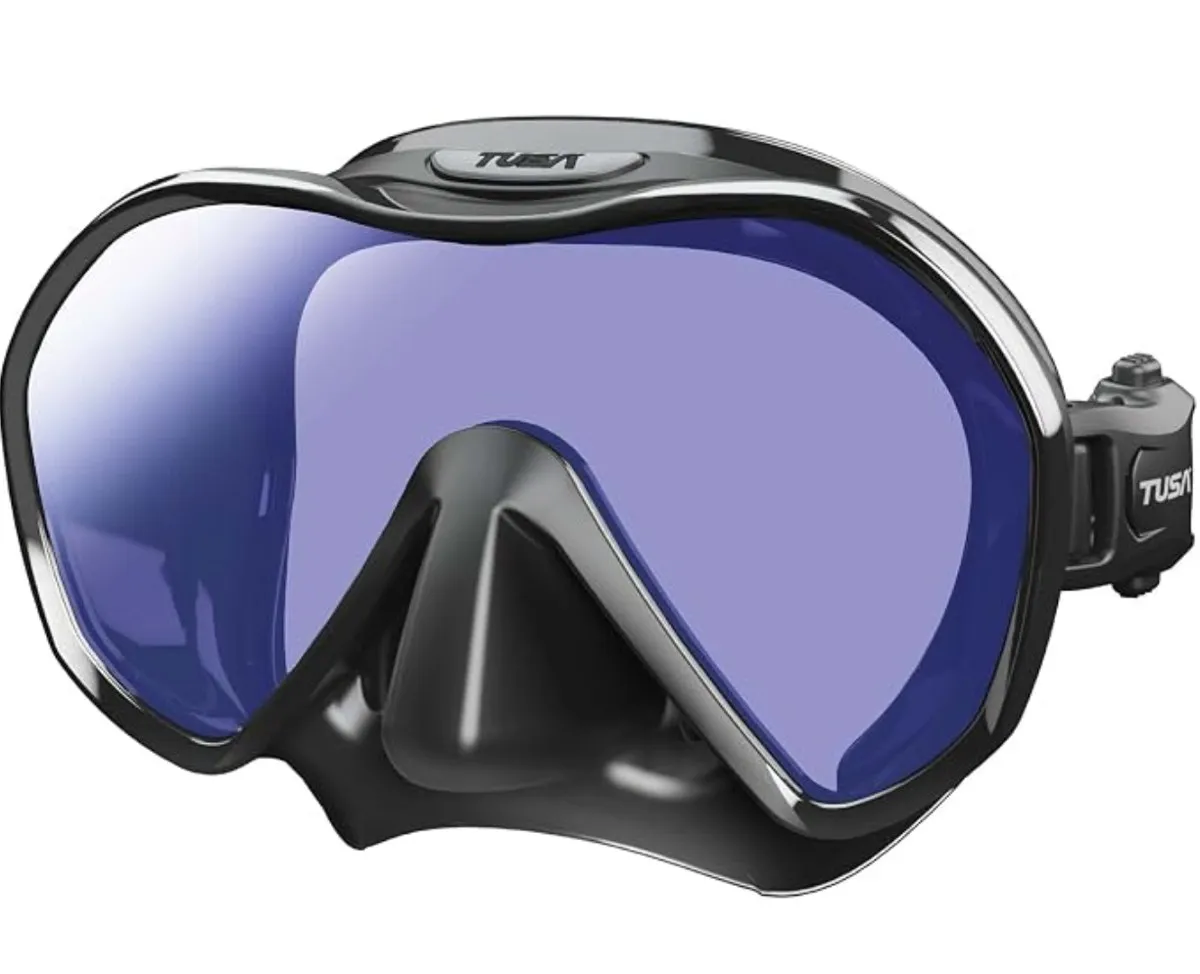
The mask: TUSA M-1010S Zensee Pro
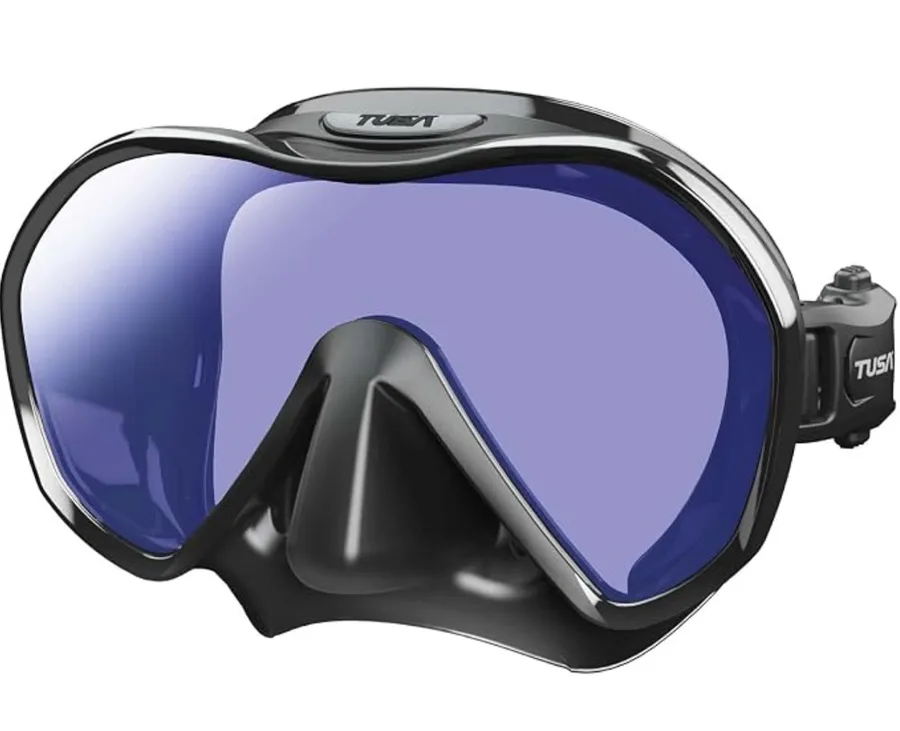
This mask is my most important purchase. It simply fits perfectly. The silicone is soft and seals cleanly, nothing presses, nothing pinches. Plus a slightly tinted lens with a blue filter, which I find pleasant and higher in contrast when diving. After the inexpensive masks of the past years, that’s a noticeable difference.
Then again, the mask can only be as good as the water. In Hanifaru Bay I had around ten meters of visibility — by far the worst of the trip, and still the biggest experience. At Bikini Beach on Fulidhoo it was the other way around: crystal-clear water over sand, and hardly anything to see. The gear doesn’t decide whether a day turns out well.
The snorkel: Scubapro Fusion Dry
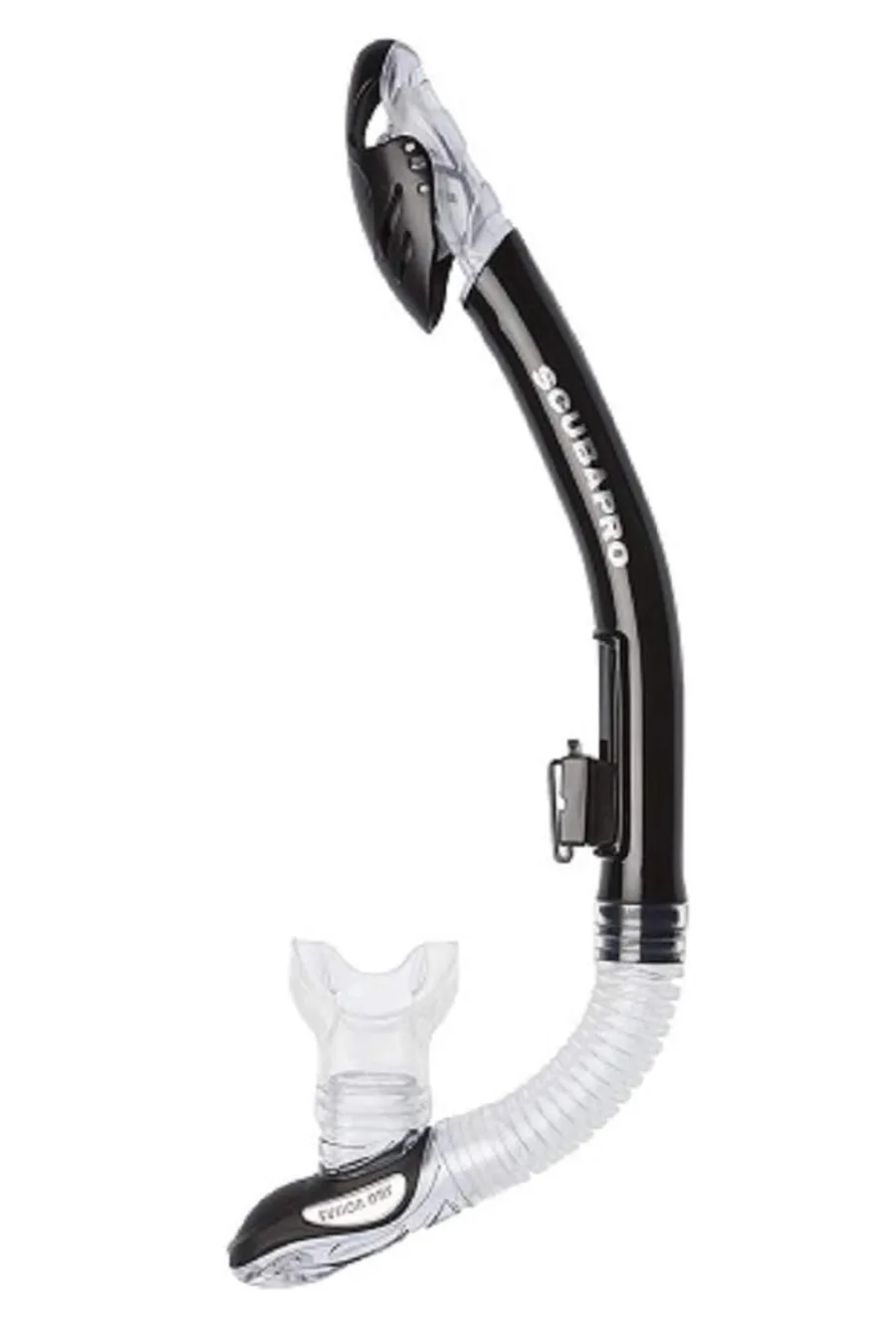
The snorkel is comfortable to wear and above all does one thing really well: when I dive down, it closes by itself. Even in higher waves it stays sealed and no water gets in. No spluttering when surfacing, no gulp of salt water. Especially when the sea gets rougher, that’s exactly what I don’t want to do without anymore.
The fins: TUSA Solla, with an honest “but”
I like wearing these fins. The rubber has exactly the right stiffness, not too hard, not too soft, and you can make good headway against current with them.
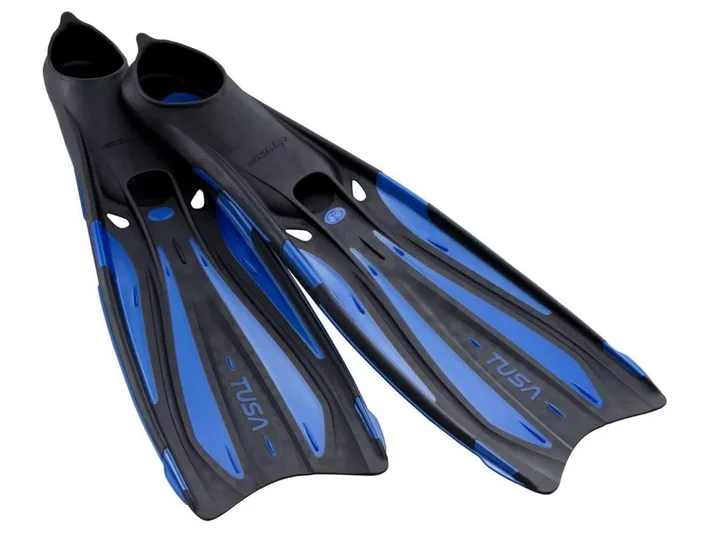
Now for the honest “but”, and it isn’t the fins’ fault. They are full-foot fins that you wear barefoot. That’s exactly why I had deliberately chosen them, and for occasional snorkeling during the day they’re great, a clear recommendation. On the last vacation, though, I had them on for several hours a day, snorkeling and diving in turns. On days like the one at Turtle Reef off Rasdhoo or on the whale shark tour off Dhigurah in the Maldives, you go in in the morning and still don’t want to get out at noon. Over such a long time, the rubber rubs against your bare foot, and with this design you can’t pull a neoprene boot on underneath. It’s not the fins that have reached a limit; what I need them for has changed.
The answer to that: open-heel fins and neoprene boots
I had this paragraph here as a plan — by now it’s done. I bought Mares Plana Avanti Quattro+, open-heel scuba fins with bungee straps instead of a buckle.
⚠️ They haven’t been in the water yet. What I write here is the reasoning behind them, not a field report. As soon as they’ve had a few days in salt water, I’ll write whether they live up to what I expect.
The idea is simple: an open heel means a neoprene boot goes underneath. For me 5 mm, also from Mares. Then nothing rubs on the bare foot anymore, not even after hours.
And the boot solves a second problem right away, one that has nothing to do with comfort. It stays on when I come out of the water — as protection against sea urchins and stonefish when the way in leads over rock. Anyone who has ever snorkeled over a shallow reef to the edge knows why that is no small thing. Off Mauritius, sharp corals lie just below the surface at the surf wall, and you don’t have much room to dodge there.
This exact model isn’t available at Decathlon. That’s not a problem: comparable neoprene boots* will do too. What matters is the thickness — 5 mm isn’t cold protection, it’s sole protection.
* Affiliate link, same rule as above: commission for me, same price for you.
What I would buy differently today
Nothing about the mask and snorkel. Both were the right decision, and I would buy both the same way again.
With the fins, I would ask the question differently. I searched for the best fin and found the TUSA Solla — it is still good today. What was missing was the question before that: How long am I in the water at a stretch? If you snorkel for half an hour twice a day, full-foot fins are the best choice. If, like me, you switch between snorkeling and diving for hours, you need the open heel and the boot.
And I would ask about the camera earlier. My GoPro at the time lost the red from about fifteen meters down. For snorkeling at two to five meters — so for most of what I do — that doesn’t matter. It only became visible when diving, and by then I’d had it for years.
One more point that wasn’t on my radar before the first trip. How much neoprene you need depends on the destination and the month. In the Red Sea you can do without it in October, but not in January. In the Maldives it was never an issue. Before you buy, it’s worth looking at when you’re going where.
In the end, gear is only a means to an end. Good equipment lets me forget that I’m even wearing it, so that I can simply look. That’s exactly why the few euros are worth it to me. And for starters, Decathlon will do.
Short & practical
- Just trying it out (1–2× a year): Inexpensive gear from Decathlon is completely enough. Not fancy, but sufficient.
- More often or diving: get advice at a dive shop and try everything on. For me: the SSI center ATLANTIS in Berlin-Lichtenberg, where I’m also doing my dive certification.
- My things: TUSA M-1010S Zensee Pro mask, Scubapro Fusion Dry snorkel, TUSA Solla fins (full-foot) and Mares Plana Avanti Quattro+ (open heel), plus 5 mm neoprene boots from Mares.
- The question before buying fins: not “which is the best,” but “how long am I in the water at a stretch.” Short and occasional → full-foot. For hours or alternating with diving → open heel plus boot.
- The neoprene boot is more than comfort: It protects against sea urchins and stonefish when getting in over rock.
Sharing experiences: what do you use?
Gear is a matter of experience, and I’m constantly learning myself. I’m interested in what you use and what has proven itself for you. Right now, for example, I’m looking for a mid-range dive computer and am honestly undecided. If you have one you can recommend, write to me: in the comments on Instagram or by email, the link is at the very bottom of this page. I’ll collect the recommendations and turn them into a post of its own.
There’s already a separate report on the camera underwater: why I switched from the GoPro to the Insta360.