Tips
How to snorkel as an adult: a beginner's guide
- Test the mask without the strap
- Dry-top valve you can still clear
- Fins against current
- Course: 2–3 hours (SSI)
In short Learning how to snorkel takes an afternoon in shallow water: check the mask, breathe calmly, clear the snorkel. Fins are the item that is most annoying in the suitcase and does the most in the water.
Translated from the German original.
While snorkeling I estimated visibility, water temperature and depth, just as I experienced them on the days I was there. On dives the dive computer measured depth and duration, and values with a named source show what is usual there, not how it was for me.
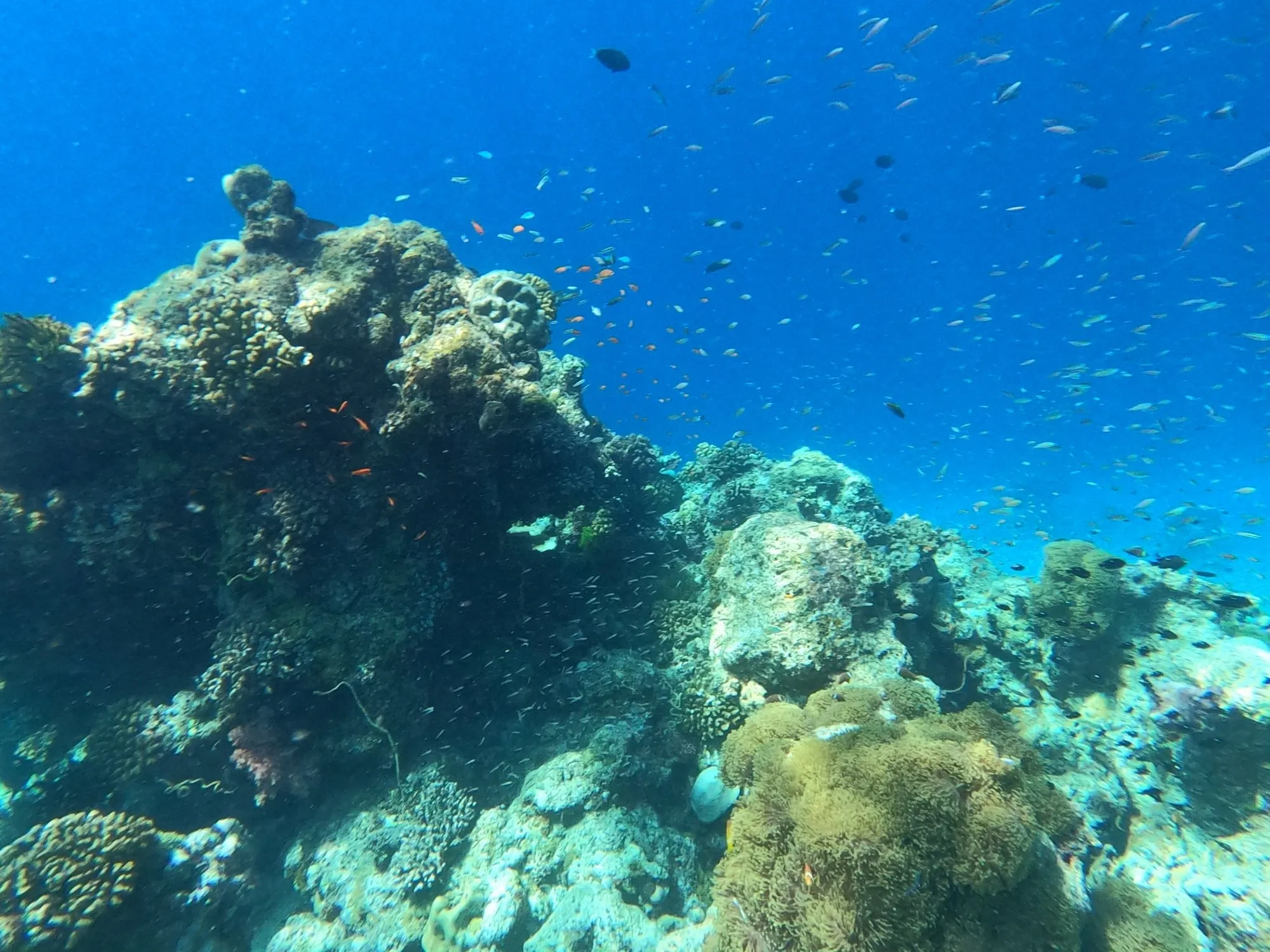
My first snorkeling outside Germany was on Crete in 2001. It wasn’t the fish that thrilled me there. I hardly saw any colorful ones. I didn’t know reefs back then. What grabbed me was the visibility: clear, warm water, and I could see so far that I didn’t want to stop searching for what else was down there. Since then I book almost every vacation by the water so that mask and snorkel come along.
You can learn how to snorkel as an adult. It takes no course and no talent, but a mask that holds on your face, an afternoon in shallow water and three moves: check the mask, breathe calmly through the snorkel, blow the water out. You do have to be able to swim; you don’t have to be a competitive swimmer. After that, the difference is made by fins and a few rules for current and sun.
At a glance
| Able to swim? | Yes, including where you can’t stand. You don’t have to be a strong swimmer (SSI) |
| What you need | Mask, snorkel, fins; plus a UV shirt and reef-safe sunscreen. My six pieces of advice are right below |
| Where to practice | first in a swimming pool, then in the ocean or a lake, and there in shallow water first (SSI) |
| Snorkel | Tube no longer than 35 cm, up to 3 cm thick, clearing must be possible (DLRG). My advice: a model with a dry-top valve that you can still clear |
| If you’re scared | lie on your back and float, then you can breathe calmly (my advice); wear a vest, don’t let anyone push you past your own limit (SSI); in an emergency shout loudly and wave (rule 3 of the Wasserwacht bathing rules) |
| Course | SSI Snorkel Diver: 2 to 3 hours, no minimum age, down to 5 m. PADI Skin Diver: from 8 years (as of October 17, 2026) |
| Never alone | never without company in open water (SSI); “I only go swimming if someone can help me in case of trouble” (Wasserwacht bathing rules, 2024) |
| Full-face mask | not for starting out; why is explained below |
| Who it’s for | Anyone who swims confidently and feels comfortable in the water (SSI) |
Contents
- At a glance
- What I advise beginners
- Do I need to be a good swimmer to snorkel?
- How do I put on a snorkel mask, and how do I check that it seals?
- How do I breathe through a snorkel without swallowing water?
- Where and how do I practice before the ocean?
- What if the mask fogs up or panic sets in?
- Do I need a snorkel vest?
- What do I do in a current?
- Should beginners use a full-face snorkel mask?
- How do I protect my skin and the reef?
- Is a snorkeling course worth it?
- My verdict
- Frequently asked questions
- Where the information comes from
- Further reading
What I advise beginners
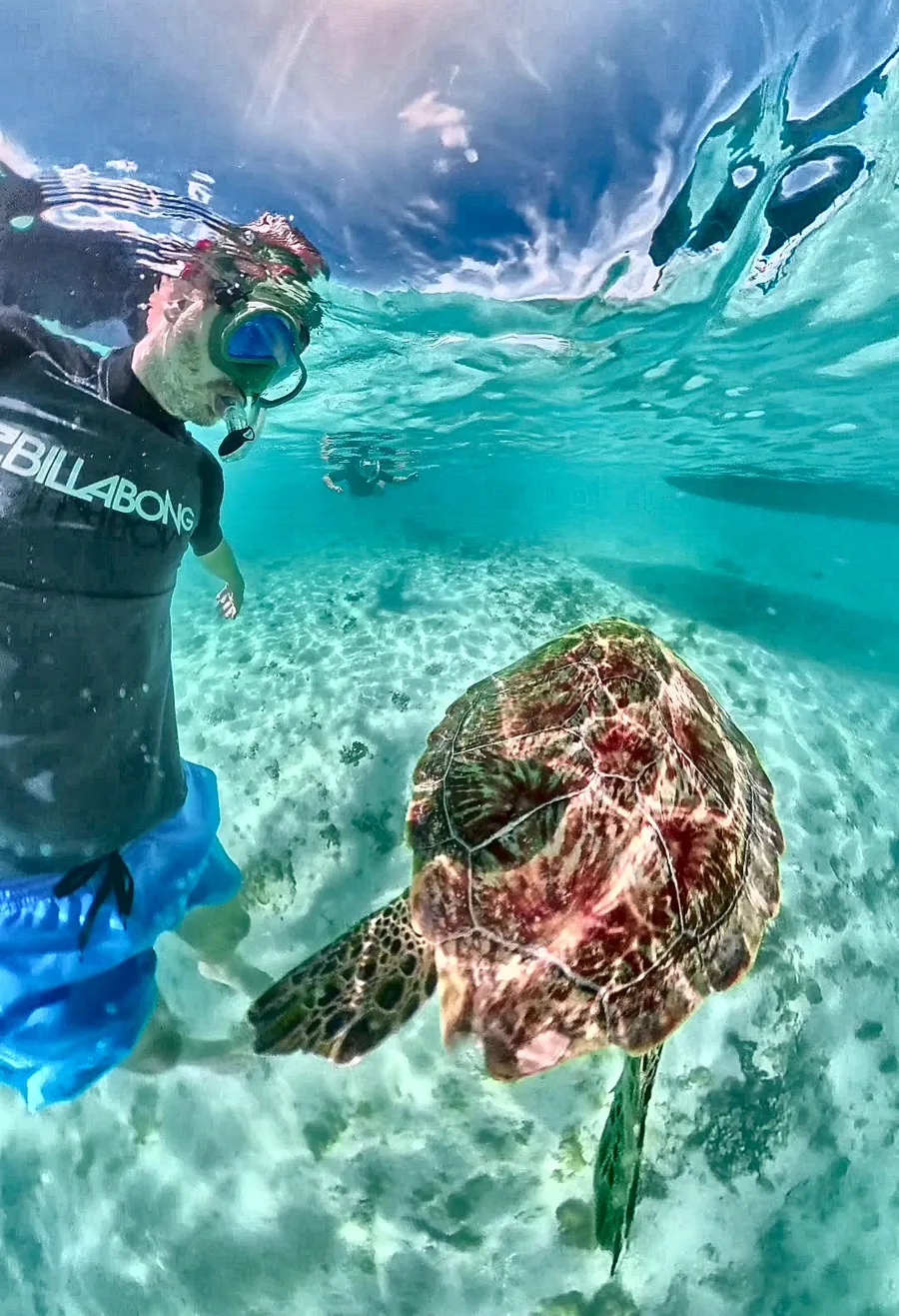
Six things, after around 25 years in the water.
-
A snorkel with a dry-top valve. At the top sits a valve that closes as soon as the snorkel goes underwater. That way water doesn’t keep running in, and you have less salt in your mouth. After many hours a day you notice the difference. Decathlon sells something like this cheaply. I used the transparent Dry Top 100 from there myself for years. It’s in the box before the verdict.
-
Fins, even if they’re a nuisance in the suitcase. They bring freedom and safety at the same time. You move better above and below the water, and they help against current. Fins also protect your foot if you accidentally step down in coral rubble, the dead broken pieces on the bottom. On shallow reefs that can rarely be avoided entirely.
Once, at a reef in the Maldives that I called Coral Garden, I heard a tourist calling for help because he couldn’t make headway against the current. Our guide was far ahead. I swam over to the man, held him steady briefly and then fetched the guide, who gave him a life ring. At least at first it wasn’t life-threatening; he was only at risk of drifting off, and then it would have become difficult to bring him back in. So better put on fins.
-
A mask that fits. For one or two vacations, a cheap one from Decathlon is enough. For years I snorkeled with masks from there myself; mine was a black single-lens mask, my wife had her own, and our son started with a kids’ set from there. If you go into the water more often, more money buys you good glass, sometimes with a blue filter for the colors, higher-quality silicone and a more comfortable fit. For that you go to a dive shop, get advice and try on several masks. My dive instructor now has four masks and is still looking for the perfect one.
-
A UV shirt and reef-safe sunscreen. I almost only wear long sleeves, for a long time the shirts from Decathlon, brand Olaian. If you snorkel for a long time, your back lies in the sun, and you notice it in the evening. What the shirt doesn’t cover, you put reef-safe sunscreen on.
-
Water with a drop of dish soap against fogging. Wash the mask through once, rinse briefly, put it on. At our house it’s called Fitwasser, after the brand fit, which in East Germany stands for dish soap. I’ve tried everything the market offers, also for my other hobby, airsoft, where fogged goggles are a constant topic. Nothing lasts as well. After that, don’t keep taking the mask on and off in the water. Put it on once and leave it.
-
Neoprene boots under the fins. These days I wear open-heel fins and under them neoprene boots with a firm sole. Nothing rubs on the foot anymore, and the sole holds when I walk into the water over rock or coral rubble, also against stonefish. My notes from Bikini Beach on Kamadhoo in the Maldives say only: urgently wear water shoes. Which fins and boots I have is in my gear article. For starting out, simple fins with a soft blade are enough. For children nothing expensive is worth it: their feet grow so fast that our son is now on his third pair of fins. First blue, then black, both from Decathlon, and now one with an adjustable strap at the back so it fits for longer.
Do I need to be a good swimmer to snorkel?
You need to be able to swim confidently, including where you can’t stand. Nothing more. You don’t have to be a strong swimmer, writes the dive training agency SSI; you just need to feel comfortable in the water, even out of your depth. When snorkeling you lie flat on the water most of the time and move slowly.
What really counts is calm. That’s why you start where you can stand up at any time, and only go further out once breathing and clearing happen on their own. A snorkel vest helps with that; more on it in the section on the vest.
How do I put on a snorkel mask, and how do I check that it seals?
Hold the mask against your face without the strap and inhale lightly through your nose. If it stays on, it fits. If air leaks in at the edge, try another one. That’s how the people at the dive shop showed me. The strap then only holds the mask in place; it doesn’t seal it.
The DLRG names three features of a good mask: safety glass, a nose pocket you can grip with your fingers, and a double sealing lip around the edge. You’ll need the nose pocket later for equalizing, once you dive down a few meters. I snorkel and dive with the same mask, and when diving I need it every time.
One more thing about the glass: my cheap masks from back then had plastic lenses. Over time they get rough and scratched, and then they fog up faster. They were good for one to two years.
How do I breathe through a snorkel without swallowing water?
Calmly, through your mouth, with your face in the water. As SSI advises beginners, you practice this in shallow water first: face in the water, breathe calmly, lift your head, again.
At some point water gets in anyway, from a wave or because you turn your head too far. Then you blow the water out of the snorkel hard. That’s exactly what you practice in shallow water until it’s a reflex. In the dive course we practiced in the pool letting water into the mask and blowing it out again.
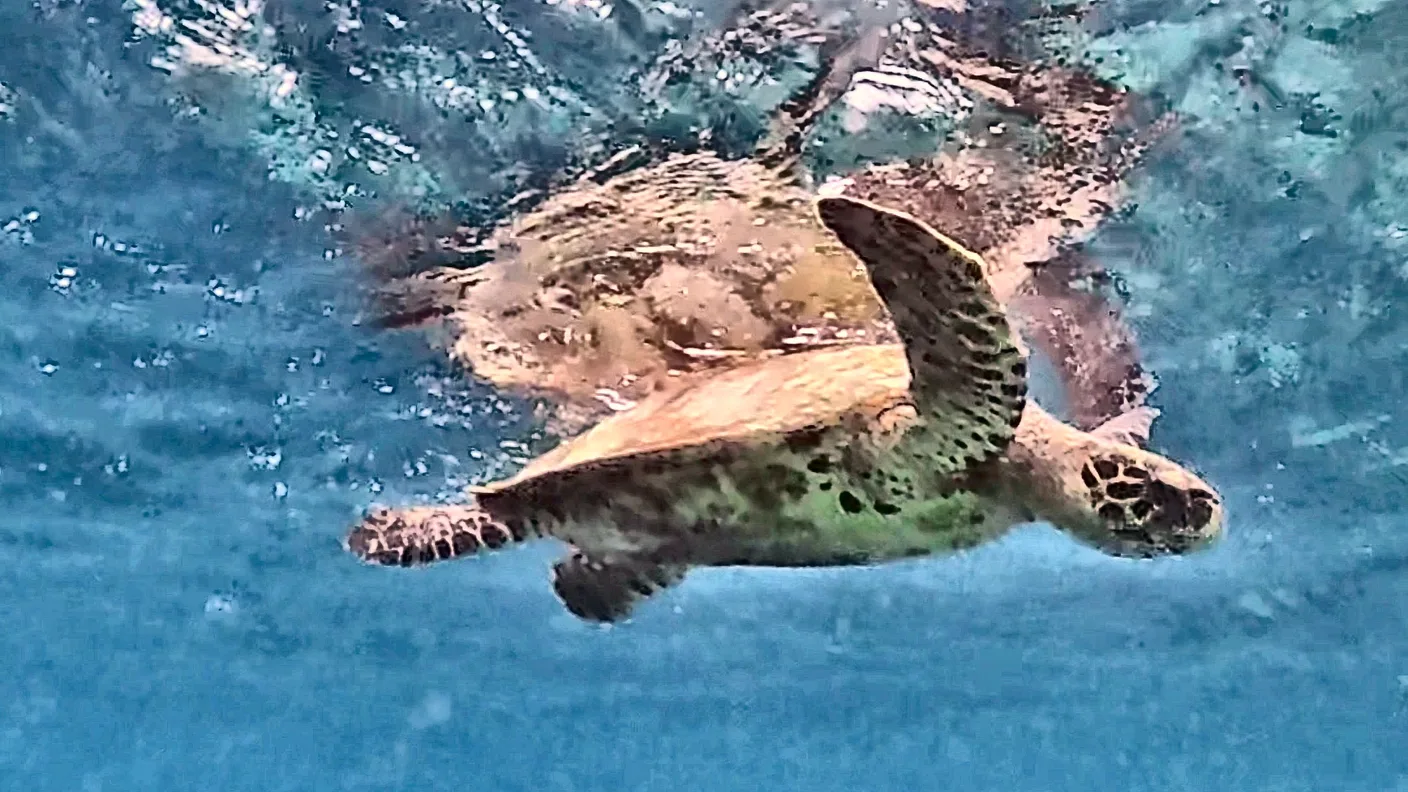
Later you’ll want to dive down because something is lying below. When snorkeling you drift at the surface, and if you see something, you dive down with the air you have. That’s enough for a short look. Then you have to come up. With turtles and down to five meters this works well. I’ve seen an octopus and moray eels briefly that way, went up for air, and down below I couldn’t find them again.
A dry-top valve doesn’t contradict the DLRG as long as the snorkel can be cleared. A very long or thick tube, on the other hand, is not a good idea, because you breathe too much used air back in from it.
Where and how do I practice before the ocean?
First in a swimming pool, then in the ocean or a lake, and there in shallow water first. That’s where our son learned it, until he felt comfortable, and only then did they go carefully into deeper water. In this order:
- Mask alone. Face in the water, exhale through your nose, look.
- Mask and snorkel standing up. Breathe, lift your head, breathe. Then deliberately let water into the snorkel once and clear it.
- Lie and float. Arms still at your sides, legs long.
- Add fins. Long, slow kick, the fins stay underwater.
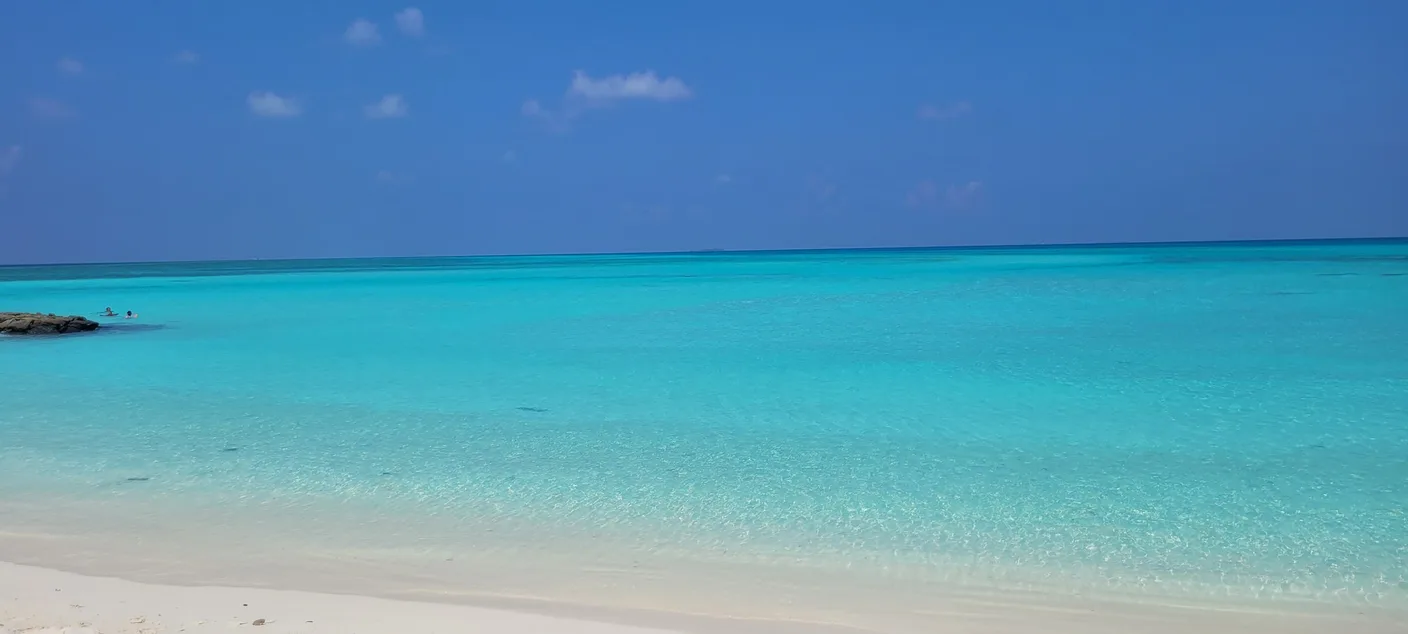
On vacation you look for a beach where the reef is close and the water in front of it is shallow. At Bikini Beach on Kamadhoo in the Maldives the reef starts just around thirty meters from the beach, and the way there is easy. Off Flic en Flac on Mauritius you could stand in the lagoon, and there was hardly any current, only the movement of the waves. Places like these are better for practicing than a boat tour where you’re supposed to jump from the boat into the deep blue.
What if the mask fogs up or panic sets in?
A new mask almost always fogs up because a thin film from manufacturing is still on the glass. Gritty toothpaste before the first time helps against that, and after that spit or an anti-fog product before every time you go into the water. For me only the dish soap from point five has held up.
If you notice in the water that panic is coming or your strength is fading, lie on your back and float. That way you can breathe calmly, and that’s the best solution. A flotation aid is not a sign of weakness, and nobody should push you past your limit. SSI writes both to its beginners, and I stand behind both. If you really get into trouble, rule three of the Wasserwacht bathing rules applies: shout loudly for help and wave your arms.
When a reef shark appeared in front of me on the house reef of Rasdhoo, I felt uneasy. I turned back. On the way back my heart beat faster, and still I couldn’t look away. The whole story is in the article about sharks in the Maldives. The fear was gone after the dive chief of our accommodation had snorkeled along the reef with our family.
Do I need a snorkel vest?
At the beginning, yes, if you don’t feel safe in deep water. A snorkel vest keeps you up without you having to move. Vests or flotation belts save energy and give you safety when you get tired. A vest in a bright color has a second advantage. You can be seen from the boat. When we went out from Dhigurah in the Maldives to the whale shark, vests for children were laid out ready.
What a vest can’t do is swim against the current. For that you need fins and a few rules.
What do I do in a current?
The dive medicine network DAN names drowning as the biggest risk when snorkeling, and as one of the causes currents and tides that carry snorkelers out to sea or against rocks. At Bikini Beach on Kamadhoo there was only a light current, plus a choppy surface. At Gordon Reef off Sharm El Sheikh, on the other hand, it pulled hard on our dive day, with a choppy surface. Check the current before you go in. Four rules help:
- Before getting in, ask how the current runs, and watch where the water drifts.
- Don’t snorkel where divers drift with the current. In Egypt that’s a rule of the Ministry of Environment.
- Not at remote beaches without people.
- If you’re being carried away: call for help early and wave.
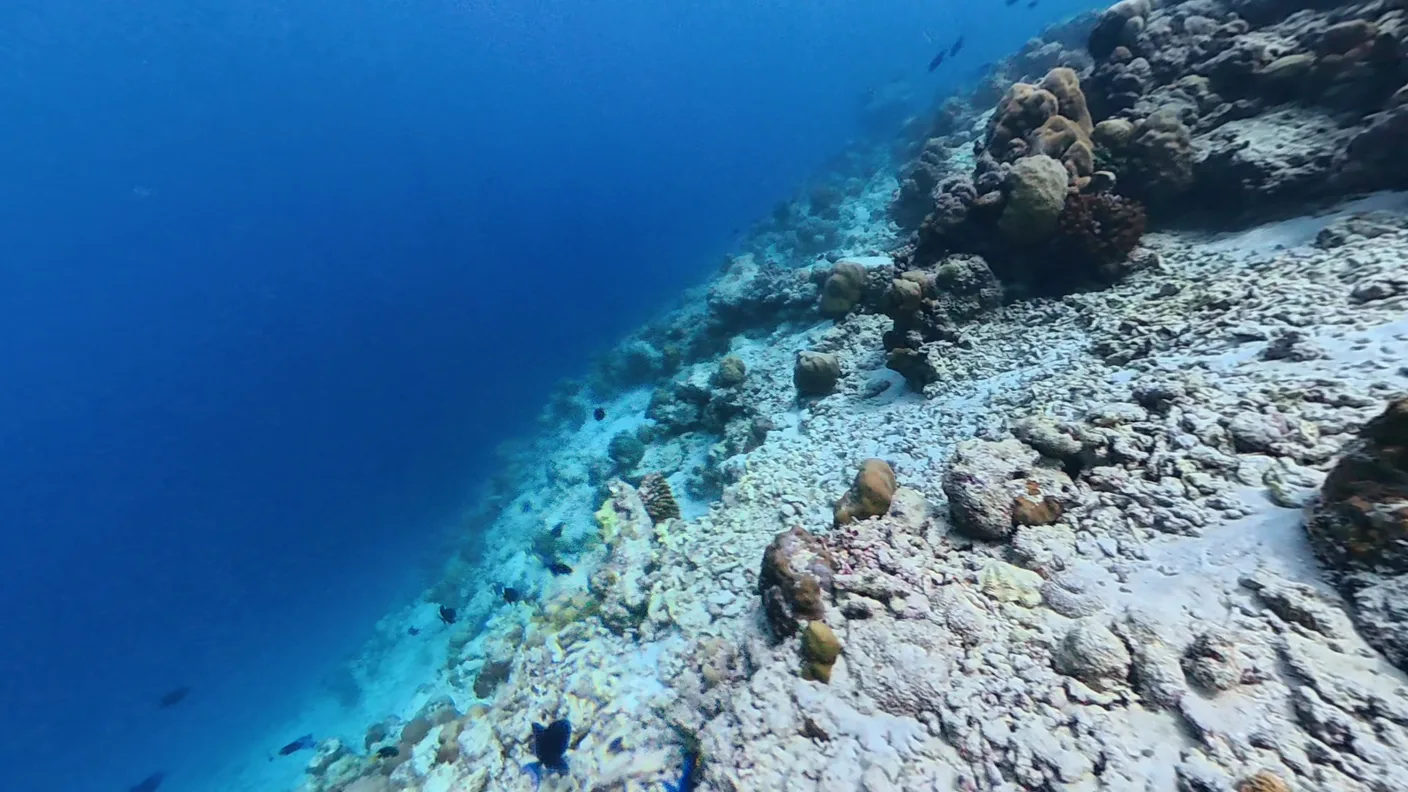
Where current becomes a problem in the Red Sea and how to get to the reef safely there is in the Egypt article about current, fire coral and lionfish. On top of that, the ten Wasserwacht bathing rules apply on every beach: only go into the water if someone can help you, cool off first, tell someone, get out in a thunderstorm.
Should beginners use a full-face snorkel mask?
No. A full-face mask looks like the easy way because you can breathe through your nose. But it has more space in front of mouth and nose in which used air can collect. That’s how the dive medicine magazine Alert Diver Europe explains it. It also names 230 milliliters as the upper limit for the internal volume of a snorkel. In Egypt, the diving association CDWS, together with the Ministry of Tourism, recommended in August 2020 after several incidents not to use full-face masks for snorkeling.
What studies, standards and authorities say in detail is in the article about the snorkel mask. When learning, something simpler counts: with a classic mask you learn clearing and diving down. With a full-face mask you can’t equalize, because you can’t grip your nose.
How do I protect my skin and the reef?
With sunscreen I make sure it’s sold as reef-safe, and with the creams I buy, that costs nothing extra. Even better is needing less cream: long sleeves.
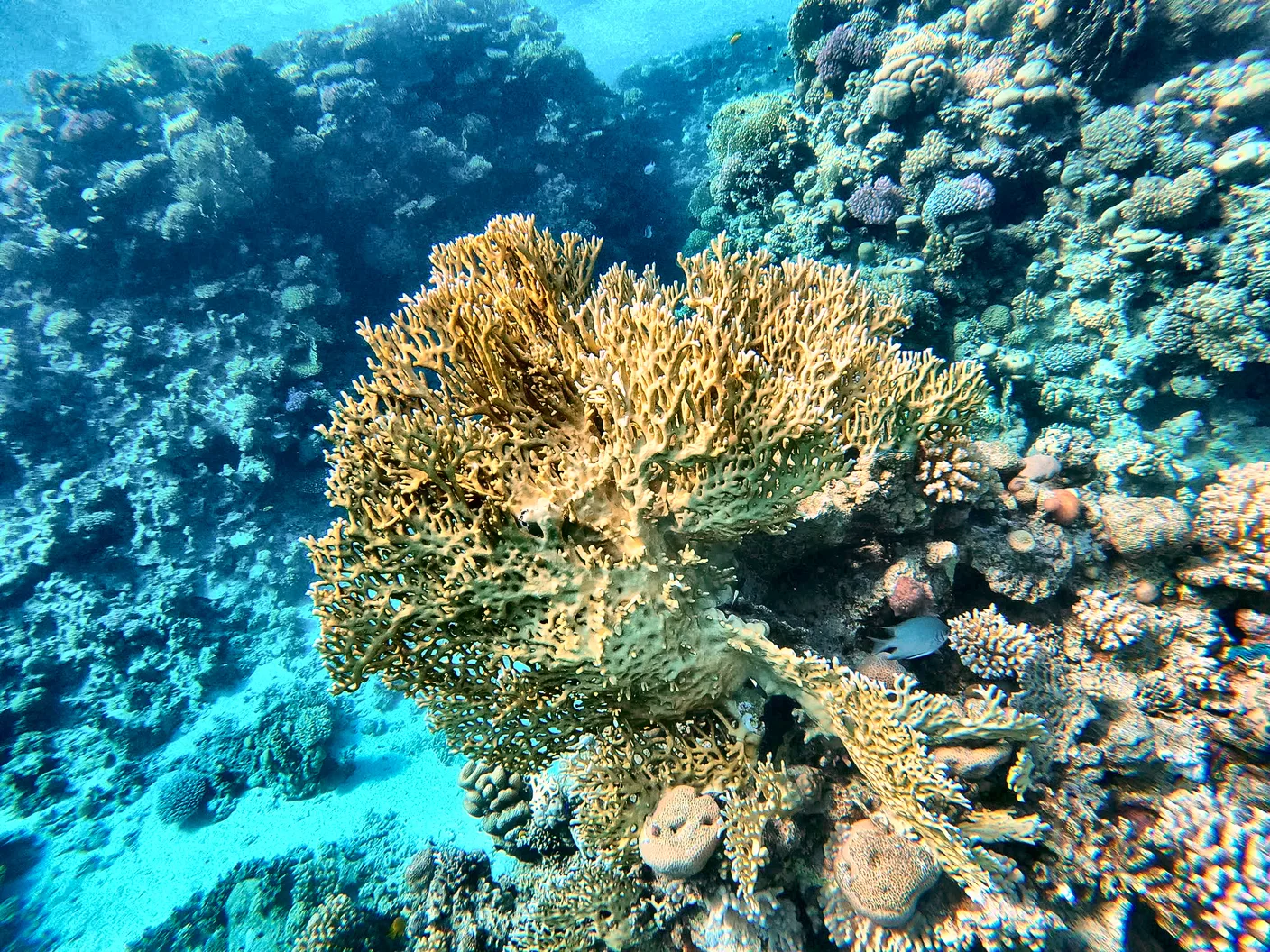
You protect the reef with your feet. Never stand on coral, not even briefly, and keep your fins below you, not over the reef. You don’t come off well either: fire coral stings, stonefish sting, and coral rubble cuts. So don’t touch anything and keep your distance. Off Mauritius we left a turtle in peace and snorkeled away from the crowd. After ten minutes it came to us on its own, and that’s how the picture above came about.
Is a snorkeling course worth it?
A course isn’t necessary, but it can shorten the start. The SSI Snorkel Diver takes two to three hours, has no minimum age and goes no deeper than five meters. PADI calls its course Skin Diver, from eight years, with adequate swimming skills. Both are offered by dive schools that belong to the respective agency.
It’s worth it if you stay unsure on your own or have nobody to practice with you. For everyone else, an afternoon in shallow water with someone keeping watch is enough. I snorkeled as a child already.
This post contains affiliate links. Each button says where it leads and carries the word “Advertisement” below it. If you buy through one, I receive a small commission; your price stays the same. What I advise doesn’t depend on the link: each entry in the box says whether and how I used it myself.
From Decathlon. Decathlon prices as of October 17, 2026; everything is sold by Decathlon itself.
Decathlon: Dry Top 100 snorkelAdvertisement
14.99 euros. My snorkel for years, in my case the transparent version: dry-top valve at the top, purge valve at the bottom. It’s 40 centimeters long, so longer than the 35 in the DLRG figure above, and according to the manufacturer it meets the European standard EN 1972.Decathlon: 100 Mono dive maskAdvertisement
17.99 euros. My Decathlon mask, the black one.Decathlon: Olaian long-sleeve UV shirtAdvertisement
12.99 euros, UPF 50+. I wore shirts like these from Olaian for a long time.Decathlon: Aqua Shoes 100Advertisement
7.99 euros. Not worn by me: a cheap water shoe from Decathlon with a firm sole. My neoprene boots are from Mares, see the gear article.
My verdict
If you take one thing from this article, make it the fins. They’re the bulkiest item in your luggage, and in the water they’re what moves you forward against the current. The rest, mask, snorkel, shirt, is cheap to get, and you buy better once you stick with it.
Frequently asked questions
Can I still learn to snorkel at 50? Yes. Anyone who swims confidently and feels comfortable in the water learns the moves quickly.
At what age can children learn to snorkel? SSI names no minimum age for its beginner course; the PADI Skin Diver starts at eight years, with adequate swimming skills. Our son started with a kids’ set. Where he was in the water in the Maldives is in the post about the Maldives with kids.
Where can I learn to snorkel? On your own in a swimming pool or in the shallow water of a lake, with someone keeping watch, or at a dive school that offers the SSI Snorkel Diver or the PADI Skin Diver.
What do I do if water gets into the snorkel? Blow out hard. A snorkel with a dry-top valve lets less in to begin with.
Can I snorkel with glasses? Yes, with prescription lenses in the mask or with contact lenses, which you take out and clean after snorkeling.
Which mask really seals and what to look for when buying: for that there’s the article about the snorkel mask.
Where the information comes from
From my own experience come, among other things, Crete, the tourist at Coral Garden, the coral rubble, the practice order, the dive instructor with the four masks, the dish soap, the neoprene boots, the reef shark off Rasdhoo and everything we used from Decathlon. Everything else comes from these sources, as of October 17, 2026:
- Courses: SSI Snorkel Diver, PADI Skin Diver
- Swimming, practicing, mask, vest: SSI, “Do you need to know how to swim to snorkel?”, “Learn to snorkel”, “How to snorkel: a beginner’s guide”
- Fogging: SSI, “Preventing fog in a new mask”
- Snorkel and mask: DLRG Schwarzenbek, Schnorcheln (PDF)
- Risks and current: DAN, “Travelers Medical Guide: Snorkeling and Scuba Diving”
- Glasses and contact lenses: DAN, J. Nowitz, “Prescription Dive Masks” (May 1, 2020)
- Bathing rules: DRK-Wasserwacht, bathing rules 2024
- Full-face masks: Alert Diver Europe, “Are full face snorkeling masks dangerous?” (July 16, 2020); Dive Magazine, “Egypt’s CDWS advises against full-face snorkel masks” (August 18, 2020)
- Decathlon: the product pages of the four items in the box, prices and details retrieved on October 17, 2026
Further reading
- My snorkeling and diving gear: which mask, which snorkel and which fins are in my suitcase today
- Buying a snorkel mask: what to look for?: fit, children, glasses wearers and the studies on full-face masks
- Maldives with kids: from what age children can snorkel and where it’s shallow
- Red Sea: four reefs for beginners: entries via jetty and beach, and what can hurt on the reef
- Fulidhoo Bikini Beach: a beach without a reef where rays come anyway
- Whale shark tour from Dhigurah: what it’s like to be in the water with fifty others at the same animal at the same time
- Visibility when snorkeling in the Maldives: why the water gets murky at midday
- My first shark on the house reef of Rasdhoo: the whole story of that uneasy feeling
- Turtles off Mauritius: the lagoon where the picture above was taken
- Maldives at a glance: the islands where we snorkeled from the beach