Tips
Is snorkeling in Egypt safe? Sharks, fire coral, lionfish and current
- Sharm El Sheikh, Egypt
- never go in alone
- entry from the jetty
- October 2025
In short Snorkeling in Egypt is rarely dangerous because of sharks – watch out for the current and sharp corals in shallow water instead.
Translated from the German original.
While snorkeling I estimated visibility, water temperature and depth, just as I experienced them on the days I was there. On dives the dive computer measured depth and duration, and values with a named source show what is usual there, not how it was for me.
From our hotel in Sharm El Sheikh we snorkeled now and then to the reef in Shark Bay. During the whole trip I saw no shark, not even there. Not one, despite the name.
Snorkeling in Egypt is rarely dangerous because of sharks. What you need to watch out for is rather the current and sharp corals in shallow water. On top of that come a few animals you shouldn’t touch. And you never go into the sea alone. We spent eight days there on the Red Sea in October 2025 and were in the water regularly.
At a glance
| Our trip | eight days in Sharm El Sheikh, October 2025; we don’t know other places in Egypt |
| Sharks | I didn’t come across any during the whole trip; according to the Federal Foreign Office, fatal incidents occur “in rare cases” (as of September 24, 2026) |
| Fire coral | stings; rinse with vinegar or seawater, never with fresh water |
| Lionfish | spines venomous; hold the spot in water as hot as you can bear, 45 °C at most |
| Current | when diving, each on our day: Gordon Reef strong, Ras Bob light, Ras Mohammed National Park none |
| Getting in | from the jetty at Ras Umm Sid straight into the water; at Ras Bob around 50 meters over a reef flat |
| With children | Best from the jetty at Ras Umm Sid; it ends at the reef edge, and beyond it the water is deep. Boat reefs in open water are not for small children. |
| Most important rule | never go into the water alone |
Contents
Are there sharks in Egypt?
Yes, sharks live in the Red Sea. In its travel advice for Egypt, the Federal Foreign Office writes: “In rare cases, fatal incidents involving sharks can occur.”
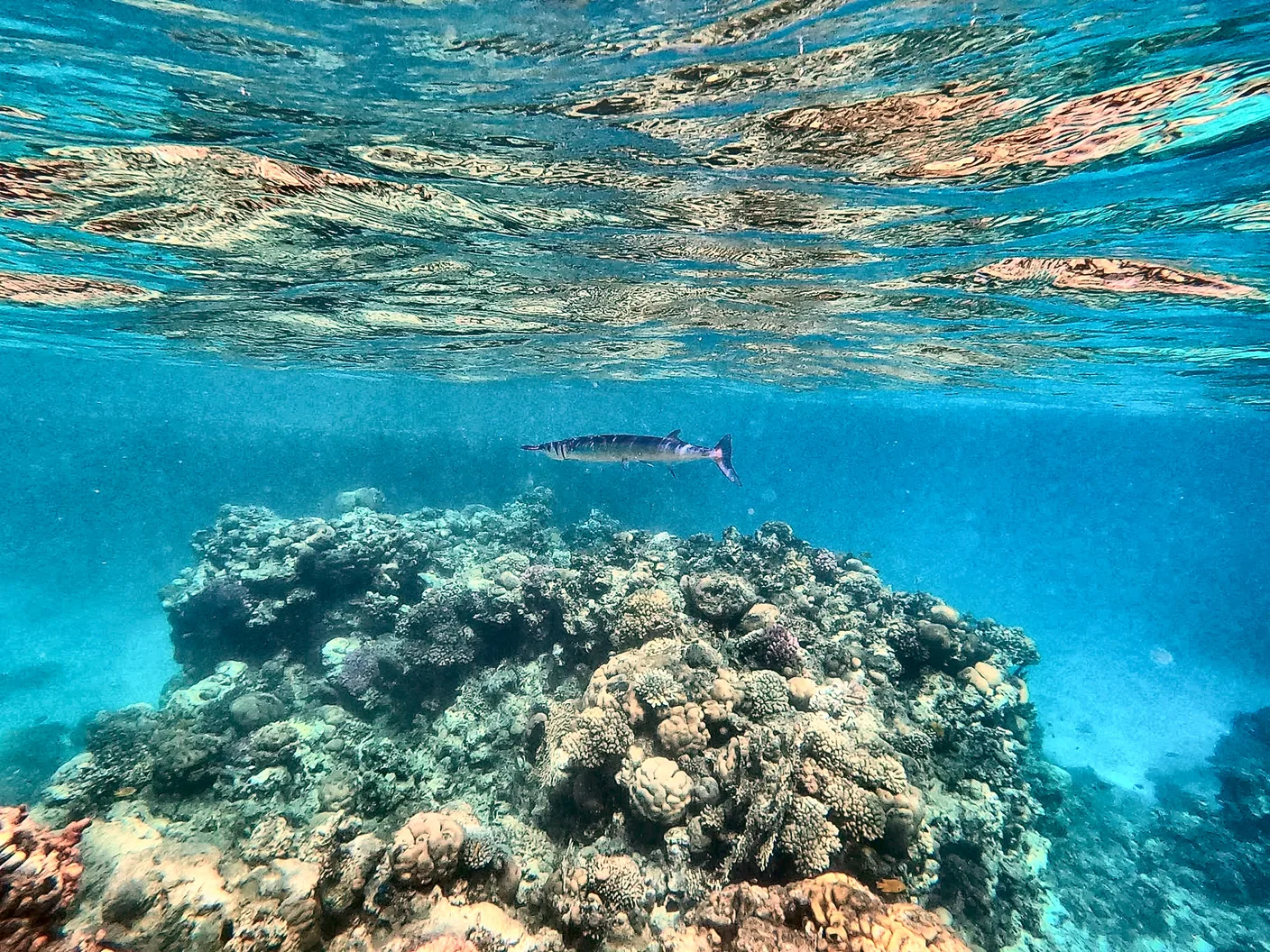
In May 2025, the Egyptian Ministry of Environment published rules for swimmers and snorkelers:
- don’t swim or snorkel alone
- don’t wear shiny jewelry, and don’t go into the water with an open wound
- don’t snorkel in places where divers drift with the current
- don’t feed fish
- don’t go into the water at dawn or dusk
We kept to the first rule anyway. We were always in the water together, as a small group, and I didn’t go snorkeling alone a single time there. I wouldn’t advise anyone to do so either.
Whether snorkeling or diving, I felt safe in Egypt the whole time.
What happens if you touch fire coral?
You can recognize fire coral by its mustard-yellow color and its fine branches. It stings. Anyone who brushes against it feels a burning that, according to the dive medicine network DAN, can last for hours. A rash sometimes appears only minutes to hours later.
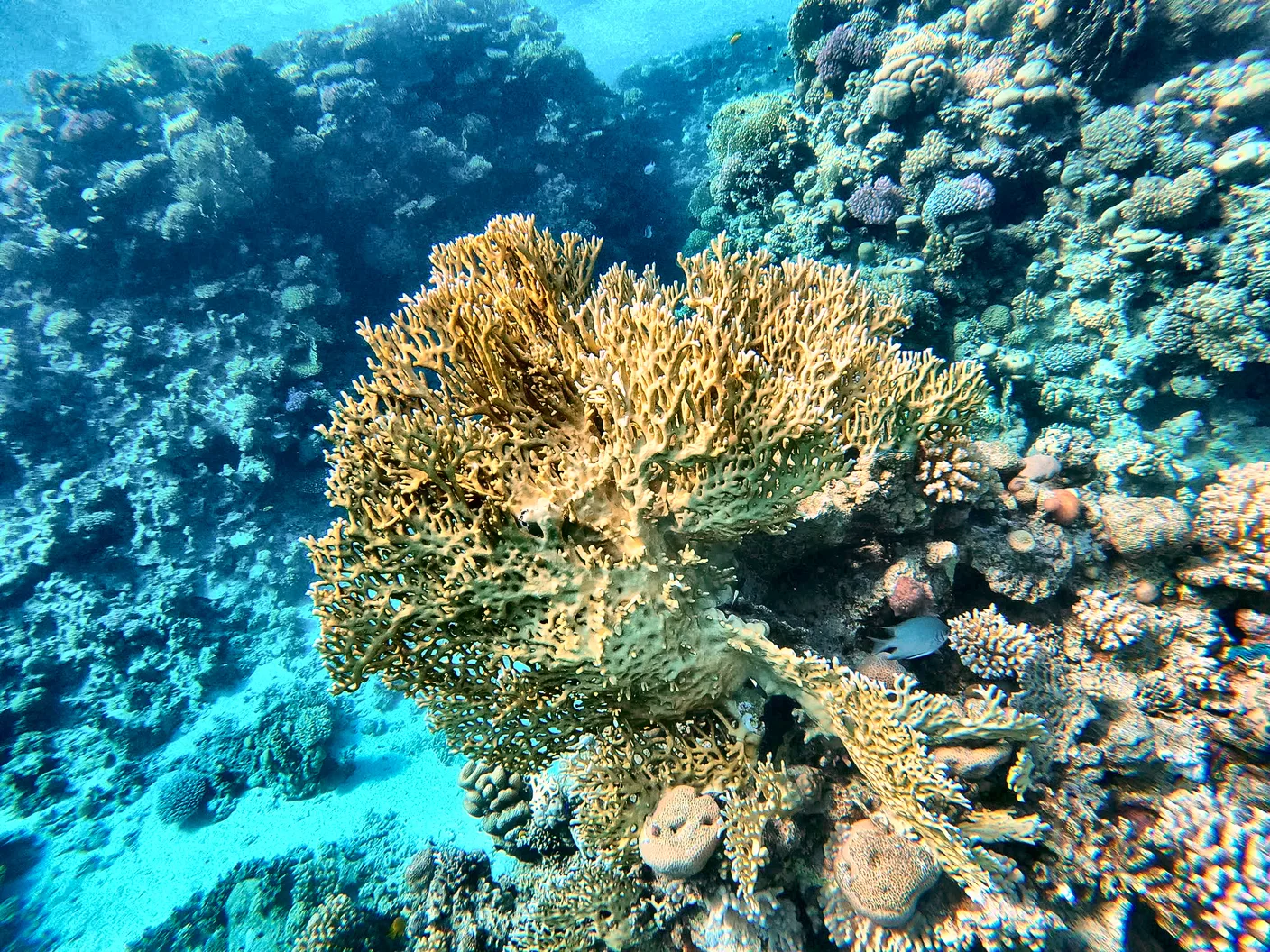
DAN advises rinsing the spot with vinegar. The medical reference MSD Manual advises seawater and warns against fresh water: it triggers the stinging cells that have not yet fired. Open wounds should be looked at by a doctor, because any injury from marine animals can become infected.
Are lionfish dangerous?
As long as you only look at it, not at all. When diving in Ras Mohammed National Park, lionfish hung in the crevices of the reef wall, their fins spread like fans. Their spines are venomous, and anyone who reaches in or leans on them gets stung. A sting hurts badly, swells and can form blisters.
After a sting, DAN advises three steps:
- clean the wound
- hold it in water as hot as you can stand, 45 °C at most, for thirty to ninety minutes
- then see a doctor
Where does the current become a problem?
Gordon Reef in the Strait of Tiran lies in a narrows that the water pushes through. Diving there on our day, we had a strong current, and the surface was choppy. There, you only go into the water if the boat stays within reach. Quite different at the two other dive sites: at Ras Bob the pull was only light, and in Ras Mohammed National Park there was no current on our day. While snorkeling, too, it was never strong anywhere.
Ask on board before getting in how strong the current is that day. And stay with the group.
How do you get to the reef safely?
The easiest way is via a jetty. At Ras Umm Sid, a long jetty leads out and ends right at the reef edge. You get into the water there without having to cross sharp corals, and there is no spot where you can touch down. Ras Bob has no jetty. There you first snorkel about fifty meters over a shallow reef, and that isn’t pleasant for everyone. At low water, there’s little room there.
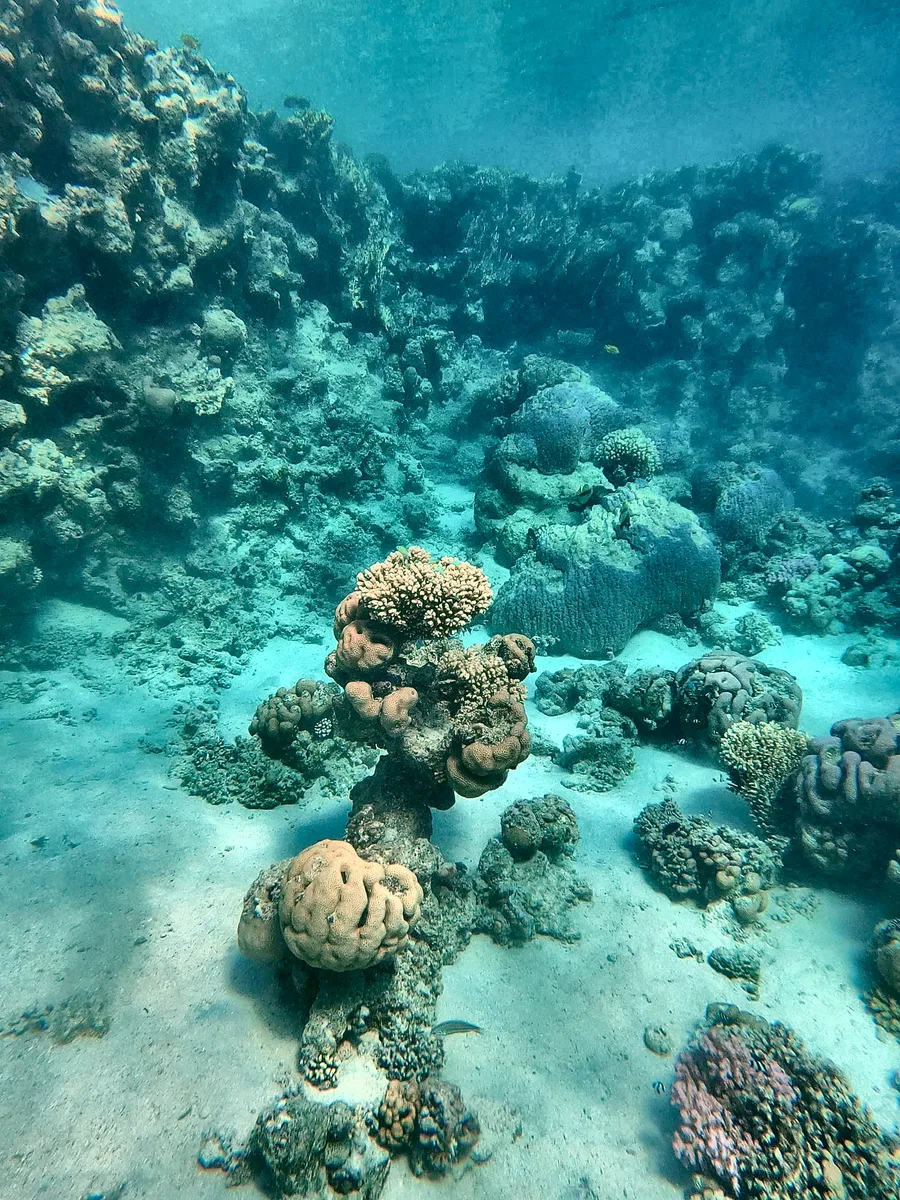
Don’t touch down and don’t kick the reef with your fins, and you’ll get to the edge at Ras Bob just fine too. Behind the jetty at Ras Umm Sid, the reef drops off steeply, and you don’t have ground under your feet there either. With children, it’s still the better way in.
Why shouldn’t you touch anything on the reef?
Because both sides get hurt. Corals grow over many years and break off in a second, whether by hand or by fin. And anyone who holds on to the reef or leans on it can easily end up grabbing a fire coral or a lionfish. So keep a little more distance, even from animals that seem calm.
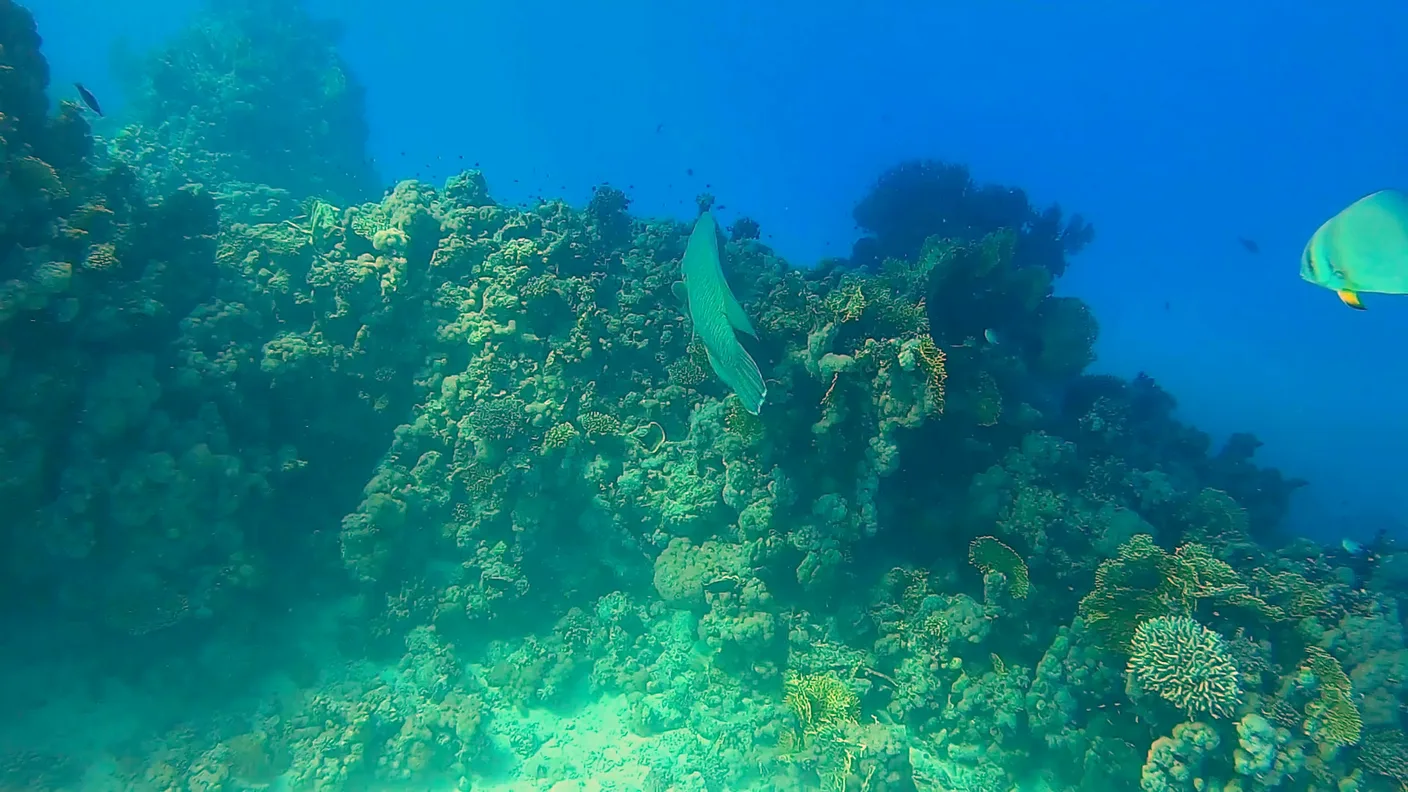
When diving in Ras Mohammed National Park, a moray eel peeked out of a rock crevice. We kept our distance and watched it. How that dive went is in the report on diving without a certification in Egypt.
Nobody in our group got hurt on the reef.
My conclusion
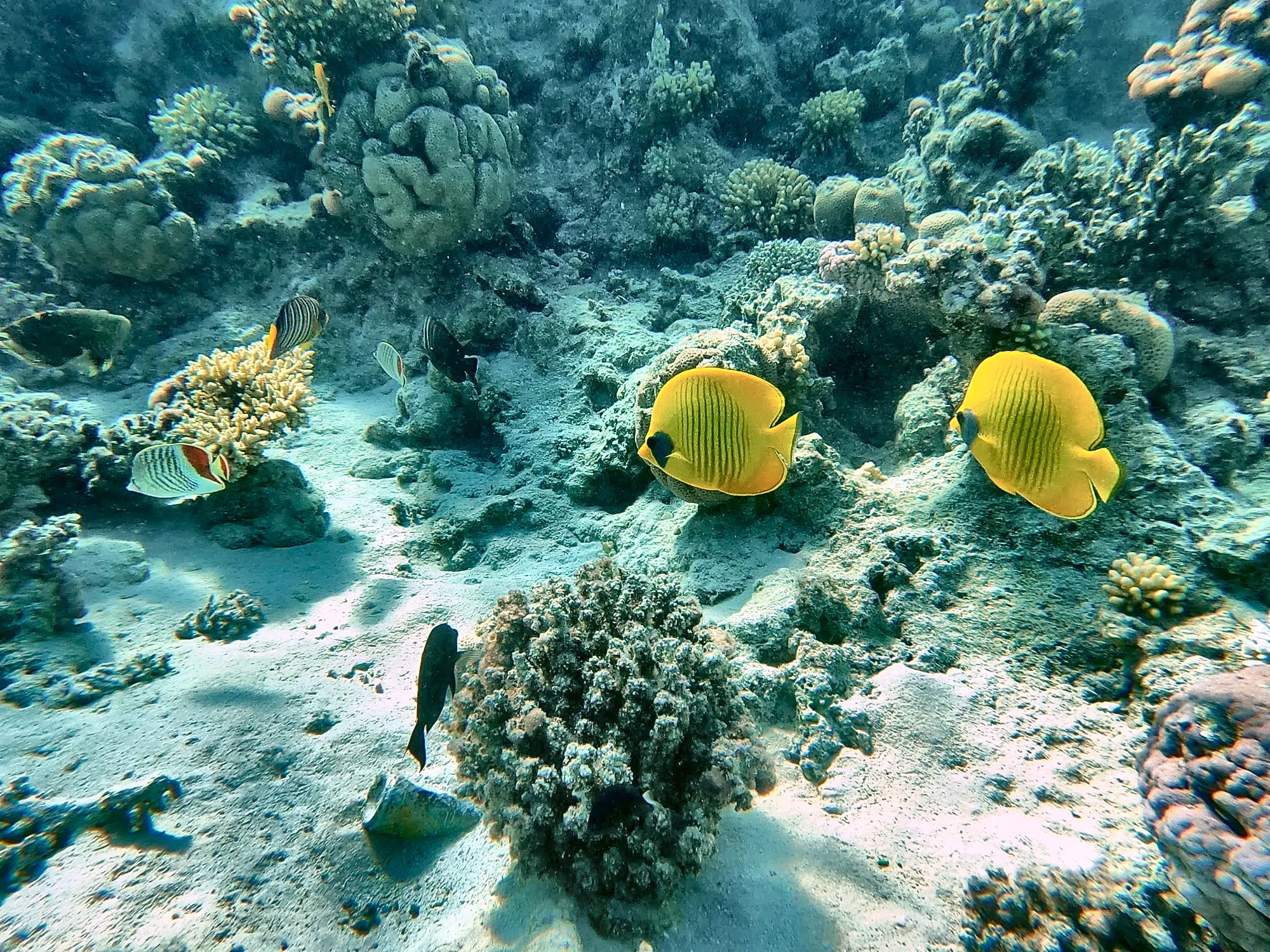
If you know the few rules, you can snorkel off Sharm El Sheikh relaxed and simply look. Clouds of orange anthias hover above the corals. In between, masked butterflyfish trace their paths.
Frequently asked questions
Can you snorkel in Egypt with children?
Whether it works depends on the entry point. It’s easiest from the jetty at Ras Umm Sid, even though it gets deep right behind it. In Ras Mohammed National Park and at Gordon Reef, you go from the boat into open water with no ground under your feet, and at Gordon Reef there’s a strong current as well. That’s not for small children. Our son wasn’t with us in Egypt. How we snorkeled with him in the Maldives is told in the article on the Maldives with kids.
Is diving in Egypt safer than snorkeling?
For me, both were the same. I snorkeled and dove around Sharm El Sheikh.
Do you see sharks when snorkeling in Sharm El Sheikh?
I didn’t see any during the whole trip, not even in Shark Bay.
Is snorkeling in Egypt more dangerous than in the Maldives?
We’ve been to both. The rules are the same: not alone, watch the current, touch nothing. What differed was what we saw: we only came across sharks in the Maldives, for example at the house reef of Rasdhoo, right in front of the beach. How calmly small reef sharks move along the reef there is told in the article about sharks in the Maldives.
You can already read about the dive in Ras Mohammed National Park. How the whole trip there goes, with the boat, a snorkeling stop, lunch and the dive, I’ll tell in an article of its own.
Where the information comes from: the assessment of sharks from the travel and safety advice of the Federal Foreign Office, the rules of the Ministry of Environment according to Egypt Independent (May 10, 2025), first aid for fire coral and lionfish from DAN, and from the MSD Manual. Accessed on September 24, 2026. Everything experienced is from our trip in October 2025.
Further reading
- Overview of the Red Sea: how warm the water is there when, and where we were
- Reefs of Sharm El Sheikh: the current and the visibility at the individual reefs
- Reefs for beginners on the Red Sea: more reefs for getting started
- Sharks at the house reef of Rasdhoo: the shark right in front of the beach
- Overview of the Maldives: all the islands we stayed on there
- Snorkeling and diving gear: what we bring for snorkeling