Tips
Sharm El Sheikh snorkeling from the beach: is it worth it?
Translated from the German original.
Shortly after seven, we’re standing with our fins in our hands on the beach in front of our hotel in Shark Bay. Apart from us, nobody is there. We let ourselves drift flat over the reef, very slowly, the water warm on our skin. After about fifty meters, the bottom drops away beneath us. Then there it is, the reef edge, and beyond it everything falls into the blue.
The short answer: Yes, snorkeling in Sharm El Sheikh is worth it, precisely because you don’t need a boat. Sharm El Sheikh lies at the southern tip of the Sinai Peninsula in Egypt, and you can reach several reefs there on foot from the beach. So choose your hotel by the reef in front of it. Ours was the Serenity Lodge in Shark Bay, with Ras Bob in front of it, the best reef of our week. Expect dense, colorful reef at two to five meters depth. Mantas, whale sharks or hammerheads are not part of it.
At a glance
| Where | Sharm el-Sheikh (Sharm El Sheikh), southern tip of the Sinai Peninsula, Egypt |
| Accommodation | Serenity Lodge in Shark Bay, house reef Ras Bob right in front |
| Getting in | Ras Bob from the beach, first around 50 m over shallow reef; Ras Umm Sid over a long jetty straight to the edge |
| Prices | Ras Umm Sid at El Fanar Beach: around 150 Egyptian pounds entry fee, about 3 to 4 €, lounger and parasol included (October 2025) |
| Getting around | a driver, arranged by the hotel, called via WhatsApp |
| Travel time | we were there in October 2025: 26 °C water, around 30 m visibility; you can get in the water all year |
| Depth at the reef | 2 to 5 m, you don’t need to be able to dive |
| For whom | beginners and families, anyone who wants to see lots of fish without a long-haul trip; not for anyone looking for a particular big animal |
Contents
- Which hotel in Sharm El Sheikh has a house reef?
- Sharm El Sheikh snorkeling with kids: where is the easiest way in?
- What do you see snorkeling in Sharm El Sheikh?
- Do you see sharks or mantas snorkeling in Sharm El Sheikh?
- How do you get from reef to reef in Sharm El Sheikh?
- When is the best time for snorkeling in Sharm El Sheikh?
- Frequently asked questions
Which hotel in Sharm El Sheikh has a house reef?
Ours had one. We stayed at the Serenity Lodge in Shark Bay, and the real highlight of the week lay right in front of it: Ras Bob. We tend to book in the lower to mid price range, and in Sharm we didn’t need an expensive resort for a good house reef.
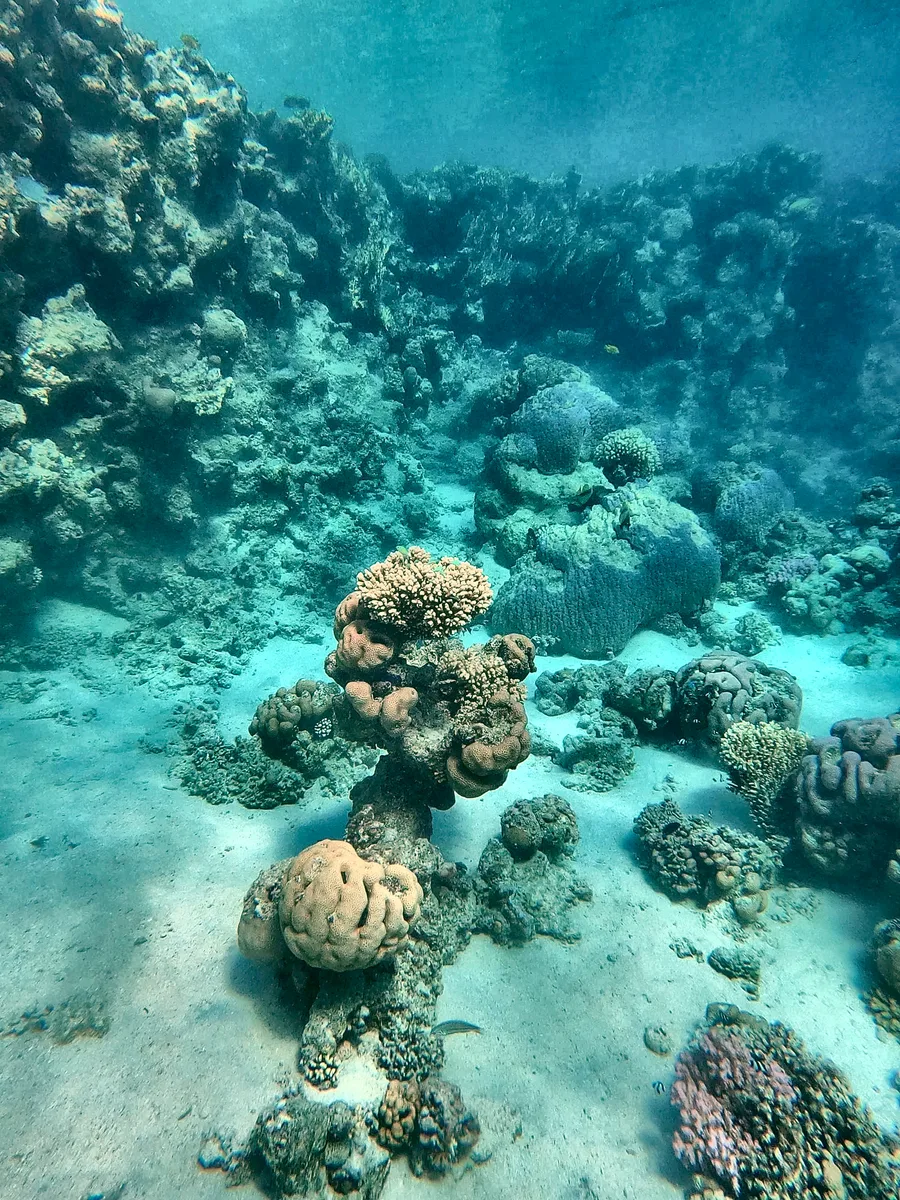
There is no jetty at Ras Bob. You first snorkel over a shallow reef, and that isn’t pleasant for everyone. After about fifty meters you’re rewarded. Beyond the edge the reef drops off, and in front of it lies bright sand full of individual coral blocks.
How good this reef is, we learned on a single day. We had booked a boat tour and drove forty-five minutes. Then the boat moored at our own house reef for snorkeling. So there are tours that go all the way to where we simply got into the water from the beach in the morning.
That is not a given. On Mauritius we had to go out by boat every time for a proper reef. At Bikini Beach on Fulidhoo in the Maldives I didn’t find any reef at all from the shore, a hundred meters out, and below me there was only sand.
Anyone not staying at a house reef can still get to one. At El Fanar Beach in the Hadaba district lies Ras Umm Sid. You pay an entry fee there, though not much, and get a lounger and parasol with it. Nowhere did I get more reef for so little money. Which other reefs there are and how they differ is on the page about the house reefs of Sharm El Sheikh.
Just about the name: The bay is called Shark Bay, but in the whole week I didn’t come across a single shark there.
Sharm El Sheikh snorkeling with kids: where is the easiest way in?
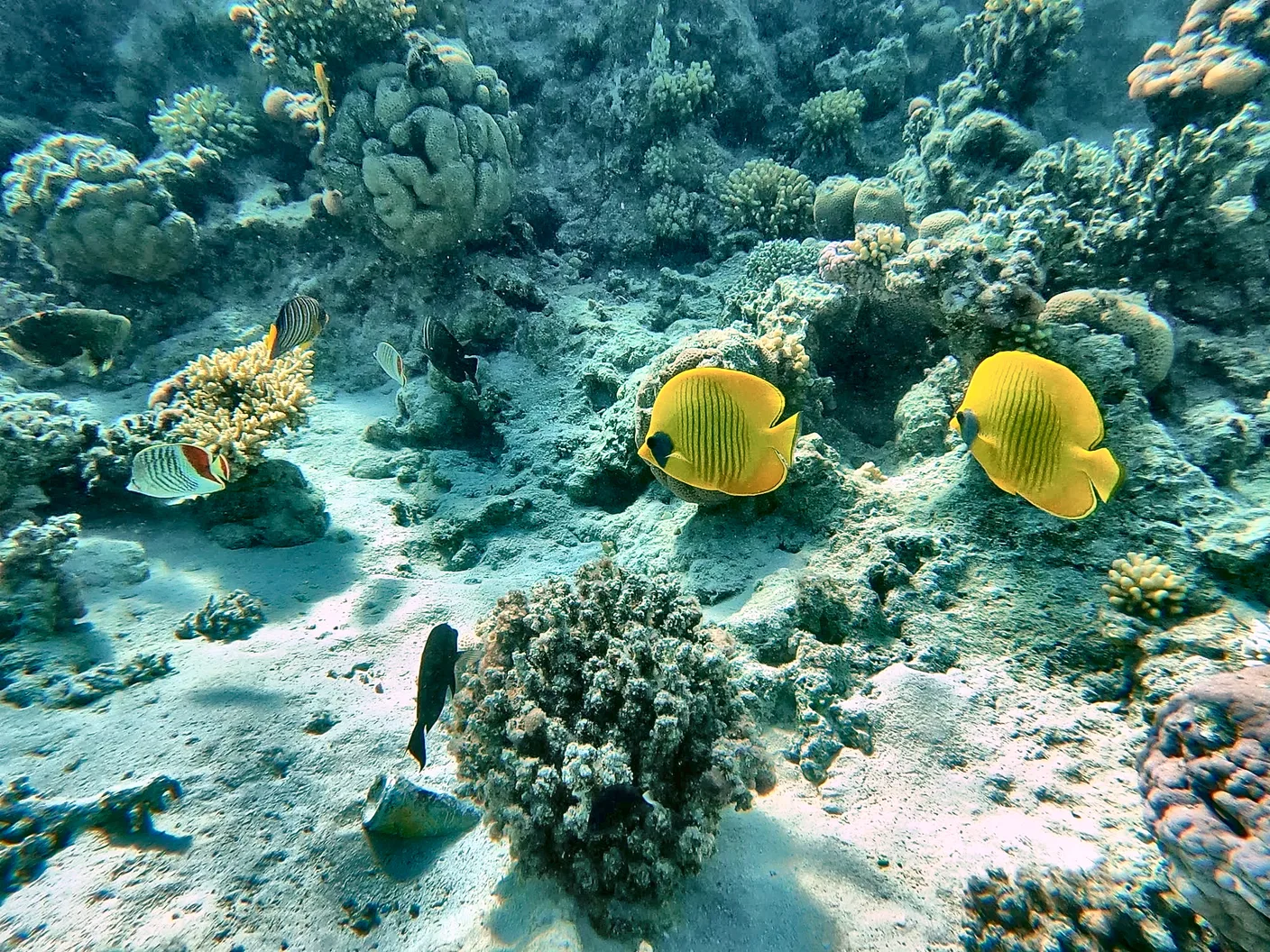
At Ras Umm Sid. A long jetty leads out and ends right at the reef edge. No shallow reef, no climbing; you go in and look. The reef drops steeply behind the jetty, the water has a deep blue, and it is colorful and densely overgrown.
For families, this is the best way in. From the jetty you go straight into the water. There is no path over sharp corals and no spot where a child can touch down. That is exactly what makes Ras Bob harder with children, because there fifty meters of shallow reef lie in between first.
By the way, we were always in the water together, as a small group. I didn’t go snorkeling alone a single time that week, and I wouldn’t advise anyone to.
Two more reefs can only be reached by boat. In Ras Mohammed National Park you snorkel at a reef in the middle of the open sea, nothing but blue all around. I also went diving there, without certification; how that went is in the report on diving without certification in Egypt. Gordon Reef in the Strait of Tiran had a strong current on our day. There you should only get into the water if the boat stays within reach.
What the four reefs are like in detail and who they suit, I wrote down in the overview Red Sea: the best reefs for beginners.
What do you see snorkeling in Sharm El Sheikh?
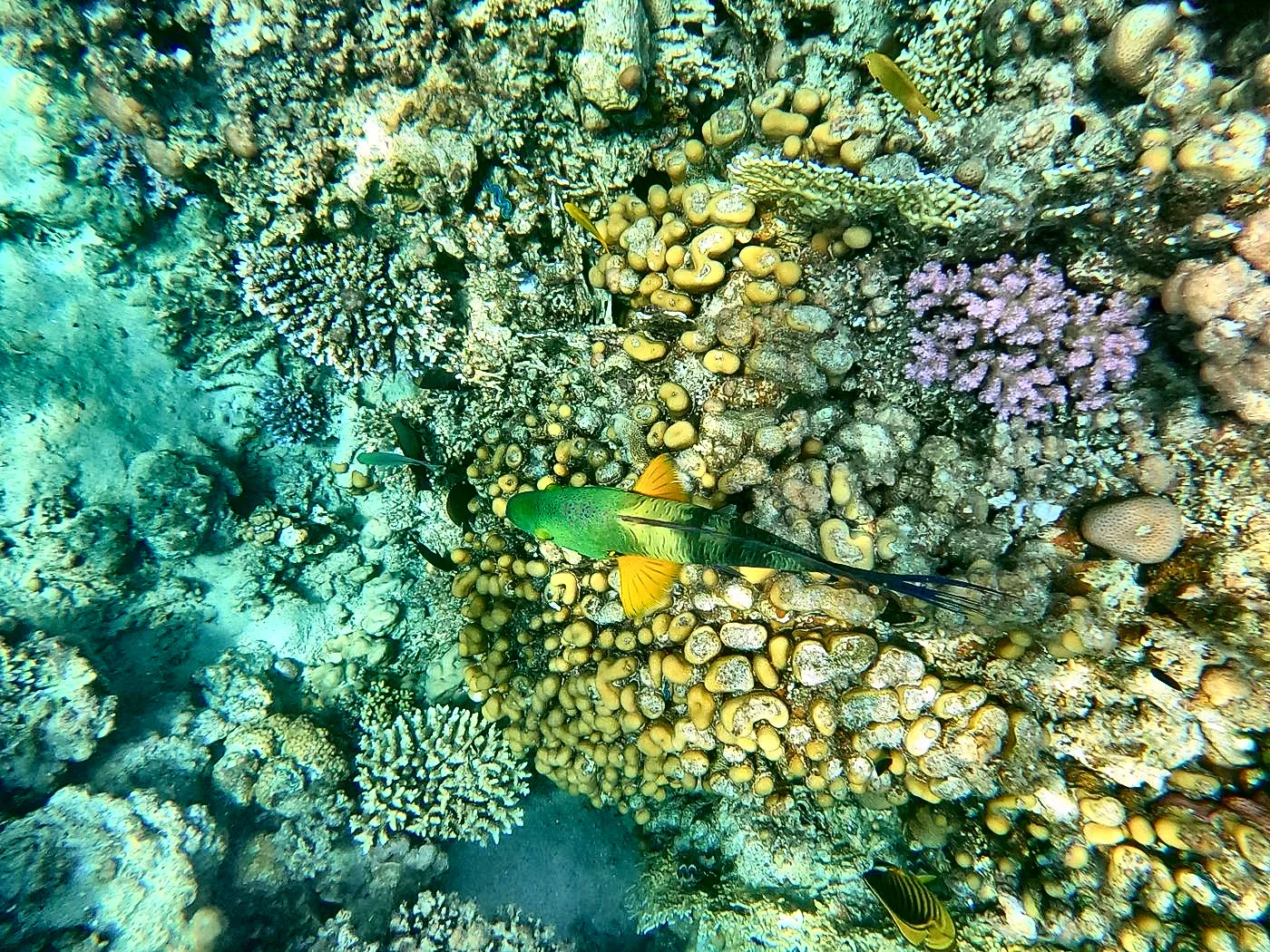
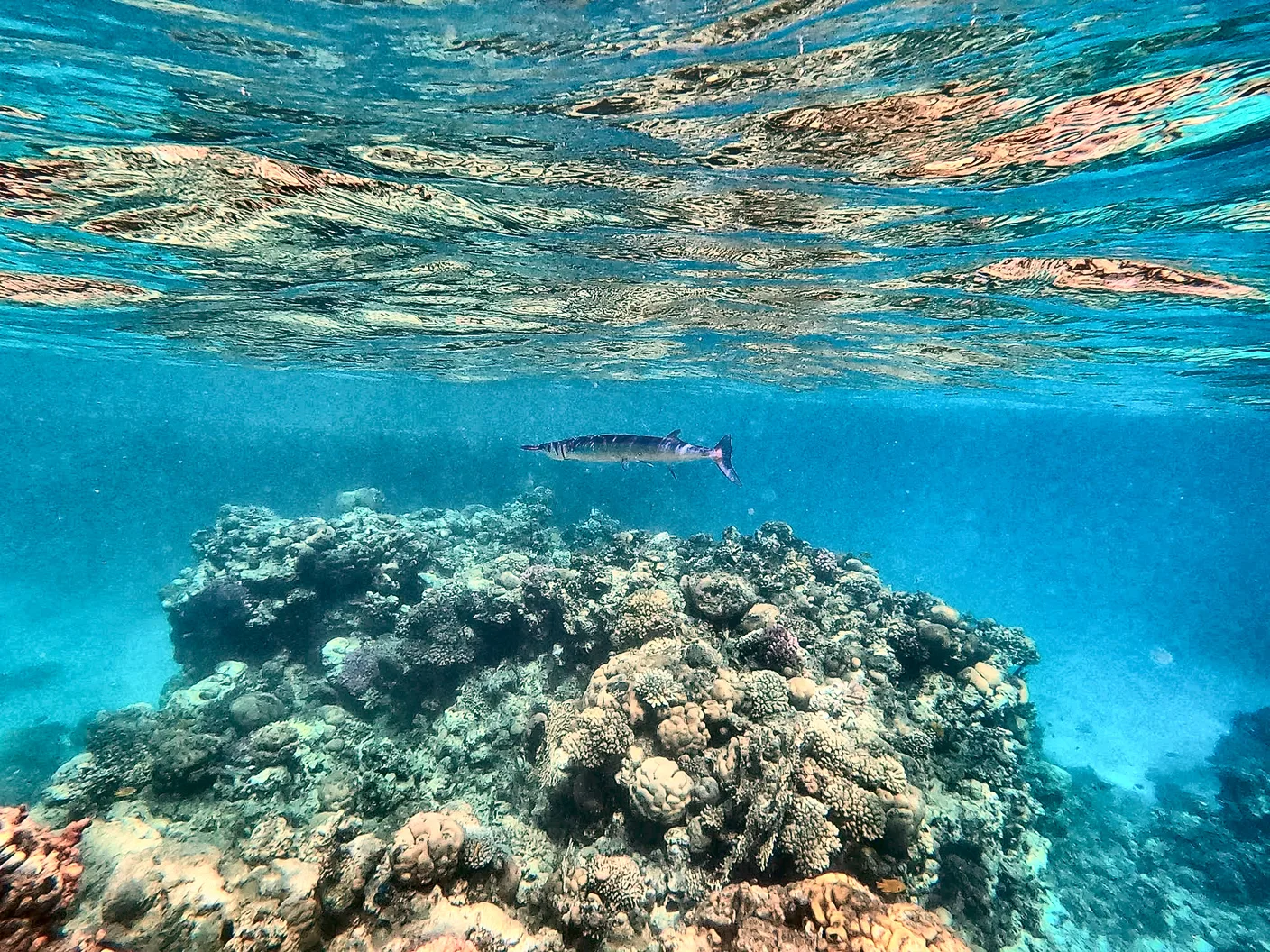
First the orange. Anthias hover in whole clouds above the corals. When a shadow comes, they all flip direction at the same moment. Right below the surface hangs a needlefish, long and slender and completely motionless.
The bigger encounters were at Ras Bob. There we saw eagle rays and a blue-spotted ray, and that’s also where the only turtle of the week was. A white moray was moving through the reef; it was on the move instead of in its crevice. At Gordon Reef eagle rays passed by in open water, and on the crossing there, dolphins accompanied us.
One turtle in seven days is not much. Anyone who specifically wants to see turtles is better off elsewhere. On Rasdhoo in the Maldives, at a single reef, we counted about ten in an hour and a half.
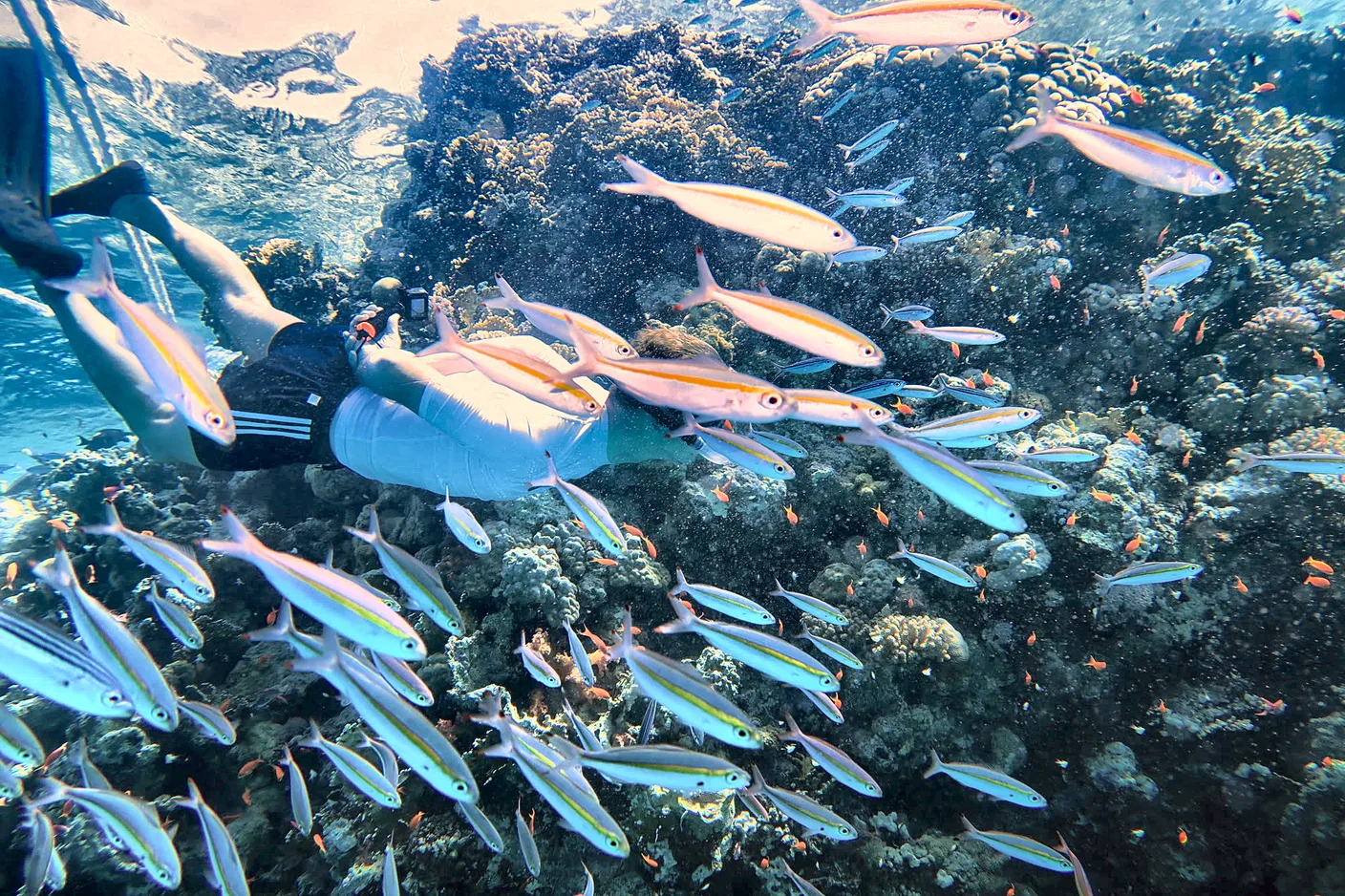
Since the trip, I keep putting it this way: The reefs in Egypt are just as colorful as the ones in the Maldives. There, only the animals are bigger. Anyone who wants to see fish, in numbers and color, is in the right place in the Red Sea and saves themselves the long-haul trip.
On top of that comes a comparison that surprised me. I have been to Greece several times, to Cyprus, Sardinia, Italy, Spain and Mallorca. On none of these coasts did I find a beautiful reef from the beach. At the first look underwater in Sharm it was clear what the somewhat longer flight is worth.
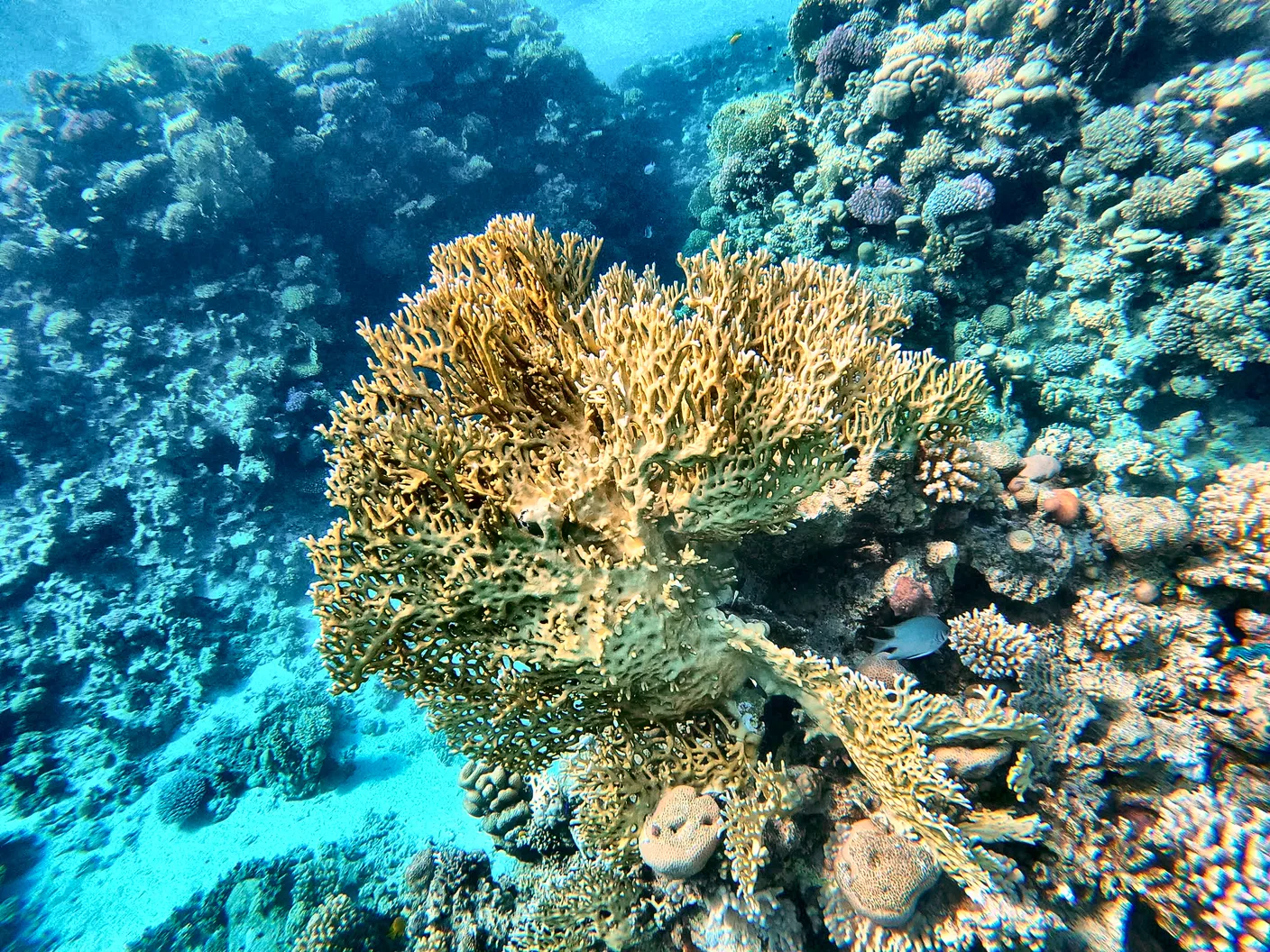
On the reef: touch nothing and keep your distance. There are two reasons for this. Corals grow for decades and break in a second. And you yourself get hurt: fire corals sting, and the spines of lionfish are venomous. For two to five meters you need little gear; what I bring along is listed under my snorkeling gear.
Do you see sharks or mantas snorkeling in Sharm El Sheikh?
Almost every article about the Red Sea mentions whale sharks, mantas and hammerheads. That is not wrong, but you see these animals at the offshore reefs such as Elphinstone, Daedalus or the Brothers. A liveaboard dive safari goes there. Anyone who gets into the water from the beach in Sharm sees a very good reef with very many fish, but no hammerhead.
If your travel goal is a particular big animal, plan differently. For us that worked out in the Maldives, with the whale shark off Dhigurah and with around fifty mantas in Hanifaru Bay. Both were booked excursions, and neither existed like that in Sharm.
How do you get from reef to reef in Sharm El Sheikh?
That was what I was most unsure about beforehand, and in the end it was the easiest part. On the first day our hotel put us in touch with a driver. From then on everything went through WhatsApp: a quick message, and usually he was there twenty minutes later. Over the week that turned into many rides and at some point also conversations. The tip about El Fanar Beach came from him, not from a guidebook.
We traveled without a SIM card. When we were somewhere and wanted to go back, we asked at the restaurant for someone to call. That worked every time; nobody asked many questions. The people there were friendly and helpful throughout, and for me that is part of the picture of this week.
Ask at the hotel for a driver, and transport is sorted for the whole week. On the side, you’ll have someone who knows which beaches are worth it.
When is the best time for snorkeling in Sharm El Sheikh?
We were there in October 2025, and for us it was the most pleasant mix. The water was warm enough to stay in for hours, and the sun already milder than in high summer. You can get into the water on the Red Sea all year, in winter with a wetsuit. The months compared are in the guide on the best time to travel to the Red Sea.
More important than the month was the time of day. In the morning we often had the house reef all to ourselves, and the water lay still. Later in the day it gets crowded; at the well-known reefs and in the protected areas there is rarely much space. To be honest, I was one of exactly those people who make it more crowded. For what happens down below, you accept it.
My conclusion
If you want to see a tropical reef for the first time and don’t feel like doing a lot of planning, Sharm El Sheikh is the simplest answer. Take a hotel with a house reef and let yourself drift over the edge. If you’re looking for a particular big animal, go somewhere else.
Frequently asked questions
Can you snorkel from the beach in Sharm El Sheikh? Yes. Ras Bob in front of the Serenity Lodge in Shark Bay and Ras Umm Sid at El Fanar Beach can be reached without a boat. The reef there lies at two to five meters.
Which hotel in Sharm has a good house reef? For us it was the Serenity Lodge in Shark Bay with Ras Bob in front of it, the best reef of our week. Anyone staying elsewhere can get to Ras Umm Sid for a small entry fee.
Is snorkeling in Sharm suitable for children? Yes, best over the jetty at Ras Umm Sid. There, nobody has to cross a shallow reef, and it starts right at the edge.
Do you see sharks or dolphins in Sharm? We didn’t see any sharks in the whole week, despite the name Shark Bay. Dolphins accompanied us once on the boat ride to Gordon Reef.
When is the best time for snorkeling in Sharm? We were there in October 2025, with 26 °C water and around 30 meters of visibility. You can get into the water all year, in winter with a wetsuit.
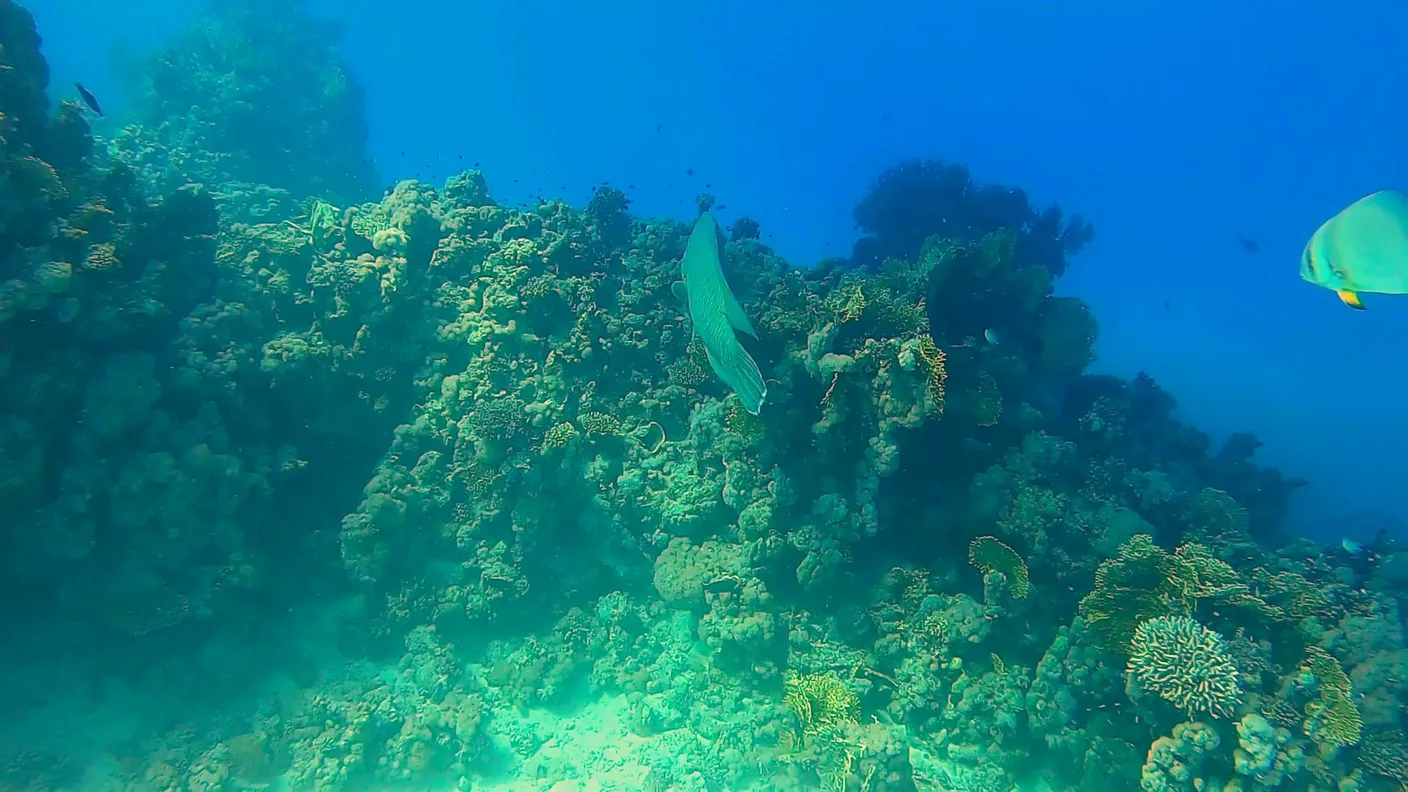
How the dive at Ras Mohammed without certification went is in my report about the Napoleon wrasse that fulfilled an old wish for one of us there.