Travel report
Crystal Rock Mauritius: the boat trip from Flic en Flac
Translated from the German original.
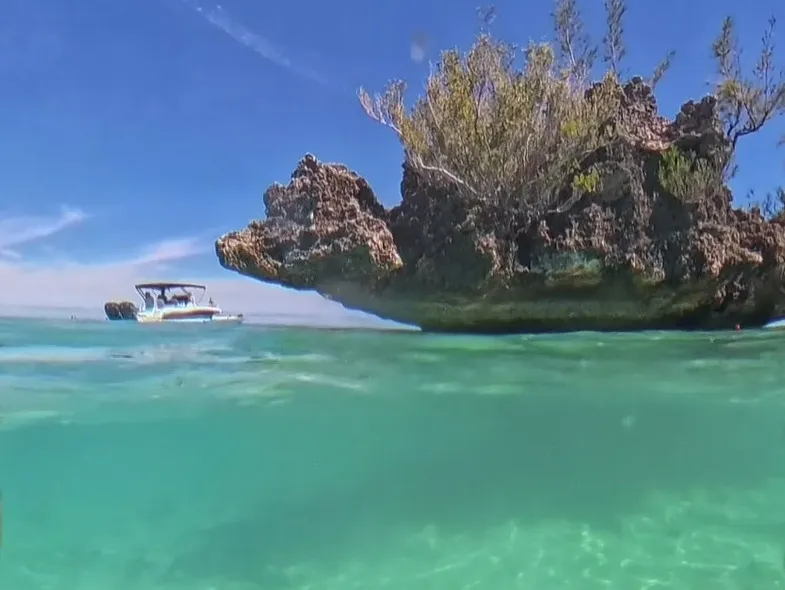
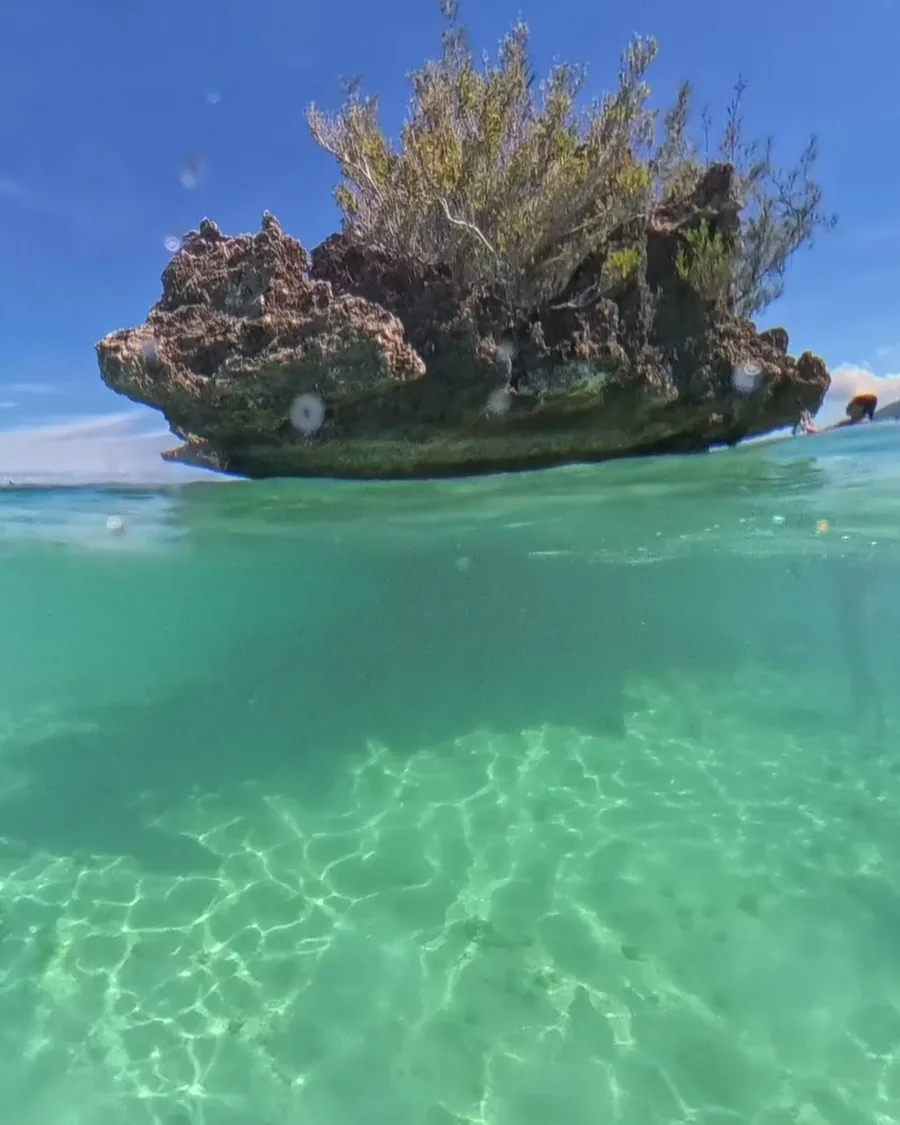
Between me and the rock lie fifty meters of lagoon in the southwest of Mauritius. The boat has anchored in front of it, in three or four meters of water; we got in from there, and now I swim across. Hardly any waves, hardly any current. The water is warm, the sun is high. Below me pale sand in shallow ripples, so clear that I see every single one. I let myself drift; Le Morne stands on the horizon. Then I put my head under water, and the picture flips: below, the rippled sand, above, the rock above the waterline, both at the same time. Right in front of my mask the world ends and turns to stone.
In case you’re booking the trip right now: Crystal Rock is a sight, not a snorkeling destination. Beneath it is sand. The snorkeling happens before it, at a field of round corals in clear water, at most four meters deep, with around 20 meters of visibility. You don’t need any skills for it. And if you don’t want to go in the water, you still have a day: first the dolphins, then the rock, and at midday the barbecue on Île aux Bénitiers. There were two of us, my wife and I.
Two other boats were at the rock with us, about ten people were there, and the water only comes up to your hips. It wasn’t too crowded. The rock is so small that no photo works without people in it. That didn’t bother me. Once you put your head in the water, you only have sand, light and this one rock in the picture anyway.
The day began sunny and almost without wind, with a ride of around 45 minutes along the coast. The sea was calm, and from out there you could see the island well. First the dolphins: a group of about twenty that kept their distance, probably with young ones among them. We all got in the water; nobody gave us any rules. The dolphins decide what happens anyway: they come closer or keep away. You hear them first, in the water, then you see them, clearly despite the distance. Then they dive under us, and as quickly as they came, they are gone again. We were very happy to see them and to hear them too.
After that the boat went to the coral stop, closer to the beach and more sheltered. There I put my face in the water, and below me stands a whole field of round blocks, dome next to dome on a pale bottom. Between the blocks run pale alleys, and the sun draws a trembling net on the sand. We had never seen these spherical shapes so densely packed anywhere before.
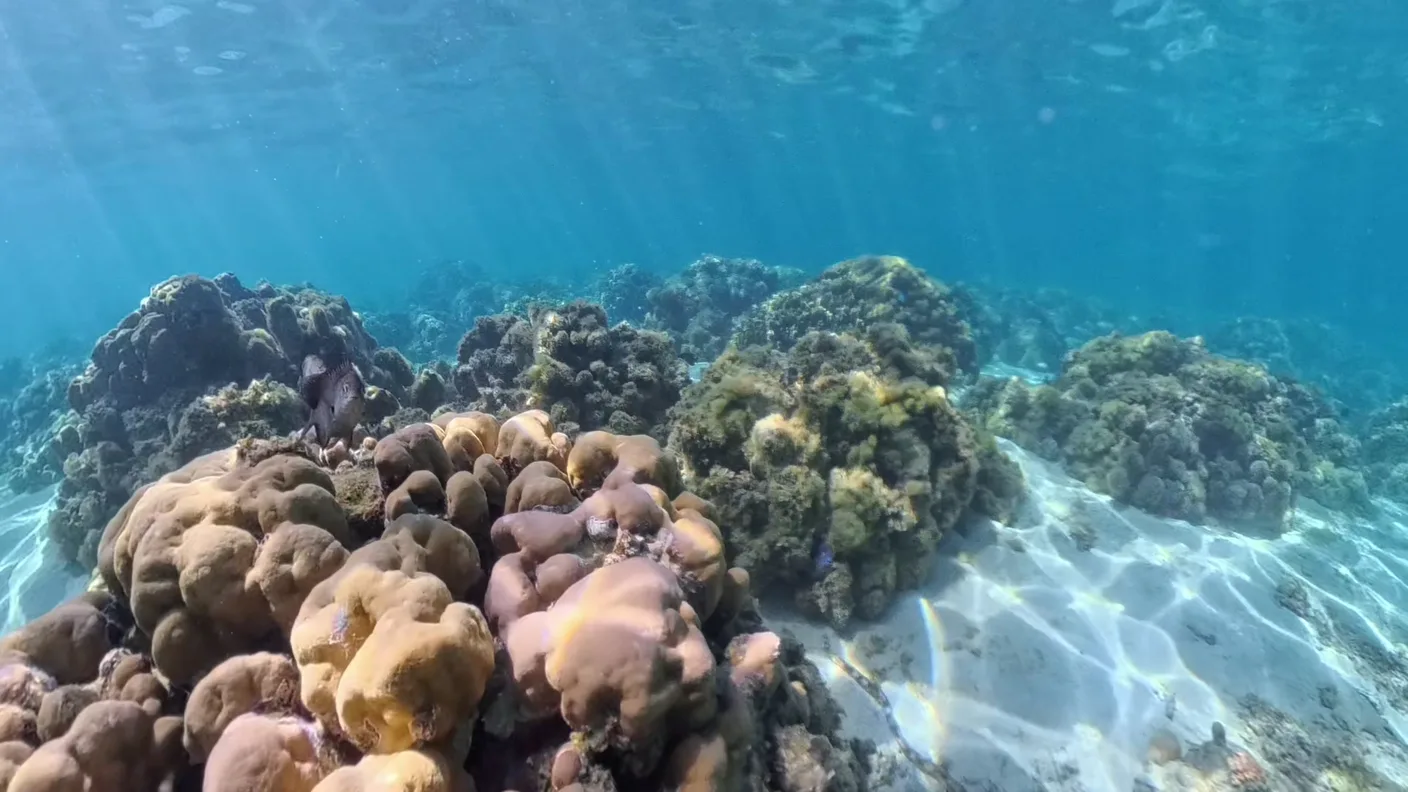
We had about thirty minutes here, and it was a very nice, relaxed stop. Until then we had been rather disappointed by the snorkeling at our beach, and here at last was a clear reef in clear water, with colorful fish. There were needlefish and pufferfish, neither of which we had seen anywhere else on Mauritius. At the deepest point it was about four meters, mostly less.
Then Crystal Rock. It stands in the middle of the water, with no island beneath it, in the lagoon of Île aux Bénitiers, off the coast of Le Morne. Scrub on top; at the bottom it is narrower than at the top. From the side it looks as if it were just resting on the lagoon. Underwater it is what it is above water: rock on a sandy bottom, hip-deep, and from the anchorage you swim or snorkel across without any effort. We had twenty minutes here, and we simply looked at the rock.
At midday we landed at Île aux Bénitiers, an uninhabited island off the coast near La Gaulette. Many boats had tied up there for the barbecue, and the guests spread out over the whole beach. We sat with the people from our boat under a tent, on our own, so it didn’t feel like being in the middle of all the others. Everything was freshly grilled for everyone: fish and chicken, with salads and grilled bananas, the highlight of the menu for my wife. Along with a glass of wine and conversations with people we hadn’t known that morning, many from France, others from Switzerland and from Spain. It was fun to sit there relaxed and eat.
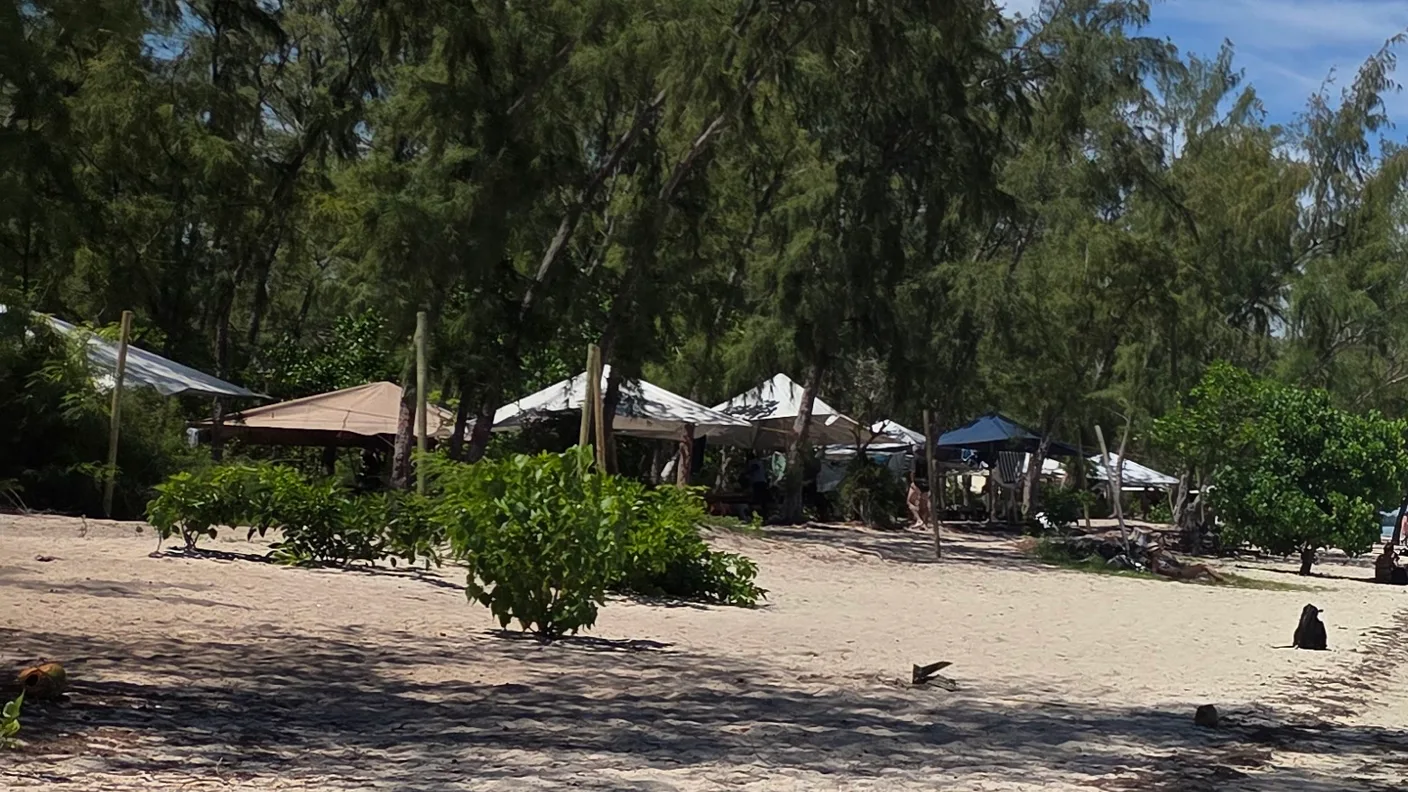
We had two hours there. Some went snorkeling once more; we strolled along the beach. The boats simply lay in the shallows, behind them the trees reached almost to the water, and in their shade stood a few small stalls with fruit, souvenirs and clothing. We headed back along the coast in the afternoon, with a few more waves than in the morning, but nothing that bothered us. From the water, the mountains rise right behind the shore, green and steep almost down to the lagoon, and Le Morne accompanied us on the seaward side, just as on the way out. We had one more good view of the island. Everything worked out that day, and for both of us it was a well-rounded experience: the dolphins, Crystal Rock and the barbecue on the beach. We came back in the afternoon with a good feeling, went out to eat in the evening and were happy and content.
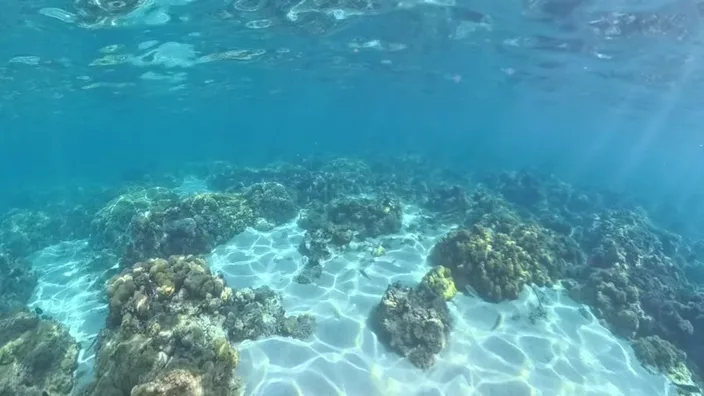
This coast doesn’t have a reef like the Red Sea. Mauritius lies behind a continuous reef, and from the beach you are left with the shallow lagoon. From the beach at Flic en Flac you see sand and dead coral; at the boat trip’s coral stop the visibility was much better than in front of our beach.
Where is Crystal Rock in Mauritius, and how does the boat trip go?
- Schedule: sunny and hardly any wind on our day. Around 45 minutes’ ride along the coast, first the dolphins, then about thirty minutes at the coral stop, twenty minutes at Crystal Rock, two hours on Île aux Bénitiers at midday, back in the afternoon.
- Booking: with a small operator on the promenade of Flic en Flac, on the way to the beach. We went on a Sunday, February 1, 2026, on a motorboat with about ten guests on board.
- Where: Crystal Rock rises only a few meters out of the water in the lagoon of Île aux Bénitiers, near the coast of Le Morne. The island is uninhabited, lies around 500 meters off La Gaulette and is two kilometers long. Le Morne Brabant is 556 meters high; its landscape has been on the World Heritage List since 2008.
- Gear: a mask and snorkel are enough; the water is shallow. What else I bring along is listed under my gear.
- Camera: I filmed with the Insta360. There is no video of the dolphins that can be shown; why is explained in the camera article.
- For comparison: There are more animals in the Maldives. What it looks like when there is only sand in front of a beach is described for Bikini Beach on Fulidhoo. All months with water values for Mauritius: in the destination guide.
My conclusion
Go if you want a relaxed day on the water, with a rock in the middle of the lagoon. You’ll find the fish at the coral stop. For us the day was one of the nicer ones of the vacation, just as a day at the beach is nice in its own way.
The turtle off Flic en Flac that we met at Turtle Point is the subject of the article on Turtle Point.